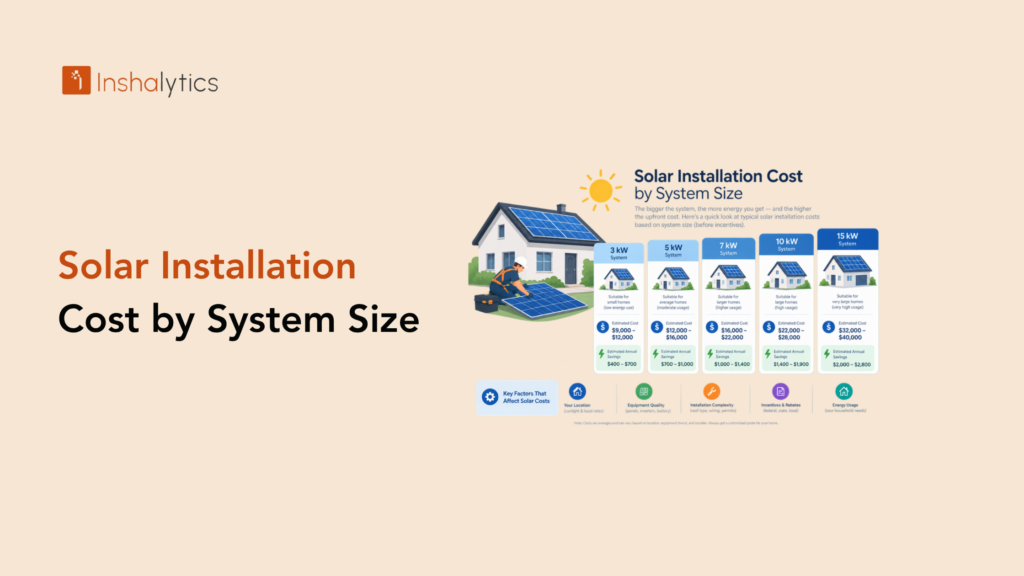
Homeowners researching solar spend weeks comparing costs before ever requesting a quote, and right now, most of that research happens on aggregator sites, not on installer websites where it arguably belongs. If your site doesn’t clearly answer solar installation cost by system size, you’re handing that entire research phase, and the lead that follows it, to someone else who’s put in the work to answer the question you haven’t. This guide breaks down what solar actually costs across common system sizes, what drives price beyond kW alone, and why owning this content on your own site matters more than most installers realize.
What Does Solar Actually Cost by System Size?
Solar system cost scales with size, but not in a straight line. Larger systems typically cost less per watt even though the total price is higher, because fixed costs like permitting and labor setup spread across more capacity than they would on a smaller job.
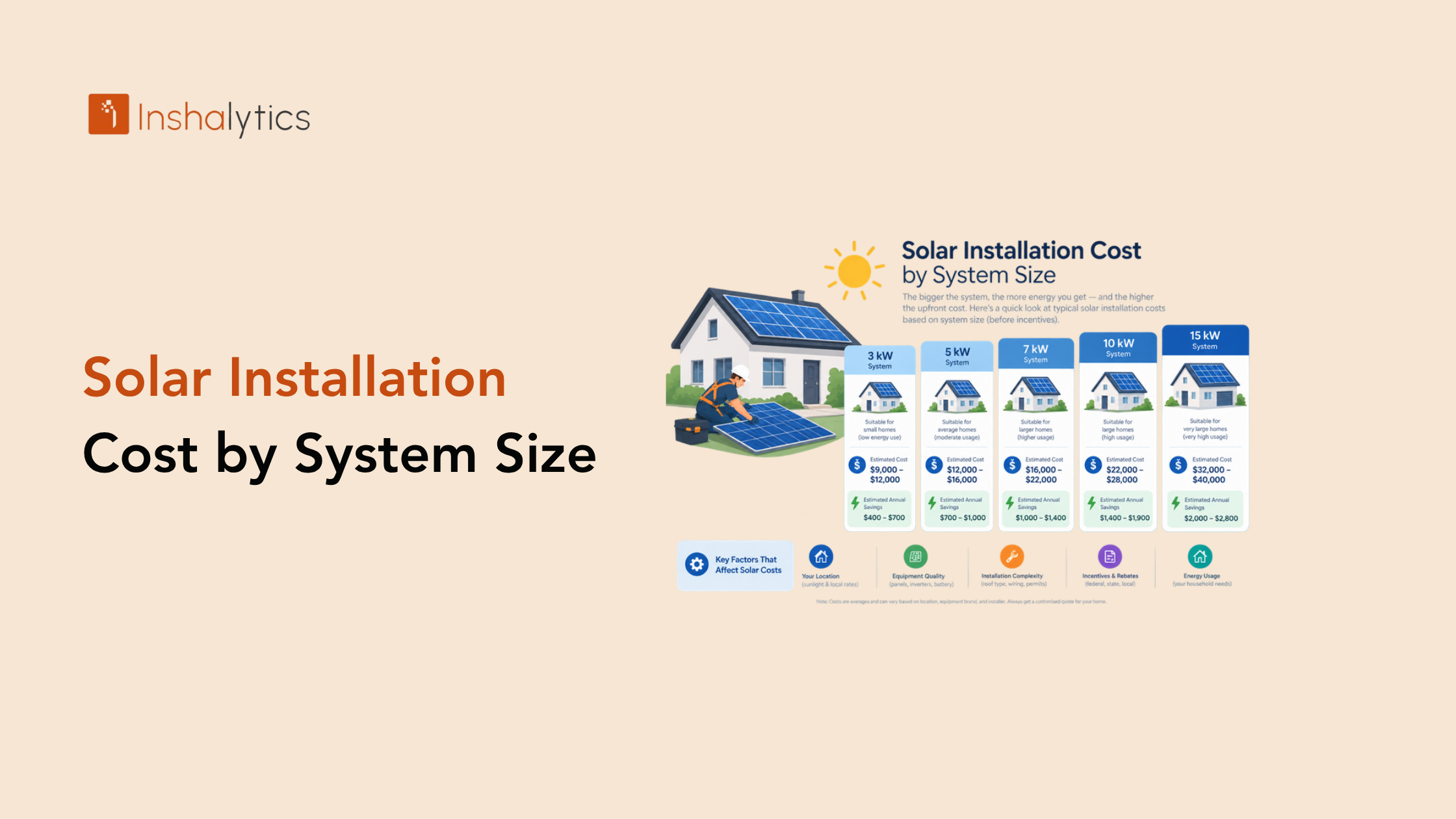
Cost Table: 3kW to 13kW Before and After Incentives
Rough national benchmarks before incentives run from around $9,000 for a 3kW system up to roughly $40,000 for a 13kW system, with the federal tax credit typically reducing the final cost by around 30 percent. A 6kW system, common for an average single-family home, often lands in the $18,000 range before incentives and closer to $13,000 after. These numbers move with material costs and local labor rates, which is exactly why localized content outperforms a generic national table that can’t account for what’s actually happening in a specific service area. A homeowner who sees a number close to what they’ll actually pay is far more likely to trust the rest of your site than one who feels misled by a generic average once they get a real quote.
Why Larger Systems Have a Lower Cost Per Watt
Permitting fees, mobilization, and inverter setup cost roughly the same whether you’re installing a 3kW or a 10kW system, which means those fixed costs represent a smaller percentage of the total on larger installations. This is a useful, easy-to-explain concept for homeowners weighing whether to slightly oversize a system for future EV or heat pump additions, since the marginal cost of extra capacity often looks better than they expect.
What Drives the Price Beyond System Size?
System size gets a homeowner in the right ballpark, but several other factors determine where their actual quote lands within that range, and explaining these clearly builds credibility before a sales conversation even happens, rather than leaving the homeowner to guess why their price differs from a neighbor’s.
Equipment Quality, Roof Complexity, and Labor
Premium panel and inverter brands, a steep or multi-plane roof requiring more mounting complexity, and local labor market rates all move the price independently of system size. Two homes with identical 6kW systems can see meaningfully different quotes based on these factors alone, which is worth explaining upfront so a homeowner isn’t surprised when their neighbor’s price doesn’t match their own. This kind of upfront honesty also reduces the number of frustrated calls your sales team gets from homeowners comparing notes with people in different situations.
How Location and Local Permitting Fees Change the Total
Permitting requirements, interconnection processes, and local labor costs vary significantly by state and even by municipality within the same state, sometimes producing meaningfully different quotes for two towns that sit only a few miles apart. A national cost table gives a homeowner a starting point, but it can’t tell them what solar actually costs in their specific market, which is precisely the gap a localized page fills, and precisely the gap most installer sites leave wide open for an aggregator to capture instead.
How Do Homeowners Actually Decide What Size They Need?
System size should be determined by actual energy consumption, not by an arbitrary budget number or roof space alone.
Sizing Based on Consumption, Not Roof Space Alone
The right starting point is a homeowner’s actual electricity usage, pulled from a recent utility bill, matched against local sun exposure data, not simply “how much roof do I have available.” Explaining this clearly on a pricing page positions your business as consultative rather than purely transactional from the first interaction, which matters a great deal for a purchase this considered. Homeowners researching solar are used to feeling sold to, and a page that starts with their actual usage instead of a generic pitch stands out immediately.
Why Undersizing or Oversizing Both Waste Money
An undersized system leaves a homeowner still paying a meaningful utility bill every month, undercutting the entire value proposition of going solar. An oversized system increases upfront cost without a proportional increase in savings. Both mistakes are common among DIY online calculators that don’t account for a specific home’s actual usage pattern, and pointing this out builds trust with a homeowner who’s already run into a few of those calculators before finding your site. That kind of specificity is often the moment a skeptical visitor decides your business is worth an actual phone call instead of just another tab to close.
Why Should Your Website Own This Data Instead of an Aggregator?
Right now, most of the search traffic for solar cost questions flows to lead-generation aggregators rather than to installers directly, and that’s a fixable, specific gap that most installer marketing hasn’t seriously addressed.
The EnergySage Problem: Why Installers Are Losing This Search Traffic
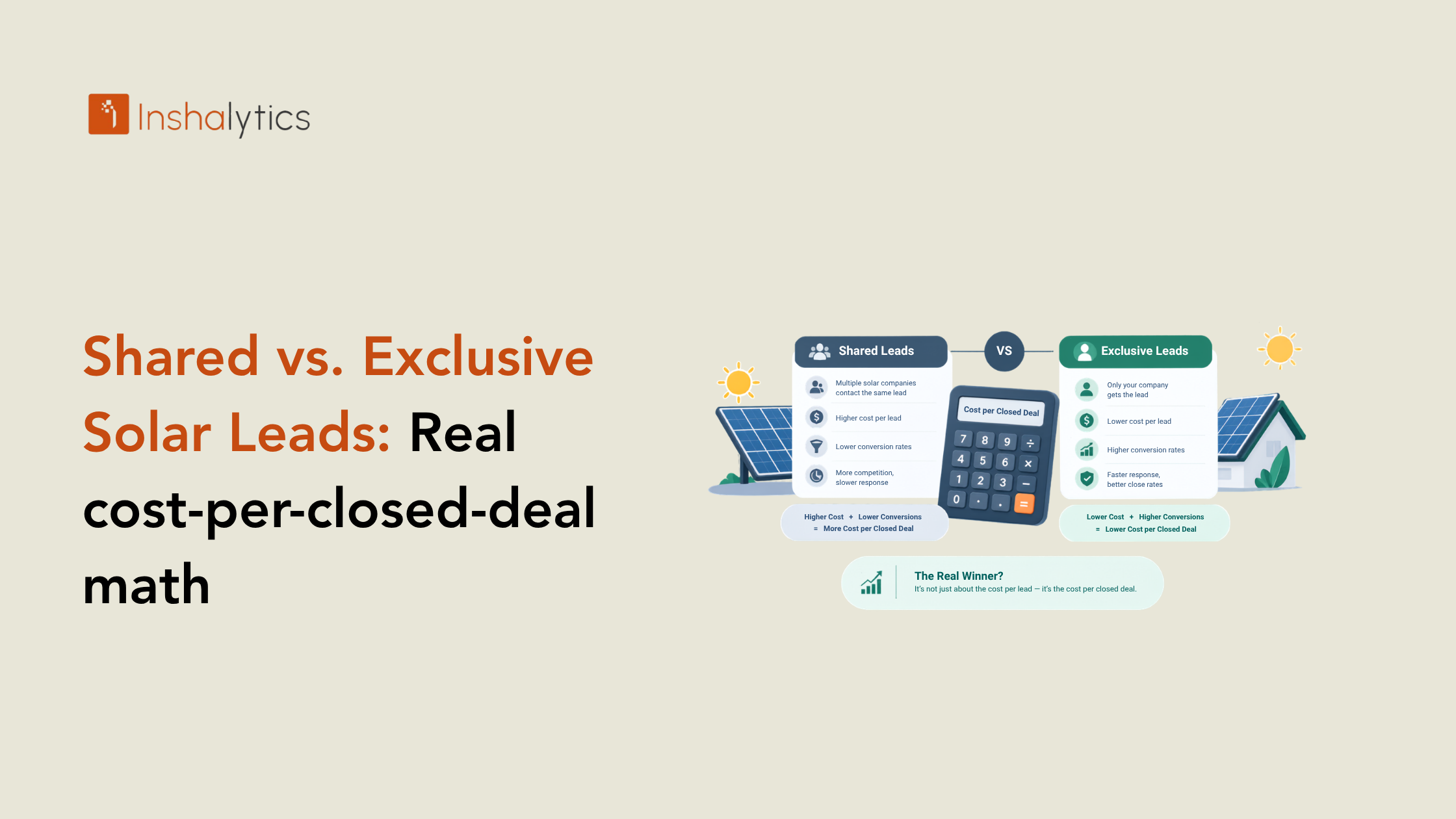
Aggregator sites have built extensive, well-optimized cost content precisely because most individual installers haven’t, then sell the resulting leads back to installers at a markup, often the same lead sold to several competitors at once. Shared vs. exclusive solar leads: real cost-per-closed-deal math breaks down exactly what that arrangement costs you compared to owning the traffic yourself and never having to pay a markup on your own prospects. Every dollar spent buying back leads that originated from a search you could have owned outright is a dollar that never needed to leave your marketing budget in the first place.
Building a Pricing Page That Ranks and Converts
A well-built, localized cost page, real numbers for your actual service area, tied to a clear next step, competes directly with aggregator content for the exact searches that currently feed them your leads, at no ongoing cost per lead once it ranks and continues earning traffic well after the initial investment.
Turning Cost Content Into Booked Consultations
Cost information alone doesn’t close a $20,000-plus purchase. It needs to lead somewhere specific, or the research-stage traffic you’ve earned simply moves on to the next tab.
Pairing Pricing Data With a Clear Quote-Request CTA
Every cost table or pricing explanation should end with a direct, low-friction next step, a free quote request or consultation booking, so the research-stage visitor you’ve just earned doesn’t leave to find that next step somewhere else after reading your content.
How Inshalytics Builds Local Cost Content That Outranks Aggregators
We build localized, regularly updated cost and incentive content specifically designed to compete with aggregator pages for research-stage search traffic, paired with conversion paths that turn that traffic into booked consultations rather than just page views that never turn into anything.
What to Do Next If Your Site Doesn’t Have This Content Yet
If cost information isn’t already a strong, localized part of your site, that’s one of the most immediate, addressable gaps in most solar installer marketing, and it’s worth prioritizing before almost anything else.
Auditing Whether You’re Losing Research-Stage Traffic Today
A quick search of your own service area’s solar cost keywords will usually show exactly who’s currently capturing that traffic, and it’s rarely the local installers themselves, even the ones who’ve been doing excellent installation work in that market for years without any complaints. Great installation work simply doesn’t matter to a search engine if there’s no content connecting that expertise to the exact question a homeowner just typed in.
Building Your First Localized Cost Page
Start with your single most common system size and your primary service area, build a genuinely useful, accurate cost breakdown, and pair it with a clear quote request. That single page is often enough to start reclaiming research-stage traffic within a few months.
Cost is the first question every solar prospect researches, and right now, aggregators are answering it instead of you. If you’re ready to take that search traffic back, let’s build the content that does it, starting with the system sizes and service areas that matter most to your business.