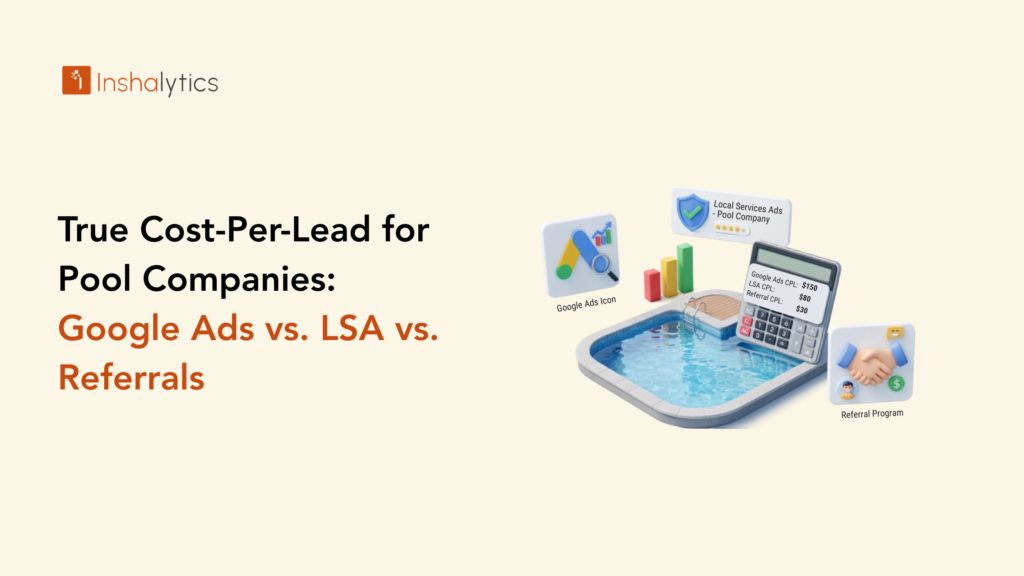
Most pool service and installation companies still don’t advertise online in any structured way, which means the businesses that do are competing for attention in one of the least saturated home-service categories left in the entire industry. If you’re evaluating true cost-per-lead for pool companies across Google Ads, Local Services Ads, and referrals, you’re looking at a real first-mover opportunity most owners haven’t taken seriously yet, largely because nobody in their local market is forcing the comparison. This article breaks down what each channel actually costs, where the hidden costs live, and how to build a blended strategy that doesn’t waste budget finding out the hard way after months of guessing.
Why Most Pool Companies Don’t Actually Know Their Real Cost Per Lead
Before comparing channels, it’s worth being honest about a starting-point problem most pool businesses share: total marketing spend divided by total leads is the only “cost per lead” number most owners can produce, and it’s rarely broken down by channel.
The First-Mover Advantage: Most Pool Pros Still Don’t Advertise
A meaningful share of pool service and installation companies still rely primarily on word-of-mouth and legacy directory listings, leaving structured paid search largely uncontested in many local markets. That’s a genuine opportunity for any owner willing to be first. The businesses willing to build real tracking and channel discipline are competing against far less sophisticated competition than in almost any other home service vertical.
Tracking Cost Per Lead by Channel, Not Just Total Marketing Spend
Without channel-level tracking, you can’t tell whether your referral program or your Google Ads account is actually driving your booked jobs, which means every future budget decision is a guess dressed up as a strategy, even when the person making it has years of experience running the business.
Google Local Services Ads for Pool Service
LSAs are frequently the most efficient starting channel for pool companies specifically, though not without a real operational cost that rarely shows up in the initial pitch from Google.
Typical Cost Per Lead ($20–$40) and Why It’s Efficient Here
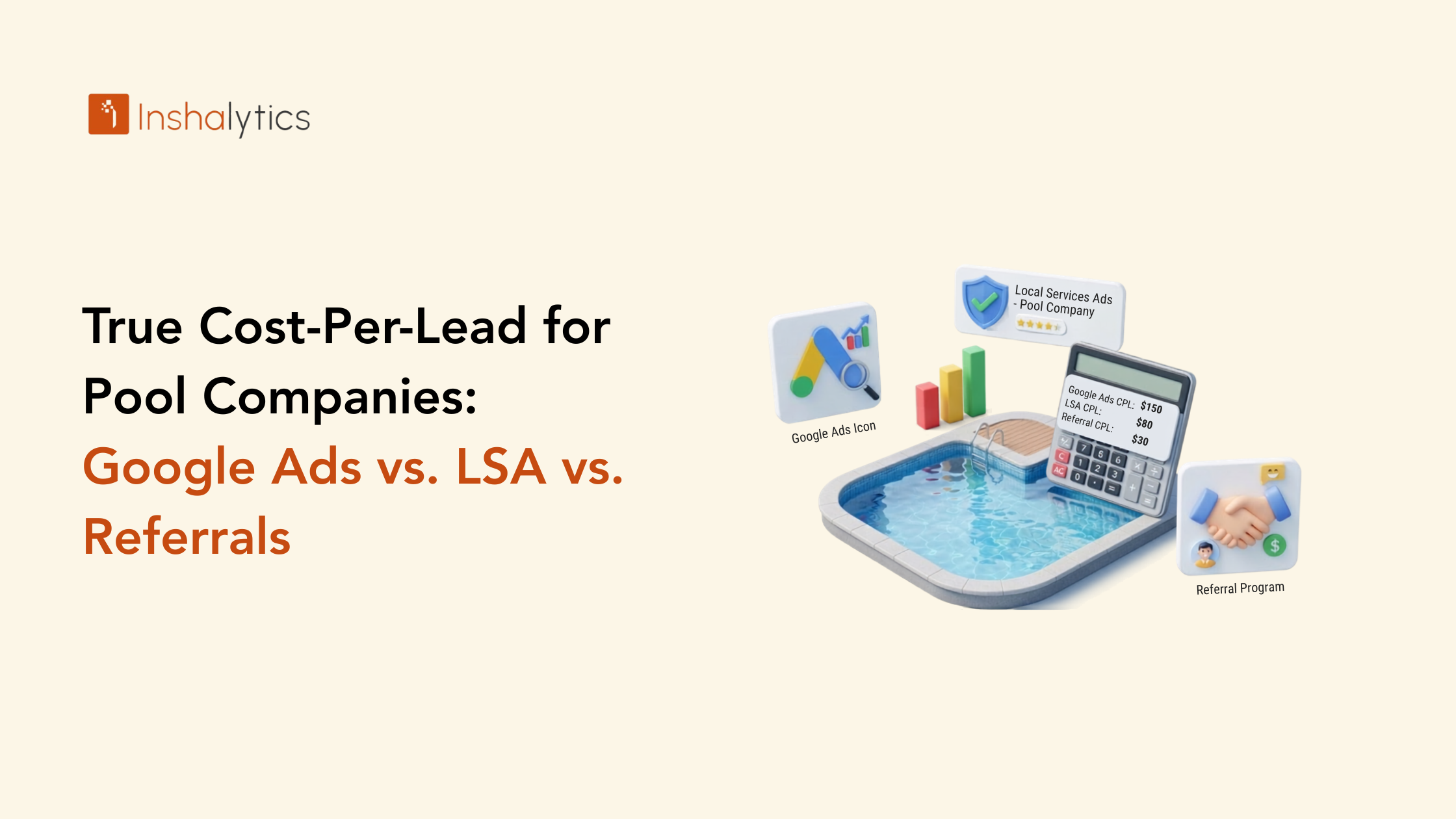
Local Services Ads for pool service typically run in the $20 to $40 per lead range, notably lower than the $30 to $95 range common across most other home service trades, a strong return when a single pool service customer can represent well over a thousand dollars in annual recurring value across the life of the relationship, before even counting referrals they might eventually send your way. That kind of lifetime value math changes what a business can reasonably afford to pay for a single new customer, even before factoring in referrals that customer might eventually send your way.
The Dispute Process: Why 30–40% of Disputes Get Denied
LSA billing isn’t as clean as “pay only for qualified leads” makes it sound. Wrong numbers, short hang-ups, and out-of-area inquiries all get billed by default, and disputing them requires manual work through Google’s process, which denies roughly 30 to 40% of disputes without detailed explanation. Your real cost per lead needs to account for this dispute friction, not just the advertised per-lead price on the sales page.
Google Ads (PPC) for Pool Service
Google Ads offers more targeting control than LSAs, at the cost of a steeper learning curve and a genuinely different pricing model to manage.
Typical Cost Per Click ($3–$8) for Pool Keywords
Pool-related keywords typically run in the $3 to $8 per click range, moderate compared to more competitive home service verticals, reflecting the still-limited advertiser competition in this category across most local markets.
Why More Control Comes With a Steeper Learning Curve
Unlike LSAs, standard Google Ads campaigns charge for every click regardless of whether it converts, which means poor keyword selection or a weak landing page directly costs money rather than just producing an unqualified lead you can dispute afterward. This trade-off, more control, more responsibility for making it work, is exactly why many pool businesses start with LSAs before layering in a full Google Ads campaign.
Referral Leads: The Channel Nobody Measures
Referrals are almost universally acknowledged as valuable and almost universally left untracked, a gap worth closing before investing further in paid channels of any kind.
Why Referral Cost Per Lead Is Usually the Lowest of All Three
A referral costs whatever incentive you offer, if any, plus the ongoing cost of being good enough at the job to earn word-of-mouth in the first place, typically the lowest cost-per-lead of any channel once you account for close rate, since a referred lead arrives with built-in trust a cold ad click doesn’t have from the very first phone call, before you’ve said a single word to earn it. That built-in trust often means a shorter sales conversation and a higher close rate compared to a cold lead who’s never heard of your business before.
Building a Referral Program You Can Actually Track
A referral program that isn’t tracked in your CRM might as well not exist for measurement purposes. A simple referral code or dedicated intake question (“how did you hear about us?”) is enough to start seeing real numbers instead of a vague sense that referrals are important. Most owners already know referrals matter; the missing piece is proving it with actual numbers rather than instinct.
Comparing All Three Channels Side by Side
Once you have real numbers for each channel, the comparison becomes a straightforward budgeting decision rather than a guessing game influenced by whichever channel feels most active that week.
Cost, Speed to First Lead, and Lead Quality by Channel
LSAs offer the fastest, most turnkey setup with solid lead quality and moderate cost. Google Ads offers more control and scale potential but requires more setup discipline. Referrals offer the lowest cost and highest trust but the slowest, least controllable volume, a genuine complement to paid channels, not a replacement for them entirely.
Which Channel Fits Which Stage of Growth
An early-stage pool business with limited marketing bandwidth often gets the fastest return from LSAs alone. A more established business with steady volume and a dedicated marketing budget typically benefits from layering in Google Ads and a formalized referral program on top, rather than relying on any single channel exclusively as it scales.
How Inshalytics Builds a Blended Channel Strategy for Pool Companies
Getting real numbers across all three channels requires setup work most pool company owners don’t have time to build themselves while also running crews and managing customers.
Setting Up Tracking Across LSA, PPC, and Referrals
We build the call tracking and CRM tagging that shows your real cost per lead across every channel, LSA, Google Ads, and referrals, so budget decisions are based on actual data rather than assumptions about which channel “feels” like it’s working best. Pool resurfacing and equipment installation: the higher-ticket keywords being ignored covers how to make sure that lead volume is aimed at your highest-margin services, not just the easiest ones to advertise.
Shifting Budget Toward Whatever’s Actually Producing Booked Jobs
Once that tracking exists, budget naturally shifts toward whichever channel is producing the best cost per booked job, exactly the kind of ongoing optimization we build into every pool company marketing engagement from the very first month.
Getting Your First Real Cost-Per-Lead Numbers
You don’t need a sophisticated setup to start improving your data this month, even before committing to any larger marketing investment.
A Simple Tracking Setup You Can Start This Week
Add a dedicated phone number to each active channel, one for LSAs, one for Google Ads, one for your website’s general contact form, and start logging “how did you hear about us” on every new inquiry, no matter how small or informal the job sounds at first. That alone gets you most of the way to real, usable channel-level data within a single billing cycle.
What to Do Once You Know Your Numbers
Once you have even a month or two of real channel data, you’ll likely find one channel meaningfully outperforming the others. The natural next step is shifting budget toward it while continuing to build out whichever channel is underperforming rather than abandoning it prematurely before it’s had a fair chance.
Pool service marketing is still early enough that disciplined tracking alone puts you ahead of most local competitors. If you’re ready to find out your real numbers, let’s build that tracking together, starting with whichever channel you’re already spending the most on today.