A homeowner with a burst pipe doesn’t wait. They call the first plumber on the list, and if that call rings four times and hits voicemail, they hang up and call the second. By the time most plumbing companies return that voicemail, the job and the $1,200 emergency ticket that came with it belong to whoever answered first. Speed to lead isn’t a nice-to-have for plumbers. It’s the single biggest lever most plumbing businesses aren’t pulling.
Here’s what the data says about how fast is fast enough, why it matters more for plumbing than almost any other trade, and how to actually build a system around it.
Why Speed to Lead Matters More for Plumbers Than Almost Any Other Trade
Plumbing sits at the extreme end of urgency-driven purchasing. That changes the rules of how fast you need to respond compared to a trade where homeowners comparison-shop for weeks.
The Urgency Factor: Burst Pipes, Backups, and No-Water Emergencies
Unlike a roof replacement or an HVAC install that a homeowner might research for weeks, a plumbing emergency demands action in the next 30 minutes. Calls from active leaks, sewer backups, and failed water heaters convert at three to five times the rate of web form leads, according to LeadsRain’s breakdown of pay-per-call plumbing leads, because the person calling already knows exactly what they need and is ready to hire whoever picks up the phone first.
What Happens in the First 5 Minutes After a Homeowner Calls
The moment a homeowner submits a request or dials your number, their interest is at its peak. Every minute that passes after that moment, their willingness to keep waiting for you drops, and their willingness to call the next plumber on the list rises. This isn’t a lead-quality problem. It’s a speed problem, and it shows up in the data every time someone actually measures it instead of assuming their team is faster than they really are.
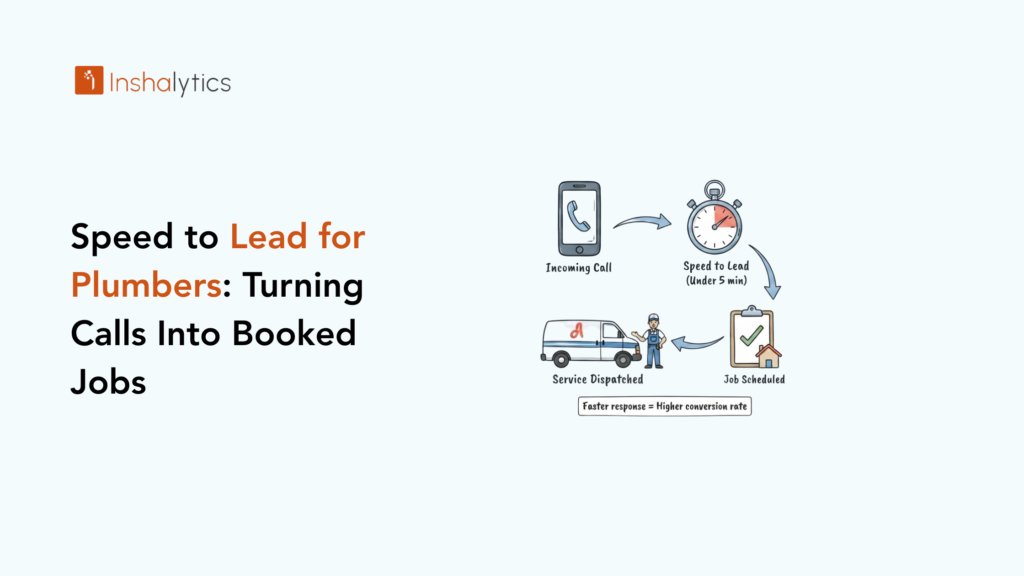
Treat every plumbing inquiry call, text, or form as having a five-minute clock attached to it, starting the second it comes in, not the second someone happens to notice it.
How Fast Is Fast Enough? The Data on Plumbing Lead Response
The research on this is consistent enough across industries that plumbers don’t need to guess at what “fast” actually means.
The 60-Second vs. 5-Minute vs. 1-Hour Conversion Gap
Responding within five minutes makes you roughly 21 times more likely to qualify a lead compared to waiting even 30 minutes, based on the widely cited MIT and Harvard Business Review lead response research referenced in Pipeline On’s analysis of speed to lead for home services. Separate research from Velocify, cited in the same analysis, found that responding within 60 seconds lifts conversion rates by nearly 400% compared to slower response windows. The gap between “fast” and “eventually” isn’t incremental it’s the difference between winning the job and never being seriously in the running.
Why 88% of Contractors Still Respond Too Slowly
Despite how clear the data is, an analysis of over 130,000 home service speed-to-lead campaigns by Hatch, also cited in Pipeline On’s breakdown, found that 88% of contractors take longer than five minutes to respond, and the single most common response time recorded was a full day later. Only about 12% of contractors respond within five minutes. That gap is exactly where the opportunity sits for any plumbing business willing to close it.
Time your own response window for the next 20 leads that come in this week. Most plumbing business owners are shocked by what they find once they actually measure it instead of relying on a general impression of how responsive the team has been.
Does Response Time Affect Your Google LSA Ranking?
For plumbers running Google Local Services Ads, speed isn’t just about winning the individual job it affects how often you get the chance to compete for jobs at all.
How Google Tracks Responsiveness
Google actively monitors how quickly LSA advertisers respond to messages and calls, according to Contractor In Charge’s breakdown of why speed to lead matters for home service companies. Consistently missing calls or replying late signals low responsiveness, and that signal directly affects your ranking within the ad results homeowners see first when they search for a plumber near them.
What Dropping Rank Costs You in Lead Volume
If your ranking drops because of slow responses, you don’t just lose that one job; you start seeing fewer high-quality leads altogether, since Google favors advertisers who reliably engage fast. That turns a speed problem into a visibility problem, compounding the original loss in a way that’s easy to miss until lead volume has already dropped noticeably. For a full comparison of how LSA stacks up against Angi on cost per booked job, see Angi vs Google LSA for Plumbers: The Real Math.
Building a Speed-to-Lead System for a Plumbing Business
Fast response isn’t about heroics from one dedicated employee who happens to check their phone constantly. It’s a system, and it needs to work the same way at 2 PM on a Tuesday as it does at 11 PM on a Saturday.
Instant Notifications and Call Routing
Every inbound call, form submission, or text needs to trigger an immediate notification to whoever is responsible for answering, not sit in an inbox until someone happens to check it during a lull. Call routing rules that escalate to a second or third person if the first doesn’t answer within a set window close the gap that any single individual’s availability can’t cover on its own.
After-Hours Coverage Without Hiring a Full-Time Dispatcher
You don’t need a 24/7 receptionist to cover after-hours speed to lead. An automated first response that acknowledges the call and sets a clear expectation, “We’ll call you back within 20 minutes; text this number if it’s urgent,” keeps most callers from moving on to the next plumber, even before a human actually picks up the phone. For more detail on exactly how much this recovers, see Missed Call Text Back: What It Actually Recovers.
Scripts for the First 60 Seconds of a Call
Whoever answers needs a script that confirms the problem is real, gets the address and access details, and sets a clear next step all in under a minute. A vague “we’ll get back to you” voicemail is a dead end. A specific promise with a timeframe keeps the caller engaged and less likely to hang up and dial the next name on their list.
Write down your after-hours voicemail and text-back scripts today. If they don’t include a specific timeframe and a way to reach someone urgently, rewrite them before your next off-hours call comes in and gets lost to a competitor.
Turning a Faster Response Into More Booked Jobs
Speed only pays off if you’re tracking it and using it as a real performance metric, not a vague aspiration everyone assumes the business is already good at.
Tracking Response Time as a KPI
Response time should sit on the same dashboard as booked jobs and revenue. A team that generates 50 digital leads a month with a four-hour response time might book around 6 jobs. The same 50 leads with a sub-60-second response time can produce more than double that output, according to the revenue math laid out in Contractor In Charge’s speed-to-lead breakdown. That’s not a marginal gain; it’s the same lead spend producing more booked revenue meaningfully without a single additional dollar going to ads.
Where Automation and Missed Call Text-Back Fit In
Missed call text-back automation closes the gap on the calls that inevitably slip through, even with a solid system in place. It’s the safety net underneath your speed-to-lead process, not a replacement for it, and pairing the two together tends to produce the best results of any single fix a plumbing business can make.
Speed to lead is one of the few advantages in plumbing marketing that costs almost nothing to build and pays off almost immediately. You don’t need more leads to book more jobs; you often just need to reach the ones you already have faster than the plumber down the street.
Want help auditing your actual response times and building a system that closes the gap? Let’s talk about how Inshalytics can set up automated lead response and LSA management that keeps your ranking and your close rate where they should be.