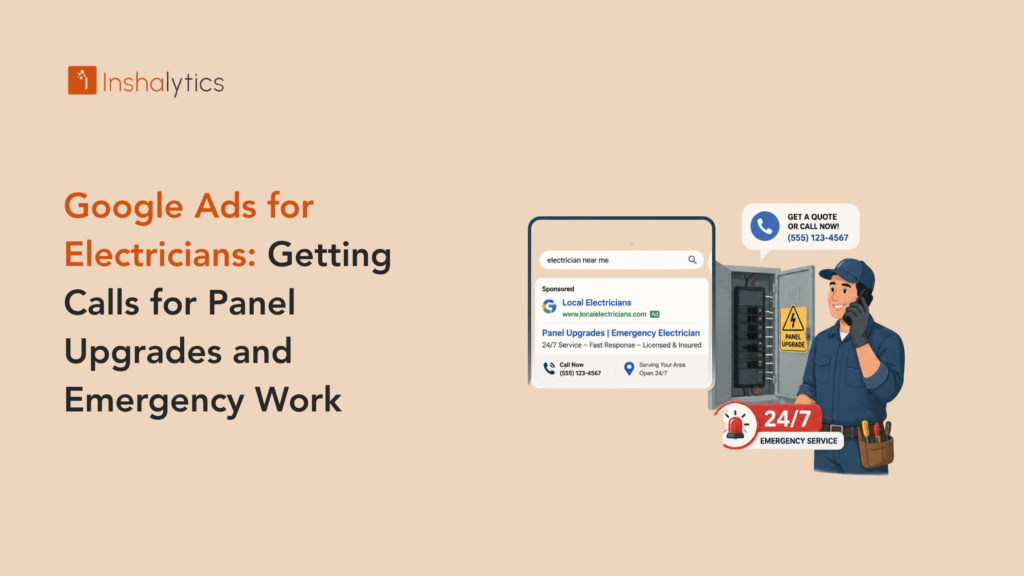
A homeowner whose power just went out searches differently, thinks differently, and needs a completely different ad than a homeowner casually researching a panel upgrade for a renovation planned three months out. Both are valuable electrical jobs. Both show up in the same Google Ads account. And both routinely get treated as if they’re the same kind of lead, which is where a lot of electrician ad budget quietly goes to waste.
This guide covers why panel upgrades and emergency work need to be run as separate campaigns, how to structure each one, and how to compare Local Services Ads against traditional PPC on the metric that actually matters.
Why Panel Upgrades and Emergency Calls Need Separate Campaigns
Blending these two into one campaign might seem simpler, but it actively works against both, no matter how well-written the shared ad copy is.
Planned Purchase vs. Urgent Need: Two Different Buyers
Someone searching “panel upgrade cost” is usually early in a considered purchase, comparing options and prices before committing. Someone searching “emergency electrician near me” at 9 p.m. has a problem right now and is calling whoever answers first. Treating these as the same search intent, with the same ad copy and landing page, serves neither one well.
The considered buyer wants reassurance and information before committing. The emergency buyer wants a phone number and a fast answer. Asking one ad to do both jobs usually means it does neither particularly well.
A single generic ad trying to appeal to both ends up sounding urgent to the researcher and sounding like a sales pitch to the person in genuine crisis, which undermines the message for both.
Why Blending Them Blurs Your Optimization Signals
When both intents sit inside one campaign, Google’s bidding algorithm can’t tell whether to optimize for someone ready to call immediately or someone still comparing options days out. Bids, ad scheduling, and landing pages that work well for one buyer actively hurt performance for the other, and separating the campaigns lets each be optimized on its own terms.
This separation also makes reporting far more useful, since it becomes possible to see clearly which of the two is actually driving profitable jobs rather than guessing from one blended number.
Structuring a Campaign for Emergency Electrical Work
Emergency campaigns live or die on speed, both in targeting and in what happens after the click.
High-Intent Keywords and Dayparting for After-Hours Calls
Terms like “emergency electrician,” “power outage,” and “electrician near me now” convert at high rates precisely because the searcher has zero patience for research. Since a meaningful share of these searches happen outside standard business hours, ad scheduling needs to reflect that rather than pausing overnight when some of the highest-intent traffic actually arrives.
A business that turns ads off at 6 p.m. is handing every after-hours emergency search straight to whichever competitor stayed visible.
Call Extensions and Mobile Landing Pages That Don’t Lose the Click
Nearly all emergency searches happen on mobile, and a landing page without a large, tappable phone number loses the click the moment the searcher has to manually dial. Call extensions that let someone tap to call directly from the ad, without even reaching a landing page, close this gap entirely.
For this segment specifically, the fastest path from search to phone call, with the fewest steps in between, wins over a more polished but slower experience every time.
Structuring a Campaign for Panel Upgrades and Larger Jobs
Considered purchases reward a slower, more informative approach than emergency campaigns do.
Keywords That Signal a Considered, Higher-Ticket Purchase
Terms like “panel upgrade,” “200 amp panel replacement,” and “electrical rewiring” indicate someone actively researching a larger project, often with a higher willingness to pay given the job size. These searches justify a higher cost per click than emergency terms, because the resulting job value is typically much greater.
This buyer is also more likely to search multiple related terms over several days before calling anyone, which makes retargeting and continued visibility across that research window worth building into the strategy.
Bidding competitively on these terms, even at a higher cost per click than feels comfortable at first, usually pays off given how much larger the resulting job value tends to be.
Landing Pages Built to Handle Longer Consideration
Someone researching a panel upgrade benefits from more information than an emergency searcher wants: what the process involves, rough cost ranges, licensing and safety credentials, and photos of past work. A dedicated landing page built around this specific service, rather than a generic homepage, keeps that researcher engaged instead of bouncing to compare elsewhere.
A page that answers the obvious questions upfront, without requiring a phone call just to learn the basics, tends to earn more trust from a buyer who isn’t ready to commit on the first visit.
LSAs vs. Traditional PPC for Electricians: Which Wins on Cost?
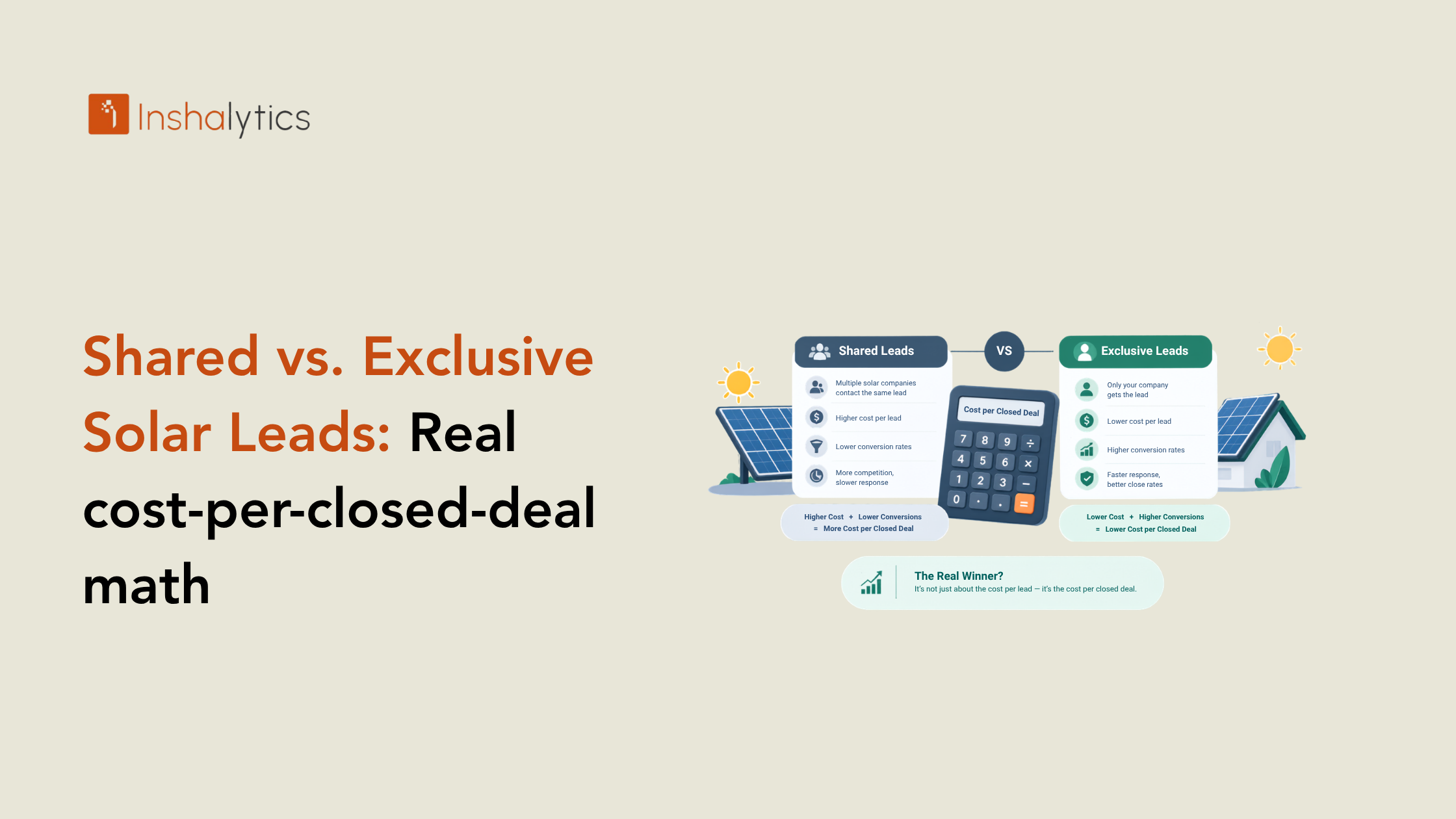
Local Services Ads often win on cost-per-booked-job for electricians, largely because they’re pay-per-lead rather than pay-per-click and carry the Google Guaranteed badge, which tends to convert at a meaningfully higher rate than standard search ads. Traditional PPC still earns its place, particularly for emergency keywords where paying for the click, not just a qualified lead, is worth the premium.
Comparing Cost-Per-Booked-Job Across Both Channels
Cost-per-booked-job, not cost-per-lead or cost-per-click, is the number that actually settles this comparison, since LSA leads that close at a high rate can easily outperform cheaper PPC clicks that convert poorly. Reviewing your electrician marketing budget against both channels separately, rather than as one blended spend, usually reveals which one deserves more of the next dollar.
Comparing the two channels head to head, rather than assuming one is universally better, is what actually reveals the right mix for a specific business and market.
When to Run Both Together
Many electricians find the strongest results running LSAs as the primary channel for cost efficiency, layered with traditional search focused specifically on the highest-intent emergency terms, where paying more per click for guaranteed placement is worth the premium.
This combination tends to outperform either channel running alone, since LSAs capture cost-efficient volume while targeted search fills gaps LSAs alone don’t reach, particularly during peak emergency periods.
What Should a Well-Structured Electrician Ad Account Deliver?
A well-structured account keeps emergency and panel-upgrade spend clearly separated, tracks cost-per-booked-job rather than cost-per-lead for each, and sends every click to a landing page built around exactly what was advertised.
Realistic Benchmarks to Expect
[STAT NEEDED: verify current electrician PPC cost-per-click and cost-per-booked-job benchmarks by service type before publishing, ideally from your own campaign data] As a general pattern, emergency keywords tend to carry a higher cost per click but convert faster, while panel upgrade and commercial electrical keywords carry a higher cost per lead that’s typically justified by a much larger job value.
Comparing an account’s own numbers against these general patterns, rather than a single flat industry average, gives a much more useful read on whether a specific campaign is performing as expected.
When to Get a Second Opinion on Your Campaigns
If lead generation feels inconsistent despite steady ad spend, a second look at whether emergency and planned-purchase traffic are actually being separated is often the fastest way to find where budget is quietly being wasted.
This single structural check catches more underperforming accounts than any amount of ad copy tweaking, since a blended campaign structure is often the actual root cause hiding behind inconsistent results.
Panel upgrades and emergency electrical work are two different sales, and treating them that way, with separate campaigns, separate landing pages, and separate ways of measuring success, is what turns a Google Ads account from a source of clicks into a source of consistently booked jobs. The electricians getting the most out of their ad spend aren’t necessarily spending more. They’re just not asking one campaign to do two very different jobs at once.
Want to see what your account looks like once emergency and panel-upgrade spend are separated and measured by cost-per-booked-job? Get a free campaign audit today.