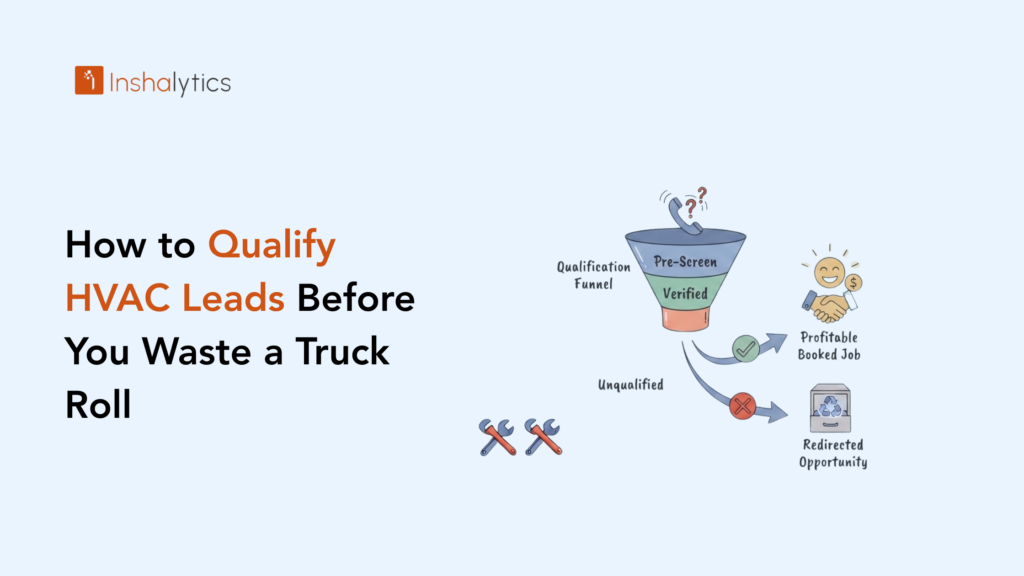
A technician who drives 40 minutes to a call that turns out to be a homeowner “just getting some quotes” hasn’t just lost 40 minutes. They’ve lost the appointment they could have had with a real customer during that window, plus fuel, plus the opportunity cost of every other call that came in while they were on the road. Qualification isn’t extra friction in the sales process it’s what protects the technician time you’re already paying for.
What an Unqualified Truck Roll Actually Costs
Most HVAC businesses underestimate this cost because it’s spread across dozens of small losses instead of showing up as one obvious number on a report.
Labor, Fuel, and Opportunity Cost Per Wasted Visit
A single wasted truck roll includes the technician’s hourly cost for drive time and the visit itself, fuel, and often the biggest hidden cost the real, paying job that technician could have handled instead during that same window. According to Contractor In Charge’s breakdown of failed HVAC lead generation campaigns, a simple exercise of reviewing 30 days of call logs and multiplying missed opportunities by average job value routinely reveals thousands of dollars in monthly revenue loss that owners hadn’t previously noticed.
How Often Contractors Send a Tech to a “Just Looking” Call
It happens more than most owners realize. When the phone rings with a broken AC, the instinct is to book the appointment immediately rather than ask a few more questions first. That instinct is understandable, but if the homeowner is price-shopping across five contractors and never intended to book with any of them that day, the technician’s time on that visit produced nothing but a wasted trip.
Track how many scheduled visits over the last month resulted in no quote request or no close, and estimate the labor and fuel cost across those visits. That’s your current qualification gap in dollars, and it’s usually a bigger number than expected.
The Speed-vs-Qualification Tension
Fast response and thorough qualification can feel like they’re pulling in opposite directions. They don’t have to, if the qualification step is built correctly.
Why You Can’t Skip Qualification Just to Respond Fast
Responding to a lead in under five minutes matters enormously for close rate, as covered in Why HVAC Leads Go Cold in Under 5 Minutes but responding fast with an unqualified booking just moves the problem downstream, from a slow response to a wasted visit later. Speed and qualification need to happen together, not as a tradeoff where one gets sacrificed for the other.
Building a Qualification Script That Still Takes Under 90 Seconds
The goal isn’t a long interrogation before booking it’s three or four sharp questions that take under two minutes and don’t feel like a barrier to a genuinely urgent caller. Real emergencies answer these questions instantly and without hesitation; price-shoppers tend to hedge or deflect, which is itself useful information for whoever’s taking the call.
The Core Questions to Ask Before You Book
A short, consistent script used every time, by whoever answers the phone is what makes qualification repeatable instead of dependent on one experienced person’s instincts alone.
Confirming a Real Problem (Not a Price-Shopping Call)
Ask what’s happening with the system specifically no cooling at all, a strange noise, a specific error code rather than accepting a vague “it’s not working right.” Specific symptoms indicate a real, active problem. Vague answers often indicate someone gathering information before deciding whether to move forward with anyone at all, which is a very different kind of lead.
Confirming Decision-Making Authority and Timing
Ask directly whether they’re the homeowner and whether they’re ready to move forward if the diagnosis matches what they expect. A renter without authorization to approve work, or someone who says they’re “just seeing what it would cost,” needs a different response than someone ready to book today, and knowing the difference upfront changes how the call should proceed.
Confirming Budget Fit for the Likely Repair or Install
For anything beyond a basic service call, give a realistic ballpark before booking repairs of this kind typically run within a certain range depending on what the technician finds. This isn’t about scaring anyone off. It’s about making sure the truck roll goes to someone whose expectations already match reality, which reduces friction and disappointment on both sides once the technician arrives.
Write these three questions down and post them at every phone station. Consistency matters more than cleverness here, since the value comes from every caller getting the same reliable screening, not from a particularly clever question.
Building Qualification Into Your Intake Process
A script only works if everyone answering the phone actually uses it, every time which means it needs to be built into the process itself, not left to memory or good intentions.
Training Your CSR or Answering Service on the Script
Whoever answers your phones in-house staff or an outsourced answering service needs the script in front of them and a clear understanding of why it matters, not just a list of questions to read off mechanically without context. According to Contractor In Charge’s lead qualification guide, businesses that respond within five minutes are up to eight times more likely to land the job but speed without qualification is described as just as dangerous, since a fast response to the wrong caller still wastes the visit.
Using CRM Fields to Flag Unqualified Leads Automatically
If your CRM supports it, build qualification answers into required fields before a technician can be scheduled. That small friction point catches leads that slipped through a rushed phone call before they ever make it onto the calendar, giving you a second checkpoint beyond whoever happened to take the initial call. This same discipline applies across trades see Spotting a Bad Roofing Lead Before You Quote It for how the same principle plays out with a much longer estimate process on the line.
Measuring the Impact on Your Close Rate and Margin
Qualification is only worth the extra 60 to 90 seconds per call if it demonstrably improves your numbers and it usually does, quickly, once it’s actually in place consistently.
Tracking Truck Rolls That Convert vs. Truck Rolls That Don’t
Compare your conversion rate on scheduled visits before and after you introduce consistent qualification. Most HVAC businesses see a meaningful jump within the first month, simply because fewer technician hours are being spent on visits that were never going to close in the first place.
What Improves When You Qualify First
Beyond the direct labor and fuel savings, qualification tends to improve technician morale nobody enjoys driving to a dead-end call and frees up calendar space for the real jobs that come in later the same day. It also improves the accuracy of your marketing ROI reporting, since booked-job numbers start reflecting real demand rather than a mix of real demand and wasted dispatches. For more on getting the framework itself right, see BANT vs CHAMP: Which Lead Qualification Framework Fits Home Service Businesses.
Qualification isn’t about turning away business. It’s about making sure the truck rolls you’re already paying for go to the calls most likely to become real, paying jobs. A short, consistent script at intake protects your technician’s time without slowing down the response speed that wins the job in the first place.
Want help building this qualification process into your CRM or answering service? Let’s set up a system that protects your dispatch time and improves your close rate at the same time.