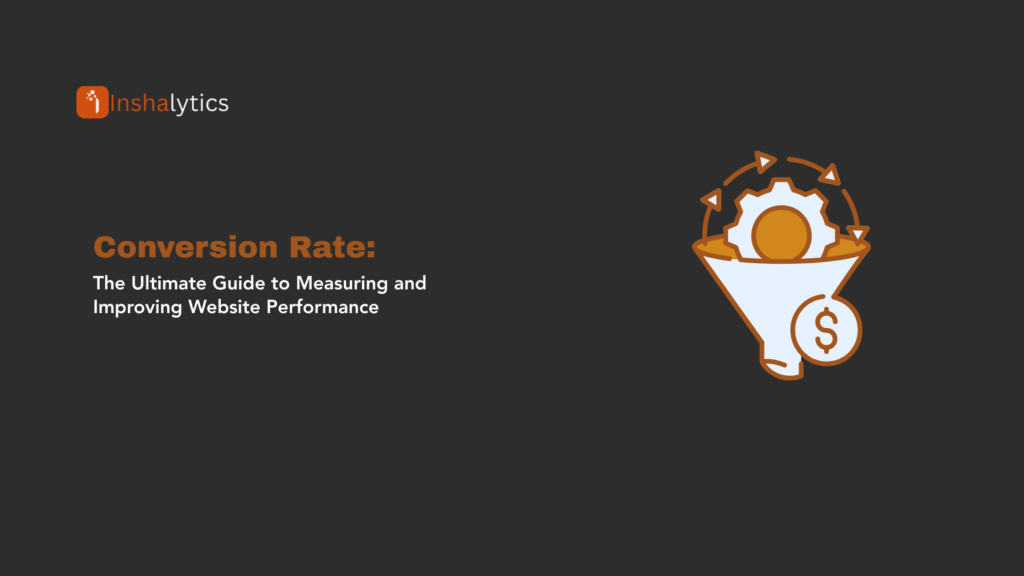
In digital marketing, attracting visitors to your website is only half the battle. The real measure of success lies in what those visitors do once they arrive. Conversion rate stands as one of the most critical metrics for evaluating website effectiveness, campaign performance, and overall business success. Understanding this fundamental metric—and knowing how to improve it—can dramatically impact your bottom line without requiring increased traffic or marketing spend.
Navigate This Post
What Is Conversion Rate?
Conversion rate is the percentage of visitors who complete a desired action on your site, such as making a purchase, signing up for a newsletter, downloading a resource, or filling out a contact form. This metric reveals how effectively your website turns passive browsers into active participants who take meaningful actions aligned with your business goals.
The basic formula for calculating conversion rate is straightforward:
Conversion Rate = (Number of Conversions / Total Number of Visitors) × 100
For example, if your website receives 10,000 visitors in a month and 200 of them make a purchase, your conversion rate would be 2%. This simple percentage provides immediate insight into how well your site performs at achieving its primary objectives.
However, conversion rate isn’t a one-size-fits-all metric. Different pages, traffic sources, and user segments typically exhibit different conversion rates. A product page might have a 3% conversion rate, while a landing page for a free trial could achieve 15%. Understanding these variations helps you identify opportunities and allocate resources effectively.
Why Conversion Rate Matters
Conversion rate directly impacts your return on investment and overall business profitability in ways that raw traffic numbers cannot capture.
Revenue optimization without increased traffic represents perhaps the most compelling reason to focus on conversion rate. Doubling your conversion rate from 2% to 4% produces the same revenue impact as doubling your traffic, but improving conversion rate is often significantly easier and more cost-effective than attracting twice as many visitors.
Customer acquisition cost reduction happens naturally as conversion rates improve. If you spend $5,000 on advertising that generates 10,000 visitors with a 2% conversion rate, you acquire 200 customers at $25 each. Improve that conversion rate to 3%, and your cost per acquisition drops to approximately $16.67—a 33% reduction without changing your advertising spend.
Competitive advantage emerges when you convert traffic more effectively than competitors. In industries where everyone targets similar keywords and audiences, conversion rate often determines who wins. Superior conversion rates mean you can afford to bid more for advertising, invest more in content, and still maintain better profitability than competitors with lower conversion rates.
Data-driven decision-making becomes possible when you closely monitor conversion rates. This metric provides clear feedback about what works and what doesn’t, enabling you to make informed decisions about design changes, content strategies, and marketing initiatives.
Enhanced user experience correlates strongly with higher conversion rates. Improving conversion rate typically requires improving the overall user experience—making your site faster, clearer, and more valuable. These improvements benefit all visitors, not just those who convert.
Types of Conversions
Not all conversions carry equal weight, and understanding different conversion types helps you track appropriate metrics for your business model.
Macro conversions represent your primary business objectives—the actions that directly generate revenue or lead to revenue. For e-commerce sites, macro conversions are purchases. For SaaS companies, they might be paid for subscriptions. For service businesses, macro conversions often involve consultation bookings or quote requests.
Micro conversions are smaller actions that indicate progress toward macro conversions. These include email signups, resource downloads, video views, account registrations, adding items to cart, or social media follows. While micro conversions don’t immediately generate revenue, they build relationships and move users through your funnel toward eventual macro conversions.
Primary conversions align directly with your main business goals, while secondary conversions support those goals or provide alternative value. An online retailer’s primary conversion is purchase completion, but newsletter signups serve as valuable secondary conversions that enable future marketing.
Understanding this hierarchy helps you prioritize optimization efforts and avoid becoming distracted by vanity metrics that don’t genuinely advance business objectives.
Average Conversion Rates by Industry
While conversion rates vary dramatically based on numerous factors, understanding industry benchmarks provides context for evaluating your performance.
E-commerce websites typically see conversion rates between 1% and 3%, though this varies by product type, price point, and market. Higher-priced items generally convert at lower rates than impulse purchases, but each conversion carries more value.
B2B websites often achieve conversion rates of 2% to 5% for lead generation forms. The longer sales cycles and higher transaction values in B2B typically mean fewer but more valuable conversions.
SaaS and software companies experience wide variation depending on their pricing model and trial offerings. Free trial signups might convert at 5% to 10%, while direct purchases of software without trials typically see 1% to 3% conversion rates.
Landing pages for paid campaigns should significantly outperform general website averages, often achieving 5% to 15% conversion rates when properly optimized and targeted. Lower conversion rates suggest misalignment between ad messaging and landing page content.
Lead generation forms see average conversion rates around 2% to 4%, though shorter forms with less friction typically convert better than lengthy questionnaires.
Remember that these are averages across diverse businesses. Your specific conversion rate depends on your traffic quality, user experience, value proposition, pricing, competition, and countless other variables. Rather than obsessing over benchmarks, focus on consistently improving your own conversion rate over time.
Key Factors Affecting Conversion Rate
Multiple elements influence whether visitors convert, and understanding these factors enables strategic optimization.
Value proposition clarity fundamentally determines conversion success. Visitors must immediately understand what you offer, why it matters, and how it benefits them. Vague messaging, unclear benefits, or confusing offerings kill conversions before visitors even consider taking action.
Trust and credibility become increasingly important as conversion commitment increases. Asking for an email address requires minimal trust; asking for payment information demands substantial credibility. Security badges, customer testimonials, professional design, clear contact information, and transparent policies all build the trust necessary for conversions.
User experience and site performance directly impact conversion rates. Slow loading times, confusing navigation, broken forms, poor mobile experiences, or cluttered designs create friction that prevents conversions. Every additional second of load time and every unnecessary form field reduces your conversion rate.
Traffic quality and relevance matter more than traffic quantity. Highly targeted visitors who found exactly what they were seeking convert at significantly higher rates than random visitors with low intent. This explains why conversion rates often vary dramatically across different traffic sources.
Pricing and perceived value determine whether visitors see sufficient benefit to justify the cost—whether that cost is money, time, or information. Competitive pricing matters, but perceived value matters more. Sometimes adding features or emphasizing benefits improves conversion rates more than reducing prices.
Call-to-action effectiveness influences whether interested visitors actually take the next step. Your CTAs must be visible, compelling, clear about what happens next, and use action-oriented language that motivates clicks.
Social proof and urgency can significantly boost conversions when used authentically. Showing how many people have purchased, displaying recent customer actions, highlighting limited availability, or mentioning time-limited offers all leverage psychological principles that encourage action.
Strategies to Improve Conversion Rate
Improving conversion rate requires systematic testing and optimization across multiple elements.
Conduct conversion rate optimization (CRO) audits to identify friction points and opportunities. Analyze user behavior through heatmaps, session recordings, and funnel analysis to understand where and why visitors abandon conversion paths.
Implement A/B testing to make data-driven improvements. Test headlines, CTA button colors and text, form lengths, page layouts, pricing displays, and images. Test one variable at a time to clearly identify what drives improvement. Even small wins compound over time into substantial conversion rate increases.
Simplify forms and reduce friction. Every form field you require decreases conversion rate. Ask only for information you absolutely need at the initial conversion point. You can always collect additional details later in the customer relationship.
Optimize page speed relentlessly. Compress images, minimize code, leverage caching, and choose quality hosting. Even one-second improvements in load time can boost conversion rates by 7% or more.
Improve mobile experience since mobile traffic now dominates most websites. Ensure buttons are easily tappable, forms work smoothly on small screens, and checkout processes don’t require excessive typing or zooming.
Strengthen your value proposition by clearly articulating benefits, not just features. Help visitors immediately understand why they should care about your offering and how it solves their specific problems.
Add trust signals strategically throughout the conversion path. Display security badges near payment forms, showcase customer testimonials on landing pages, and highlight guarantees or return policies near purchase buttons.
Create urgency without being manipulative. Limited-time offers, countdown timers, or low-stock notifications can encourage action, but fake scarcity damages trust and long-term performance.
Personalize experiences based on user behavior, traffic source, or demographic data. Show returning visitors different CTAs than new visitors. Display location-specific content or offers. Personalization typically improves relevance and conversion rates.
Optimize for intent by aligning your content and CTAs with where visitors are in the buyer journey. Someone researching options needs different content and CTAs than someone ready to purchase.
Measuring and Tracking Conversion Rate
Effective conversion rate optimization requires robust measurement systems.
Set up goal tracking in Google Analytics or your analytics platform. Define what constitutes a conversion for your business and ensure these actions are properly tracked. Configure goals for both macro and micro conversions.
Segment your data to understand conversion rate variations across different dimensions. Analyze conversion rates by traffic source, device type, landing page, geographic location, new versus returning visitors, and customer segments. This segmentation reveals specific opportunities for improvement.
Track the complete funnel, not just the final conversion. Understanding where visitors drop off helps you identify and address specific friction points. If 80% of users who start your checkout process abandon their carts, focus optimization efforts on the checkout experience.
Monitor conversion rate trends over time rather than fixating on single data points. Seasonal variations, marketing campaigns, and external factors create natural fluctuations. Look for meaningful trends rather than reacting to random variance.
Calculate statistical significance for tests before declaring winners. Ensure you have sufficient sample size and confidence level before implementing changes based on test results.
Common Conversion Rate Mistakes
Several common errors undermine conversion rate optimization efforts.
Optimizing for the wrong metrics wastes resources. Focus on conversions that drive business value, not vanity metrics like pageviews or time on site that don’t correlate with revenue.
Testing without sufficient traffic produces unreliable results. Small sample sizes create random variance that leads to poor decisions. Ensure tests run long enough to reach statistical significance.
Making too many changes at once prevents you from understanding what actually improved performance. Systematic, controlled testing yields better long-term results than chaotic redesigns.
Ignoring mobile users becomes increasingly costly as mobile traffic grows. Mobile conversion rates typically lag desktop rates, but mobile traffic volume makes mobile optimization essential.
Prioritizing traffic over conversion rate misallocates resources. Sometimes reducing traffic while improving quality and conversion rate produces better business outcomes than maximizing visitor numbers.
Conclusion
Conversion rate stands as one of the most important metrics in digital marketing because it directly connects website performance to business results. While attracting traffic requires ongoing investment, improving conversion rate multiplies the value of every visitor you already attract. A website converting at 4% generates twice the results of one converting at 2%, with identical traffic and marketing costs.
The path to higher conversion rates combines data analysis, user psychology, rigorous testing, and continuous optimization. Focus on understanding your visitors, reducing friction, building trust, and clearly communicating value. Test systematically, measure carefully, and implement improvements incrementally.
Remember that conversion rate optimization is never finished. Markets evolve, competitors adapt, user expectations change, and new optimization opportunities constantly emerge. The most successful digital marketers treat conversion rate improvement as an ongoing discipline rather than a one-time project. By consistently focusing on converting more of your existing traffic, you create sustainable competitive advantages and dramatically improve your marketing efficiency and business profitability.