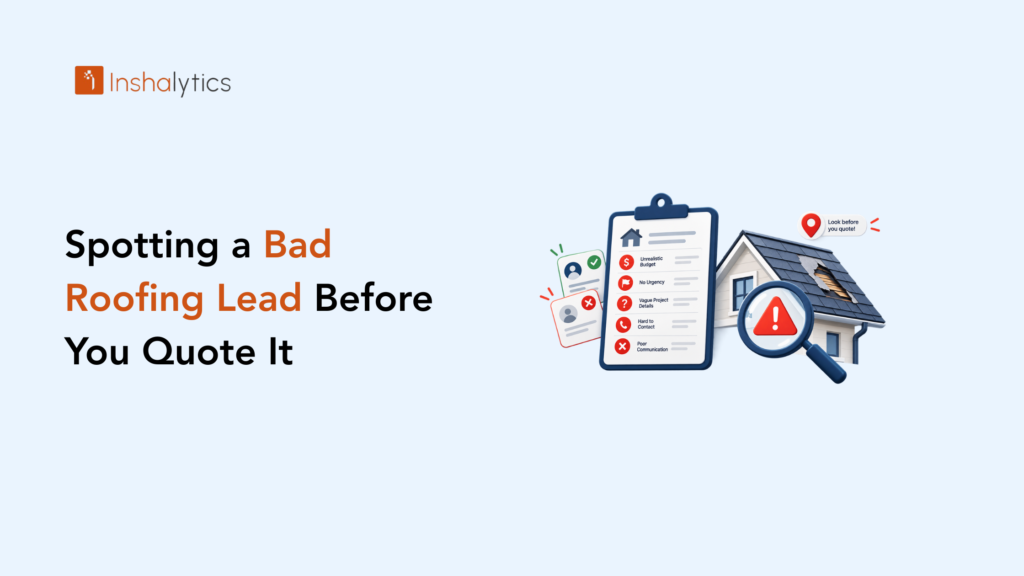
A full roofing estimate takes real time driving to the property, walking the roof, measuring, photographing, and putting together a detailed quote. When that lead was never going to become a job, you’ve lost hours that could have gone to a homeowner ready to sign. Roofing attracts more price-shoppers and tire-kickers than most trades, which makes spotting a bad lead early one of the highest-value skills a roofing sales process can build.
Why Roofing Leads Are Especially Expensive to Get Wrong
Roofing’s sales process is heavier than most home service categories, which raises the cost of chasing the wrong lead in a way that a quick HVAC service call never has to worry about.
The Time Cost of a Full Estimate Visit
A typical roofing estimate involves scheduling, driving to the property, a full roof inspection, measurements, photos, and a written proposal often an hour or more of combined time per lead once travel is factored in. Multiply a wasted estimate by even a handful of bad leads a month, and the lost hours add up to real, unrecovered cost that rarely gets tracked as its own line item.
Why Roofing Attracts More Price-Shoppers Than Other Trades
Because roofing jobs are high-ticket and often insurance-adjacent, homeowners are more inclined to gather multiple quotes before deciding sometimes three, four, or more before making a decision. That’s reasonable behavior from the homeowner’s side, but it means a larger share of roofing inquiries are inherently comparison-shopping rather than ready-to-hire on the first call.
Track how many of your full estimates over the last quarter converted into signed jobs. If that number is lower than you’d expect, screening earlier in the process is likely to move it meaningfully.
The Red Flags to Listen For on the First Call
Most bad roofing leads show recognizable patterns on the very first call, before an estimate is ever scheduled, if you know what to listen for.
Insurance-Claim Fishing Without a Real Damage Event
A caller asking broad questions about insurance coverage or claim processes without describing a specific, recent damage event a storm, a fallen branch, visible leaking may be exploring options rather than dealing with an actual roof problem. This isn’t automatically disqualifying, but it warrants a clarifying question before scheduling a full visit around it.
Renters, Not Owners, Requesting Quotes
Roofing decisions require the property owner’s authorization. A caller who isn’t clear on ownership, or who mentions needing to “check with the landlord,” doesn’t have the authority to move forward and shouldn’t be scheduled for a full estimate until that’s confirmed with the actual decision-maker.
Callers Who Already Have Three Other Quotes “Just Comparing”
There’s nothing wrong with a homeowner comparing quotes but a caller who volunteers that they already have several quotes and is “just seeing what else is out there” is signaling a longer decision timeline and a lower likelihood of near-term commitment than a caller with an active, unaddressed problem demanding a decision soon.
Questions That Separate a Real Job From a Tire-Kicker
A short set of consistent questions, asked the same way every time, turns pattern recognition into a repeatable process anyone on your team can follow, not just your most experienced estimator.
Confirming Ownership and Decision Authority
Ask directly whether they own the property and whether they’re the one who’ll be making the final decision. A hesitant or unclear answer is worth following up on before committing a full estimate visit to someone who ultimately can’t sign the contract.
Confirming Timeline and Urgency
Ask when they’re looking to have the work done. “As soon as possible” after a storm event is a very different signal than “sometime in the next year or two, just getting a sense of cost,” and the two callers deserve different levels of immediate attention from your team.
Confirming Whether It’s Insurance-Funded or Out-of-Pocket
This shapes both the sales process and the timeline. Insurance-funded jobs move on the adjuster’s schedule; out-of-pocket jobs often move faster once the homeowner decides. Knowing which one you’re dealing with helps you set the right expectations from the first call and plan your follow-up accordingly.
Build these three questions into your intake script and require an answer to all three before a full estimate gets scheduled, rather than leaving it up to whoever happens to take the call that day.
What to Do When a Lead Looks Borderline
Not every lead sorts cleanly into “clearly real” or “clearly not.” Borderline calls need a middle-ground response rather than an automatic yes or no.
A Lighter-Touch Response Before Committing a Full Estimate Visit
For leads that raise a flag but aren’t clearly disqualified, a phone-based rough estimate or a request for photos before scheduling an in-person visit can confirm intent without committing a full hour of drive and inspection time to a lead that might not pan out.
When to Still Take the Meeting Anyway
Some flags are worth taking the meeting despite a first-time homeowner unfamiliar with the insurance process, for instance, isn’t the same red flag as someone deliberately vague about ownership. Judgment still matters here; the checklist is a filter meant to catch the clearest cases, not a hard rule that overrides common sense.
Speed still matters even for a borderline lead a homeowner deciding between contractors is still comparing how quickly and professionally each one responds, a factor covered more broadly in How Response Time Is Quietly Killing Your Close Rate.
Building Screening Into Your Roofing Sales Process
A good checklist only helps if it’s actually used consistently across every lead, not just the ones that feel obviously suspicious from the first sentence.
Training Your Intake Team on the Checklist
Whoever answers the phone or manages inbound leads needs the same three-question checklist in front of them every time, along with a clear understanding of what to do when an answer raises a flag rather than an automatic reflex to book the visit regardless.
Tracking Which Lead Sources Send the Most Bad Leads
Over time, track which lead source Angi, Google Ads, referrals, your website produces the highest share of leads that fail this screening. That data helps you shift budget toward the sources sending you real, ready-to-buy homeowners, and it’s a natural companion to the cost-per-booked-job tracking covered in Angi Leads for Roofers: Real Cost Per Booked Job a bad lead on an expensive shared platform is doubly costly, since you’ve already paid for the lead before you’ve even had the chance to screen it.
Screening a roofing lead before you quote it isn’t about being suspicious of every caller it’s about protecting the hours your sales process depends on for the leads most likely to close. A short, consistent set of questions on the first call is often all it takes to separate a real job from a comparison-shopping exercise that was never going anywhere.
Related reading: How to Get More Roofing Leads Without Door Knocking: Digital Channels
Want help building this screening process into your CRM and training your intake team? Let’s put a repeatable qualification system in place that protects your estimator’s time.