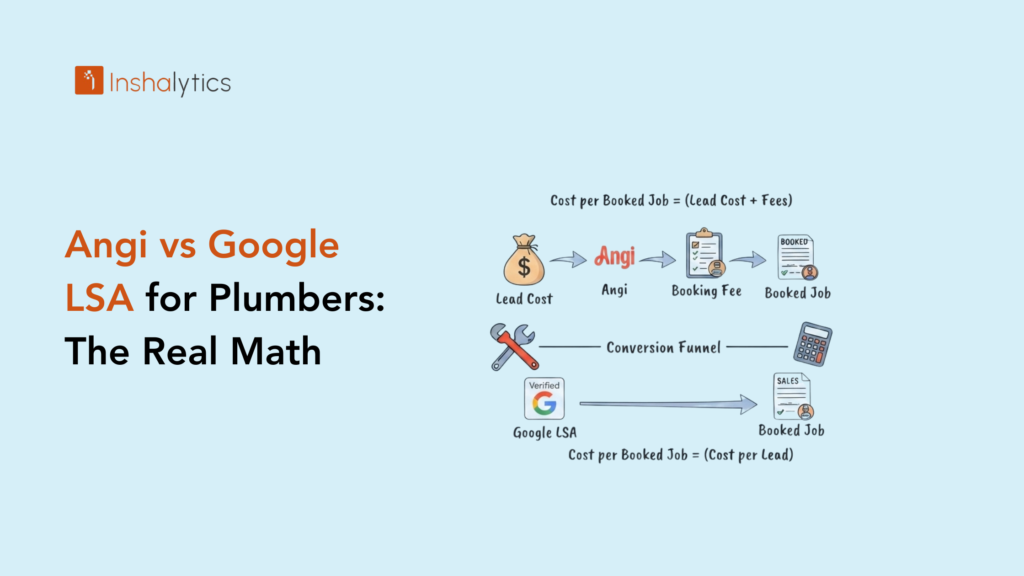
Ask ten plumbers whether Angi or Google Local Services Ads is the better lead source, and you’ll get ten different answers based on ten different bad months. The real answer isn’t a matter of opinion it’s a formula. Once you run cost per lead through your actual close rate on each platform, the comparison stops being about brand loyalty and starts being about which platform is genuinely cheaper per booked job for your specific business.
How Each Platform Actually Prices and Delivers Leads
Angi and Google LSA solve the same basic problem connecting you with homeowners who need a plumber through fundamentally different mechanics that produce very different economics.
Angi’s Shared-Lead, Auction-Based Model
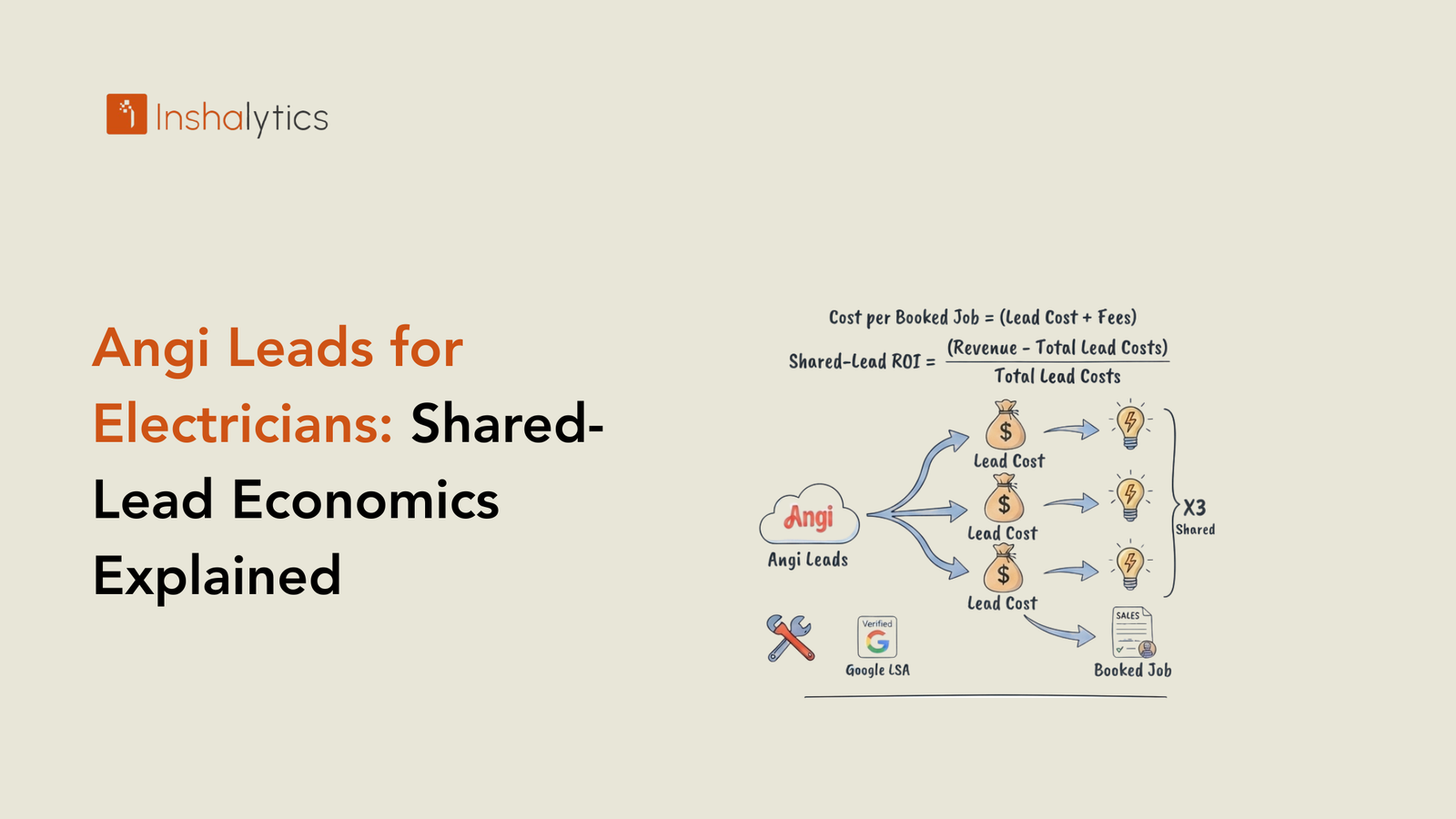
On Angi, a homeowner’s request gets sold to multiple plumbers simultaneously typically three to eight competitors receiving the same contact information, according to LeadTruffle’s guide to Angi’s shared-lead model. Pricing is auction-based, so plumbers willing to bid higher get leads first. You pay for the lead regardless of whether you win the job.
Google LSA’s Exclusive, Pay-Per-Lead Model
LSA works differently: you only pay for connected calls or messages, and the lead isn’t shared you’re the only plumber that homeowner is speaking with through that ad. The Google Guaranteed badge adds a trust signal that shared-lead platforms don’t offer, and it can influence which result a homeowner clicks before a conversation even starts.
Before comparing pricing, confirm which model each platform is currently using in your specific market pricing structures shift, and the exclusivity of LSA is the single biggest structural difference worth verifying before you commit budget either way.
The Real Cost Per Booked Job, Side by Side
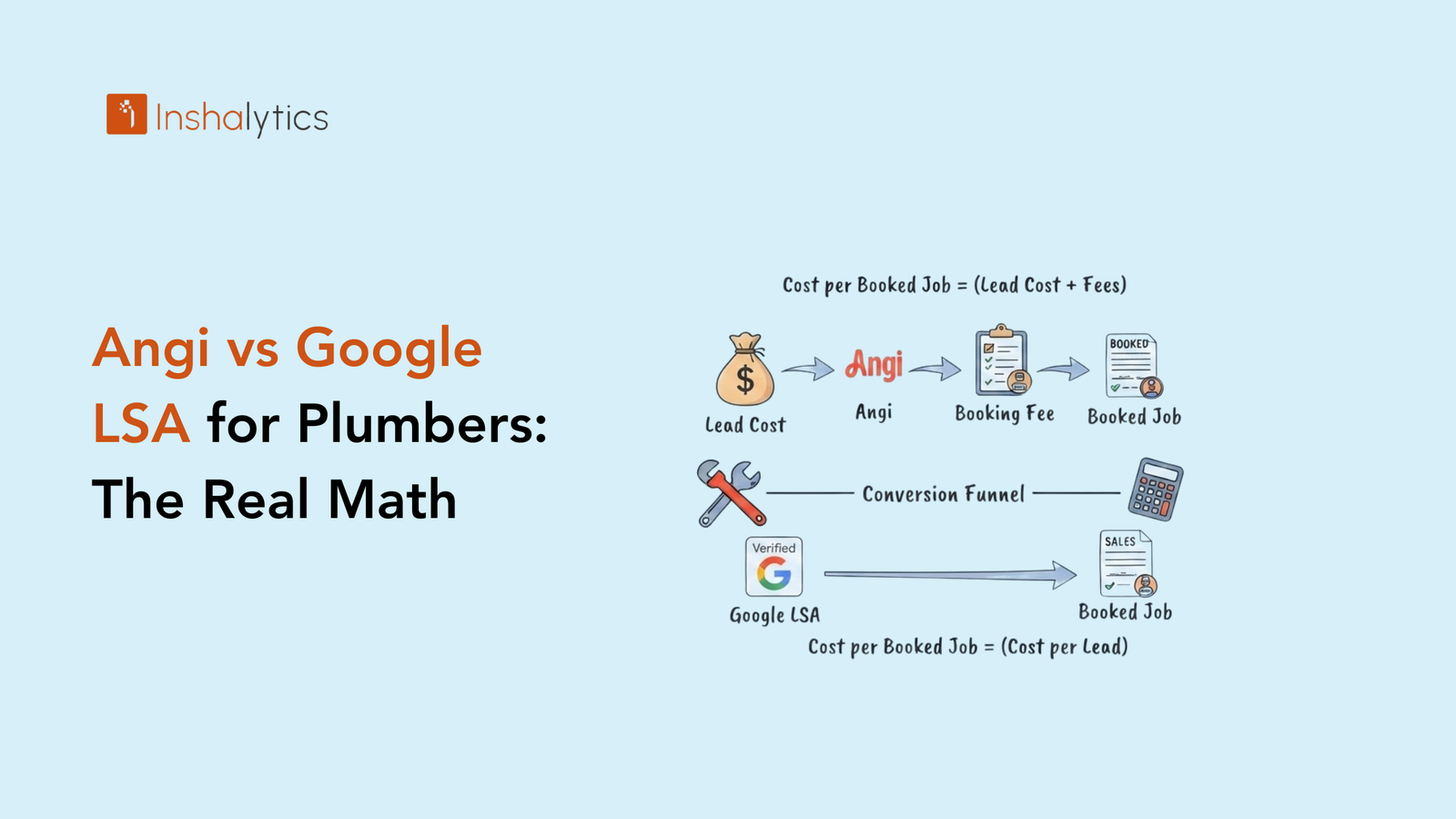
This is where the comparison actually gets useful not cost per lead, but cost per booked job, calculated the same way for both platforms so you’re comparing like with like.
Plumbing LSA Benchmarks: Average CPL and Book Rate
Plumbing LSA leads average around $57 with a book rate near 44.5%, according to Pipeline On’s breakdown of the best lead generation platforms for plumbing contractors. Run the math $57 divided by 0.445 and cost per booked job on LSA lands close to $128.
Plumbing Angi Benchmarks: Average CPL and Close Rate
The same Pipeline On analysis cites Angi charging plumbers $65 to $150 per lead, shared among four to five contractors, with a close rate of roughly 5% to 15%. At a $100 average lead and a 10% close rate, cost per booked job comes out around $1,000 several times higher than the LSA figure above. At a 5% close rate, that figure doubles to roughly $2,000.
The Formula: How to Run This Math for Your Own Business
The formula is the same regardless of platform: cost per lead divided by close rate equals cost per booked job. Pull your own numbers from the last 90 days on each platform and run this calculation before making any decision based on someone else’s benchmarks, since your actual close rate depends heavily on your own speed to lead and qualification process.
Don’t trust industry averages for your final decision they’re a starting point. Your actual close rate on each platform is what determines the real number for your business specifically.
What You’re Actually Paying For Beyond Cost Per Lead
The dollar figure only tells part of the story. The structural difference between the two platforms affects more than just price on the invoice.
Exclusivity vs. Competing With 3–8 Other Plumbers
An LSA lead is a request from a homeowner who’s already vetted your reviews, license, and badge before reaching out and you’re the only plumber they’re talking to. An Angi lead is a race, where being the best plumber matters less than being the fastest to respond among several competitors calling the same person at nearly the same moment.
The Google Guaranteed Badge and Trust Signal
The Google Guaranteed badge signals to homeowners that Google has vetted your business license and insurance. That trust signal alone can influence which plumber a homeowner chooses to click on before a single conversation happens, which is a form of value that doesn’t show up directly in the cost-per-lead comparison but affects the outcome anyway. For a look at how this same shared-lead dynamic plays out for a different trade, see Angi Leads for Electricians: Shared-Lead Economics Explained.
The Catch With LSA: Setup Time and Verification
LSA’s advantages come with a real cost that’s easy to underestimate when you’re comparing platforms purely on price: time.
Background Checks and License Review Timelines
Getting verified for LSA typically requires a background check and license review that can take three to five weeks to clear, according to Astra Results Marketing’s breakdown of the transition from HomeAdvisor to LSA. That’s a meaningful delay if you need lead flow now, not next month.
Why Most Plumbers Default to Angi First
This delay is exactly why many plumbers default to Angi it turns on immediately, while LSA requires patience most business owners in a lead crunch don’t have. But defaulting to whatever’s fastest to set up isn’t the same as defaulting to what’s cheapest per booked job over the long run, and the two decisions deserve to be made separately.
Building a Transition Plan From Angi to LSA
The smartest approach for most plumbers isn’t choosing one platform permanently it’s using Angi to bridge the gap while LSA verification and ramp-up happen in the background.
Running Both Channels During the LSA Ramp-Up
Start your LSA verification process immediately, even if you’re staying on Angi for lead flow in the meantime. Running both simultaneously for 60 to 90 days gives you real comparison data on your own close rates before you make a permanent decision, rather than relying on industry benchmarks alone.
When to Cut Angi Spend Once LSA Is Live
Once LSA is fully ramped and producing a steady flow of exclusive leads, compare your actual cost per booked job on both platforms using your own numbers. If LSA is consistently cheaper which the benchmark data above suggests is common for plumbing shift budget accordingly rather than cutting Angi cold on day one and risking a temporary gap in lead flow. Speed still matters throughout this transition, regardless of which platform the lead came from; see Speed to Lead for Plumbers: Turning Calls Into Booked Jobs for how to make sure you’re not losing jobs to slow response while you’re mid-transition.
Angi and Google LSA aren’t rivals you have to pick between forever they’re two different tools with two different cost structures, and the right mix depends on your actual close rate on each. Run the real math before you decide, and don’t be surprised if the platform you’ve been avoiding turns out to be the cheaper one once the formula is applied honestly.
Want help getting LSA verified and running a real side-by-side comparison against your current Angi spend? Let’s build the PPC and LSA management that gets you exclusive leads at the lowest real cost per booked job.