HVAC businesses live in feast-or-famine cycles phones ringing off the hook during a heat wave, dead quiet in April and October. Email marketing is one of the few tools built specifically to smooth that gap, keeping your company top of mind during the slow months so the phone rings for you, not a competitor, the moment the first hot day hits.
Why Email Works So Well for HVAC’s Seasonal Business Cycle
Email’s core advantage for HVAC isn’t reach it’s timing. You control exactly when a message lands, which matters enormously in a business this seasonal and this tied to weather.
Bridging the Slow Spring and Fall Gaps
Spring and fall are notoriously quiet for HVAC compared to summer and winter demand spikes. A well-timed email about spring AC prep or fall furnace check-ups gives homeowners a reason to book during the gap, rather than waiting until the system fails during peak season when your schedule is already full and every job is competing for a slot.
Staying Top of Mind Before the First Heatwave or Cold Snap
Homeowners rarely think about their HVAC system until it stops working and in that moment, they call whoever’s name they remember. Consistent seasonal emails are what make your company the name they remember, rather than one of several unfamiliar options they have to search for from scratch.
If you’re not currently sending any seasonal reminders, start with just one a spring AC tune-up email before building out the full calendar below, and expand from there once the first campaign is running.
The Core Seasonal Campaign Calendar
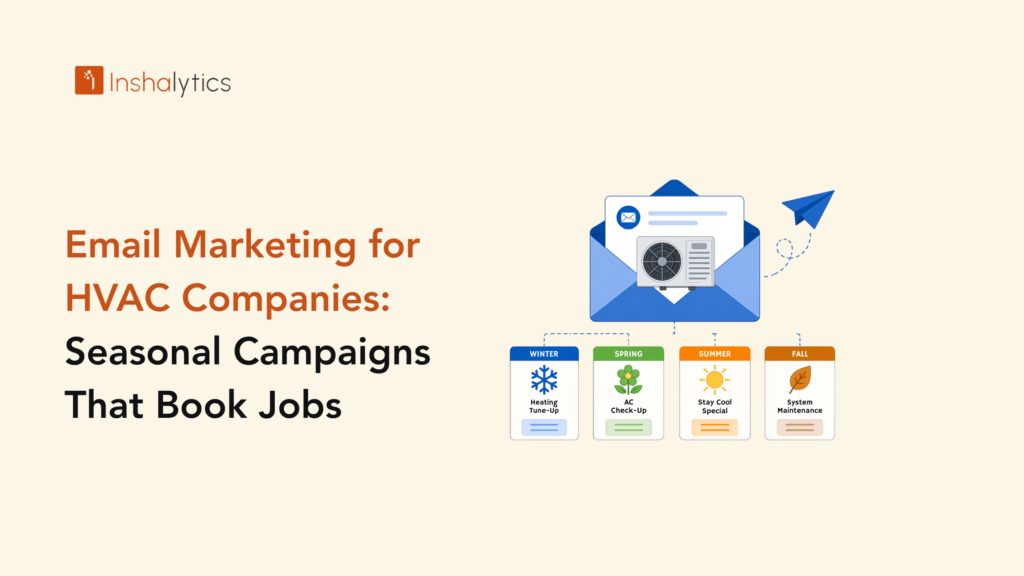
A full year of HVAC email marketing breaks down naturally into four seasonal windows, each with a distinct purpose and message.
Spring: AC Prep and Tune-Up Reminders
Send AC prep and tune-up reminders 6 to 8 weeks before peak cooling season hits, according to the campaign timing recommended by HVAC Software Hub’s email marketing guide. Frame these around preventing a breakdown rather than selling new equipment — homeowners respond better to avoiding a mid-summer failure than to a straightforward sales pitch.
Summer: Emergency Readiness and Aging-Equipment Nurture
During peak summer, shift messaging toward emergency readiness and equipment-age nurturing. Aging-equipment campaigns flagging systems approaching the end of their typical lifespan can be lucrative even from a small number of conversions, since replacement contracts often run $10,000 to $20,000 per job, according to ServiceTitan’s HVAC email marketing guide.
Fall: Furnace Check-Ups and Maintenance Plan Renewals
As cooling season winds down, pivot to furnace check-ups and maintenance plan renewals, again timed 6 to 8 weeks ahead of the heating season rush so homeowners have time to book before the first cold snap arrives.
Winter: Severe Weather Alerts and Emergency Positioning
Winter emails should focus on severe weather preparation and positioning your business as the responsive choice for emergency heating failures the moment homeowners are most likely to need you on short notice and least likely to have already picked a contractor.
Speed matters just as much once these campaigns generate a call a well-timed email is wasted if the resulting inquiry then sits unanswered, a problem covered in Why HVAC Leads Go Cold in Under 5 Minutes.
Segmenting Your List So Campaigns Actually Convert
A single email blast to your entire list performs far worse than the same message sent to the right segment of customers.
Segmenting by Equipment Age
Homeowners with a 15-year-old system need replacement nurturing. Homeowners with a two-year-old system need routine maintenance reminders. Sending the same message to both wastes the opportunity in the first group and annoys the second, who don’t need to hear about replacement yet.
Segmenting by Service History and Property Type
Commercial clients with maintenance contracts need different touchpoints than one-time residential service customers. Segmenting by property type and service history lets each group receive messages that are actually relevant to their specific situation, rather than a one-size-fits-all newsletter.
Start with just two segments equipment older than 10 years, and everyone else. Even this simple split noticeably improves how relevant your emails feel to the people receiving them.
What Good HVAC Email Performance Looks Like
Setting realistic benchmarks helps you know whether your campaigns are actually working or need adjustment before you’ve invested months into a strategy that isn’t landing.
Realistic Open, Click, and Booking Rates
Industry benchmarks for HVAC email typically show open rates between 20% and 30%, click rates of 3% to 5%, and booking conversion rates of 2% to 4% on maintenance scheduling campaigns, according to HVAC Software Hub’s guide. If your numbers are meaningfully below this range, subject lines, sending frequency, and list quality are the first places to look.
A Worked ROI Example for a Mid-Size HVAC Business
A $50,000-a-year HVAC business layering in strategic email marketing maintenance reminders, seasonal campaigns, reactivation sequences can generate an additional $12,500 to $15,000 annually from that channel alone, per the same HVAC Software Hub analysis. HVAC companies implementing email marketing broadly report 15% to 25% more repeat business and 30% higher customer lifetime value compared to businesses relying solely on phone calls and door hangers. The cost to run a program like this is a small fraction of that return.
Setting Up Seasonal Campaigns Without a Marketing Team
None of this requires a dedicated marketing hire it requires building the automation once and letting it run in the background from that point forward.
Automating Triggers Instead of Manual Sends
Set up seasonal campaigns to trigger automatically based on the calendar and customer data 30 days before a recommended service interval, 6 to 8 weeks before peak season rather than remembering to send them manually every quarter, which is where most manual efforts eventually break down.
Tools and CRM Workflows That Do the Heavy Lifting
Most CRM and field service platforms used in HVAC support this kind of triggered workflow natively. The setup work happens once; after that, the campaigns run in the background while you focus on the calls they generate. The same triggered-automation approach applies just as well to a plumbing business’s past-customer list, covered in Email Automation for Plumbers: Turning Past Customers Into Repeat Bookings, if you’re weighing how this fits into a broader marketing strategy across trades.
Email marketing won’t replace your paid lead channels, but it solves a problem they can’t staying visible during the months homeowners aren’t actively searching. A simple, automated seasonal calendar is enough to turn slow months into steady booking windows and make sure your name is the one they remember when the system finally fails.
Want help building and automating a full seasonal email calendar for your HVAC business? Let’s set up the segmentation and triggers that keep your schedule full year-round.