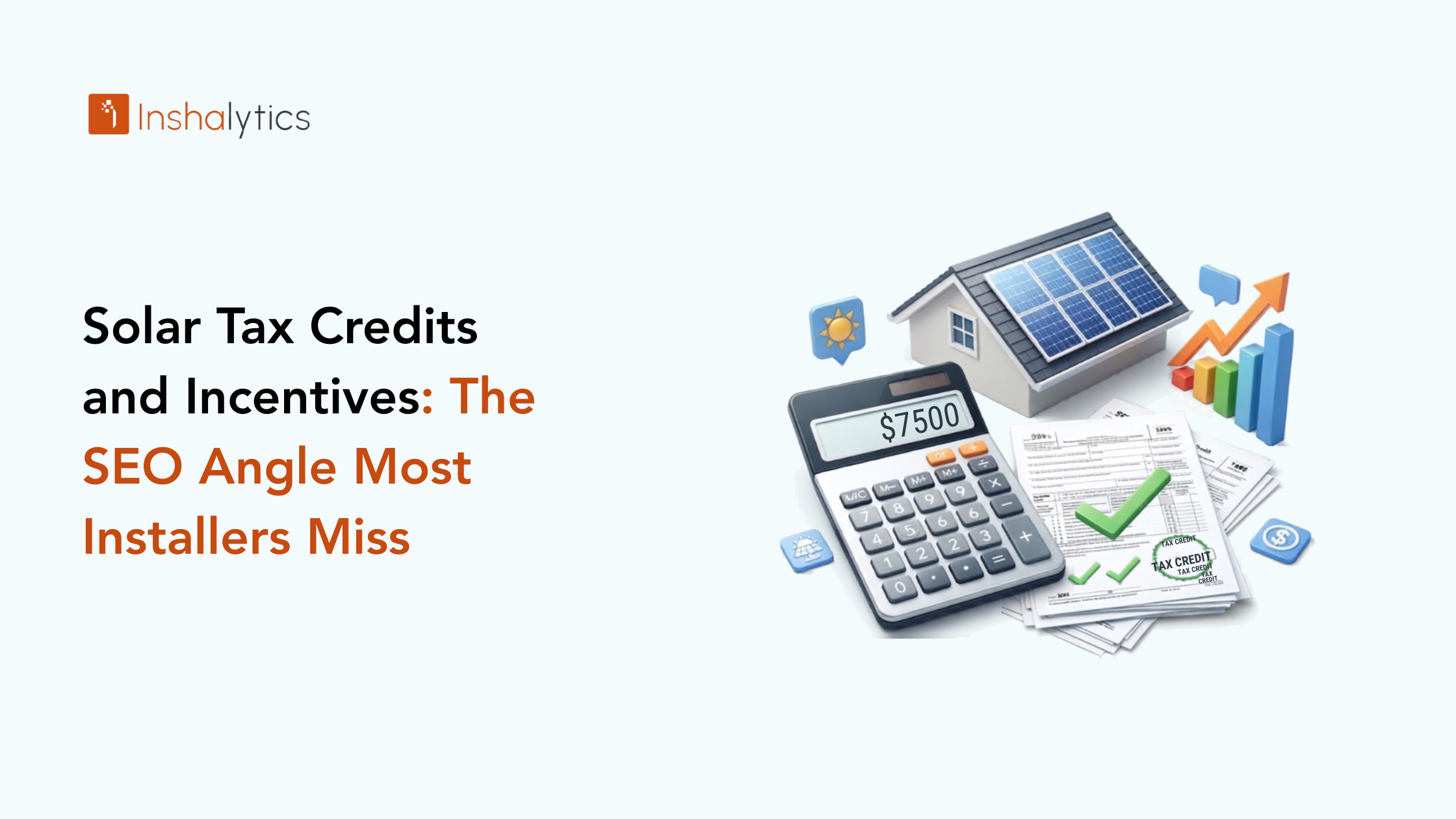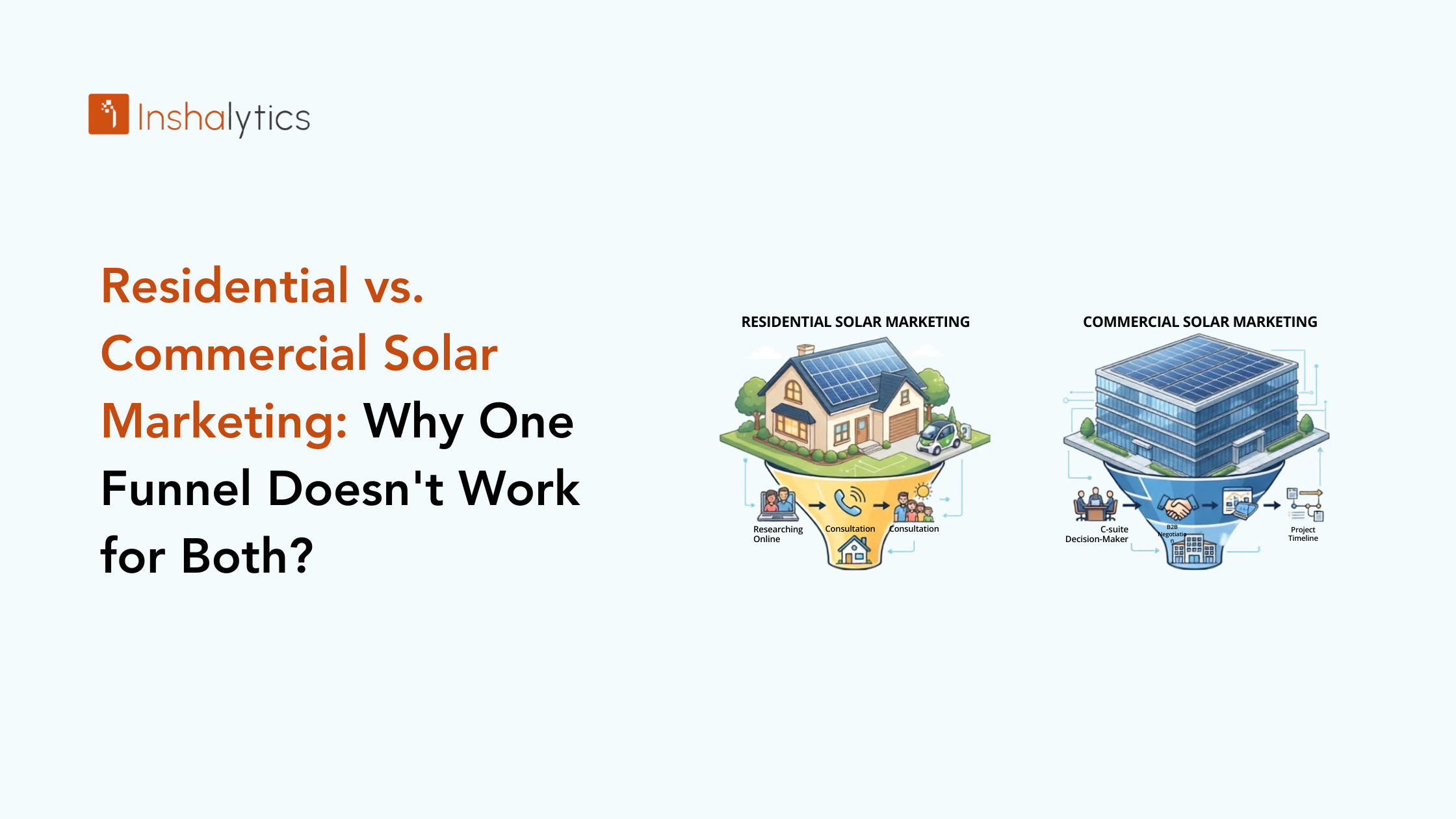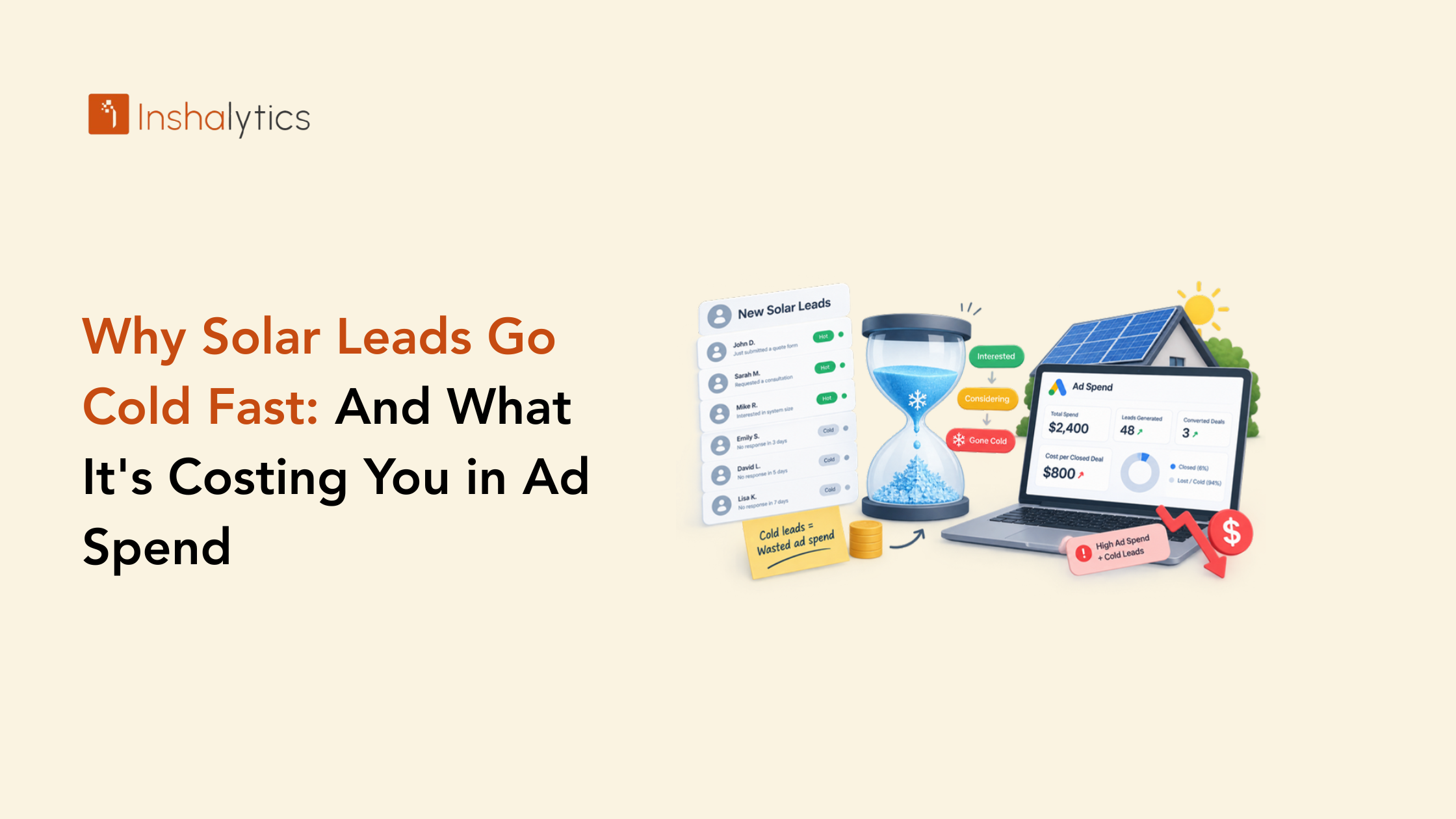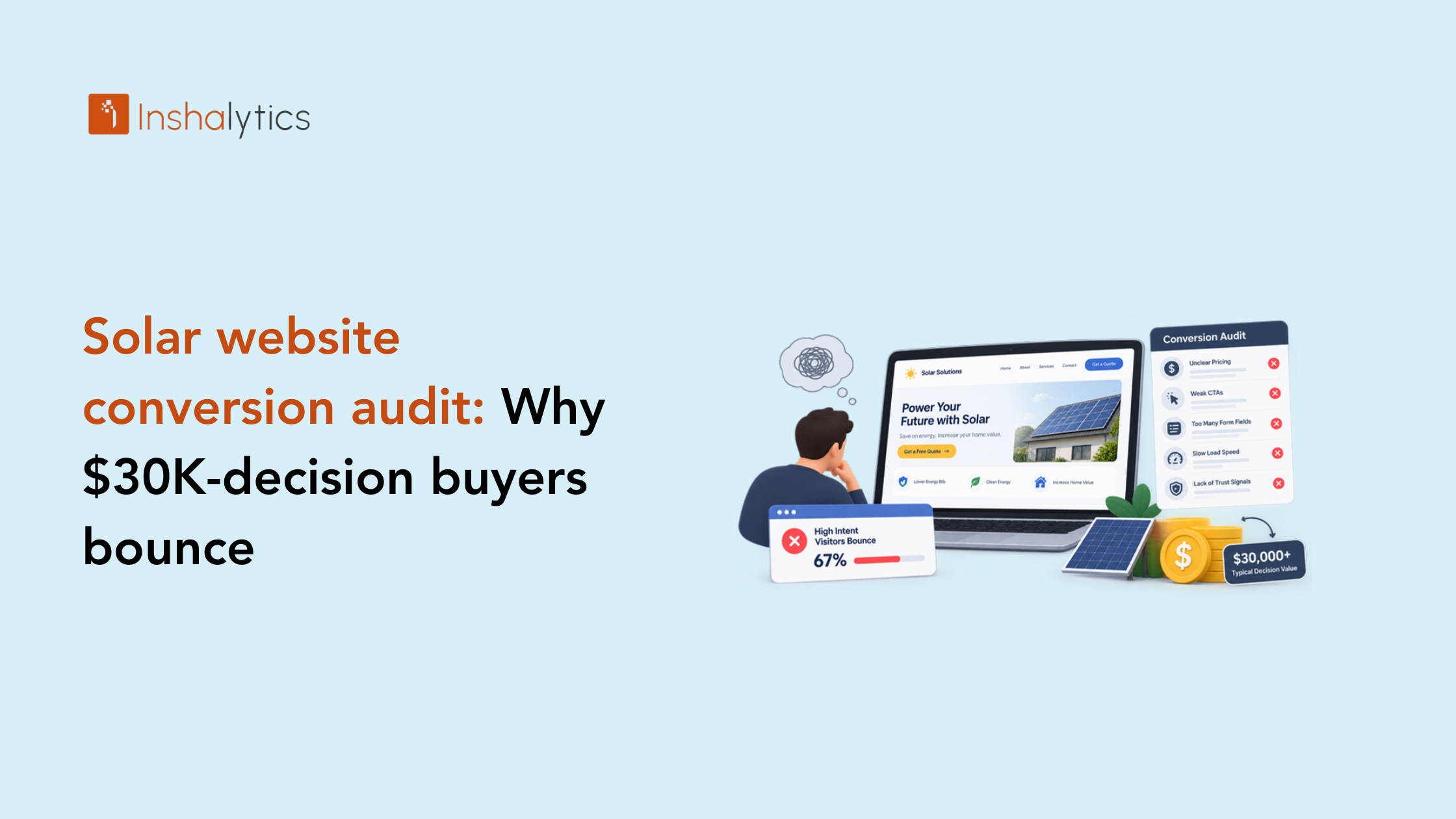
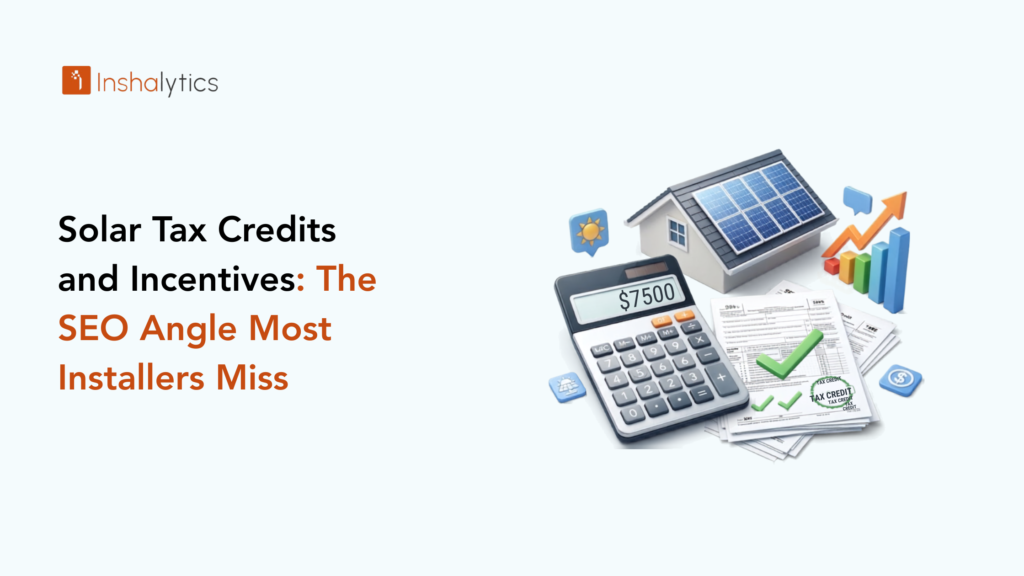
Homeowners researching solar tax credits and incentives are some of the highest-intent, earliest-stage searchers in the entire solar buying journey, and right now, most of that search traffic flows to aggregator sites instead of local installers who could just as easily be answering the same questions. The reason is almost always the same: incentive information is scattered, generic, or outdated on installer websites, while aggregators have consolidated it into exactly the kind of comprehensive resource that ranks well and keeps visitors engaged. This article covers how to close that gap, and why it matters more than almost any other content decision you’ll make this year.
Why This Is One of the Highest-Value Search Topics in Solar
Incentive research happens early, often before a homeowner has even decided solar is right for them, which makes it a rare opportunity to capture a prospect before your competitors even know they exist.
Research-Stage Buyers Searching Before They Ever Request a Quote
A homeowner searching “solar tax credit” or “solar incentives [state]” is frequently earlier in their decision than someone searching “solar installer near me.” They’re still building the case for solar in their own mind, often before they’ve told anyone else they’re even considering it. Capturing that search means you’re the first business this homeowner associates with solar, well before they’re ready to compare installers directly, which builds a form of familiarity no ad campaign can replicate as cheaply.
Why Aggregators Like EnergySage Currently Own This Traffic
Large aggregator sites have built extensive, well-maintained incentive content precisely because most individual installers haven’t invested the same effort, then convert that traffic into leads they resell to installers, often the same lead sold to multiple competitors at once. This is a direct, fixable content gap, not an unbeatable structural advantage that requires an aggregator’s scale to overcome. Any installer willing to invest the research time can close it, regardless of company size or marketing budget.
The Content Gap: Fragmented Incentive Information
The core problem isn’t that installers ignore incentives entirely. It’s that the information tends to be scattered across separate, thin pages instead of consolidated into one authoritative resource a homeowner can rely on.
Federal, State, and Utility Incentives Scattered Across Different Sources
Most solar sites, if they cover incentives at all, mention the federal tax credit briefly on a general page and leave state and utility-specific programs unaddressed entirely, even though a homeowner’s actual total incentive picture depends on all three layers working together to determine the real out-of-pocket cost.
Why Consolidating Them Into One Page Is a Real Ranking Opportunity
A single, comprehensive page addressing federal, state, and local utility incentives together, genuinely useful rather than a thin summary, directly targets the exact fragmentation gap that currently sends this traffic to aggregators instead of installers. This is one of the more clearly identifiable, high-value content opportunities available in solar SEO right now, and one most local competitors still haven’t acted on. Being early to build this out means ranking gains compound while everyone else is still relying on a single paragraph mentioning the federal credit in passing.
What Should a Complete Incentive Content Page Actually Include?
Building this page well requires more than a paragraph on each incentive type. It requires genuine depth homeowners can’t easily find consolidated elsewhere on a single page.
The Federal Investment Tax Credit, Explained Simply
A clear, current explanation of the federal Investment Tax Credit, what percentage it covers, what’s eligible, how it’s claimed, written in plain language rather than tax jargon, removes one of the biggest points of confusion in a homeowner’s early research and builds trust before the sales conversation even begins in earnest.
State-Specific Rebates and Property Tax Exemptions
State-level programs vary significantly and change more frequently than the federal credit, making this section both high-value and high-maintenance, exactly the kind of ongoing content investment aggregators handle at scale but many individual installer sites let go stale within a year or two of publishing and never revisit. Once a page falls behind current policy, it quietly becomes a liability instead of an asset, since an outdated number is often worse for trust than having no number at all.
Utility-Specific Programs (Net Metering, NEM Rules)
Net metering and interconnection rules differ by utility, not just by state, and directly affect a homeowner’s actual long-term savings calculation, sometimes by a meaningful enough margin to change whether solar makes financial sense for them at all. Content addressing your specific utility territories by name captures search intent a generic state-level page simply can’t, since it speaks directly to the exact rules a homeowner’s bill is actually governed by.
How Do You Keep Incentive Content Accurate as Rules Change?
Incentive programs shift more often than most evergreen content, which makes freshness itself a ranking and trust factor here, not just an editorial nicety.
Signaling Freshness and Update Dates to Build Trust
A visible “last updated” date, paired with genuinely current information, signals both to Google and to skeptical homeowners that this page reflects the current rules, not a program that expired two years ago and never got taken down.
Avoiding Outdated Numbers That Damage Credibility
Outdated incentive figures don’t just hurt rankings over time. They actively damage trust with a homeowner who discovers, mid-conversation, that the numbers on your site were wrong. A regular review cadence for this content is worth building into your marketing calendar as a recurring task, not a one-time project that gets forgotten once it’s published.
Turning Incentive Content Into Booked Consultations
Comprehensive incentive information earns the traffic. What happens next determines whether that traffic becomes a lead or simply closes the tab and moves on.
Pairing Incentive Data With a Localized Cost Calculator
Incentive information paired directly with solar installation cost by system size gives a research-stage visitor the complete picture, what solar costs and what it actually costs after incentives, in one place, rather than sending them elsewhere to complete the math themselves and possibly finding a competitor along the way.
Clear Next-Step CTAs Instead of Dead-End Explainer Pages
Every incentive page should end with a specific, low-friction next step, a free savings estimate or quote request, so the research-stage visitor you’ve earned has an obvious path forward instead of leaving to search for it elsewhere once they’ve absorbed the information. A visitor who leaves satisfied with your explanation but without a next step to click is a visitor you’ve effectively educated for a competitor to close.
How Inshalytics Builds Incentive Content That Competes With Aggregators
Building and maintaining this kind of content requires both upfront research depth and an ongoing update process most solar companies don’t have internal bandwidth for on top of running installations.
Our Process for Consolidating Federal, State, and Utility Data
We build comprehensive, genuinely useful incentive pages covering federal, state, and utility-specific programs for your service territories, structured specifically to compete with aggregator content for this exact search traffic without requiring your team to become policy researchers.
Keeping This Content Updated as Policy Changes
We treat incentive content as a living asset requiring regular review, not a one-time publish, which is exactly the maintenance gap that lets aggregator content stay ahead of most individual installer sites over time even when the underlying installer offers better service. A homeowner will never know your service is superior if they never make it past a stale page to find out.
Getting Started on Your Incentive Content Page
If incentive content isn’t currently a strong, consolidated part of your site, it’s one of the highest-leverage content gaps available to fix, and one that pays off well beyond the initial investment.
Auditing What Incentive Content You Currently Have
Search your own site for what incentive information already exists, and check how current it is. Many installer sites have a page that hasn’t been meaningfully updated since it was first published years ago, back when the incentive rules looked completely different than they do now.
Prioritizing Your State and Utility-Specific Programs First
Start with your state’s programs and your largest utility territory’s net metering rules, the two pieces of information most likely to differentiate your page from a generic federal-only summary that every other installer already has.
Incentive research is where solar prospects start their journey, and right now, aggregators are meeting them there instead of you. If you’re ready to build the content that changes that, let’s talk about your service territories specifically and where the biggest gaps in your current content actually are.