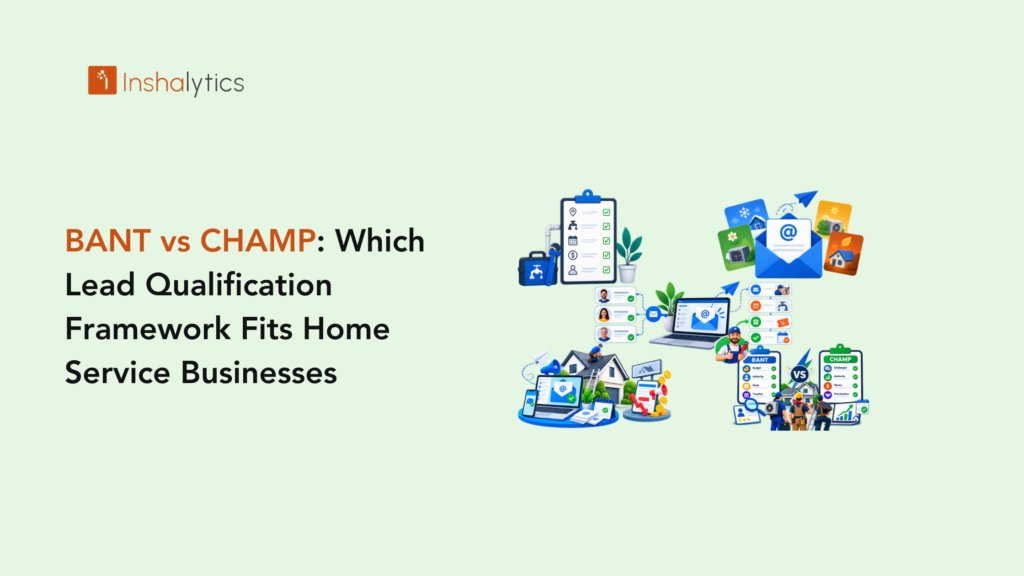
BANT and CHAMP were both built for B2B software sales teams working multi-week deal cycles with committees of stakeholders. A plumber’s CSR has about ninety seconds and one homeowner on the phone. Almost every article comparing these two frameworks ignores that gap entirely, so here’s what BANT and CHAMP actually look like when translated into a call that has to end with either a booked appointment or a polite no.
Two Frameworks Built for B2B: Do They Even Apply to Home Services?
Before adapting either framework, it’s worth understanding what each one was originally designed to solve and where the two approaches diverge.
What BANT Stands For and Where It Came From
BANT stands for Budget, Authority, Need, and Timeline. It’s a fast, blunt qualification method built for straightforward sales where the goal is quickly separating winnable deals from unwinnable ones, according to ORM’s comparison of BANT and CHAMP. Its strength is speed it doesn’t require deep discovery to reach a conclusion, which is exactly why it earns its place at the top of a wide, fast-moving funnel.
What CHAMP Stands For and Why It Exists
CHAMP stands for Challenges, Authority, Money, and Prioritization. It was developed as a more consultative alternative to BANT, leading with the prospect’s problem rather than their budget, on the theory that understanding the pain point first builds a stronger case before price ever enters the conversation, as described in Pathmonk’s breakdown of the CHAMP framework.
Neither framework was designed with a sub-two-minute home service call in mind which is exactly why the adaptation below matters more than simply picking one off the shelf and applying it as written.
BANT Applied to a Home Service Call
BANT’s bluntness, usually considered a limitation in complex B2B sales, becomes an advantage in a fast, transactional home service call where there’s no time for extended discovery.
Budget: Does the Homeowner’s Situation Match Your Price Range?
A quick, honest range repairs of this kind typically run within a certain price band — surfaces a budget mismatch in seconds rather than after a wasted visit. This isn’t about scaring off real customers; it’s about setting accurate expectations from the first conversation so nobody’s time gets wasted later.
Authority: Are You Talking to the Owner or a Renter?
Home service work almost always requires the property owner’s authorization. A renter or someone who needs to check with the landlord doesn’t have the authority to approve work a fact worth confirming before scheduling anything that requires a signature or a payment decision.
Need and Timeline: Real Problem vs. Just Browsing
A specific, current problem no hot water since this morning, for example signals real need. A vague, hypothetical description, like wondering what it would cost if it were ever needed, signals someone still in the research phase, which changes how, and how urgently, you should respond to the call.
CHAMP Applied to a Home Service Call
For bigger, more considered purchases, CHAMP’s challenge-first approach fits naturally with how homeowners actually think and talk about major home projects.
Challenges First: What’s Actually Going Wrong at the House?
Leading with a question like “tell me what’s happening” rather than “what’s your budget” mirrors how homeowners naturally want to talk about a problem especially for something like a roof replacement or an HVAC system nearing the end of its life, where understanding the full situation matters before price becomes relevant to the conversation.
Authority, Money, and Prioritization in a Home Context
Once the challenge is understood, confirming who’s involved in the decision, what budget range they’re working with, and how urgently they want to solve it rounds out a picture that’s harder to get from a rigid, budget-first script. This mirrors the scope-first approach covered in Lead Qualification Checklist for Plumbers for planned, non-emergency projects.
Which Framework Fits Which Kind of Job
The right choice isn’t about which framework is newer or more sophisticated it’s about matching the framework to the shape of the deal in front of you.
BANT for Fast, Transactional Calls (Emergency Repairs)
Emergency repairs a burst pipe, a dead AC in July, an active leak call for BANT’s speed. There’s no time or need for deep discovery when the homeowner already knows exactly what’s wrong and wants it fixed today, not after a lengthy conversation about their broader goals.
CHAMP for Bigger, Considered Purchases (Installs, Roof Replacements)
Larger, more considered purchases a full system replacement, a roof replacement, a repipe — benefit from CHAMP’s challenge-first approach, since these decisions usually involve more research, more stakeholders, and a genuine need to understand the homeowner’s full situation before price becomes the deciding factor. This same distinction is what separates a wasted technician visit from a well-scoped one, covered in more detail in How to Qualify HVAC Leads Before You Waste a Truck Roll.
Don’t force every call through one framework. Match the framework to the job type at the moment the call comes in emergency calls get BANT’s speed, bigger considered purchases get CHAMP’s discovery.
Building a Home-Service-Specific Qualification Script
Whichever framework fits a given call, the goal is the same: a script that’s fast enough not to lose the caller and thorough enough to protect your team’s time.
Adapting Either Framework to a Sub-2-Minute Call
Strip either framework down to three or four questions that can be asked conversationally, not read off a checklist word for word. The homeowner should never feel like they’re being interrogated the questions should feel like a natural part of getting them help quickly, woven into the flow of a normal conversation.
Training CSRs and Dispatchers Without Overloading Them
Give your team one framework per call type, not both frameworks to choose between on the fly in the middle of a call. A CSR juggling two acronyms mid-call is more likely to skip qualification altogether than to apply either one correctly, which defeats the purpose of having a framework in the first place. The same red-flag pattern-recognition approach applies to a much longer sales cycle in roofing, covered in Spotting a Bad Roofing Lead Before You Quote It, where the stakes of getting qualification wrong are considerably higher.
BANT and CHAMP weren’t built with a home service business in mind, but the underlying logic in both confirm the need, confirm who’s deciding, confirm the timeline and budget fit translates directly once you strip away the B2B-specific language. The businesses that qualify leads well aren’t the ones using the fanciest framework. They’re the ones using a simple, consistent one, every single call, without exception.
Want help building a qualification script tailored to your specific trade and call volume? Let’s put a repeatable framework in place that protects your team’s time without slowing down your response speed.