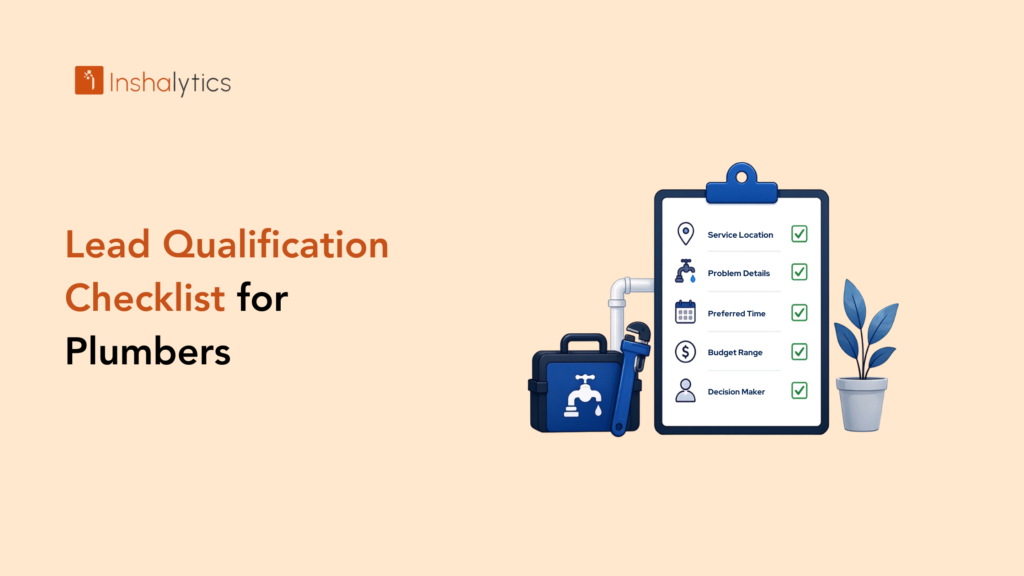
Lead Qualification Checklist for Plumbers
An emergency plumbing call and a “someday we want to repipe the house” call need to be handled by completely different scripts — but most plumbing businesses run every inbound lead through the same generic set of questions, or skip qualification altogether in the rush to book fast. This checklist splits plumbing leads the way they actually come in: fast-moving emergencies and slower-moving planned projects, each with its own approach.
Why Plumbing Leads Need Two Different Checklists
Treating every lead the same is where most plumbing qualification processes break down, and it’s an easy mistake to make when the phone is ringing constantly.
Emergency Calls: Fast, Minimal-Friction Qualification
A burst pipe or active leak needs to be confirmed and booked in under a minute. Anything that slows this down risks losing the caller to a faster-answering competitor, so the checklist here has to be short by design, covering only what’s genuinely necessary before dispatch.
Planned Projects: Slower, Detail-Heavy Qualification
A water heater replacement or full repipe involves bigger decisions, more research on the homeowner’s part, and a longer sales cycle. Rushing this kind of call through a two-question script wastes an opportunity to properly scope the job and set accurate expectations from the very first conversation.
Before your next call comes in, decide which checklist applies within the first 15 seconds of the conversation — that single decision shapes everything that follows and prevents wasted time on either end.
The Emergency-Call Checklist
Speed matters most here, but even an emergency call benefits from three fast confirmations that take only seconds each.
Confirming the Problem Is Active and Real
Ask directly what’s happening right now — water actively leaking, a toilet that won’t stop running, no hot water at all. A specific, present-tense answer confirms urgency. A vague or past-tense description, such as something that happened a couple of days ago, suggests something that can likely wait for a scheduled appointment instead of an emergency dispatch.
Confirming Location, Access, and Timing
Get the address, confirm someone will be home or can provide access, and confirm when the technician can realistically arrive. This prevents a truck being dispatched to an empty house or one where nobody can let the technician in once they arrive.
Confirming Who’s Authorizing the Work
A quick confirmation that the caller can approve the repair on-site avoids a technician arriving to find out the actual decision-maker isn’t available and work can’t proceed, wasting the visit entirely.
The Planned-Project Checklist
Bigger jobs deserve a more thorough set of questions before you invest time in an estimate, since the stakes and complexity are higher.
Confirming Scope (Repair, Replace, or Repipe)
Get a clear sense of what the homeowner thinks they need — even if your technician will ultimately determine the real scope on-site. This shapes how much time to allocate for the estimate and who on your team is best suited to handle it, since a full repipe conversation looks very different from a single fixture swap.
Confirming Budget Range and Financing Needs
For larger jobs, a rough budget conversation upfront — projects of this kind typically run within a certain range — surfaces a mismatch before your team invests an hour in an estimate the homeowner was never going to move forward on at that price point.
Confirming Decision Timeline
Ask when they’re hoping to have the work done and whether other decision-makers, such as a spouse or a property manager, need to be involved before moving forward. This shapes your follow-up cadence and prevents an estimate from sitting unanswered because the real decision-maker was never actually part of the original conversation.
Print both checklists and keep them next to every phone. A checklist that lives only in someone’s head disappears the moment that person is out sick or the phone gets unusually busy.
What to Do When a Lead Doesn’t Pass the Checklist
Not passing the checklist doesn’t always mean turning the lead away entirely — it usually means adjusting how you respond rather than closing the door completely.
Polite Ways to Deprioritize Without Losing the Relationship
A lead that isn’t ready to move forward yet can still become a job later. A simple, friendly note in your CRM to follow up in a month, paired with adding them to your email list, keeps the door open without spending technician time on it today. This kind of ongoing nurture is covered in more depth in Email Automation for Plumbers: Turning Past Customers Into Repeat Bookings, which applies just as well to future customers as it does to past ones.
When to Route to a Different Service Tier
Some leads that don’t fit your emergency-response model are still real opportunities — just for a different part of your business. A “someday” repipe inquiry might be better routed to a sales-focused team member than your emergency dispatcher, who’s better suited to handling calls that need to move fast.
Turning This Checklist Into a Repeatable System
A checklist only works long-term if it’s built into your process rather than treated as a one-time training session that fades over time.
Building It Into Your CRM or Answering Service Script
If you use an answering service or a CRM with intake fields, build both checklists directly into the intake flow so the right questions get asked automatically, regardless of who’s handling the call that day.
Reviewing Qualification Data Monthly to Refine It
Review a sample of qualified and disqualified leads each month. Patterns will emerge — certain lead sources sending more tire-kickers, certain questions that consistently reveal the real signal — and refining the checklist based on that data keeps it sharp over time instead of stale. For a broader look at where these checklist questions come from and how to think about qualification frameworks generally, see BANT vs CHAMP: Which Lead Qualification Framework Fits Home Service Businesses.
A good qualification checklist doesn’t slow plumbers down — it makes sure the speed you’re already putting into fast response gets pointed at the calls most likely to become real, booked jobs. Splitting emergency and planned-project leads into two distinct processes is the single change most plumbing businesses haven’t made yet, and it pays off almost immediately once it’s in place.
Want help turning this checklist into a live script inside your CRM or answering service? Let’s build a qualification system that fits how your plumbing business actually takes calls.