An HVAC company billing time-and-materials on emergency calls is fighting an uphill battle every single visit, because the customer has no idea what the final number will be until the technician is already halfway through the job. Flat-rate pricing removed that uncertainty decades ago for most of the industry, and membership plans took the model a step further, turning one-time emergency customers into predictable, recurring revenue. This HVAC pricing strategy guide covers both, and how to build a membership plan that actually sells itself.
We’ll look at why flat-rate pricing became the industry standard, how to structure a membership plan that’s genuinely profitable, how memberships fill the revenue gap between your busy seasons, and how to market your pricing model as a trust signal rather than leaving it unmentioned.
Why Flat-Rate Pricing Won in HVAC (and What It Costs You If You Skip It)
Flat-rate pricing did not become standard in HVAC by accident. It solved a specific trust problem that time-and-materials billing could never fully address.
The trust problem with time-and-material billing on emergency calls
A homeowner facing a broken air conditioner in July is already stressed, and being told the price depends on how long the repair takes adds a second layer of anxiety on top of the original problem. Time-and-material billing also creates an incentive conflict, whether real or perceived, where the customer wonders if the job is taking longer than necessary. Flat-rate pricing removes that entire dynamic by naming a price before the work begins, regardless of how long it actually takes.
This matters even more in HVAC than in many other trades, since a broken system in extreme weather creates genuine urgency that can make customers feel especially vulnerable to being overcharged. Removing that specific anxiety with a clear, upfront number is one of the simplest ways to build trust in a high-stress moment.
How flat-rate pricing changes what your sales conversation sounds like
With flat-rate pricing, your technician can quote a number on the spot and get a yes or no decision immediately, rather than needing to explain hourly rates and estimate ranges. This shortens the sales conversation considerably and reduces the awkwardness of billing surprises after the fact. Technicians selling flat-rate work also tend to close at higher rates, since the customer feels informed rather than uncertain about what they’re agreeing to.
This shift also simplifies training for newer technicians, since they don’t need years of experience to confidently quote a job, they simply need to correctly diagnose the issue and reference the flat-rate price book. That consistency protects your brand’s pricing reputation even as your team grows and includes technicians with varying levels of tenure.
Building a Membership Plan That Sells Itself
A membership plan works when it’s structured around genuine value to the customer, not just as a revenue tactic bolted onto your existing services.
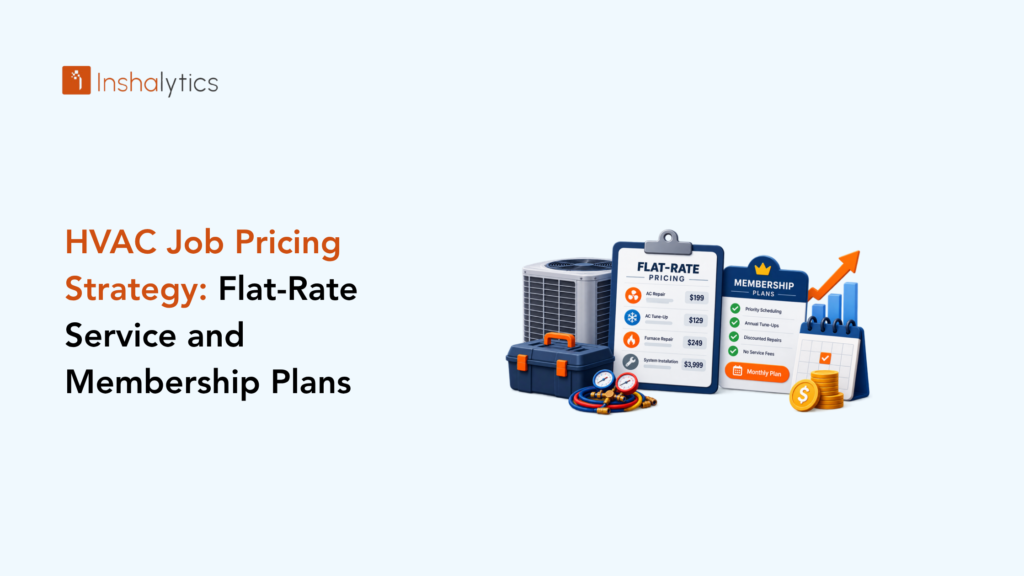
A membership plan that sells itself typically combines a waived dispatch fee, priority scheduling, and scheduled seasonal tune-ups, since each of those benefits directly addresses a real customer frustration with one-off HVAC service.
What to include (dispatch fee waivers, priority scheduling, seasonal tune-ups)
Waiving the dispatch or trip fee for members removes a recurring point of friction that non-members pay every single visit, making the membership feel like an obvious value even before considering the tune-up visits. Priority scheduling matters most during peak season, when non-members might wait days for an appointment while members get seen faster. Two scheduled tune-up visits per year, one before summer and one before winter, catch small issues before they become expensive emergency repairs, which benefits both the customer’s wallet and your technician’s workload.
Some companies also add a modest discount on repairs or parts for members, which further reinforces the value without requiring a significant additional cost to deliver. The goal is a package where the total value clearly outweighs the membership price in the customer’s mind, even if they only use one or two of the benefits in a given year.
Pricing the membership so it’s profitable, not just a loss leader
Price the membership to cover the actual cost of the included tune-up visits plus a margin, rather than treating it purely as a marketing loss leader that never turns a direct profit. The real financial upside of memberships comes from retention and repeat business over multiple years, but the plan itself should still make sense on its own economics. Running the numbers on your actual tune-up visit cost, technician time plus materials, before setting the price prevents an unsustainable offer that erodes margin every time someone signs up.
How Membership Plans Create Recurring Revenue Off-Season
HVAC demand is inherently seasonal, and membership plans are one of the most effective tools for smoothing out that seasonality.
Filling the schedule gap between summer and winter peaks
The shoulder seasons, spring and fall, are typically the slowest periods for HVAC companies, and scheduled membership tune-up visits are a natural way to fill technician time during those gaps. Rather than scrambling for leads during the slow season, a healthy membership base gives you a baseline of scheduled work you can plan around regardless of demand fluctuations. This predictability also makes staffing decisions easier, since you’re not entirely dependent on unpredictable emergency call volume.
Scheduling these tune-ups strategically, spreading them across the shoulder season rather than clustering them all in one week, smooths out technician workload and avoids the awkward situation of an overloaded schedule immediately followed by empty days. Some companies use membership tune-ups specifically to fill gaps that appear on the calendar a week or two out, treating the membership base as a flexible scheduling buffer.
Turning one-time customers into repeat, referral-generating customers
A member who sees you twice a year develops a relationship with your company that a one-time emergency customer never does, which translates into higher retention when their system eventually needs replacement and more willingness to refer friends and neighbors. This repeat contact also gives you natural opportunities to identify system replacement needs before they become emergencies, which benefits both the customer’s comfort and your revenue pipeline. Membership customers consistently show higher lifetime value than one-off customers across the industry.
Marketing Your Pricing Model, Not Just Your Services
Once your pricing and membership structure is solid, make sure your marketing actually communicates it clearly instead of burying it in a services list.
Where flat-rate and membership messaging belongs on your website
Your homepage and primary service pages should mention flat-rate, upfront pricing explicitly, since this is exactly the reassurance an anxious homeowner facing a broken system is looking for. A dedicated membership page, not just a small mention buried in a footer, gives you a place to fully explain the value and make it easy for interested customers to sign up. If your website currently isn’t converting well, unclear pricing and membership messaging is one of the first places worth checking.
How Inshalytics helps clients position pricing as a trust signal
We help HVAC clients build pricing and membership messaging directly into their site structure and content strategy, rather than treating it as a detail to mention only if a customer asks. This includes writing membership landing pages that clearly explain the value, and making sure ad campaigns and service pages consistently reinforce the same pricing story. Getting this messaging right often increases both membership sign-up rates and overall lead trust simultaneously.
If your pricing model and membership plan aren’t clearly represented in your current marketing, talk to Inshalytics about building that messaging into your website and campaigns.
Common Questions About HVAC Pricing and Membership Plans
How many members do you need before the plan pays for itself?
This depends on your specific tune-up visit costs and membership price, but most HVAC companies find memberships become clearly profitable, accounting for both direct tune-up costs and administrative overhead, once membership base reaches a size where scheduled visits can be efficiently routed alongside other calls rather than requiring dedicated trips. Running your own numbers based on your actual visit costs is more reliable than relying on an industry-wide benchmark. Track this monthly for at least the first year so you can adjust pricing or benefits if the early numbers don’t match your projections.
Should membership pricing be visible on your website?
Yes, showing membership pricing removes a barrier for interested customers who might otherwise need to call just to ask the cost, and transparent pricing tends to build more trust than it costs in lost negotiation flexibility. If pricing varies by system type or home size, showing a starting price with a note about variables still gives visitors useful information to act on.
A well-structured flat-rate and membership pricing strategy does double duty, building trust with anxious emergency customers while creating predictable recurring revenue that smooths out seasonal swings. Review your current membership offer, or build your first one, with the specific goal of making the value obvious within the first few seconds a customer looks at it.