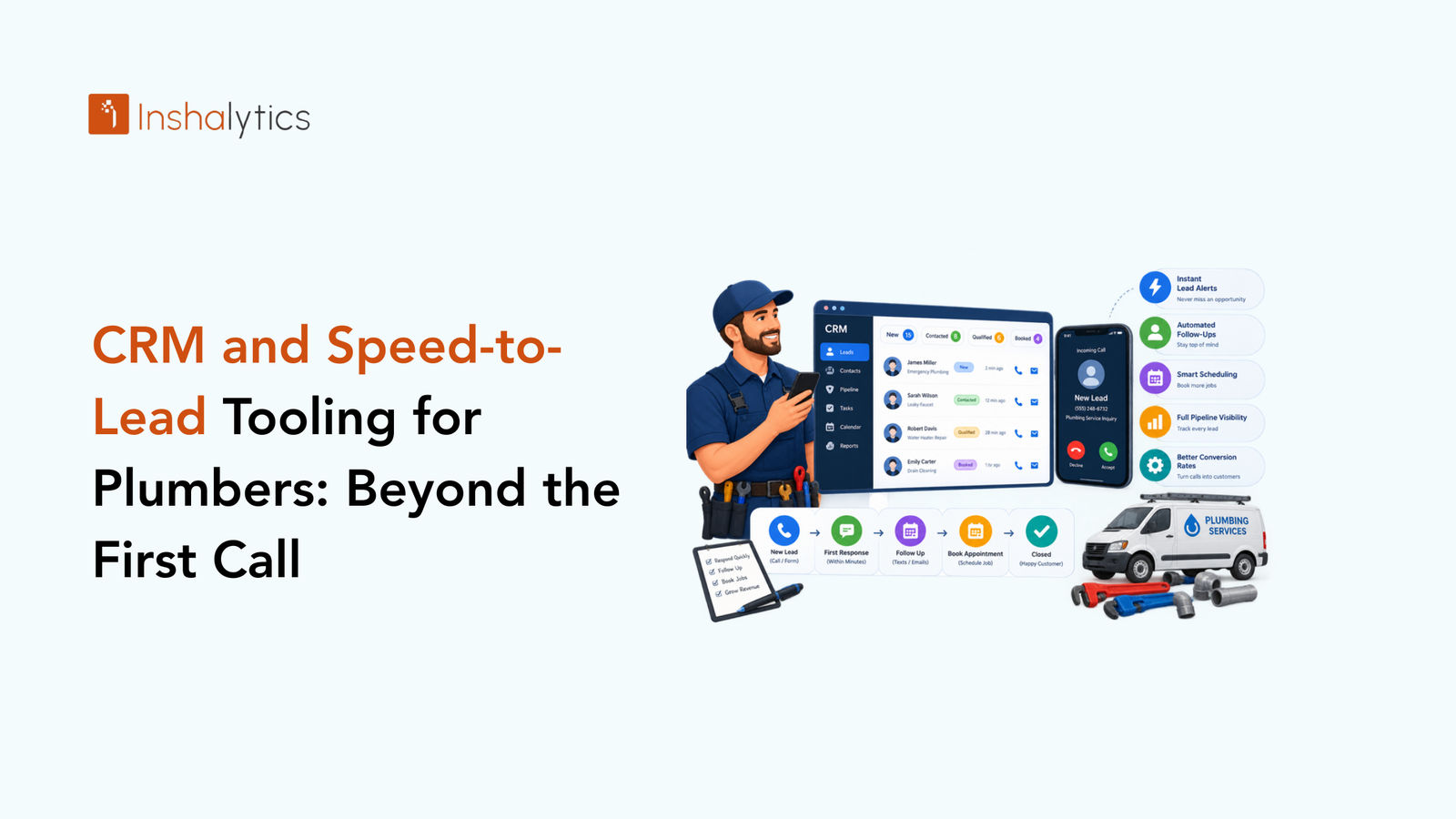
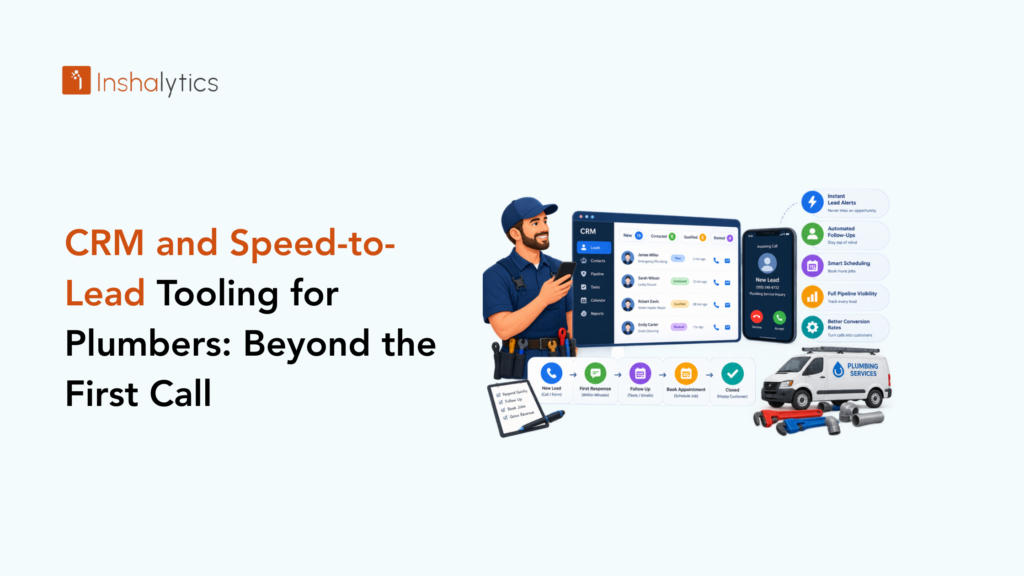
Roughly three out of every four customers hire the first business that responds to their inquiry, not the cheapest, not the most experienced, the fastest to actually pick up the phone or reply. If you’re evaluating speed-to-lead CRM tooling for plumbers, that single fact should shape almost every decision you make about how leads get handled from the moment they come in, because everything downstream of a slow first response is fighting an uphill battle. This article covers what speed-to-lead actually means, what a plumbing CRM needs to do well, and why fast follow-up alone still isn’t the whole answer.
What Is Speed-to-Lead, and Why Does It Decide Who Wins the Job?
Speed-to-lead is the time between when a customer reaches out and when your business makes real contact with them. For plumbing specifically, where most jobs start as an urgent problem rather than a considered purchase, this single metric often matters more than price, reviews, or brand reputation combined, because none of that matters if you never actually get the chance to talk to the customer.
The 78% Rule: First Responder Wins the Job
Industry research on service-business lead response consistently shows that a large majority of customers go with whichever company reaches them first. In a market where most homeowners contact more than one plumber the moment they have a problem, being first to actually speak with them functions almost like an automatic win condition, regardless of everything else on your website or your reputation, and it’s a pattern that holds true across nearly every emergency-driven service category.
What Happens to a Lead After 5 Minutes of Silence
Response quality degrades fast. A lead contacted within minutes converts dramatically better than one contacted hours later, and by the next day, most of that opportunity is already gone, either booked with a competitor or simply cooled off entirely. The window where fast follow-up actually changes the outcome is much shorter than most CSR workflows account for, and most businesses only discover this after losing a string of jobs they assumed they’d win on quality alone.
What Should a Plumbing CRM Actually Do?
Not every feature marketed in plumbing CRM software actually moves the needle on speed-to-lead. A few core capabilities matter far more than the rest, and it’s worth evaluating any software against these before anything flashier on the feature list.
Capturing Every Channel: Calls, Missed Calls, Forms, Google Messages
A lead that comes in through a Google Business Profile message needs the same urgency as one that comes in by phone, but it’s far more likely to get missed, because it doesn’t ring anywhere. A CRM that pulls every channel into one queue, tagged by urgency, is the foundation everything else depends on. Without that, speed-to-lead discipline only covers part of your actual lead flow, and the channels most likely to get ignored are often the ones with the highest intent.
Automated Follow-Up Reminders Tied to Urgency Level
A quoted job that isn’t scheduled within 24 hours should trigger an automatic follow-up task, not rely on a CSR remembering to check. This is the single highest-leverage automation most plumbing businesses are missing, and it directly protects revenue that’s already been quoted but not yet closed, which is often sitting closer to a yes than anyone realizes.
Job and Customer History for Repeat-Visit Efficiency
Fast follow-up matters on new leads, but a CRM that also surfaces prior job history, pipe sizes, past repairs, recurring issues, speeds up every return visit too, which reduces miscommunication and builds the kind of trust that turns a one-time customer into a repeat one who calls you first the next time something breaks. That history also helps a technician arrive prepared with the right parts on the truck, cutting down on the second trip that eats into a day’s schedule and frustrates the customer.
Why a Fast CRM Can’t Fix a Bad Lead Source
Speed-to-lead discipline only pays off if the leads you’re responding to quickly are actually worth chasing in the first place, and that’s a distinction most plumbing owners never separate out clearly.
The Difference Between Speed-to-Lead and Lead Quality
Responding in 60 seconds to a low-intent, price-shopping lead from a low-quality directory still produces a low-intent, price-shopping conversation. It just happens faster. Speed and quality solve two different problems, and treating them as the same thing leads plumbing owners to over-invest in response automation while under-investing in where the leads come from to begin with, which is often the more expensive mistake in the long run.
How Marketing Attribution Shows Which Sources Are Worth Responding to Fast
Once your CRM tracks lead source alongside close rate, a clear pattern usually emerges: some channels consistently produce leads worth chasing hard, and others consistently don’t, regardless of how fast you respond. That data should directly inform where your marketing budget goes next. See multi-location plumbing SEO for growing service areas for how this plays out once you’re managing lead sources across more than one market and need to know which ones are pulling their weight in each city.
Building a Speed-to-Lead System That Actually Sticks
The gap between knowing speed-to-lead matters and actually consistently executing on it comes down to whether the system fits how your team really works, not how a software vendor assumes it works.
Setting Response-Time SLAs for Your CSR Team
A clear, written standard, for example, live calls answered within three rings, missed calls returned within five minutes, form fills contacted within fifteen, turns a vague goal into something your team can actually be held to and measured against, and it gives new hires a concrete standard to learn instead of picking up habits informally. Posting the standard somewhere visible in the office, not just in a training document nobody revisits, keeps it from quietly slipping once things get busy.
Using Missed-Call Automation Without Losing the Personal Touch
An automated text response the moment a call is missed (“Sorry we missed you, we’re on it and calling you right back”) buys crucial minutes without pretending to be a real person. It’s a stopgap, not a replacement for the actual callback, but it meaningfully improves the odds a customer waits rather than dialing the next name on the list while your team scrambles to call back.
How Inshalytics Connects Your CRM to Real Marketing ROI
Fast follow-up and smart marketing spend work best when they’re built to inform each other, not managed as two separate efforts running on parallel tracks.
Reporting That Ties Response Time to Close Rate by Channel
We build reporting that shows exactly how response time and lead source together affect your close rate, so you can see whether a slow response is costing you more on your highest-value channels or your lowest-value ones, and fix the right problem first instead of guessing at which lever to pull.
Aligning PPC and Local SEO Spend With What Your CRM Data Shows
Once that reporting exists, your marketing spend stops being a guess. If your CRM data shows a particular campaign or keyword consistently produces leads that close fast and well, that’s where budget should concentrate, and this is exactly the kind of ongoing optimization we build into every plumbing marketing engagement.
A Checklist to Audit Your Own Speed-to-Lead Process Today
Before investing in new tooling, it’s worth knowing exactly where your current process stands, since the fix might be smaller and cheaper than a full software switch.
Measuring Your Current Average Response Time
Pull your last 20 leads across every channel and calculate the actual time from inquiry to first real contact, not the time to a first automated text, the time to an actual conversation. Most owners are surprised by how much slower this number is than they assumed, particularly on channels nobody’s been paying close attention to.
Identifying Where Leads Are Currently Slipping Through
Look specifically for the channels most likely to be missed entirely: Google Business Profile messages, after-hours calls, form fills submitted overnight. These are usually where the biggest, most fixable leaks are hiding, and often the fix is as simple as making sure someone is actually assigned to check them.
Speed-to-lead is one of the few competitive advantages in plumbing that doesn’t depend on outspending anyone. If you’re ready to find out where your response process is actually losing jobs, and make sure the leads you’re chasing fast are worth chasing, let’s talk about building that system together.