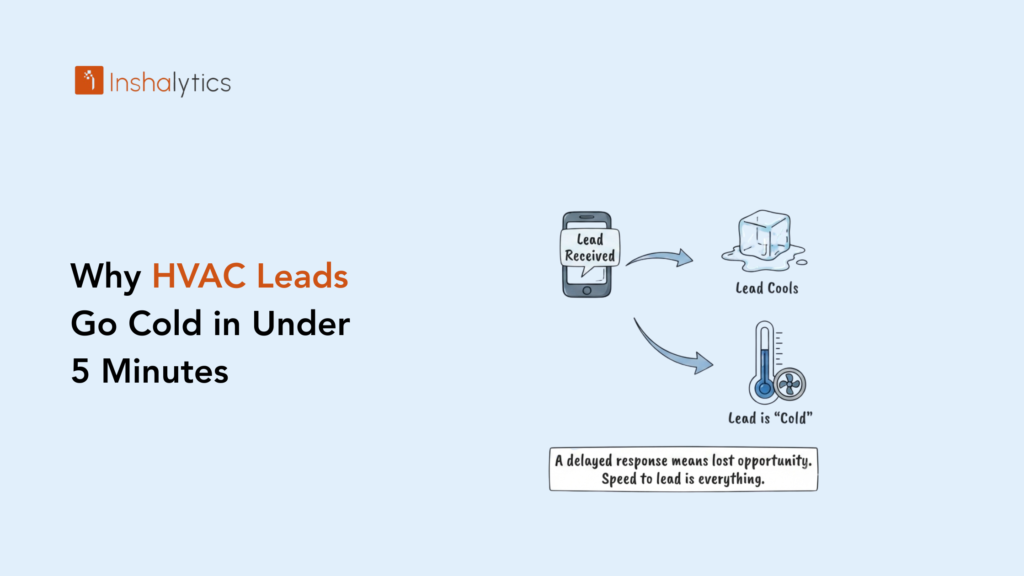
An HVAC lead isn’t like a lead for a kitchen remodel. Nobody browses AC contractors for six months before deciding. When the system fails, the homeowner starts calling immediately, and by the fifth minute of no response, they’ve usually moved on to whoever answered first. Understanding why HVAC leads cool this fast is the first step to actually stopping it from happening to your business. Marketplace leads add to the problem, as Angi’s per-lead pricing for HVAC contractors shows.
What “Going Cold” Actually Means for an HVAC Lead
“Going cold” doesn’t mean the homeowner stopped needing HVAC service. It means they stopped waiting specifically for you to call them back.
The Homeowner’s Mindset in the First Few Minutes
The moment a homeowner submits a request or picks up the phone, their attention and urgency are at their peak. They’re actively problem-solving; an uncomfortable, broken AC in July or a dead furnace in January isn’t a minor inconvenience, and they want a resolution now, not a callback sometime later in the day.
Why HVAC Leads Cool Faster Than Other Home Service Categories
Unlike a roofing quote, which involves comparing bids over several days, HVAC emergencies are usually solved by whoever gets there first. That compresses the decision window dramatically. A homeowner filling out multiple contractor forms simultaneously will typically go with whoever calls back first, regardless of price or reviews, because comfort and urgency outweigh comparison shopping in the moment a system fails.
Treat every HVAC lead as if it has a five-minute shelf life, because for practical purposes, based on how homeowners actually behave, it does.
The Data: How Fast Contractors Actually Respond
The gap between what HVAC contractors think their response time is and what it actually is tends to be significant, and it only shows up once someone actually measures it.
What the Hatch 132,188-Campaign Study Found
An analysis of over 132,000 HVAC speed-to-lead campaigns by Hatch, referenced in Pipeline On’s breakdown of speed to lead for home services, found that 88% of contractors take longer than five minutes to respond to a new lead. The most common response time recorded across the entire sample was a full day later. Only about 12% of contractors responded within the five-minute window that actually matters most for winning the job.
The Gap Between the Fastest and Slowest Responders
That gap isn’t a rounding error; it’s the difference between a business capturing a meaningful share of the leads it’s already paying for and one leaking most of them to faster competitors. Contractors who respond within five minutes are dramatically more likely to actually connect with and qualify the homeowner compared to those who wait even 30 minutes, according to the MIT and Harvard Business Review research cited in the same analysis, which puts the difference at roughly 21 times more likely.
Check your CRM or call log for the actual timestamp gap between lead creation and first outbound contact on your last 20 leads. Most owners are surprised by what they find once they look at real numbers instead of a general impression.
What You Lose When a Lead Goes Cold
A cold lead isn’t a wasted opportunity in the abstract; it’s money you already spent on marketing that produced nothing at all.
The Direct Revenue Loss Per Missed Window
If you generate 50 digital leads a month with a four-hour average response time, you might book around 6 jobs from them. The same 50 leads, responded to within 60 seconds, can produce more than double that number of booked jobs, according to the revenue math outlined by Contractor In Charge. That’s not new lead spend producing the difference it’s the exact same money producing dramatically different results based on speed alone.
The Compounding Effect on Ad and Lead-Platform ROI
Every lead that goes cold because of a slow response is a lead you already paid for on Angi, Google Ads, or LSA. A slow response doesn’t just cost you that job it silently drags down the reported ROI of whatever channel generated the lead, making a genuinely good marketing channel look worse than it actually is when you’re deciding where to invest next. For more on how this specifically affects your Angi spend, see What Angi Actually Charges HVAC Contractors Per Lead.
How to Keep HVAC Leads Warm Through the First Contact
The fix isn’t complicated, but it does require building a system rather than relying on whoever happens to be near the phone when it rings.
Instant Digital Notifications and Auto-Responders
Every form submission or missed call should trigger an immediate notification to your team and an automated first response to the homeowner confirming you received their request. That single message buys you time before a human callback happens, and it’s often enough on its own to keep a caller from immediately dialing the next contractor.
Staffing and Routing for Peak-Season Call Volume
During heat waves and cold snaps, call volume spikes exactly when your team is busiest in the field. Routing rules that escalate unanswered calls to a second or third person or to an after-hours answering service prevent your busiest, most valuable weeks from also becoming your leakiest ones in terms of missed opportunity.
Set up an instant auto-response for every lead source you use: website form, Google LSA message, and missed call this week, rather than treating it as a someday project. And if leads keep slipping even with fast replies, check whether your HVAC website is not converting visitors in the first place.
Building a Culture of Urgency Around Lead Response
Systems only work if the team actually follows them, and that requires making speed a visible, tracked priority rather than an assumed strength nobody actually checks on.
Setting a Response-Time SLA for Your Team
Give your team a concrete target: first response within five minutes, no exceptions rather than a vague expectation to “get back to people quickly.” A specific number is easier to hold people accountable to and far easier to measure objectively than a general sense of responsiveness.
Measuring and Reporting on Speed as a KPI
Track average response time alongside booked jobs and revenue every month. When speed improves, close rate almost always follows, and seeing that connection show up in your own numbers is what makes the habit stick long-term instead of slipping once the initial push fades. This connects directly to the broader pattern covered in How Response Time Is Quietly Killing Your Close Rate and to the practical qualification work covered in How to Qualify HVAC Leads Before You Waste a Truck Roll. Speed and qualification need to work together, not against each other.
HVAC leads don’t go cold because homeowners lose interest in getting their system fixed. They go cold because somebody else answered first. The contractors who win consistently aren’t necessarily the ones with the most leads; they’re the ones who respond to the leads they already have faster than anyone else in the market, every single time a call or form comes in.
Want visibility into exactly how fast your team is responding across every lead source? Let’s build a reporting dashboard and automated response system that keeps your leads warm from the first click.