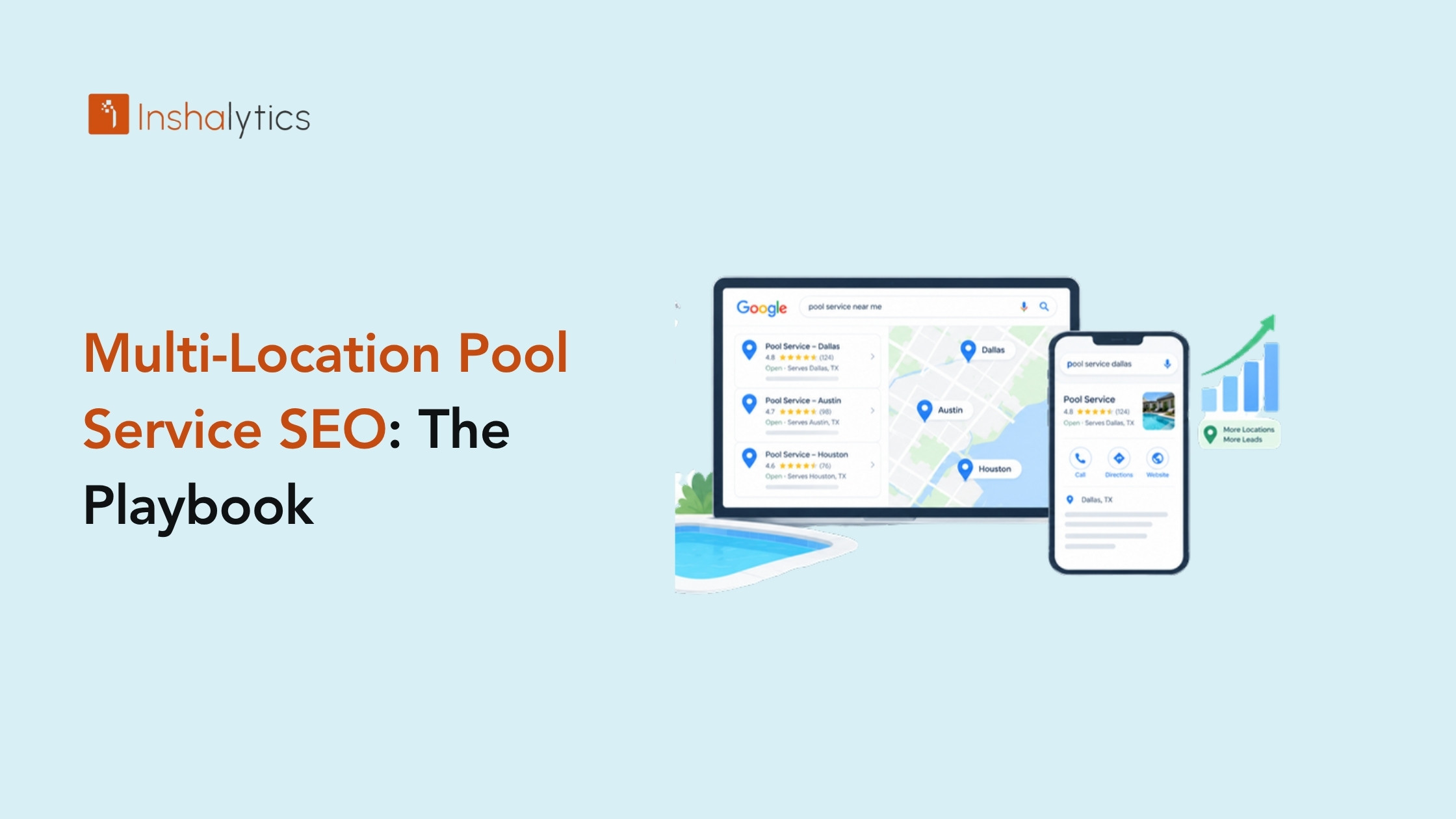
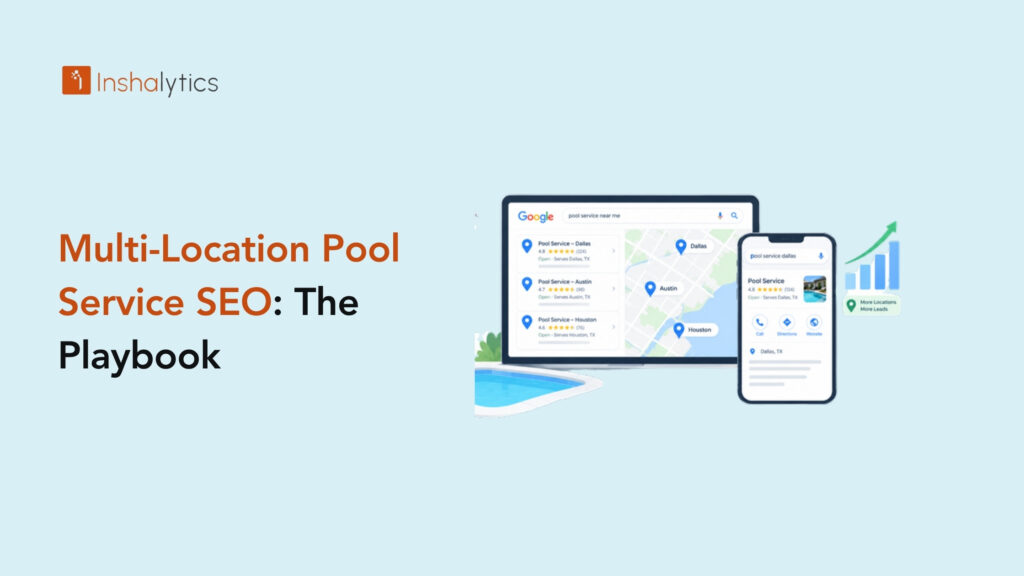
You opened a second branch, or started servicing three new cities, and the phone barely changed. That is the most common story we hear from pool company owners who grow past one market. Your original city keeps ranking while the new ones stay invisible, because Google treats each location as its own competition. Multi-location pool service SEO is the work of making every branch or service city earn its own visibility, without wasting effort on pages and profiles that do not count. This playbook shows you how to structure your site, manage your profiles, build local content, and measure what each market delivers.
What Makes Multi-Location Pool Service SEO Different?
Multi-location pool service SEO is the practice of ranking one pool company in several separate local markets at once. Instead of optimizing a single city, you build distinct pages, profiles, and proof for each branch or service area, so Google can match each searcher to the closest, most relevant option.
The difference from single-city SEO is that your reputation does not travel on its own. A strong profile in one town does little for a homeowner searching in the next. Three ideas explain why, and they shape every decision that follows.
Branches vs. Service Areas: Know Which You Are
A true branch has a staffed location with a real street address, where your team works during posted hours. A branch can qualify for its own Google Business Profile. A service-area business travels to the customer, runs from one base, and simply covers several cities. That company gets one profile with a service area, not one profile per city.
Most pool companies with 2-3 branches are a mix of both. Your shop in the north county is a branch. The three towns you drive to from there are service areas of that branch. Sort every market into one of those two buckets before you build anything, because it decides your pages, your profiles, and your budget.
Why Copy-Pasting City Pages Fails
The tempting shortcut is one page, duplicated for every city, with the town name swapped. Google reads that as thin, repetitive content. It also reads as exactly what it is: a template with no local knowledge behind it.
Homeowners notice too. A page that says “pool cleaning in your town” but talks about nothing a Dunmore homeowner cares about gives them no reason to call. We cover the mechanics in our guide to duplicate content and SEO, but the rule is simple. Every location page needs content that could only be true for that location: its water, its neighborhoods, its crew, its customers.
How Google Decides Which Location to Show
Google weighs three signals for local results: relevance, distance, and prominence. Relevance is how well your profile and page match the search. Distance is how close your location is to the searcher. Prominence is how well known and trusted you are, which reviews, links, and mentions feed. Google’s own advice on improving your local ranking walks through all three.
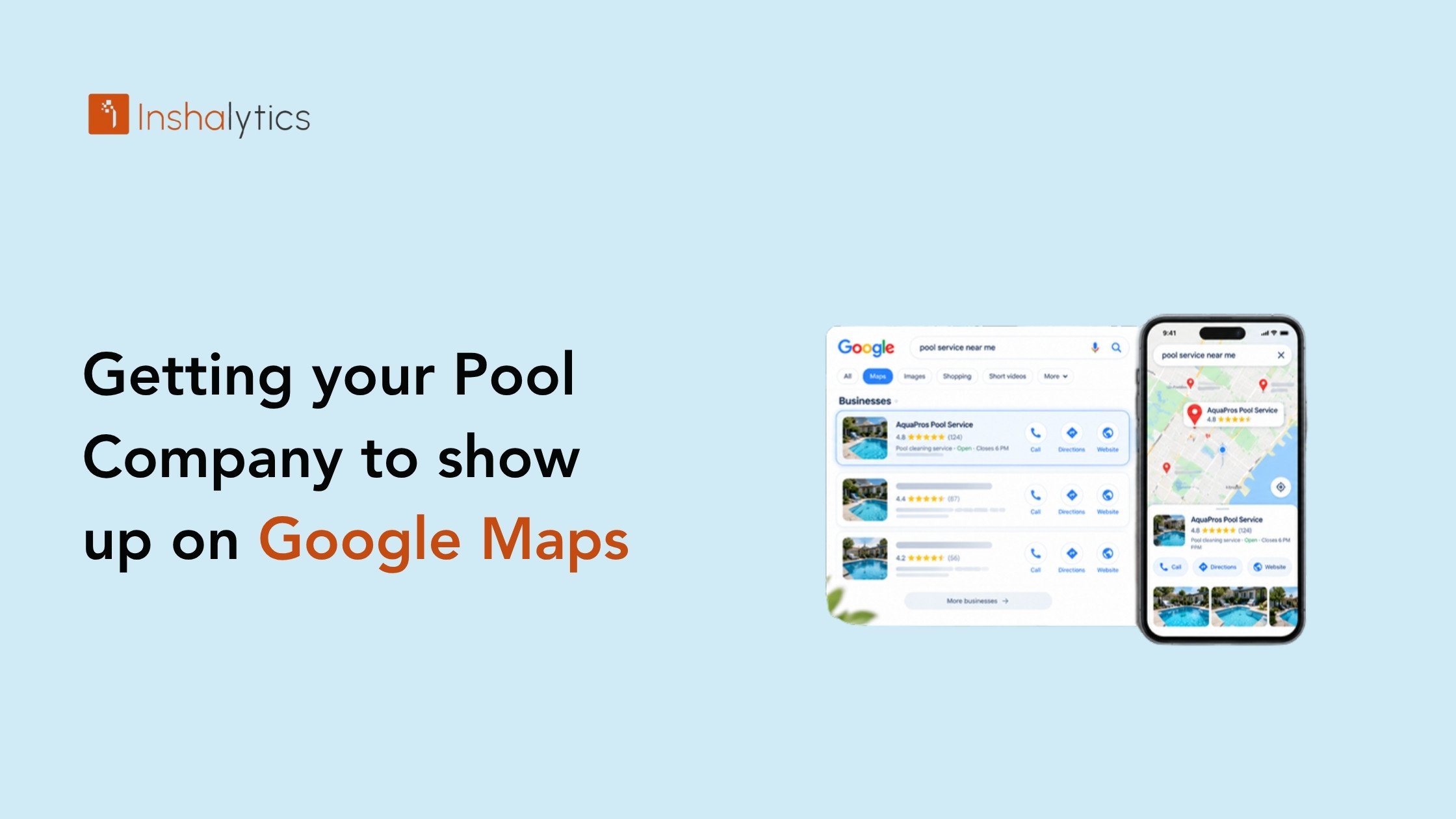
For you, distance is the one signal you cannot fake. A branch near the searcher has a built-in advantage, which is why each real branch needs its own strong profile and page. Map results follow these same three signals, so each branch has to earn its place on its own.
How Do You Structure a Website for Multiple Pool Service Locations?
Structuring a multi-location pool website means giving each branch or service city its own dedicated page, linked from a central locations hub and connected to your core services. The structure tells Google and homeowners where you work, what you offer there, and which page answers which search.
A clean structure comes first, because content built on a messy site wastes its own effort.
Location Page Architecture
Build a three-layer setup. A locations hub lists every market you serve and links to each one. Below it sit individual location pages, one per branch or major service city. Your core service pages, such as weekly service and repair, connect to those location pages.
Keep the URLs short and predictable, like /locations/city-name. Put the branch address, phone number, hours, a map, and a clear call button above the fold on every branch page. For service-area cities, skip the address and lead with the coverage details. If you want the full picture of how this fits your broader strategy, our local SEO guide for pool service companies covers the single-market foundation.
Unique Content for Every City
Each location page needs several hundred words that belong to that market alone. Start with the real details: which neighborhoods your techs visit, how long it takes to reach them, and who handles the route. Add what makes pools there different, such as heavy tree cover, hard well water, or lots of salt systems.
Then add things only you know. Mention the crew lead for that area, the typical service day, and common problems you fix there. Say a tech notices that one subdivision keeps battling the same algae issue every spring. That one observation does more than three paragraphs of generic copy. Write it from real jobs, not from a template.
Internal Linking Between Locations and Services
Links tell Google how your pages relate. Link each location page to the services you offer there, and link each service page back to the locations that provide it. Add contextual links from blog posts to the nearest location page.
Avoid dumping every city into a footer list on every page. Link where it helps a reader. A post about green pool recovery in a hot climate should point to the location pages that serve that climate. Our internal linking strategy guide explains how to build those paths so authority flows to your most important pages.
How Do You Manage Google Business Profiles for Multiple Locations?
Managing Google Business Profiles for multiple locations means giving each eligible branch its own verified, accurate, and active profile, while service-area markets share the profile of the branch that serves them. Each profile needs consistent details, its own reviews, and regular updates.
Profiles drive most of your map visibility, so errors here cost real calls.
When Each Location Qualifies for Its Own Profile
A location qualifies when it is a real place where your staff works and your business can be reached during stated hours. Google’s guidelines for representing your business rule out addresses that exist only to win a market, such as a mailbox, a virtual office, or a friend’s house you never use.
If a branch qualifies, verify it and create its own profile. If you simply cover a city from another location, do not create a fake address there. Instead, add that city to the service area of the profile that actually serves it. A false profile risks suspension, which would hurt the legitimate ones. Our Google Business Profile guide covers setup in detail.
Consistent NAP and Citations
NAP means name, address, and phone number. Each branch should use one exact version of all three everywhere it appears: your website, your profile, and every directory listing. Give each branch its own local phone number and tie it to its own page.
Inconsistency creates doubt. If one directory lists “Suite 4” and another does not, or an old number still floats around from before a move, you split your credibility. Build a simple spreadsheet with one row per branch and check it against every listing at least twice a year. Our article on NAP consistency shows how to find and fix mismatches.
Reviews and Photos Per Location
Reviews belong to the profile they are written on, so each branch has to earn its own. Ask customers at the end of a service visit, and give your techs a short link or QR code that opens the right branch’s review form. Reply to every review in the voice of that local team.
Photos matter just as much. Upload real images of each branch: the storefront or shop, the trucks, and the crew at work on local pools. Avoid reusing the same stock photo across profiles. Fresh, location-specific photos signal that each profile belongs to an active, real operation. Set a monthly reminder so no branch goes quiet.
Multi-Location Pool Service SEO Content That Wins Each Market
Once your structure and profiles are in place, content is what separates you from the competition in each city. The goal is to answer what local homeowners search for, in language that proves you know their area.
Think of content as three layers: service pages, proof, and education.
Local Service Pages (Weekly Service, Repair, Opening and Closing)
Pool companies sell a few core services, and each one deserves a page per market where demand is strong. Weekly service, equipment repair, and seasonal opening and closing are the usual starting points.
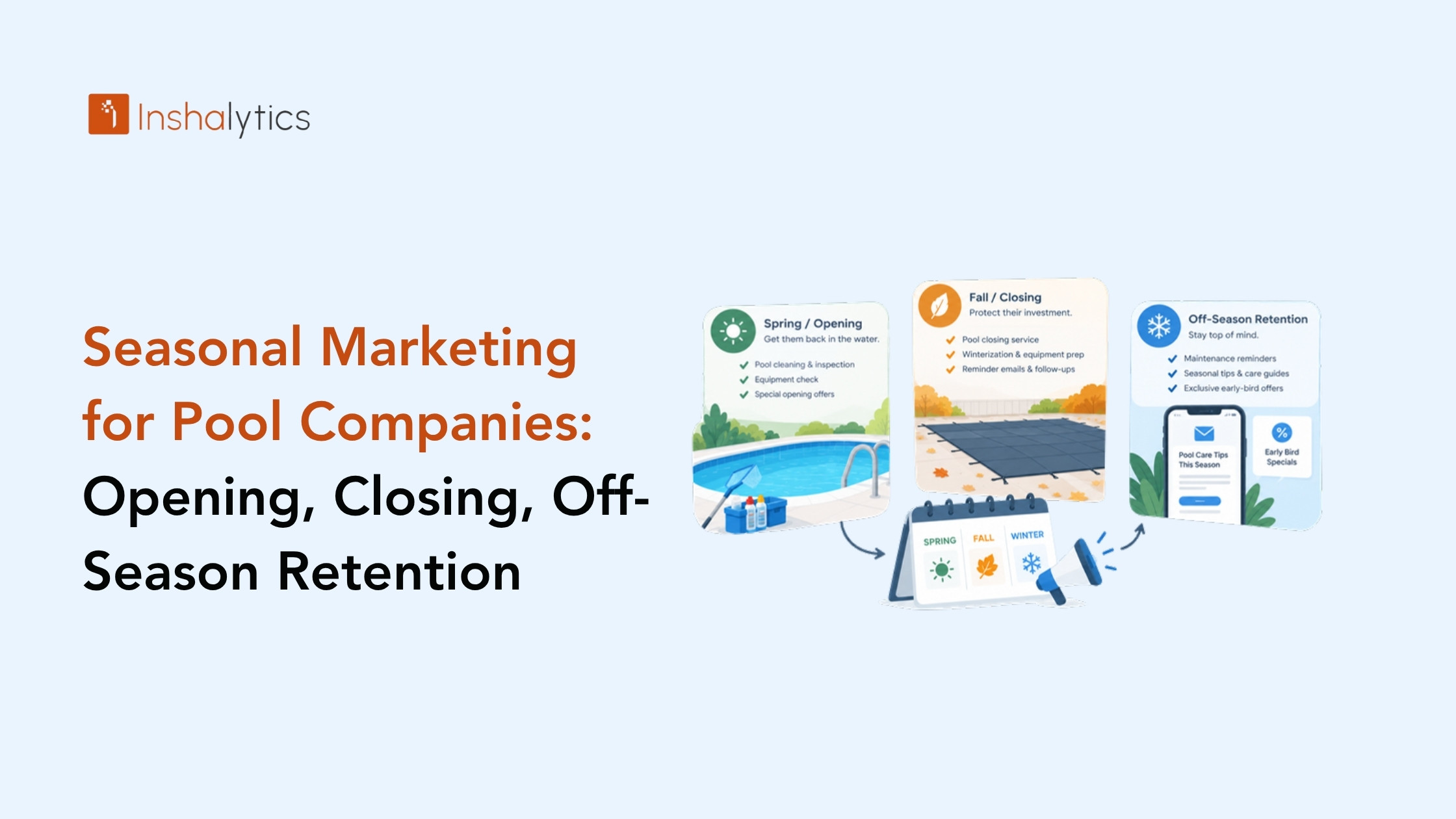
Do not clone them. A weekly service page for a warm, year-round market should talk about constant algae pressure and heavy debris. The same page for a cold market should talk about the season window and what is included at opening. Include local pricing logic only when you can state it truthfully, and always add a clear way to request service. Pair these with the timing ideas in our seasonal marketing for pool companies article.
Local Proof: Neighborhood Case Studies and Reviews
Proof is where generic competitors cannot follow you. Build your own short project write-ups from real jobs, with the customer’s permission. For each one, record the neighborhood, the problem you found, what your crew did, and how the pool looked afterward. Add before and after photos you took yourself.
Keep it factual and short. Use the customer’s name only if they agree, and otherwise describe the job by area. Then place each write-up on the matching location page, alongside a few genuine reviews from that market. Over time, you build a library of real local evidence that no template can copy.
Blog Topics That Reflect Local Water and Climate Conditions
Blog posts let you capture searches your service pages cannot, and local conditions give you topics competitors skip. Think about what actually differs between your markets.
A coastal branch can write about salt air and equipment corrosion. An inland branch with hard water can cover scale and cloudy water. A branch in a heavily wooded area can explain leaf load and filter cleaning. A colder market can explain opening and closing timelines. Each post should link to its related location page and service page. Build them in clusters around each location page, so each market has depth rather than a single stray article.
Measuring Multi-Location Pool Service SEO Performance
Measurement keeps you from judging all your markets by one blended number. A strong city can hide a weak one, so every location needs its own scoreboard.
Track three things, then use them to decide where to invest.
Rankings and Map Pack Visibility by Location
Track rankings for each market separately, using the searches homeowners actually use in that city. Check both the standard results and the map pack. Where you appear depends on where the searcher stands, so a grid-style local rank check for each branch shows more than a single position number.
Record a baseline for every location before you change anything. Then review monthly. You are looking for direction: which pages are climbing, which profiles show up more often, and which markets are stuck. Rankings alone are only a leading signal, so always pair them with the next section.
Calls, Forms and Booked Jobs Per Market
Rankings do not pay your techs. Calls, forms, and booked jobs do. Give each branch its own tracking phone number and tag each location page’s forms, so you can see which market generates which lead.
Then go one step further and mark which leads became paying customers. Say your north branch gets twice the calls of your south branch, but the south branch books a higher share of them. That tells you the problem is traffic, not the offer. Without job-level tracking per market, you are guessing. We report against calls and booked jobs for exactly this reason.
Deciding Where to Expand Next
Use your data to choose the next city. Look at three things: how many homeowners in the area likely have pools, how strong the competing local companies appear, and how close the area sits to your existing routes.
A neighboring town you already service is the lowest-risk move, because your trucks and reputation are already nearby. Test it first with a dedicated page and service-area coverage before you commit to a new address. If calls come in and jobs book, you have proof of demand. If they do not, you saved yourself the cost of a branch. Our pool company Google Maps guide helps you judge where you can realistically win map visibility.
Scale Local Rankings with Inshalytics SEO
Everything above takes consistent execution across several markets at once, which is where many owners stall. That is where we come in. Inshalytics is a digital marketing agency for local service businesses, and our pool maintenance marketing work is built around the way homeowners actually find a pool company.
Technical SEO for Multi-Page Location Sites
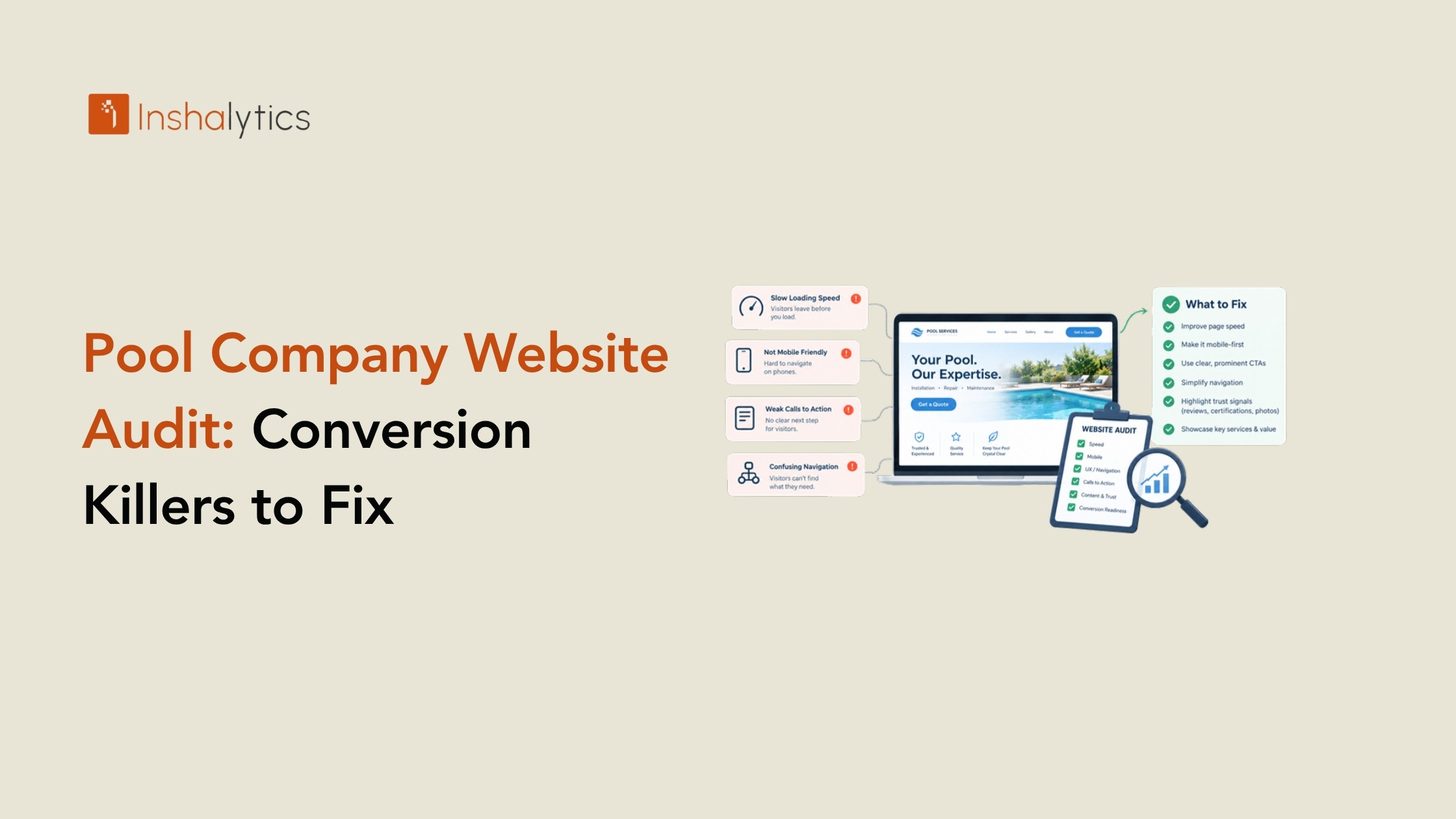
Location sites break in quiet ways. Pages compete with each other, URLs multiply, and slow load times hurt the mobile visitors who make up most local searches. We audit and fix the technical layer so every location page can be crawled, indexed, and understood, and so your structure supports growth instead of fighting it.
Local SEO and Content Marketing Support
We handle local SEO and content marketing together. That includes profile optimization, citation cleanup, and location pages written around real local details. We build content around pillar-cluster architecture, so each market gets depth instead of thin, repeated pages.
Reporting by Location
You should never have to wonder which city is working. We report by location and measure against calls and booked jobs, not just rankings. That gives you a clear view of where to push harder, where to fix problems, and where to expand. If you want to see how your locations stack up, we can show you how they rank against local competitors.
Next Steps: A 90-Day Multi-Location SEO Plan
You now have the full picture. Sort your markets into branches and service areas, build unique pages for each, give every eligible branch its own accurate profile, and measure each market on its own. The sequence matters more than speed, so use the next 90 days to put the foundation in the right order.
Audit, Fix, Then Expand
In the first 30 days, audit. List every branch and service city, check each profile and listing for consistent NAP, and review your location pages for copied or thin content. In days 30 to 60, fix what you found: correct listings, rewrite duplicated pages, and set up per-location call tracking. Only in the final 30 days should you add new pages or new markets. Expanding on a shaky base spreads the same problems across more cities.
Prioritizing Your Strongest Market First
Start your effort where you already have momentum. Your strongest market has the most reviews, the best rankings, and the clearest data. Perfect that location first, and use it as the model for every other one. Copy the process, not the words, and adapt each page to its own city. If you want a second set of eyes on where you stand, talk to our team and we will show you how your locations compare with the local competition. Every new market you win makes the next one easier to take.