An electrician who does one $73 lead a week on Angi and books one job a month isn’t having a bad month they’re seeing the shared-lead model work exactly as it’s designed. Understanding that design, rather than assuming something’s broken, is the first step to deciding whether Angi belongs in your lead mix at all, and if so, which parts of your business it should actually serve.
What “Shared Lead” Actually Means on Angi
The term sounds neutral. The economics behind it are not, and understanding the mechanism changes how you should evaluate the platform.
How Many Contractors Get the Same Homeowner Contact
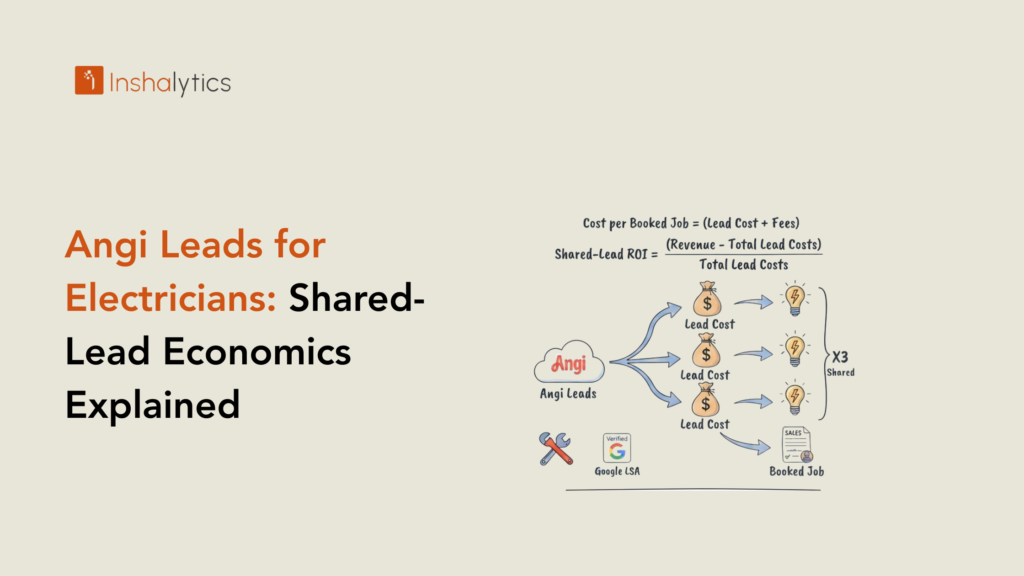
When a homeowner submits an electrical service request on Angi, that same contact information typically goes out to three to five electricians simultaneously, according to Grow Your Trade’s review of Angi Leads for electricians. Every one of you receives the same name, number, and job description at roughly the same moment, and the race to respond starts immediately.
Why You Pay Whether You Win the Job or Not
The lead charge hits your account the moment you receive it not when you win the job. If four other electricians also received it and one of them calls first, you’ve still paid full price for a lead that turned into nothing for your business.
Before evaluating whether Angi “works,” separate leads received from jobs won in your own records. The gap between those two numbers is the real cost of the shared model, and it’s usually larger than most electricians assume before they actually track it.
The Real Numbers for Electrical Work
Electrical lead pricing on Angi splits sharply by job type, and treating all electrical leads as one category hides the real economics underneath the blended average.
Small Repairs: $15–$50 Per Lead
Basic repair and troubleshooting leads a dead outlet, a flickering light, a minor panel issue typically run $15 to $50 per lead, according to Grow Your Trade’s pricing breakdown. Volume is higher in this tier, but so is competition, since more electricians are willing to chase smaller jobs at a lower price point.
Panel Upgrades, Generators, and EV Chargers: $50–$100+ Per Lead
Bigger-ticket work panel upgrades, generator installs, EV charger installations runs $50 to $100 or more per lead. These leads cost more upfront, but the job value behind them is high enough that even a modest close rate can produce solid margin, unlike the thinner economics of the small-repair tier.
Annual Membership and Deposit Costs on Top
Layered on top of per-lead pricing, most electricians report an annual membership fee around $300 and a required lead-credit deposit, commonly $300 to $1,500, just to activate the account, according to LeadTruffle’s contractor pricing guide. That’s real money committed before a single lead converts into actual revenue.
Split your Angi spend by job type for the last three months. Most electricians have never looked at their small-repair leads and their panel-upgrade leads as two separate line items, and the ROI difference between them is usually significant once separated.
Why the Economics Get Worse as You Grow
Counterintuitively, Angi’s shared-lead model tends to become less favorable the more established your business gets, not more, which surprises a lot of electricians who expected the opposite.
Paying for Every Lead vs. Winning a Shrinking Share
A newer electrician with open capacity can absorb a lower win rate because every job still represents genuine growth. An established electrician competing against the same pool of leads is paying the same per-lead price for a shrinking marginal benefit, since the jobs they’re winning aren’t meaningfully growing their existing customer base or reputation the way they did early on. One analysis from Alev Digital found electricians needing 5 to 10 purchased leads to book a single job in competitive markets, at a per-lead cost of $40 to $80.
What Happens When Private-Equity-Backed Competitors Bid Up Prices
Consolidation in electrical, plumbing, and HVAC has brought larger, PE-backed operators into local markets who can afford to overpay for leads because they’re playing a volume game with lower per-job overhead. That bidding pressure pushes shared-lead prices up across the board, making the math worse for independent electricians even when nothing about their own business has changed. One electrical contractor cited by ResultCalls calculated that Angi fees consumed 35% of job revenue on the leads they won, and another reported booking just one job from 25 purchased leads a 4% conversion rate.
When Shared-Lead Economics Still Work for Electricians
None of this means Angi is universally a bad deal it means it’s situational, and the right call depends on where your business is right now.
New Businesses Filling Open Capacity
For an electrician with no backlog and a need for immediate work, Angi’s speed and volume can be genuinely valuable, even at a lower close rate. Filling open capacity today is worth more to a new business than optimizing for the cheapest possible cost per lead down the road.
High-Volume Small-Ticket Service Work
Electricians whose business model relies on high call volume and quick turnarounds rather than fewer, larger jobs tend to tolerate shared-lead economics better, because steady flow matters more than exclusivity for that kind of operation.
Moving Beyond Shared Leads
For electricians ready to reduce dependence on shared leads, the path usually runs through two channels working together rather than a single replacement platform.
Comparing Angi to Google LSA for Big-Ticket Electrical Jobs
For panel upgrades, generator installs, and EV charger work where a single booked call is worth significantly more Google LSA’s exclusive lead model tends to produce a lower cost per booked job than Angi’s shared approach, since you’re not splitting the opportunity with four other bidders for the same homeowner. For the exact formula to run this comparison yourself, see Angi vs Google LSA for Plumbers: The Real Math, which applies directly to electrical work using the same underlying logic.
Building an Owned Pipeline With Reviews, GBP, and SEO
A strong Google Business Profile, a steady stream of reviews, and a website that ranks for local electrical searches produce leads with no per-lead invoice attached. It takes longer to build than turning on Angi, but every lead it produces afterward is free at the margin, which changes the long-term economics considerably in your favor.
Shared-lead economics on Angi aren’t a mystery once you see the mechanism clearly: you’re paying for a chance, not a customer, and that chance gets more expensive relative to its value as your business grows. Knowing your real job-type breakdown is what turns Angi from a platform you’re stuck guessing about into one you can actually manage strategically, keeping only the parts of it that make financial sense for where your business is today.
Related reading: Lead Generation for Electricians: The Complete Multi-Channel Guide · Why Your Electrician Google Ads Aren’t Generating Real Leads
Want a clear picture of which electrical job types are worth keeping on Angi and which should shift to LSA or SEO? Let’s run the numbers together and build a lead mix that actually fits your business.