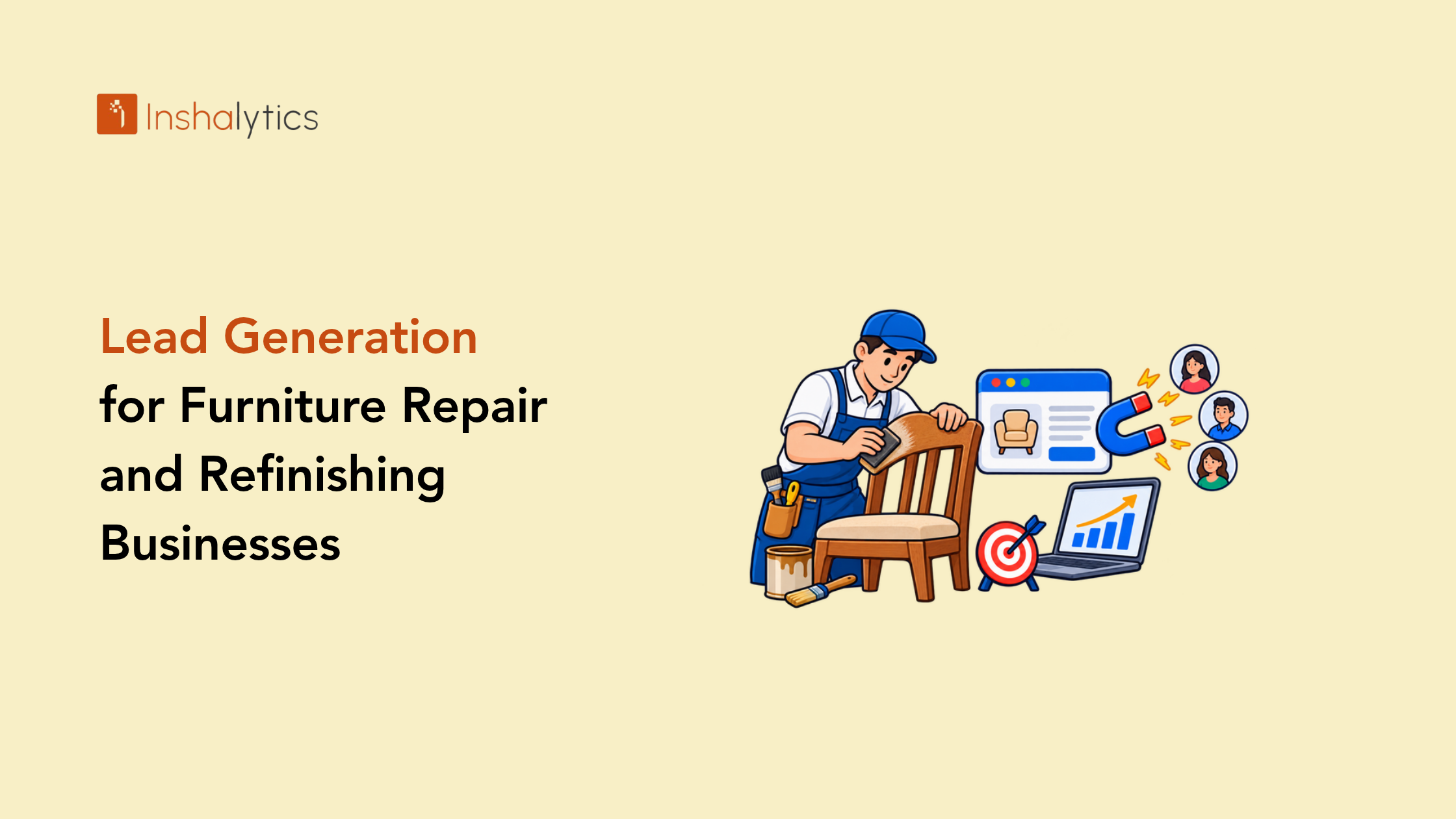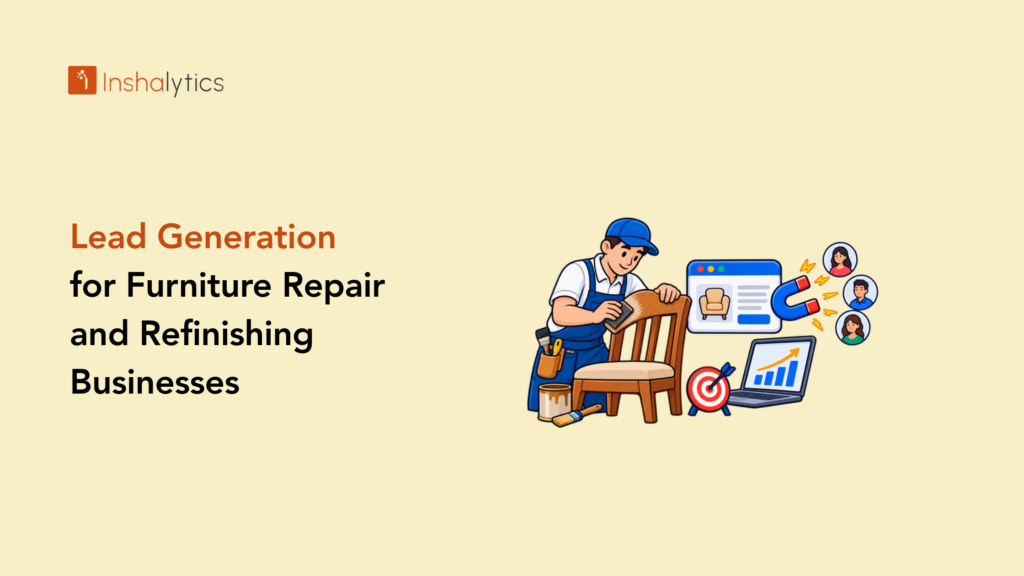
Furniture repair and refinishing is a referral-heavy trade, and most owners rely on word of mouth until the calendar empties. The good news is that homeowners who need a chair re-upholstered or a dresser refinished do search for help. The challenge is being found at the right moment and turning an inquiry into a booked piece of work. This guide covers the lead channels that fit a small furniture restoration shop, how to set them up, and what to track.
What Lead Generation Looks Like for a Furniture Restorer
Lead generation for furniture repair means creating a steady flow of people who want a specific repair, refinish or restoration done. Unlike a plumber, your customer often has time to compare options, so your website, photos and reviews carry more weight than a fast-response ad.
Which Lead Channels Work Best for Furniture Refinishers?
Most furniture businesses do best with three channels: local search, referrals and social content that shows the work.
Local Search and Google Business Profile
People searching “furniture refinishing near me” or “upholstery repair in ” are ready to hire. Your Google Business Profile should list accurate services, real photos of finished pieces and a clear service area. Ask recent customers for reviews that name the piece they had repaired, since specific reviews help people trust you. For local search setup, see our handyman lead generation guide.
Referrals From Interior Designers and Local Businesses
Interior designers, staging companies, antique dealers and moving companies all meet people who own furniture worth saving. A simple referral arrangement, such as a small thank-you for each booked job, can produce steady work. Partner businesses that serve the same homeowners are often the most reliable source of repeat business.
Social Content and Paid Social
Before-and-after photos perform well on Instagram and Facebook. Paid social can also reach homeowners during the research phase, before they search. Use a clear offer, such as a free estimate for a specific piece type, and send traffic to a page that makes booking simple.
Start with the platform where your past customers already spend time, then expand once you have booked work to measure.
How Do You Get More Leads Without Buying Them?
Paid lead marketplaces can deliver inquiries quickly, but quality varies and the same lead may go to several shops. Organic channels take longer, yet they usually produce better-fit customers. If you test a paid lead source, track its cost per booked job and stop if the numbers do not work.
How to Respond to Leads Before They Go Cold
Furniture customers often contact several shops. The first shop to reply with a clear estimate process usually wins the job. Set a same-day response goal, send photos of similar work and offer a simple next step, such as dropping off the piece or booking a home visit.
What to Track Each Month
- Lead source: Where each inquiry came from.
- Booked jobs: How many inquiries turned into work.
- Average job value: Which piece types bring the most revenue.
- Repeat and referral rate: How often past customers return or refer someone.
If one channel brings many inquiries but few bookings, the offer or follow-up needs work, not more spend.
Is Lead Generation Worth It for a Small Shop?
For most small refinishing businesses, a combined approach works best: a strong Google profile, a referral program and one paid channel tested for 60 to 90 days. Check the numbers monthly before scaling any single channel.
Want a lead plan built around your shop, your service area and the pieces you most want to win? Inshalytics can set up local search, tracking and a simple follow-up process. Get a free consultation to see what that looks like for your business.