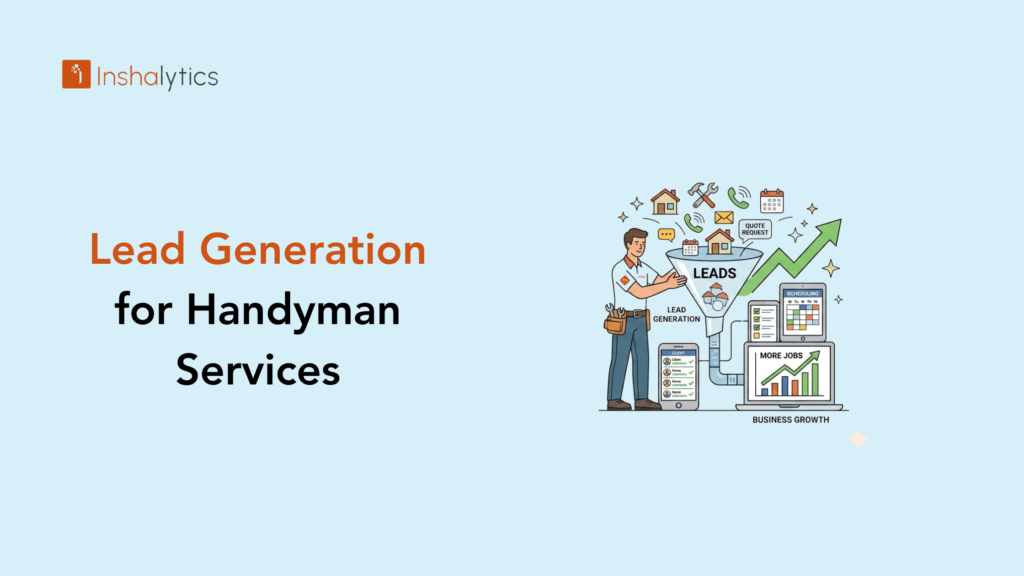
Running a handyman business is a daily hustle. You’re fixing cabinets on Monday, hanging drywall on Tuesday, installing ceiling fans on Wednesday, and in between, you’re trying to figure out where next week’s jobs are coming from. Referrals help. Word of mouth helps. But neither produces the consistent, predictable lead flow a real business needs to scale.
Every handyman gets to the same crossroads eventually: either you figure out a systematic way to generate leads, or you stay stuck at the revenue ceiling that referral work alone can support. The good news is that handyman lead generation isn’t complicated. It’s just unfamiliar to most contractors who’ve relied on word of mouth for years.
This complete guide walks through every lead generation channel that actually works for handyman businesses, how to prioritize them based on your stage, and the 90-day roadmap to predictable, profitable lead flow.
Why Handyman Lead Generation Is Different From Other Trades
Handyman businesses face specific lead generation challenges that don’t apply to higher-ticket trades. Understanding these differences is the first step toward building a system that works for your specific service mix.
Lower-Ticket Jobs, Higher Volume Economics
The average handyman job runs $150–$500. That’s significantly lower than HVAC ($500–$15,000) or roofing ($5,000–$25,000), which means your customer acquisition cost needs to stay proportionally lower. Spending $200 to acquire a $250 repair customer doesn’t work unless that customer becomes a repeat client.
The volume economics of handyman work also mean you need more leads than a high-ticket contractor. Ten handyman leads producing $300 average jobs generate the same revenue as two HVAC replacement leads. Your lead generation system has to prioritize volume and efficiency.
Commodity Perception and How to Fight It
Homeowners often perceive handyman services as commodity work, with interchangeable contractors offering similar services at competing prices. This perception drives price shopping and low conversion rates unless you actively differentiate through branding, reviews, and specific service packaging.
The “Trust Your Home to a Stranger” Conversion Hurdle
Every handyman job requires letting a stranger into the homeowner’s house. Trust becomes the single largest conversion factor, even more than price. Review volume, professional appearance, licensing visibility, and responsive communication all matter more for handyman conversion than for trades where work happens outside the home.
How Do I Get Leads for a Handyman Business?
To get leads for a handyman business, combine four channels: local SEO and Google Business Profile optimization for free organic traffic, Google Local Services Ads for pay-per-lead generation, social media for community visibility, and a systematic referral program for repeat and word-of-mouth customers. Most handyman businesses under $250K should start with LSAs and SEO before expanding to other paid channels.
Inbound Lead Channels (SEO, GBP, Content)
Inbound channels attract homeowners actively searching for handyman services. These include SEO-optimized service and location pages, a well-maintained Google Business Profile, and content marketing that answers common homeowner questions. Inbound lead generation takes longer to produce results but builds owned traffic that compounds over time.
Outbound Paid Channels (Google Ads, LSAs, Meta)
Paid channels put you in front of homeowners regardless of whether you’ve earned organic rankings. Google Ads and Local Services Ads produce immediate lead flow. Meta ads build awareness and generate leads for planned work. Paid channels deliver faster results than SEO but require ongoing spend.
Referral and Word-of-Mouth Systems
Your existing customers are your best lead source if you give them a reason to refer. Systematic referral programs with clear incentives (“$25 off your next service for every referral who books”) convert one-time customers into lead generators. Most handymen have referral potential that they never activate.
Marketplace Platforms (Thumbtack, Angi, HomeAdvisor)
Lead marketplaces like Thumbtack, Angi, and HomeAdvisor connect handymen with homeowners actively requesting services. These platforms charge per lead ($30–$75) and provide quick access to lead flow, but the leads aren’t exclusive, and you’re competing on speed-to-response with other contractors. Use them strategically to fill schedule gaps, not as your primary lead source.
The Fastest Ways to Generate Handyman Leads Right Now
If you need leads this week, these channels produce the fastest.
Google Local Services Ads (Pay-per-Lead)
Google Local Services Ads (LSAs) are the single fastest lead source for most handyman businesses. Set up typically takes 1–2 weeks for Google’s verification process, but once active, LSAs place your business above all other search results with the Google Guaranteed badge. You pay only per verified lead (typically $15–$30 for handyman services), and the Google Guaranteed badge dramatically boosts conversion rates.
For handymen under $250K in annual revenue, we recommend allocating your entire paid ad budget to LSAs before exploring other channels.
Call-Only Google Search Ads
Call-only ads appear exclusively on mobile devices and drive direct phone calls instead of website visits. These work beautifully for handyman emergency-adjacent searches: “handyman near me,” “home repair same day,” “drywall repair .” You pay per click ($2–$8 for handyman keywords), and clicks convert directly to phone calls.
Nextdoor and Local Facebook Groups
Nextdoor and local neighborhood Facebook groups are free lead sources that work exceptionally well for handyman businesses. Homeowners frequently post requests for recommendations in these communities. Active participation, answering questions, offering advice, and demonstrating expertise generate leads organically without ad spend. Establish a consistent, helpful presence before asking for business.
Building a Handyman Website That Actually Captures Leads
Your website is the foundation of every marketing effort. Without a converting website, paid ads and SEO both underperform.
The 5 Pages Every Handyman Site Needs
A functional handyman website needs at a minimum:
- Homepage with primary service overview and clear CTA
- Services page listing everything you do with pricing indicators
- Service area page covering neighborhoods and cities you work in
- About page with your story, licensing, and insurance info
- Contact page with phone, form, and service area map
Beyond these five, individual service pages and location pages drive SEO traffic.
Service and Location Pages for Local SEO
Service pages target specific keywords: “Drywall Repair in [City],” “Ceiling Fan Installation [City],” “Furniture Assembly [City].” Each page should run 600–1,200 words with specific descriptions, pricing ranges, and FAQs. Location pages target neighborhood and suburb names: “Handyman Services in Downtown [City],” “Home Repair in [Neighborhood].” These pages capture the highest-intent local searches.
Trust Elements: Licensing, Insurance, Before-and-After
Display your license number, insurance coverage, and bond information prominently. Before-and-after photos of completed work build more trust than any testimonial copy. Real photos of your team and trucks outperform stock imagery significantly. Professional website development bakes these elements into the foundation.
Local SEO for Handyman Businesses
Local SEO produces the most cost-effective lead generation for handyman businesses because it generates owned traffic that doesn’t disappear when you stop paying for ads.
Setting Up and Optimizing Your Google Business Profile
Your Google Business Profile is the single most important local SEO asset for a handyman business. Complete every field category, services, description, hours, service area, and attributes. Upload 20+ photos, including your team, trucks, and completed projects. Post weekly updates about completed work, seasonal services, and tips. An actively maintained profile outranks dormant competitors with better reviews.
Service + City Keyword Targeting
Target your primary services combined with your city name: “handyman ,” “home repair ,” “drywall repair .” These keywords produce the most commercial-intent searches in your market. Build dedicated pages for each service-plus-city combination and optimize headlines, meta descriptions, and content for these target phrases.
Review Collection Systems That Compound Over Time
Reviews are the single strongest local ranking signal for handyman businesses. Build review collection into every job completion: send a text link to Google review immediately after closing the job. Tools like Housecall Pro and NiceJob automate this process. Aim for 5+ new reviews per month consistently.
Paid Advertising Channels Ranked for Handyman Businesses
Different paid channels serve different business stages. Knowing which to prioritize prevents wasted ad spend.
Google Local Services Ads (Best for Under $250K)
LSAs are the highest-ROI paid channel for small handyman businesses. Pay-per-lead economics, Google Guaranteed badge, top-of-page placement, and minimal setup complexity make them the starting point for most handymen.
Google Search Ads / PPC (Best for $250K+)
Google Search Ads offer more control and scalability than LSAs but require more sophisticated setup and optimization. Most handyman businesses should run Search Ads only after establishing consistent revenue and having the budget to cover both LSA and Search Ad spend simultaneously.
Facebook and Instagram (Best for Brand Awareness)
Facebook and Instagram ads work best for building brand awareness rather than generating direct leads. A $5–$10/day brand awareness campaign keeps your business top-of-mind with local homeowners so that when they eventually need a handyman, you’re the name they remember.
Display and Retargeting (Best for Top-of-Mind)
Display and retargeting ads follow visitors around the web after they’ve visited your site. For handyman businesses, retargeting works best as a supplementary channel. It doesn’t generate cold leads, but it keeps warm prospects engaged until they’re ready to book.
Content Marketing for Handyman Lead Generation
Content marketing builds long-term SEO authority and produces passive lead flow from organic search.
Seasonal Home Maintenance Content
Seasonal content targets homeowners preparing for weather changes. “Spring home maintenance checklist,” “Fall prep before winter,” “Summer home repair priorities” these topics capture search volume and establish expertise. Publish seasonal content 60–90 days before the season begins to give Google time to index and rank.
Video Content Showing Real Jobs
Video content, 30-60 second clips of you completing real repairs, builds trust and serves multiple channels at once. Post to YouTube (for SEO traffic), Instagram Reels (for local visibility), and your website (for conversion lift). Production doesn’t need to be polished; authenticity outperforms studio quality.
Blog Posts That Answer “How Do I Fix…” Queries
Homeowners Google common problems before calling a handyman: “How do I fix a squeaky door?” “How to patch a small hole in drywall.” Comprehensive blog posts answering these questions capture search traffic and convert a percentage of readers into customers who realize the fix is more involved than they thought.
Referral, Repeat, and Retention Systems That Compound
Your existing customers are your highest-value lead source. Systematic retention turns them into lead generators.
Structured Referral Programs With Real Incentives
Casual referrals happen occasionally. Structured programs happen systematically. Offer real incentives: $25 off next service, a free inspection, or a percentage off for every referral who books. Make the referral process easy: pre-written email templates, unique referral links, and clear tracking.
Email and SMS Follow-Up for Repeat Business
Your existing customer list is gold. Email marketing systems send seasonal reminders, special offers, and service anniversaries to keep your business top-of-mind. “It’s been a year since your last service time for a home checkup?” emails generate bookings that would otherwise not happen.
Partnering With Realtors, Property Managers, and Senior Communities
Strategic partnerships produce steady lead flow. Realtors need handymen for pre-listing repairs. Property managers need handymen for tenant requests. Senior living communities need handymen for resident modifications. Build partnerships with 3–5 strategic partners in your market, and they’ll generate consistent work.
How to Qualify and Convert Handyman Leads Faster
Generating leads is only half the battle. Converting them efficiently is where businesses scale.
Speed-to-Lead: Why Response Time Beats Lead Volume
Leads contacted within five minutes convert at dramatically higher rates than leads contacted within an hour. Most handymen are in the field and can’t answer calls immediately. Solutions: automated SMS response within 60 seconds, an answering service for calls, or a dedicated dispatch person for larger operations.
Pricing and Estimate Processes That Close More Deals
Handyman pricing is a trust-or-lose-trust moment. Transparent pricing ranges on your website (“$95 for service calls, $60/hour after the first hour”) converts better than “free quotes.” Customers hesitant to book a “quote” will book a defined service. Package common services with fixed pricing when possible.
Call Tracking and Attribution Setup
Without call tracking, you’re guessing which marketing channels produce leads. Assign unique phone numbers to each channel (Google Ads, LSAs, website, Facebook) so you know exactly which dollar of marketing spend produced each call. This data informs every future budget decision.
How Inshalytics Builds Handyman Lead Generation Systems That Scale
Most handyman marketing is a collection of disconnected tactics. We build integrated systems where every channel feeds the others.
Our Stage-Based Lead Gen Framework
Different stages of business need different strategies. Handymen under $100K revenue need speed-to-first-lead focus. $100K–$500K operations need to build the foundation for scaling. Over $500K, the focus shifts to a systematic multi-channel strategy. Our framework meets you where you are.
Owned vs. Rented Leads: Why Our Approach Compounds
Every Inshalytics engagement prioritizes building owned lead systems through SEO alongside paid advertising. Paid ads produce immediate revenue while owned traffic builds. Over 18–24 months, the balance shifts from 80% paid to 50/50 paid and organic, dramatically reducing your cost-per-acquisition.
What a Complete Handyman Marketing System Looks Like
A complete system covers: an optimized website with call tracking, active SEO producing organic leads, paid ads (LSAs plus Google Ads) filling the pipeline, email and SMS systems for retention, review collection automation, and monthly reporting tying every lead to revenue.
Your 90-Day Handyman Lead Generation Roadmap
Systematic lead generation follows a predictable pattern. Here’s what the first 90 days should look like.
Days 1–30: Foundation (Website + GBP + LSA)
Audit and optimize your Google Business Profile categories, photos, services, and hours. Build or rebuild your website with call tracking and conversion tracking. Apply for Google Local Services Ads and complete verification. Launch a review collection system. Begin collecting 2–3 reviews per week.
Days 31–60: Traffic (SEO + Google Ads)
Build out service and location pages on your website. Launch Google Search Ads with call-only campaigns for primary services. Submit to top directories with consistent NAP. Publish your first 4–6 blog posts targeting local keywords.
Days 61–90: Scale (Meta + Content + Referrals)
Launch Facebook brand awareness campaigns in your service area. Set up a structured referral program with tracking. Expand content marketing with seasonal and service-specific posts. Build your first strategic partnership with a realtor or property manager.
By day 90, you should have multiple channels producing leads, review velocity building, and data to inform ongoing optimization.
Handyman lead generation isn’t a mystery; it’s a system of specific, proven tactics executed in the right order. The difference between handymen stuck at six figures and those scaling past seven comes down to whether they build these systems or rely on referral luck. If you’re ready to stop hoping the phone rings and start building a predictable lead flow, Inshalytics builds handyman lead generation systems designed for contractors serious about scaling. Book a consultation, and we’ll map out your fastest 90-day path to owned, predictable lead flow.