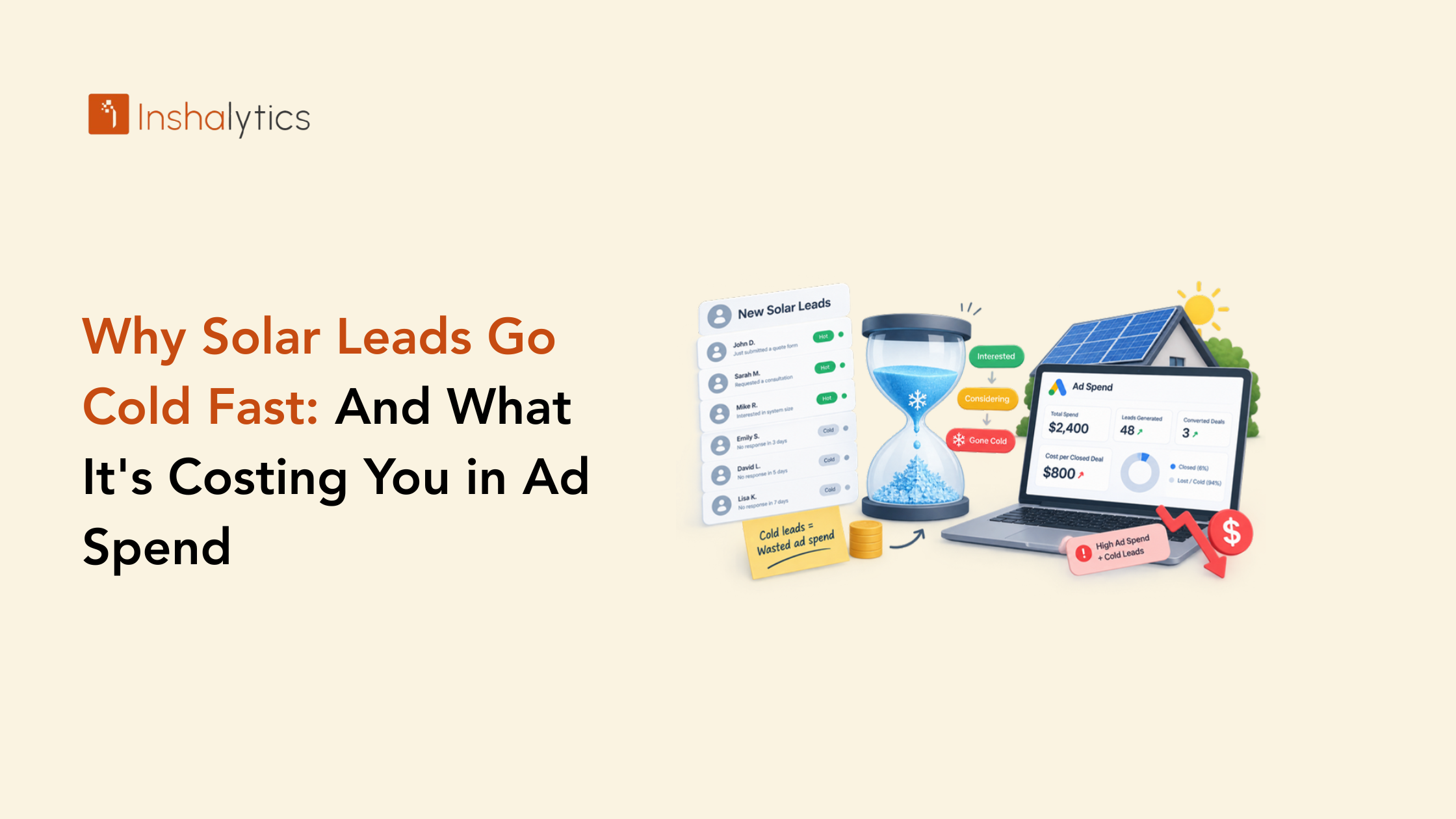
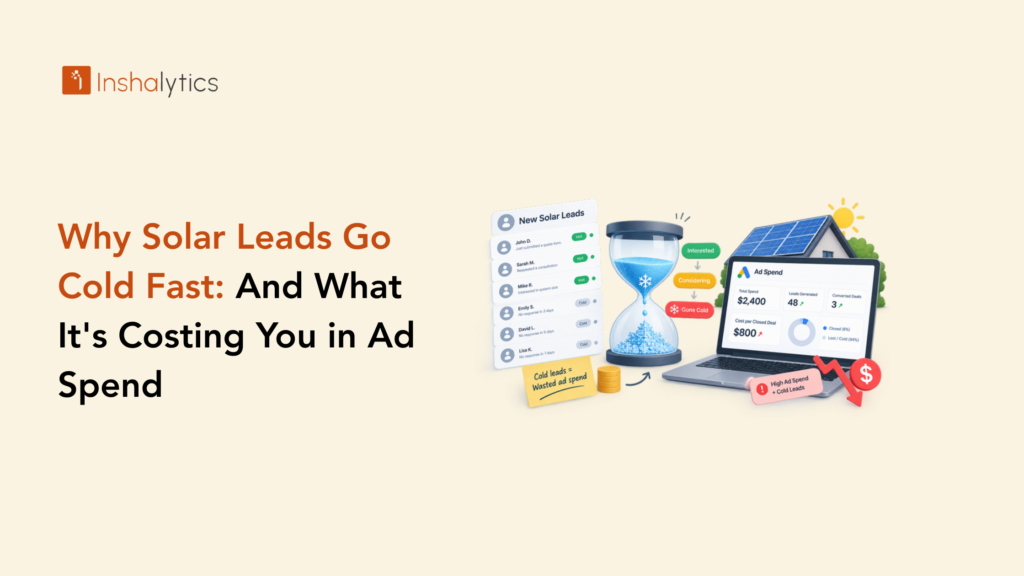
Contacting a solar lead within the first minute improves conversion by nearly 400% compared to letting that same lead sit for even a few hours, a gap large enough that response speed alone can determine whether a lead you already paid for ever turns into revenue. Understanding why solar leads go cold fast is the first step to fixing one of the most expensive, least visible leaks in a solar company’s marketing funnel, one that rarely shows up clearly in a standard monthly report because it hides inside a metric most companies never separate out from overall lead volume. This article covers the research behind that drop-off, the operational reason it happens even to installers who know better, and how to build a system that catches leads before they cool, without requiring a bigger sales team or a bigger marketing budget.
The Moment That Triggers Solar Interest Fades Just as Fast
Solar interest is rarely constant. It’s triggered by a specific moment, and that moment has a short shelf life that most marketing calendars don’t account for.
Sticker Shock, Referrals, and EV Purchases as Interest Triggers
A homeowner’s interest in solar is usually sparked by a specific event, an unusually high electric bill, a referral from a friend who just went solar, or buying an electric vehicle and thinking about charging costs. That interest is genuine, but it’s tied to the emotional weight of the triggering event, not a permanent decision to buy that will still be there weeks later. Marketing that treats every lead as equally warm, regardless of how much time has passed since that original trigger, misses this entirely.
Why the Further From the Trigger Event, the Less Likely They Convert
The longer the gap between the triggering event and your first contact, the less likely that lead converts, the same pattern behind why New Year’s resolutions fade the further you get from January 1st. A homeowner who filled out a form the moment their electric bill shocked them is a very different prospect three days later, once that initial urgency has faded into the background of daily life.
The Research Behind the 1-Minute Rule
This isn’t guesswork. Large-scale lead response research consistently confirms the same pattern across industries, solar included, and the numbers are consistent enough to plan a whole follow-up process around, rather than treating fast response as a nice-to-have that happens whenever staff availability allows.
400% Higher Conversion When Contacted Within 1 Minute
Research analyzing millions of leads across industries found that contacting a customer within one minute of lead generation improved lead-to-sale conversion by nearly 400% compared to slower response times. For solar specifically, where deal sizes are large and competition for the same homeowner is intense, that gap translates directly into lost revenue that never shows up as a clear line item anywhere.
Why Waiting 5–24 Hours Only Improves Conversion by 17%
Conversion improvement drops sharply after that first minute. Contacting a lead within five to twenty-four hours only improves conversion by roughly 17% over an even slower response, a fraction of the lift available in that first sixty seconds. Yet most solar companies, on average, still contact leads roughly a full day after they’re generated, well past the window where it matters most.
The Solar Backlog Problem Nobody Tracks
Even installers who understand the research often still respond too slowly, not from ignorance, but from a structural problem specific to how solar sales cycles work.
Why Your Best New Leads Go Cold While You’re Finishing the Last Sale
A signed contract with a deposit doesn’t mean the sales process is over. It means weeks of design, permitting, and installation coordination are just beginning. While that work is happening, new inbound leads keep arriving, and there’s often nobody dedicated to responding to them the moment they come in, because the same people are buried in fulfilling the last sale they already closed.
The Gap Between Leads Generated and Leads You Can Actually Work
This is the backlog problem: your marketing is generating leads at a steady pace, but your team’s actual capacity to respond fast is bottlenecked by everything already in the pipeline. It doesn’t show up on any dashboard, but it’s directly costing closed deals every week it goes unaddressed, quietly compounding month after month as volume grows. Owners who scale up lead generation without also scaling up follow-up capacity often see their close rate quietly decline even as raw lead volume climbs, and the connection between the two isn’t always obvious from the numbers alone.
Is a Cold Solar Lead Actually Dead?
A lead that’s gone quiet for weeks isn’t necessarily lost for good. It just needs a different approach than a standard follow-up that treats every unresponsive lead the same way.
The 3-Step Re-Engagement Sequence That Revives 20–35% of Cold Leads
A structured re-engagement sequence, leading with new, genuinely useful information rather than a generic check-in, followed by value without an ask, then a low-pressure permission-based close, has been shown to revive a meaningful share of leads that had gone cold for 30 to 90 days, without discounting or pressure tactics that can damage the relationship if the customer isn’t ready.
New-Angle Messaging vs. “Just Checking In” Follow-Ups
A message that sounds like a follow-up reminder gets ignored. A message that leads with a genuinely new piece of information, an updated incentive, a financing option they hadn’t considered, restarts a conversation instead of just reminding them it exists. This distinction is the difference between a re-engagement sequence that works and one that reads as another sales nag nobody wants to respond to. Homeowners can usually tell the difference between a generic nudge and a message that shows someone actually thought about their specific situation since the last conversation.
Building a System That Doesn’t Let Leads Cool in the First Place
The most effective fix isn’t a better re-engagement sequence. It’s preventing leads from going cold to begin with, which requires rethinking how the first few minutes after a lead arrives actually get handled.
Automating First-Contact Speed Without Adding Headcount
An automated first-response, a text or email acknowledging the inquiry within seconds, even before a human follow-up happens, buys crucial time and signals responsiveness immediately, without requiring a dedicated team member watching the lead queue around the clock waiting for the next form fill. It won’t replace a real conversation, but it stops the clock from running against you while one gets arranged. Even a simple automated acknowledgment closes a meaningful part of the gap while a real person gets free to make the actual call.
How Inshalytics Structures Follow-Up Workflows Around This Research
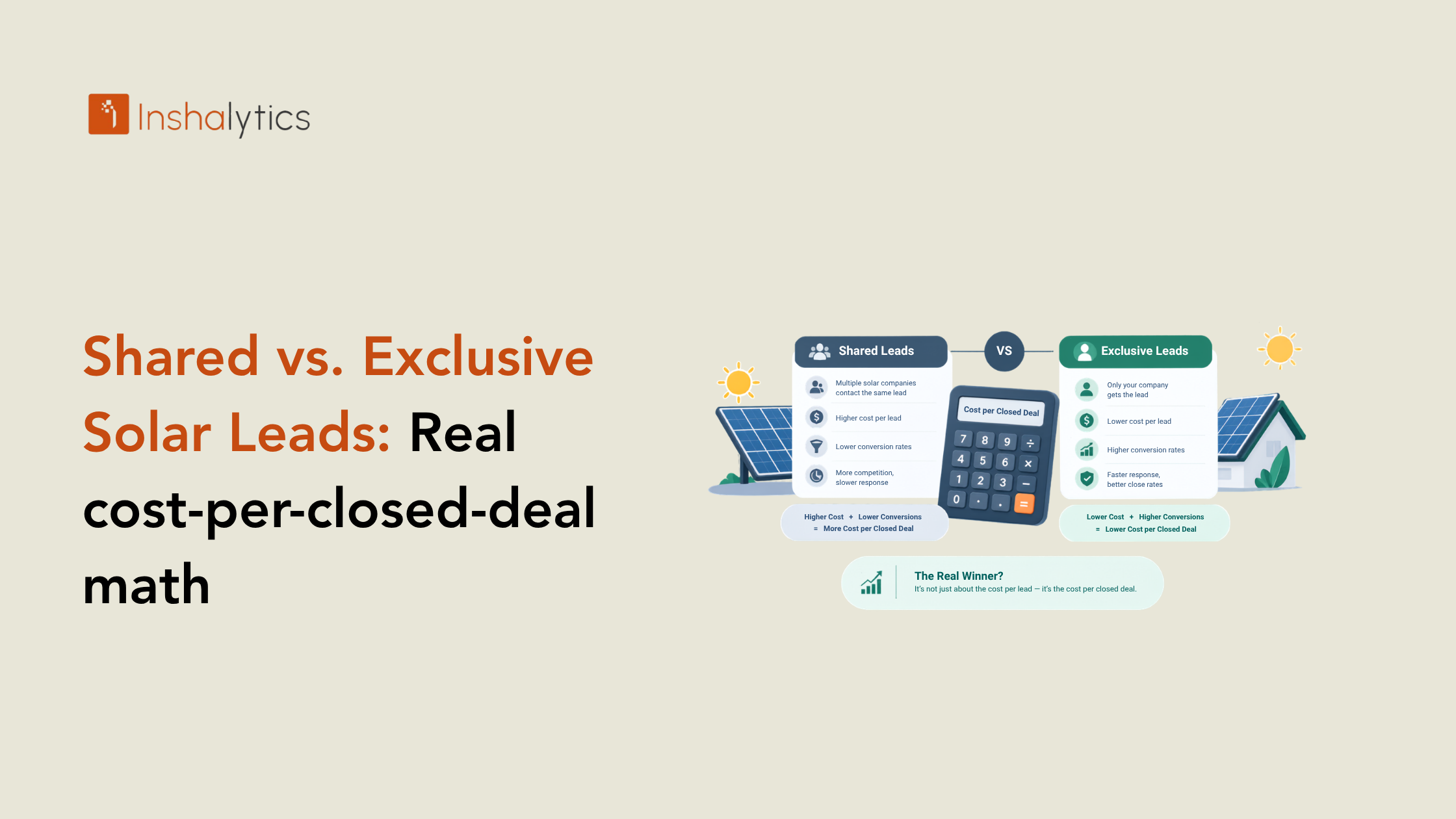
We build follow-up workflows directly around this response-time research, automated first contact, structured re-engagement sequences for leads that do cool, and reporting that shows exactly how response time correlates with your close rate. Shared vs. exclusive solar leads: real cost-per-closed-deal math covers making sure the leads you’re working this hard to save were worth the spend to begin with, since not every lead deserves the same level of urgency.
Auditing Your Own Lead-Response Timeline Today
Before building new systems, it’s worth knowing exactly how your current process performs against this research, since most owners are working from an assumption rather than a real measurement.
Measuring Your Average Time-to-First-Contact
Pull your last month of leads and calculate the actual average time between form submission and first real contact, not the automated acknowledgment, the first genuine conversation. Most solar companies are surprised by how far this number sits from the one-minute benchmark once they actually run the numbers.
Identifying Where Leads Are Currently Sitting Cold
Look specifically at your busiest install periods. The weeks your team is most consumed with active installations are almost always when new lead response times quietly slip the most, exactly the backlog pattern this article describes, and exactly when the cost of that slippage is highest, since that’s also usually when the most new leads are coming in from active campaigns running in parallel.
Every cold lead sitting in your CRM right now is ad spend you’ve already paid for and haven’t yet turned into revenue. If you’re ready to build the response and re-engagement systems that stop that leak, let’s talk about what that looks like for your team, starting with a clear picture of exactly how much revenue is currently sitting cold in your pipeline.