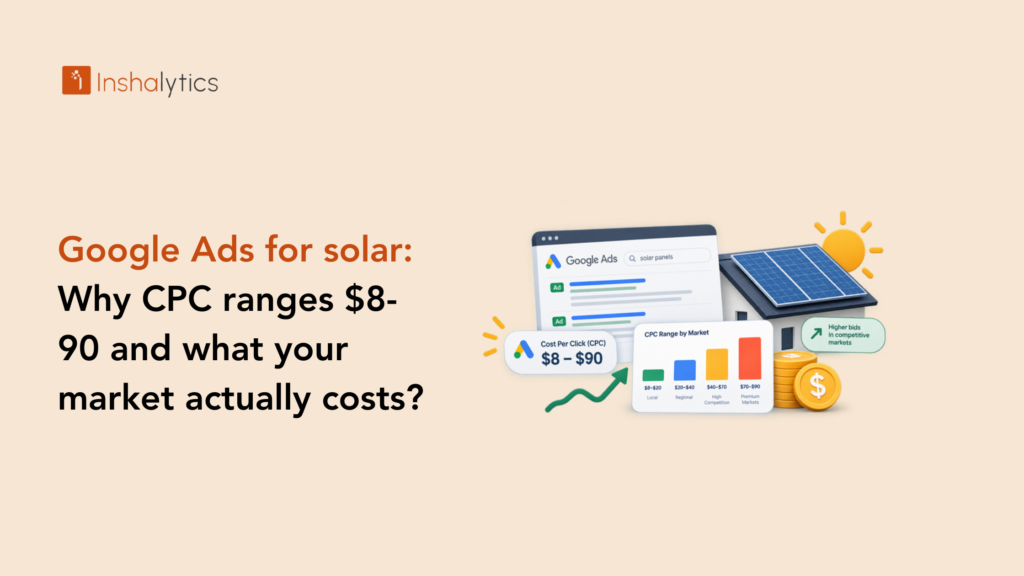
Open a Google Ads account for a solar keyword and the cost-per-click estimate can swing from single digits to nearly a hundred dollars depending on the day, the keyword, and the market, a range wide enough to make budgeting feel like guesswork. If you’re running or considering Google Ads for solar, understanding why CPC moves this much is the difference between a campaign that produces profitable installations and one that quietly burns budget on clicks that were never going to convert in the first place, no matter how well the campaign itself was structured on paper. This article breaks down exactly what drives that range and what you should actually expect to pay in a realistic, competitive market.
Why Is Solar One of the Most Expensive Verticals in Google Ads?
Solar sits among the more expensive verticals in Google Ads because it combines high deal value, often $20,000 or more per sale, with intense competition from installers, lead aggregators, and national brands, all bidding on the same searches.
High Deal Value Meets High Advertiser Competition
When a single closed deal is worth tens of thousands of dollars, advertisers can justify bidding aggressively for clicks that convert even a small percentage of the time. That dynamic pushes prices up across the board, in the same way legal and insurance keywords, also built on high-value conversions, command some of the highest CPCs in all of Google Ads, and it’s a pattern that holds true across nearly every high-ticket vertical, not just solar. The math is simple from an advertiser’s perspective: a click that costs $20 is trivial when the resulting sale is worth $25,000, even if only a small fraction of clicks ever convert.
National Installers and Lead Aggregators Bidding Up Your Local Market
You’re not just competing against the solar installer down the street. National installers and well-funded lead-generation aggregators with far larger budgets bid on the exact same local keywords, driving up the auction price in markets they may not even service directly themselves. They’re simply capturing and reselling the leads, which means your competition in the auction is often invisible in your actual day-to-day business.
What’s Actually Driving CPC From $8 to $90?
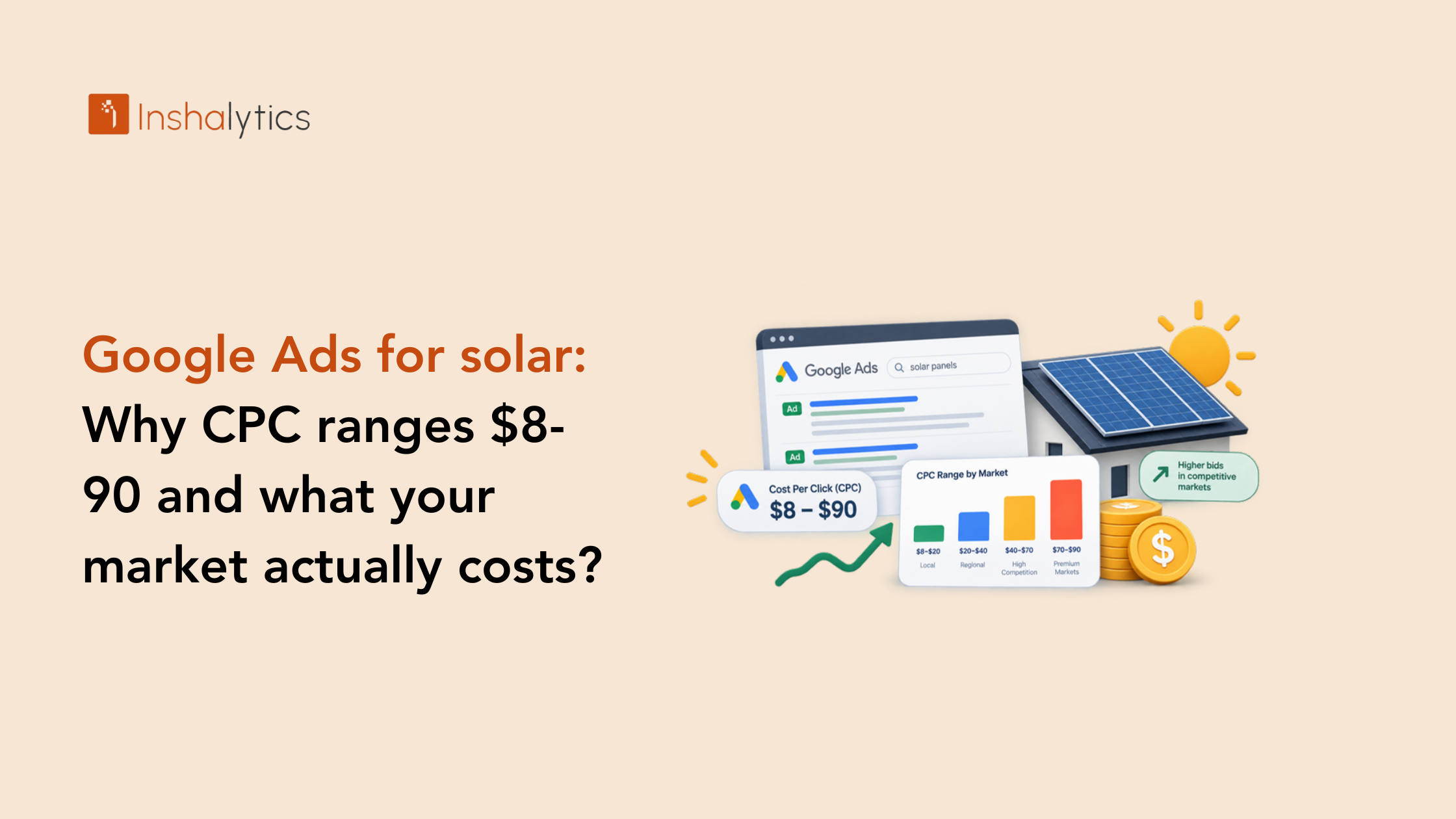
The wide published range isn’t inconsistent data. It reflects genuinely different keyword types and markets, each with its own price logic that’s worth understanding before setting a budget.
Keyword Intent: Informational vs. High-Intent “Solar Installer Near Me”
Broad, informational searches like “how does solar work” typically sit at the lower end of the range, closer to $3 to $7, because the searcher isn’t necessarily ready to buy yet. High-intent searches like “solar installer near me” or “solar panel installation ” sit meaningfully higher, often $12 to $22 in competitive markets, because that searcher is actively evaluating vendors right now and likely to convert within days.
Regional Competition: Why California, Texas, and Florida Cost More
Markets with dense installer competition and strong solar adoption, California, Texas, Florida among them, routinely see the highest CPCs in the country, sometimes reaching $18 to $22 per click on the most competitive terms. A smaller, less-saturated market can see meaningfully lower costs for comparable keyword intent, which is worth accounting for when comparing your own numbers to national benchmarks. An installer in a smaller metro reading a national average CPC figure may assume something is wrong with their campaign when in fact they’re simply operating in a less contested auction.
Quality Score and Landing Page Match
Google rewards ads and landing pages that closely match search intent with a lower effective cost-per-click, even in an identical auction. A generic homepage sent traffic from a specific, high-intent keyword typically pays more per click than a tightly matched landing page would for the exact same search, which means two installers bidding on the same term can end up paying meaningfully different prices for the same position simply because one built a better landing page than the other.
What Should Solar Installers Actually Budget For?
Understanding CPC ranges is only useful once it’s translated into a realistic monthly budget and expected outcome you can actually plan around.
Typical Monthly Spend and Lead Volume by Campaign Structure
A typical solar installer running Google Ads spends somewhere in the $4,000 to $8,500 monthly range, generating roughly 15 to 40 qualified leads depending on campaign structure and how tightly geo-targeted the campaign is. Below that range, campaigns often struggle to gather enough data for Google’s algorithms to optimize effectively. Cost per lead for solar typically averages $150 to $400, with well-optimized campaigns and dedicated landing pages reaching the $100 to $200 range.
Cost Per Lead vs. Cost Per Booked Consultation
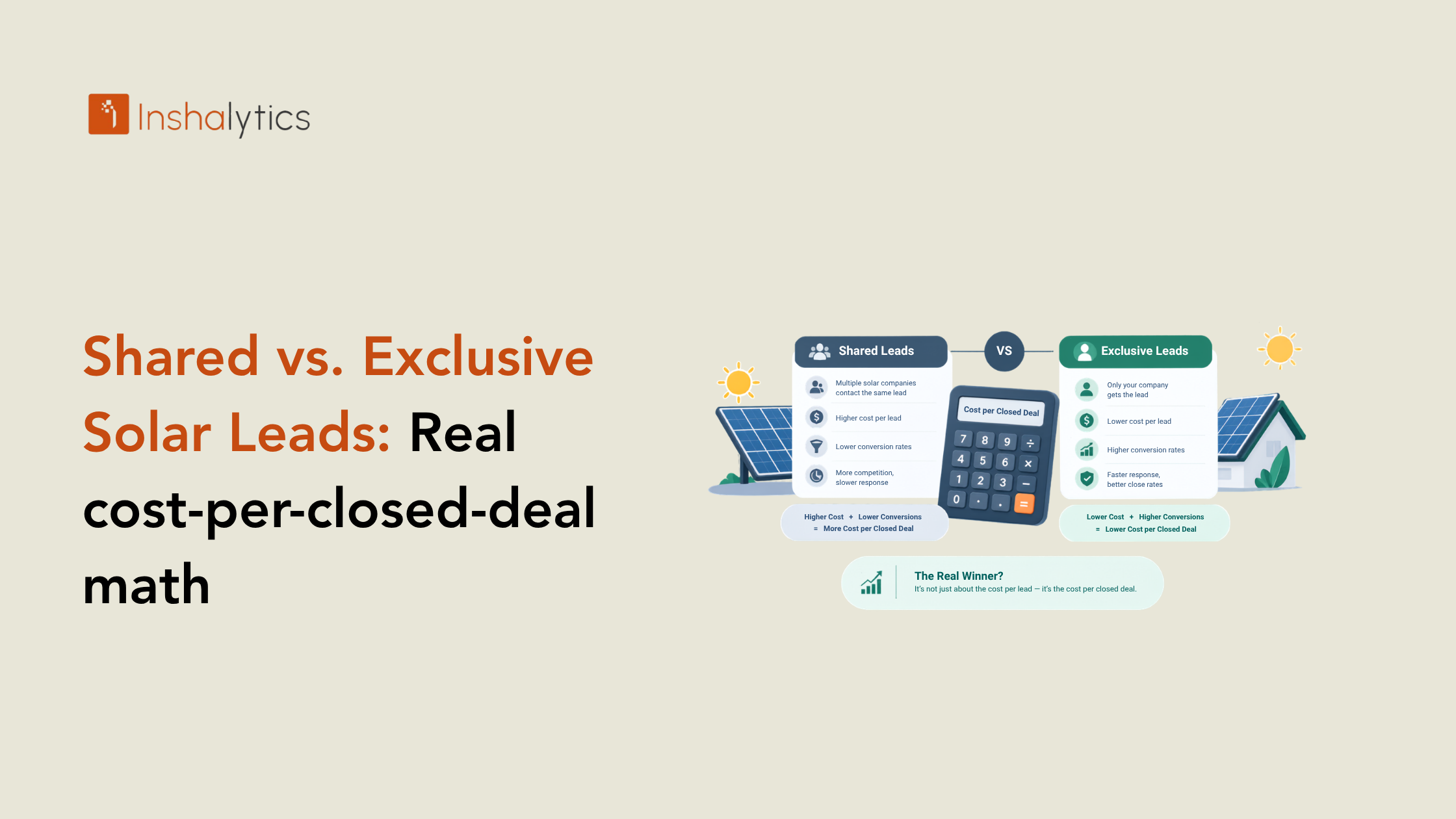
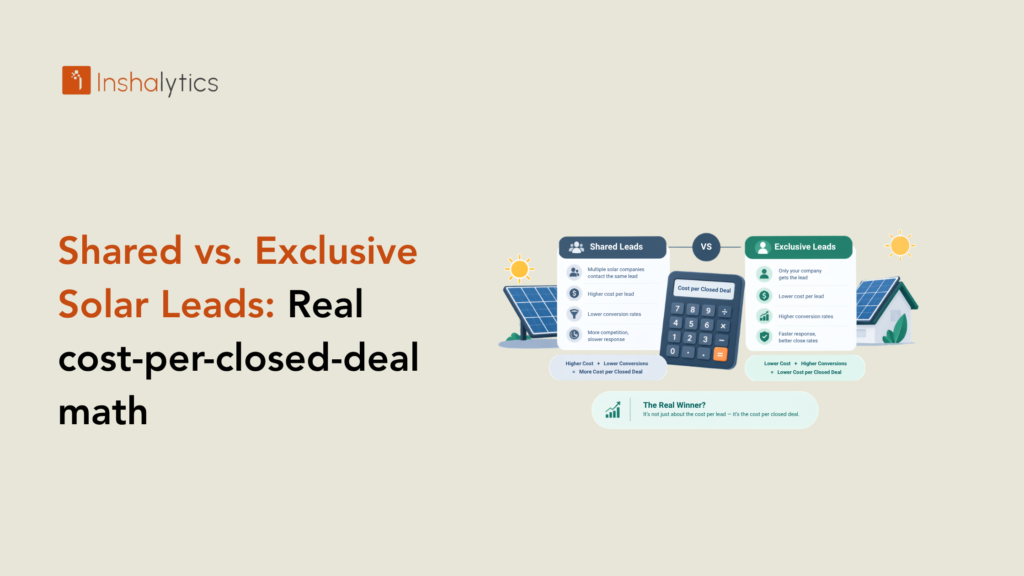
Cost per lead is only the first checkpoint. The number that actually determines ROI is cost per booked consultation, and ultimately cost per closed installation. See shared vs. exclusive solar leads: real cost-per-closed-deal math for the full math on carrying that comparison through to a closed deal, since a cheap lead that never books a consultation isn’t actually cheap at all.
How Does Google Ads Compare to Local Services Ads for Solar?
Google Ads isn’t the only paid search option available, and the two models work fundamentally differently in how risk is distributed between you and the platform.
Pay-Per-Click vs. Pay-Per-Lead Trade-Offs
Traditional Search campaigns charge for every click regardless of whether it converts. Local Services Ads charge only when a qualified call or message comes through, which shifts risk away from the advertiser, but comes with less targeting control and a dispute process for invalid leads that requires ongoing attention. Neither model is strictly better; they simply distribute cost and control differently, and many installers eventually run both side by side once budget allows.
When LSAs Deliver Cheaper, Better-Qualified Leads
Local Services Ads for solar frequently deliver leads in the $40 to $100 range, meaningfully below traditional search CPC-based campaigns on a cost-per-lead basis, making them a strong complement to, though rarely a full replacement for, Search campaigns run in parallel.
Lowering Your Real Cost Per Lead Without Lowering Bids
Bidding lower isn’t usually the right lever to pull. The bigger, more controllable cost drivers sit elsewhere in the campaign, often in places that get far less attention than the bid strategy itself.
Landing Pages Built for Quote-Intent, Not Company History
A landing page built around a clear quote-request path, matched directly to the keyword’s intent, consistently outperforms a generic homepage, often dramatically improving both Quality Score and actual conversion rate without touching your bid strategy at all, which makes it one of the highest-return fixes available to any existing campaign, and usually the first place to look before assuming your budget simply needs to be bigger.
How Inshalytics Structures Solar PPC Campaigns for Installation ROI, Not Click Volume
We build campaigns around tracked installation revenue, not raw click or lead volume, structuring keyword groups, landing pages, and bid strategy specifically to lower your real cost per booked consultation, not just your headline CPC that looks good in a monthly report but doesn’t reflect actual business outcomes.
What Your Market’s CPC Actually Tells You
Once you understand the ranges, your own campaign data becomes a much more useful diagnostic tool than a generic industry benchmark ever could be.
Benchmarking Your Current CPC Against These Ranges
If you’re paying meaningfully above these benchmarks for comparable keyword intent in your market, that’s usually a signal of a Quality Score or landing page match problem, not an unavoidable cost of doing business in solar, and it’s worth investigating before assuming the market itself is simply too expensive to compete in profitably.
When It’s Time to Shift Budget Toward Owned Channels
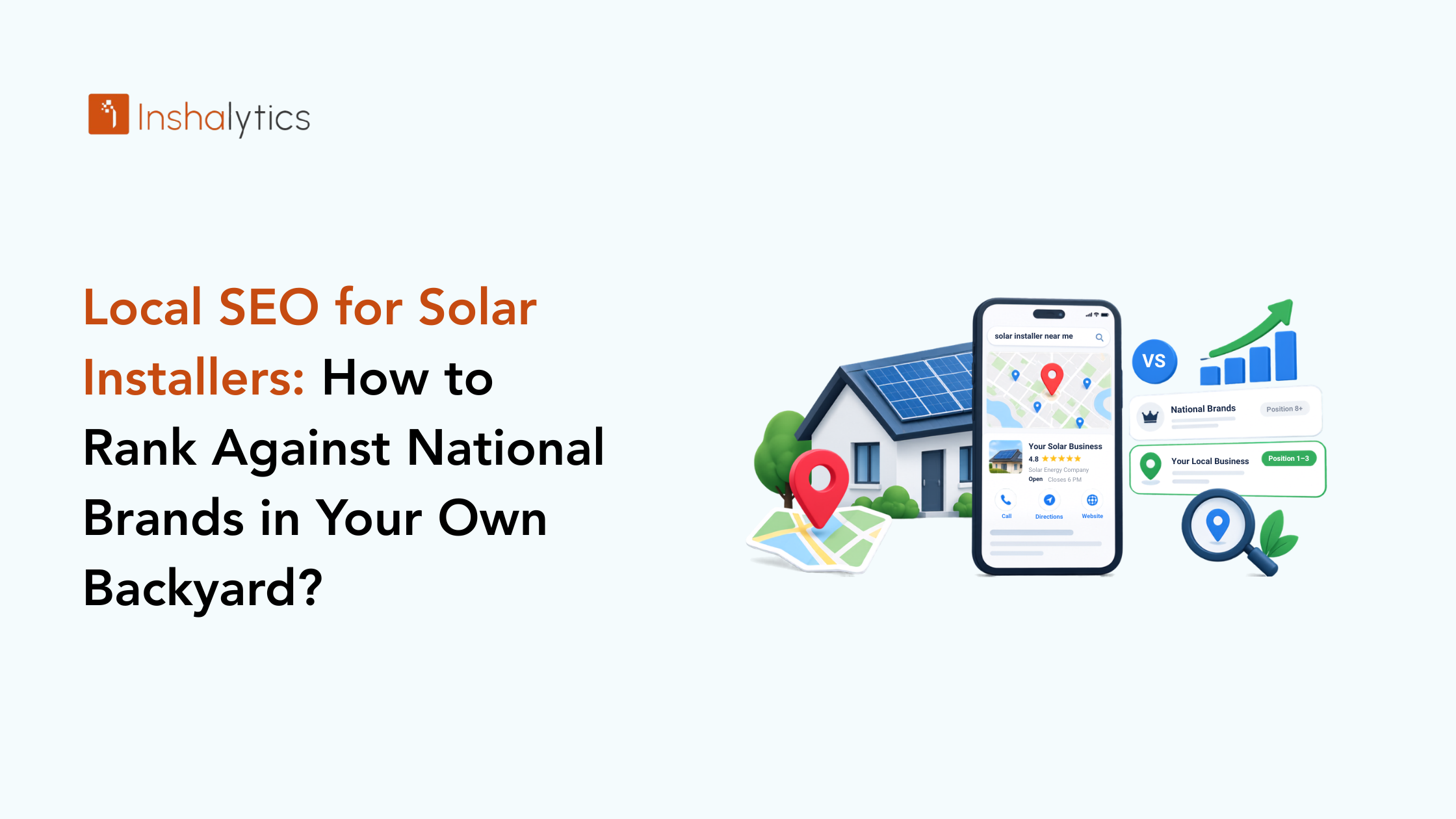
As your organic and local SEO presence matures, the marginal value of every additional paid click typically declines, a good signal to start shifting a portion of PPC budget toward the local SEO for solar installers work that compounds over time instead of resetting every month when the ad budget runs out.
Solar CPC is genuinely expensive, but expensive clicks aren’t automatically unprofitable ones. The campaigns that struggle are almost always the ones missing the landing page and tracking discipline that turns a costly click into a booked installation. If you want a campaign built around that discipline, let’s talk about what it would take in your market, and what your real numbers look like once we run them together.