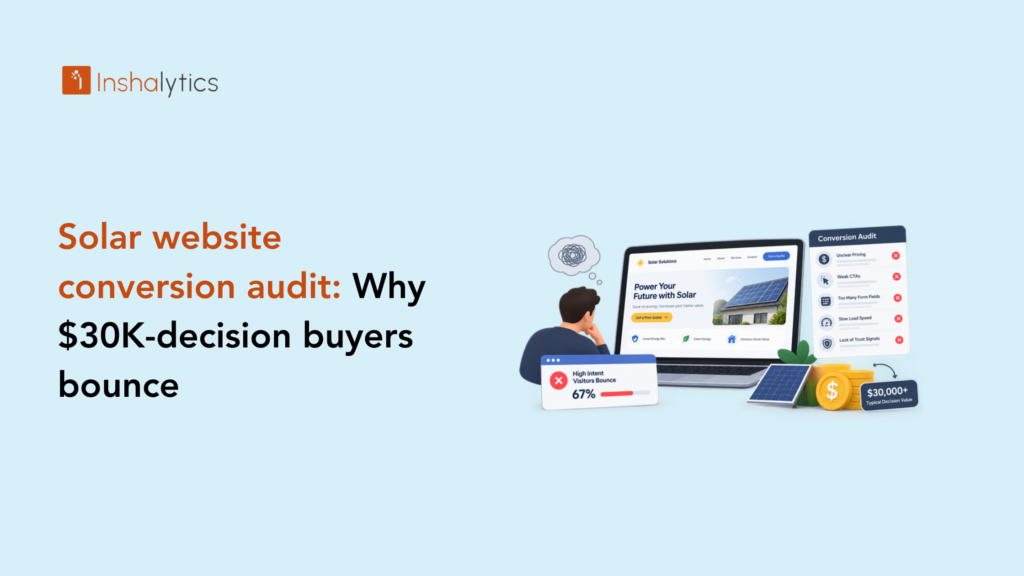
A solar installer running paid ads at a solid click-through rate can still watch cost per lead climb month after month, and the reason usually isn’t the ads. It’s what happens after the click, on a site that was never really built for how a homeowner actually makes a purchase this size, this considered, and this dependent on trust built over multiple visits. A solar website conversion audit exists to answer exactly that question: where is a visitor considering a $20,000 to $30,000 purchase actually losing confidence and leaving? This article covers what makes solar buyer behavior different from other home services, what to check on your own site, and how a proper audit finds the fixes that actually move conversion rate, without wasting budget on a redesign aimed at the wrong problem.
Solar Is a $20K–$30K Decision: Your Website Has to Act Like It
Most home service websites are built for fast, low-consideration decisions. Solar buyers behave nothing like that, and a site built for the wrong buying pattern loses trust before it ever has a chance to earn it back later in the visit, no matter how good the actual installation work behind it turns out to be.
Why High-Ticket Purchases Behave Differently Than Emergency Home Services
A burst pipe forces an instant decision. A $25,000 solar investment does not. Homeowners return to a site multiple times, compare it against competitors, and research independently before ever filling out a form. A site optimized purely for the fast, single-visit conversion pattern common in emergency services misses most of what a solar buyer actually needs to see across those repeat visits.
The Multi-Visit Research Pattern Before a Quote Request
Most solar buyers visit an installer’s site more than once before requesting a quote, researching financing, savings estimates, and installer credibility across separate sessions. A site with no clear way to re-engage a returning, still-researching visitor, retargeting, an email capture for a savings guide, clear next-step content, loses that visitor to whichever competitor’s site made a stronger second impression on their next search. Each of those repeat visits is a fresh opportunity to close the gap, provided the site gives them a reason to trust you a little more each time instead of leaving them exactly where they started.
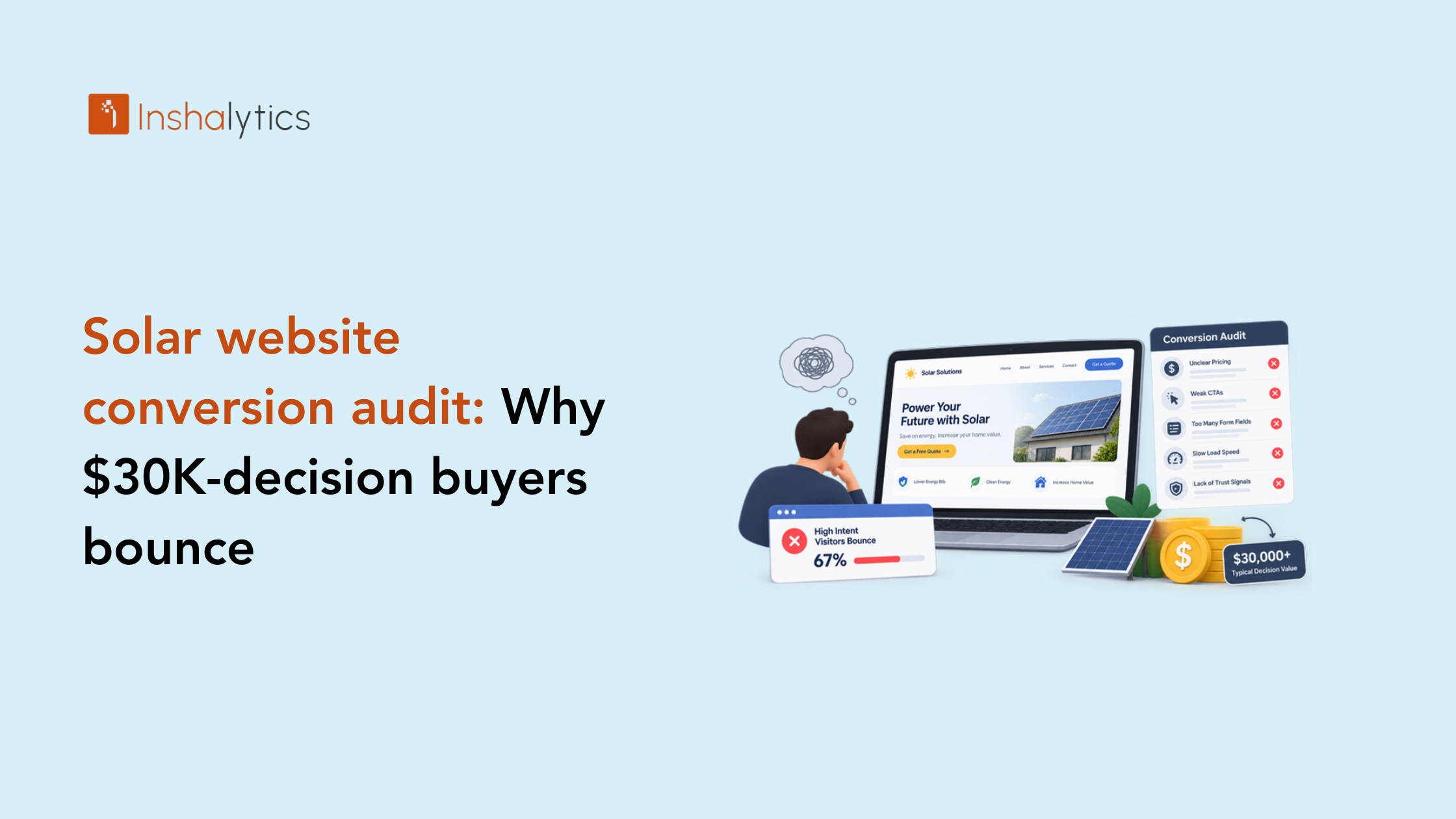
What’s Actually Causing Solar Visitors to Bounce?
A handful of recurring gaps account for most of the lost conversions on solar sites specifically, and most of them are fixable without a full redesign.
Unclear or Missing Financing Options (Cash, Loan, Lease, PPA)
Financing structure often matters as much to a homeowner’s decision as the system itself, and a site that doesn’t clearly explain cash purchase, loan, lease, and PPA options, with honest trade-offs for each, leaves a critical decision-point unanswered, pushing the visitor elsewhere to find that comparison instead of asking you directly. Many buyers who bounce for this reason never come back to your site at all, since the competitor who answered the financing question first usually ends up with the consultation.
Vague Savings Claims Without Real Numbers
“Save thousands on your energy bill” without a concrete methodology or example reads as marketing fluff to a buyer who’s already skeptical of solar sales tactics. Specific, explained savings estimates, even ranges tied to real utility rate data, build far more credibility than a vague promise that could apply to any installer’s site. Specificity signals that you’ve actually done the analysis for their home, not just copied a line from a marketing template everyone in the industry uses.
Slow Load Speed Killing Trust Before Content Loads
A slow-loading site undermines credibility before a visitor even reads a word of your content, and for a purchase this considered, that first impression matters disproportionately more than it would for almost any other kind of purchase. A hesitant buyer doesn’t give a slow, clunky site the benefit of the doubt the way they might forgive a minor delay elsewhere.
What Trust Signals Actually Move a $30K Decision?
Trust-building elements do more work on a solar site than almost any other single factor, because the purchase size makes skepticism the default starting position for nearly every visitor.
Installer Credentials, Certifications, and Warranty Clarity
Clear, visible credentials, licensing, relevant certifications, and a plainly explained warranty structure directly address the two biggest fears a solar buyer has: am I hiring a legitimate installer, and what happens if something goes wrong later, once the crew has left and the check has cleared and the sales rep has moved on to the next customer. Answering both questions clearly, before a homeowner has to ask, removes two of the biggest sources of hesitation standing between a visit and a booked consultation.
Real Local Case Studies and Before/After Savings Data
Generic stock testimonials do far less than a specific, local case study showing an actual homeowner’s system size, installed cost, and real savings over time. That level of specificity is exactly what separates a trustworthy site from one that reads like every other solar company’s template, copied from the same handful of stock design patterns. A real name, a real neighborhood, and a real dollar figure carry weight that no amount of polished copywriting can substitute for.
How Do You Audit Your Own Solar Website Right Now?
A basic self-audit will surface most of the obvious problems before you ever bring in outside help, and it costs nothing but an honest, critical look.
Checking Your Funnel From Ad Click to Quote Request
Walk through your own site exactly as a paid search visitor would. Click your own ad, land on the page it sends traffic to, and honestly evaluate whether that page answers the visitor’s most likely questions or just talks about your company and how long you’ve been in business, without addressing what they actually came to find out.
Where Solar Companies See the Biggest Lifts (Case Data: 84–405% Conversion Increases)
Solar companies that have invested in structured conversion work have documented conversion rate increases in the range of 84% to over 400% following a full redesign focused on trust, clarity, and mobile experience, a strong indicator of how much is typically left on the table by an unaudited site that hasn’t been touched in years. These aren’t outlier results either; they reflect how much friction accumulates on a site that was built once and never revisited as buyer expectations moved on.
How Inshalytics Runs a Solar-Specific Conversion Audit
A generic CRO audit checklist misses the trust and financing-clarity issues that are specific to a high-ticket, considered purchase like solar, which is exactly why a specialized audit finds problems a general one would miss.
What We Check That Generic CRO Audits Miss
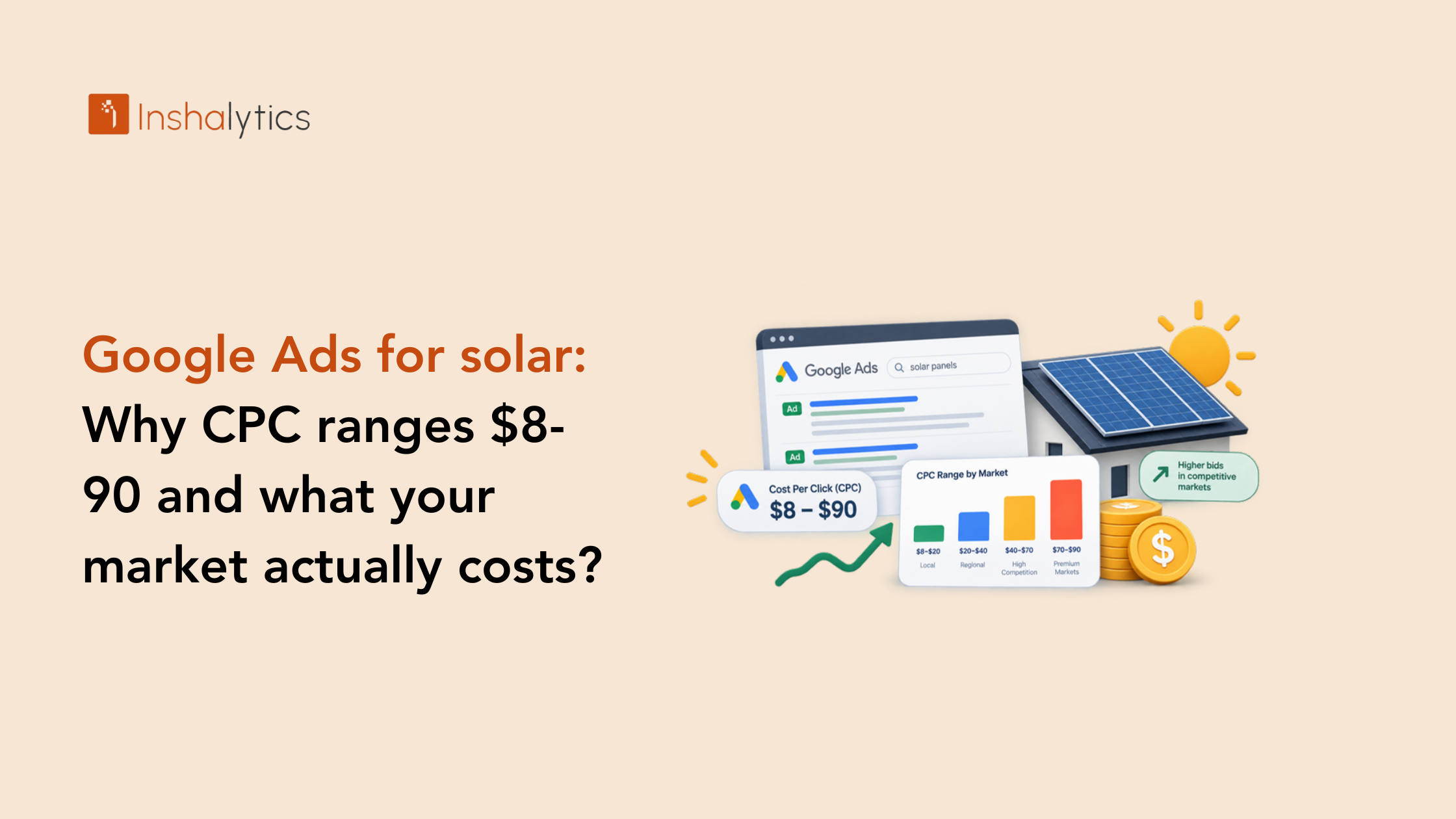
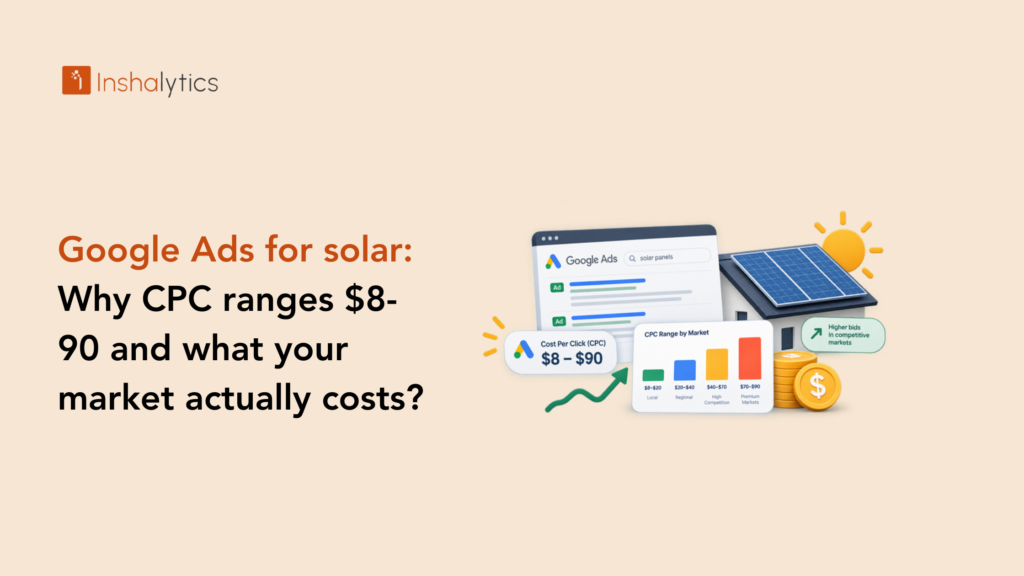
We evaluate financing clarity, credential visibility, savings-claim specificity, and multi-visit re-engagement paths, the elements that matter specifically for a $20,000-plus decision, not just generic page speed and button placement. Google Ads for solar: why CPC ranges $8–90 covers making sure the traffic arriving at your improved site is worth the click cost to begin with, so the fixes here actually pay off on qualified visitors.
Turning Audit Findings Into a Prioritized Fix List
Every audit finding gets prioritized by traffic volume and revenue impact, so the fixes that matter most, usually your highest-traffic ad landing page, get addressed first, not buried under lower-impact cosmetic changes that feel satisfying but don’t move the numbers. That prioritization alone often saves weeks of effort that would otherwise go toward changes with little measurable return.
Stopping the Leak Before Your Next PPC Dollar Is Spent
Fixing conversion should happen before scaling ad spend further, not after, otherwise you’re just paying more to lose the same percentage of visitors every single month.
Why Fixing Conversion Comes Before Increasing Ad Spend
Doubling your ad budget on a site converting at 1% simply doubles the number of visitors you’re losing. Fixing the conversion problem first means every dollar you already spend on traffic starts working harder immediately, before you commit to spending more chasing the same weak conversion rate. It’s a far better use of budget than assuming the problem is simply not enough traffic reaching the site.
Getting Your Free Audit Started
If your site is generating clicks but not enough quote requests to justify the spend, the fastest path forward is finding out exactly where those visitors are losing confidence. Ready for a free conversion audit? Let’s find the leak and fix it before another month of ad spend goes toward the same underperforming pages.