Tens of thousands of people search for a dentist in every single month. If your practice isn’t showing up when they search “dentist near me” or “ dentist,” you’re losing patients to competitors who have invested in their online presence.
The challenge isn’t demand is a growing community with families, professionals, and long-term residents all needing dental care. The real challenge is visibility.
This guide breaks down exactly what dental practices need to succeed: a website that converts visitors into appointments, local SEO that puts you at the top of search results, and a lead generation system that delivers consistent patient flow month after month.
The Challenges Dental Practices Face Today
‘s dental market has fundamentally shifted over the past decade. Corporate dental chains have expanded aggressively, bringing massive marketing budgets and sophisticated patient acquisition systems. Meanwhile, independent practices find themselves squeezed as patient acquisition costs are climbing, insurance reimbursements remain stagnant, and competition for Google visibility has never been fiercer.
According to recent industry data, more than a third of dental practice leaders report their practices are “not busy enough.” This isn’t because patients aren’t looking, it’s because those patients are finding other practices first.
The Staffing Crisis Compounds Marketing Challenges
The majority of dental practices across the country describe recruiting dental hygienists as “extremely challenging,” with similar struggles for dental assistants and front office staff. When you’re operating with a lean team, every marketing dollar needs to translate into qualified patients walking through your door.
There’s no room for campaigns that generate clicks but not appointments. Marketing has to work harder and smarter than it used to.
Geographic Competition Varies Dramatically
Practices in established, high-income neighborhoods face particularly intense competition and higher Google Ads costs. Meanwhile, rapidly growing areas present real opportunities for practices willing to establish a strong digital presence early, before the competition catches up.
The practices struggling most are those still relying on word-of-mouth alone. Patients today research providers online before picking up the phone. They read Google reviews, compare websites, and judge practice quality by digital presentation. If your online presence doesn’t inspire confidence, they move on.
Why Does Most Dental Marketing Fail in ?
Most dental marketing fails because it ignores how patients actually search for and choose dental providers. Generic campaigns treat like any other city, missing the unique dynamics of a local market where different neighborhoods serve very different patient profiles.
A patient near a university campus has different needs than a retiree in a suburban community, or a young professional downtown. Effective dental marketing requires hyper-local targeting that speaks to specific communities, not a one-size-fits-all message broadcast to the entire metro area.
The Fragmented Vendor Problem
Another common failure point is the fragmented vendor problem. One company handles the website, another manages SEO, a third runs Google Ads, and a fourth posts to social media.
None of them communicates with each other. None take responsibility for the outcome of new patients in chairs. When results disappoint, each vendor points fingers while the practice owner keeps writing checks with nothing to show for it.
The Operations Disconnect
Practices generate leads but don’t have systems to convert them into scheduled appointments. The front desk is overwhelmed, calls go to voicemail, and online form submissions sit unanswered for days.
Without infrastructure to handle increased lead flow, marketing spend gets wasted on opportunities that never convert. Successful dental marketing requires an integrated approach where every component works together toward a single goal: generating qualified patient inquiries and converting them into scheduled appointments.
What Do Dental Patients Actually Search For?
dental patients search in four primary categories: emergency care, specific services, location-based queries, and “near me” mobile searches. Understanding each category is essential for capturing patient attention at the moment of need.
Emergency Searches
Patients searching for “emergency dentist ” or “tooth pain dentist near me” need immediate care. They’ll book with the first practice that appears available and trustworthy. These searches happen around the clock, and practices that show up prominently capture patients who often become long-term relationships.
Speed and availability signals matter here. A well-optimized Google Business Profile with current hours and strong reviews is often the deciding factor.
Service-Specific Searches
“Invisalign ,” “dental implants ,” “teeth whitening “; these patients have already identified what they need and are comparing providers. Ranking for these terms requires dedicated content demonstrating expertise in each service area.
Generic “we do everything” pages don’t win here. Focused service pages with real information convert far better than thin content.
Location-Based and Mobile Searches
“Dentist in ,” “ family dentist,” “ cosmetic dentist” patients search by community. Practices that optimize for their specific neighborhood capture patients looking for convenient, local care they can actually get to.
Mobile search dominates patient behavior. The majority of dental searches happen on smartphones, sitting in cars, during lunch breaks, or lying in bed with a toothache at midnight. Websites that load slowly or don’t display properly on mobile lose these patients before they ever see your practice information.
What Are the Essential Elements of a Dental Website That Converts?
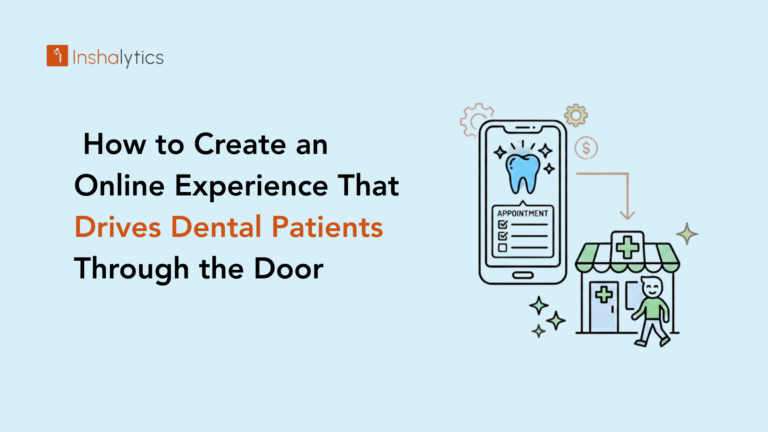
A converting dental website requires fast loading speed, mobile-first design, clear calls to action, trust signals, and content that answers patient questions. Your website is the digital front door of your practice; for most potential patients, it’s the first impression they’ll form about your care quality.
Speed and Mobile-First Design
You have approximately three seconds before visitors decide whether to stay or bounce back to Google. Websites that load slowly lose patients before they ever see your content.
More than 60% of dental searches happen on mobile devices. True mobile-first design means tap-to-call buttons, easy thumb navigation, and forms that don’t require extensive typing on small keyboards. If your site isn’t built for phones, you’re losing more than half your potential patients before they even read a word.
Clear Calls to Action and Trust Signals
Every page should make it obvious what visitors should do next: call your office, request an appointment online, or submit a question. Practices that bury their phone number in the footer lose patients who would have scheduled if the process were easier.
Trust signals address patient anxiety before they contact you:
- Photos of your actual office and team, not stock imagery
- Team member bios with credentials and personal details
- Prominent display of Google reviews with star ratings
- Before-and-after galleries for cosmetic services
Stock photography and vague descriptions of “quality care” do nothing to differentiate your practice from competitors. Patients want to see the real people and the real place before they commit.
How Does Local SEO Drive Dental Leads in ?
Local SEO drives dental leads by optimizing your Google Business Profile, building review volume, ensuring citation consistency, and creating city-specific content. When residents search for a dentist, Google serves the “map pack” showing three local businesses plus traditional organic results below. If you’re not in the map pack, you’re invisible to most searchers.
Google Business Profile Optimization
Your Google Business Profile is often the first thing potential patients see, even before your website. Complete profiles with accurate hours, comprehensive service listings, high-quality photos, and active review management dramatically outperform sparse profiles with minimal information.
An incomplete or outdated profile signals to patients that your practice may not be taking things seriously.
Reviews Are the Currency of Local Search
Practices with a high volume of positive Google reviews appear more trustworthy to patients and receive ranking boosts from Google’s algorithm. In ‘s competitive market, a practice with fewer reviews competes at a significant disadvantage against established competitors with hundreds.
Systematic review generation, asking satisfied patients to share their experience through a simple, frictionless process, builds the review volume that separates top-ranking practices from everyone else. This doesn’t happen by accident; it requires a consistent process built into your patient workflow.
Local Citation Consistency
Your name, address, and phone number need to appear identically across your website, Google Business Profile, Yelp, Healthgrades, and dozens of other directories. Inconsistent information confuses both Google and patients and can actively suppress your local rankings.
City-Specific Content
Blog posts and landing pages that mention neighborhoods, local landmarks, and community information demonstrate that your practice genuinely serves the local area. A page specifically about dental implants in will consistently outrank a generic “dental implants” page for patients searching in your market.
Building a Complete Lead Generation System for Your Practice
Individual marketing tactics produce limited results in isolation. What separates practices that grow consistently from those that struggle is a systematic approach, integrating every marketing channel into a cohesive patient acquisition machine.
The Foundation: Conversion-Optimized Website
Traffic means nothing if visitors don’t take action. Conversion-optimized websites guide potential patients through a clear journey from initial interest to scheduled appointment, removing friction at every step. Every design decision should serve one goal: getting qualified patients to contact your practice.
Local SEO for Sustainable Growth
Unlike paid advertising that stops producing the moment you stop paying, SEO investments compound over time. Pages you rank today continue generating patient inquiries for months and years. Dominating local search results for your primary services creates a reliable baseline patient flow that doesn’t disappear when your budget does.
Google Ads for Immediate Visibility
Pay-per-click advertising puts your practice at the top of search results starting day one. Strategic campaign management ensures you’re bidding on the right keywords, targeting the right geographic areas, and paying only for clicks from qualified patients, not general browsers with no intent to book.
Conversion Tracking and Follow-Up Systems
Every phone call, form submission, and scheduling request should be tracked back to its source. You should know exactly which channels produce patients and which waste money.
Automated text and email sequences keep your practice top-of-mind for patients who inquire but don’t immediately schedule, capturing leads that would otherwise slip through the cracks.
Ready to build a lead generation system that actually works? Inshalytics provides dental practices with a complete marketing infrastructure for $500 per month, website development, local SEO, Google Ads management, and conversion optimization. One team, one coordinated strategy, one clear goal.
Market Insights: What Makes This Market Unique
Every dental market has its own dynamics, and is no different. Understanding the local landscape helps practices position themselves for long-term growth rather than chasing short-term tactics that don’t fit the market.
Population Growth Fuels Demand
has seen consistent population growth over recent years, bringing new residents who need to establish dental care relationships. Many newcomers arrive without an existing dentist, making them actively search for a practice, a significant opportunity for practices with strong visibility.
Distinct Neighborhood Opportunities
Different parts of attract different patient profiles. Higher-income neighborhoods tend to support demand for cosmetic and elective dentistry at premium price points. Areas with large student or young professional populations create demand for orthodontics and preventive care. Growing suburban communities present opportunities to establish dominance before competition intensifies.
Understanding which patient profile your practice serves best, and marketing directly to that segment, produces far better results than trying to appeal to everyone.
Demographic Diversity Requires Thoughtful Marketing
‘s population reflects broader American diversity, and effective practices think carefully about language accessibility and cultural considerations in their marketing. Practices that offer multilingual capabilities on their websites and in their offices capture patients who might otherwise choose a provider they can communicate with more comfortably.
Seasonal Patterns Affect Patient Behavior
Most markets experience predictable seasonal patterns in patient volume. Understanding your local rhythm when patients are most likely to schedule, when they tend to delay, allows you to time campaigns and promotions for maximum impact rather than spending evenly across periods of uneven demand.
Insurance Landscape Shapes Economics
A significant portion of residents in most markets lack dental insurance. Practices that clearly communicate financing options and transparent cash-pay pricing capture patients who might otherwise delay care indefinitely. This isn’t a small segment; it represents a substantial portion of potential patients who are actively making decisions based on affordability.
Grow Your Dental Practice with Inshalytics
Every day you wait to address your practice’s online presence is another day of lost opportunities, patients who searched for a dentist, didn’t find you, and scheduled with a competitor instead.
Inshalytics specializes in helping dental practices throughout build online presence and lead generation systems that produce consistent patient growth. Our $500 per month all-in-one solution replaces the fragmented vendor approach that wastes money and produces underwhelming results.
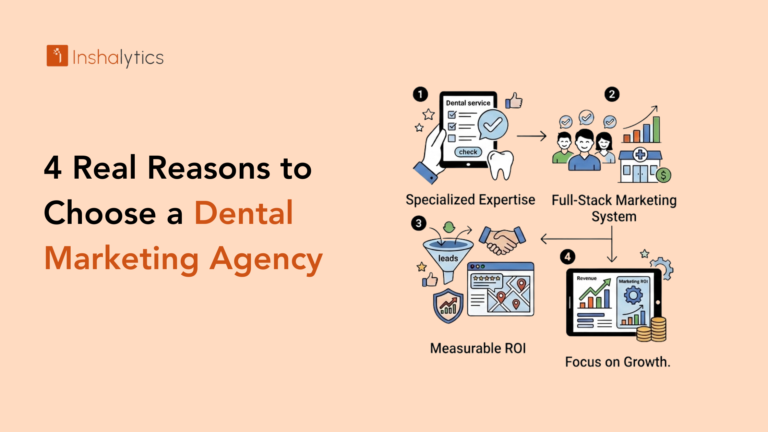
Where specialized dental marketing agencies charge $1,500 to $3,000 monthly for just SEO or Google Ads, we deliver the full stack:
- Custom website development and hosting
- Local SEO and Google Business Profile optimization
- Google Ads management
- Conversion tracking and reporting
Get a free consultation to see how dental marketing can transform your practice. We’ll review your current online presence, identify opportunities you’re missing, and explain exactly how we’d approach growing your patient base.
Your competitors are already investing in their digital presence. It’s time to make sure patients can find you first.