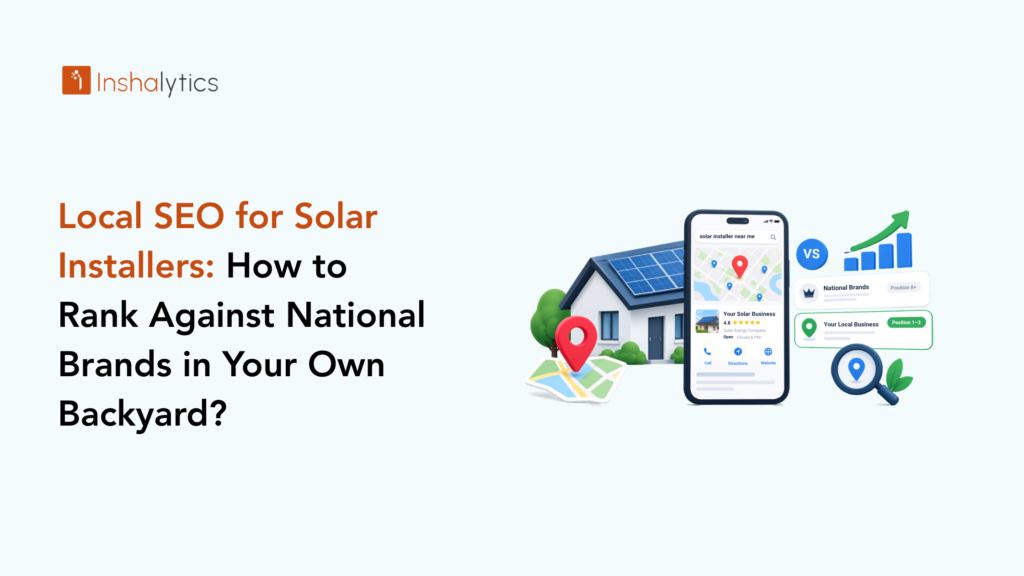
National solar brands spend more on marketing in a month than most local installers spend in a year, and yet, in local search results, a well-built local installer routinely outranks them, sometimes by a wide margin. Local SEO for solar installers is one of the few marketing channels where budget size doesn’t determine the winner, which is exactly why it deserves more attention than most installers currently give it. This guide covers why local installers can compete with national brands specifically in local search, what the work actually involves, and how long it realistically takes to see results, along with the specific content types that give a local installer an edge a national operation structurally can’t match.
Can a Local Installer Actually Compete With Sunrun or Tesla Energy?
Yes. Local search rewards proximity, local relevance, and depth of local content, none of which scale the way national ad budgets do. A national brand’s local page for your city is often a thin, templated placeholder; a genuinely local installer’s content can go far deeper into the specifics that actually matter to a nearby homeowner weighing a real decision.
Why National Brand Budgets Don’t Win Local Search
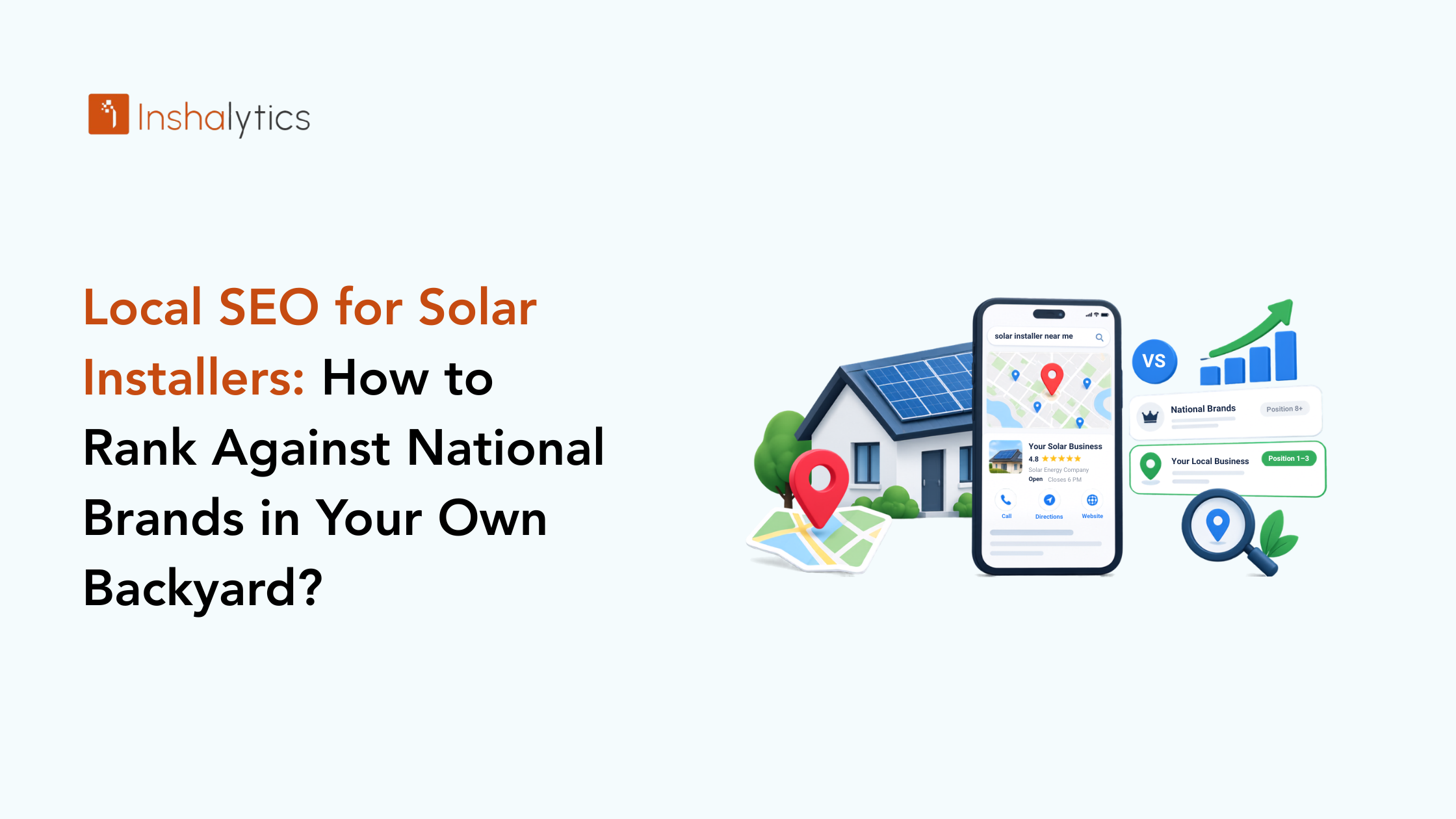
Google’s local ranking factors weigh proximity, relevance, and prominence, not advertising spend. A national installer can outbid you in paid search, but that budget advantage doesn’t transfer to organic local rankings, where a well-optimized Google Business Profile and locally specific content matter far more than the size of a company’s overall marketing team or ad budget. A five-person, single-market local installer with a well-optimized profile can genuinely outrank a company spending millions nationally, because the ranking factors that matter most in local search simply aren’t the ones a national budget is built to influence.
The Three Advantages Locals Structurally Own
Local installers can go deep on utility-specific net metering and interconnection rules, local permitting requirements that vary by jurisdiction, and genuine local installer authority, local crews, local references, local warranty handling, in ways a national operation structurally can’t replicate with the same depth across every market they serve simultaneously, no matter how large their content team is. Each of these three areas represents content a national brand’s centralized marketing team is structurally unlikely to prioritize, because it doesn’t scale efficiently across hundreds of markets the way a generic explainer page does.
What Does Local SEO for Solar Actually Involve?
Local SEO for solar rests on the same core pillars as any local service business, applied with solar-specific depth that most generic local SEO advice never addresses.
Google Business Profile as Your Highest-Leverage Free Asset
A fully completed, actively managed Google Business Profile, accurate service areas, regular posts, prompt responses to messages, is free and directly influences whether you appear in the local map pack, which is where the majority of local search clicks go before a searcher ever scrolls further down the page to see organic results. Many installers set this up once at launch and never revisit it, which means outdated hours, missing photos, or an incomplete services list quietly cost visibility every single day it goes unfixed.
Local Citations and NAP Consistency
Consistent name, address, and phone number information across directories and citation sources builds the trust signals Google uses to confirm your business is legitimate and accurately located, a foundational, often-overlooked piece of local ranking that’s easy to get right early and expensive to fix once inconsistencies have spread across dozens of listings.
Review Velocity as a Ranking and Trust Signal
A steady flow of new, recent reviews affects both your local ranking and a homeowner’s willingness to trust you with a $20,000-plus decision. Review velocity, new reviews arriving regularly, not just total count, is one of the fastest-moving levers available to improve local visibility, and it’s entirely within your control regardless of budget.
Why Utility-Specific Content Is the Underused Ranking Lever
Most solar SEO content stops at generic “why go solar” explainers. The installers who go deeper into utility- and permit-specific content build a moat competitors can’t easily copy without doing the same research work themselves.
Net Metering and Interconnection Rules by Utility
Each utility territory has distinct net metering policies and interconnection processes, and homeowners researching solar actively search for exactly this information. Content addressing your specific utility territories directly captures that research-stage search intent, traffic a generic national page has no reason to target since it isn’t built around any one utility’s specific rules. A homeowner searching for their exact utility’s net metering policy is signaling strong, specific intent, and a page that answers that question directly earns far more trust than a generic overview ever could.
Local Permitting Content Nationals Can’t Replicate at Scale
Permit requirements and inspection processes vary by city and county. A local installer with direct experience navigating a specific jurisdiction’s permitting process can produce genuinely useful, specific content that a national operation covering hundreds of jurisdictions simply won’t invest the same depth into for any single market, which is exactly the gap a local installer can fill without needing anywhere near a national marketing budget to do it. It’s slower to produce than a generic page, but it’s also far harder for a national competitor to copy convincingly, since doing so would require the same jurisdiction-by-jurisdiction research a local installer already has firsthand.
How Long Does It Actually Take to Rank?
Local SEO is a compounding asset, not an instant fix, and setting realistic expectations upfront prevents campaigns from being abandoned before they’ve had a chance to work.
The 60–90 Day Map Pack Timeline
Most solar installers see initial Map Pack movement within 60 to 90 days of consistent optimization work, with meaningful organic traffic growth typically following by months four to six. Highly competitive metros generally take longer; less-saturated markets can move faster, which is worth knowing before committing to a specific timeline internally. Setting expectations with anyone tracking the campaign, whether that’s a partner, an investor, or just yourself, prevents good work from getting judged prematurely against an unrealistic clock.
What Drives Faster vs. Slower Results in Your Metro
Review acquisition and Google Business Profile completeness tend to drive the fastest early wins, while deeper content and earned local links build the ranking durability that holds up over time, even as competitors eventually copy your surface-level tactics once they notice you gaining ground and start scrambling to catch up.
How Inshalytics Builds Local SEO Campaigns for Solar Installers
Local SEO for solar benefits from a structured, ongoing process, not a one-time optimization pass that’s never revisited once the initial setup is complete.
Our Utility- and Permit-Specific Content Framework
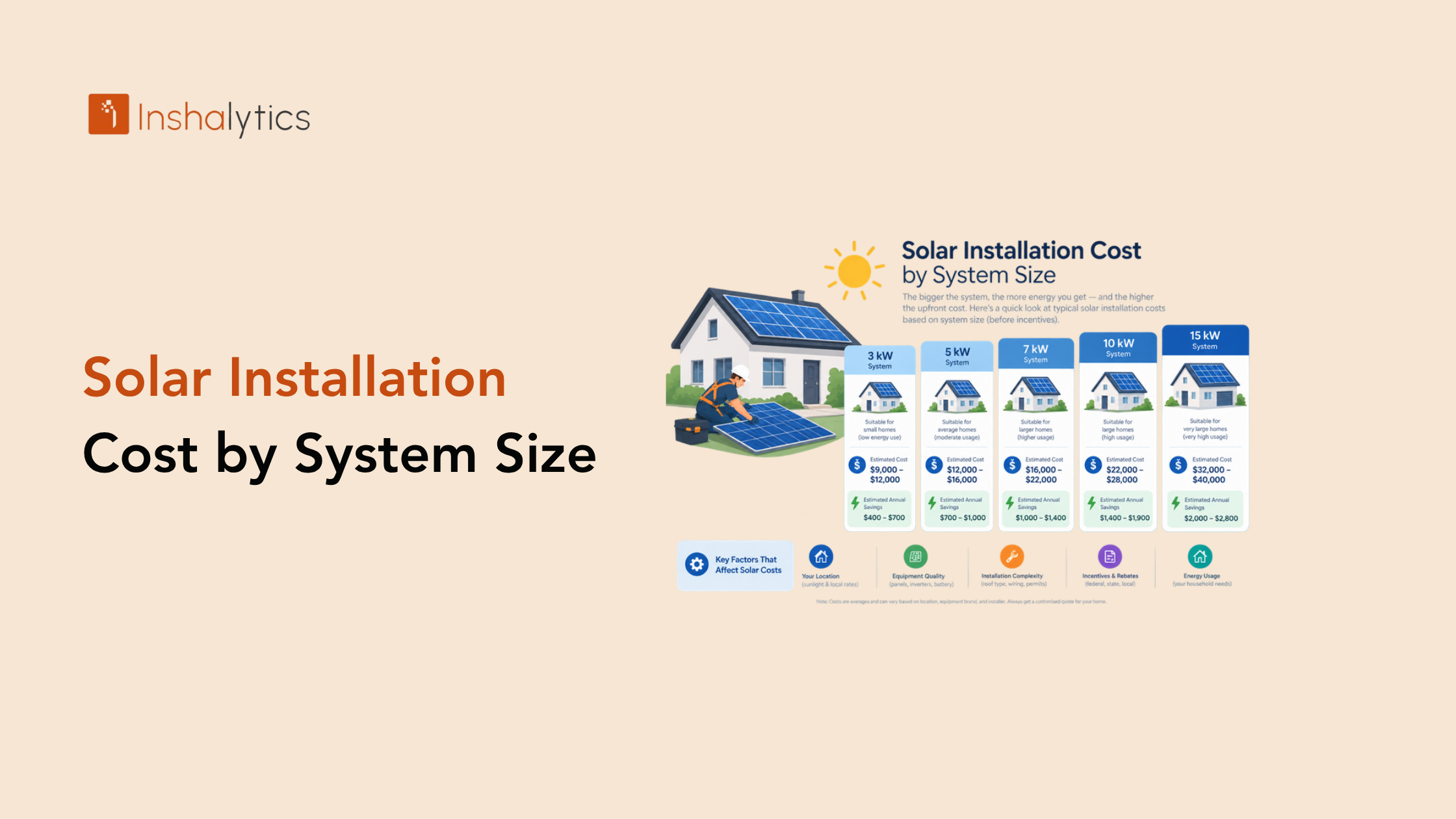
We build content specifically around your service territories’ utility rules and local permitting processes, the depth that consistently outranks thinner national and aggregator content for research-stage local searches. Solar installation cost by system size shows how this same localized-content approach applies to pricing pages specifically, and how the two content types reinforce each other.
Combining Local SEO With Paid Search for Faster Early Wins
While local SEO compounds over months, we typically pair it with targeted paid search in the early stages, so lead flow doesn’t have to wait for organic rankings to mature, then gradually shift weight toward organic as it takes hold and starts producing leads at a lower cost per acquisition.
Getting Started: Where to Focus First
If local SEO hasn’t been a deliberate, ongoing part of your marketing, there’s a clear place to start that doesn’t require a large upfront investment.
Auditing Your Google Business Profile Today
Check whether your service areas are accurately configured, your categories are correct, and you’re responding to messages and reviews promptly. This single asset often has the fastest, most direct impact on local visibility of anything on this list, and it costs nothing but time to get right, which makes it the obvious place to start.
Prioritizing Your First 90 Days of Local Content
Start with content addressing your single largest utility territory’s net metering rules and your primary city’s permitting process, the two highest-value, most defensible pieces of local content you can build first, before expanding outward to smaller territories once the initial pages have had time to mature.
National brands will always outspend local installers on advertising. They won’t out-local you in organic search, if you build the content and profile work to prove it. Ready to build a local SEO strategy that competes on relevance instead of budget? Let’s get started with your service territories specifically.