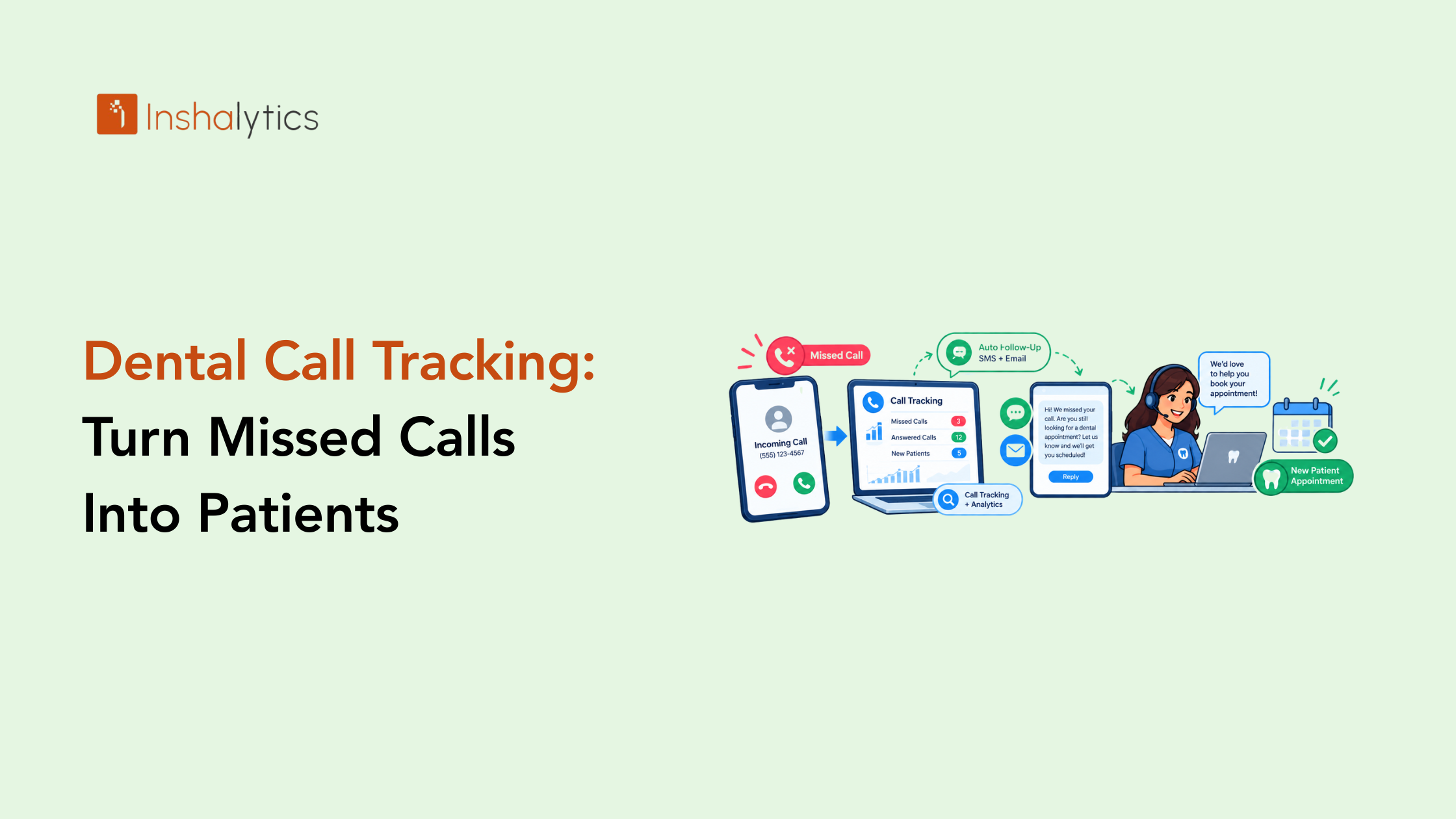
Your marketing can do everything right and still lose the patient in the first thirty seconds of a phone call. Dental call tracking shows you which marketing sources make the phone ring, and which of those calls turn into booked patients, so you stop guessing and start fixing.
This guide explains where new patients are lost, how call tracking works, which metrics matter, how your front desk should handle calls, what the law says about recording, how to choose a tool, and how to start in thirty days.
Why Do Dental Practices Lose New Patients on the Phone?
Practices lose new patients on the phone because calls go unanswered, get answered by a busy front desk that cannot give full attention, or end without a booked appointment. A prospective patient who does not reach a person usually calls the next practice.
Where missed and mishandled calls come from
The usual causes are peak-hour overload, lunch breaks, staff who are already with a patient, and no coverage after hours. Calls that are answered can still be mishandled when the caller feels rushed or gets no clear next step.
What one lost new-patient call costs
One missed new-patient call costs more than the call. It costs the marketing spend that produced it and the lifetime value of the patient who never arrived. Our guide to dental patient lifetime value shows how to put a number on it.
What Is Dental Call Tracking and How Does It Work?
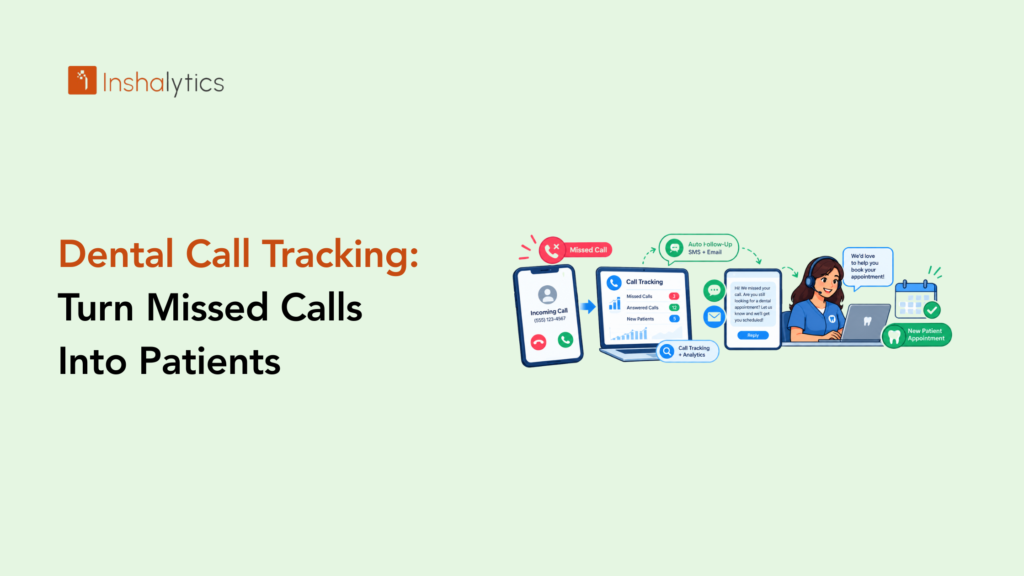
Dental call tracking uses unique phone numbers for each marketing source, so every call can be traced back to the ad, listing, or page that produced it. The system logs each call and, if enabled, records it, which shows what happened after the phone rang.
Tracking numbers, source attribution and recording
Each source gets its own number, such as one for Google Ads, one for your Google Business Profile, and one for your website. All of them forward to your main line. The software then reports which source produced each call.
Static vs dynamic tracking numbers
Static numbers are fixed, and they suit directories, print, and Google Business Profile listings. Dynamic numbers swap on your website based on how each visitor arrived, which lets you see the exact source, campaign, or keyword.
What to log: source, duration and outcome
Log the source, the call length, whether it was a new patient, and the outcome: booked, not booked, or voicemail. The outcome is the field most practices skip, and it is the one that tells you whether the call was worth paying for.
Which Call Tracking Metrics Matter for Dental Practices?
The metrics that matter are answer rate, new-patient call rate, booking rate, and cost per booked patient by source. Together they show where the funnel leaks.
Answer rate, new-patient call rate and booking rate
Answer rate is the share of calls a person picks up. New-patient call rate is the share of calls from people who are not yet patients. Booking rate is the share of new-patient calls that end with an appointment. Improving any of the three raises your return on marketing.
Cost per booked patient by marketing source
Divide the spend on each source by the new patients it booked. This comparison often reorders your channels. For benchmarks and the math, see our guide to cost per acquisition for dental patients.
Peak-hour and after-hours gaps
Chart missed calls by hour and by day. The gaps usually cluster around opening, lunch, and closing, and after hours. Once you see them, you can fix them with schedule changes, extra coverage, or automation.
How Should the Front Desk Handle New Patient Calls?
A new-patient call should follow a simple pattern: a warm greeting, a few questions to understand the need, an invitation to book, and a confirmation of the appointment. Consistency matters more than perfection.
A call-handling script and scorecard
Write a short script that includes a friendly greeting with the practice name, a question about what brought them in, an offer of two appointment times, and a request for contact details. Then score calls against it: greeted warmly, asked about the need, offered a time, booked or scheduled a callback.
Missed-call text-back and callback workflow
When no one can answer, an automatic text to the caller acknowledges the call and offers a way to book. Pair it with a callback rule, such as returning every missed call within a set time. Results depend on how your team handles the message, and our guide to missed-call text-back recovery rates explains what to expect.
Coaching from call recordings
Review a few recorded calls each week with your team. Praise what went well, and pick one thing to improve. Coaching from real calls is far more effective than general training.
Is Call Recording Legal and Privacy-Safe for Dental Offices?
Call recording laws vary by state. Some states allow recording with the consent of one party, while others, including California and Florida, generally require everyone on the call to consent. Because laws differ and calls may cross state lines, get legal advice and use a clear notice.
One-party vs two-party consent states
In one-party consent states, your practice can usually record a call you are part of. In all-party consent states, you need every participant to agree. The safest approach is to treat every call as needing consent and announce recording at the start.
Greeting scripts and storing recordings securely
A simple notice works well: This call may be recorded for quality and training purposes. Recordings can contain health information, so store them securely, limit access, set a retention period, and make sure your vendor can meet HIPAA requirements, including a business associate agreement where applicable. Confirm the details with your compliance advisor.
How Do You Choose a Dental Call Tracking Tool?
Choose a tool that fits your marketing, your phone system, and your budget. Prioritize reliable attribution, easy reporting, and secure handling of recordings.
Pricing models
Tools usually charge a monthly fee plus a cost per number or per minute. Ask what is included, how many numbers you get, and whether recording and storage cost extra.
Integrations with practice software and Google Ads
Look for a tool that can send call data to Google Ads and Google Analytics, so your campaigns learn from real calls. Check whether it works with your phone system and your practice management software.
How Inshalytics Connects Calls to Dental Marketing ROI
We set up call tracking as part of your reporting, so every channel is judged by booked patients. Our dental marketing services put calls, ads, and search in one view.
Source-level tracking across ads, SEO and maps
We assign tracking numbers to your Google Ads, your Google Business Profile, and your website, so you see which sources produce calls. If you also invest in map visibility, see our guide to local SEO for dentists.
Booked-appointment and revenue reporting
We connect calls to booked appointments, so reports show cost per booked patient and not only call counts. Our dental marketing ROI audit checklist shows the foundation.
Missed-call automation
We configure missed-call text-back and callback reminders, so after-hours and peak-hour callers get a response. Need a clearer view of your calls? Talk to Inshalytics about a call tracking setup.
Put Call Tracking to Work This Month
Dental call tracking turns an invisible part of your funnel into numbers you can improve. Start small, and review weekly.
A first-30-days checklist
- Choose a tool and set up tracking numbers for your top three sources.
- Add a recording notice and confirm your consent approach with counsel.
- Log the outcome of every new-patient call.
- Review answer rate and booking rate each week.
- Turn on missed-call text-back for peak hours and after hours.
- Coach your team from two recorded calls per week.
Next steps
Once you have a month of data, compare sources by cost per booked patient and move budget accordingly. If you want a team to run it, let’s talk about how Inshalytics can help.