
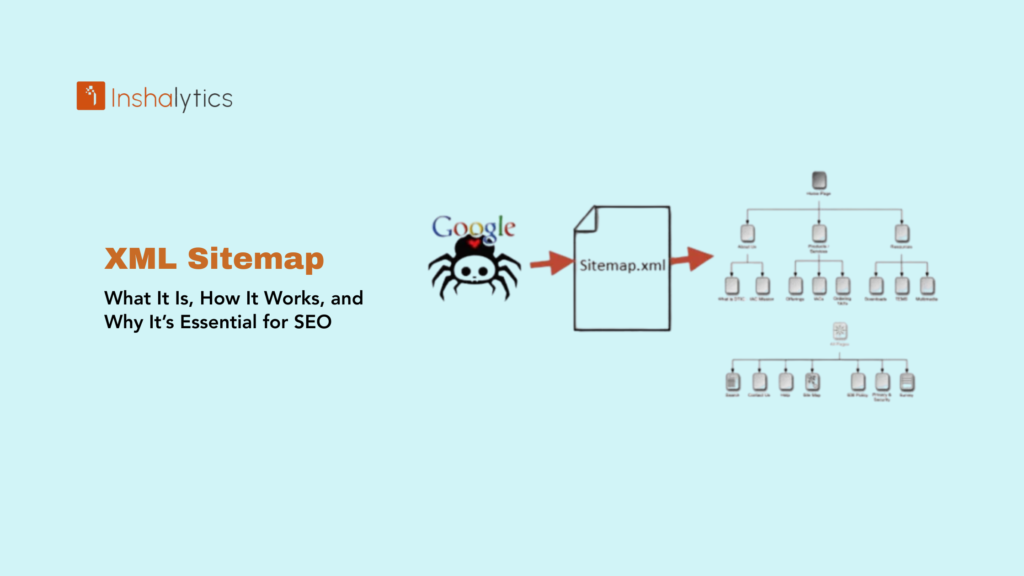
An XML sitemap is one of the simplest yet most powerful tools for improving your website’s visibility in search engines. It serves as a structured list of your website’s important URLs, helping search engines like Google, Bing, and others understand what pages exist, how they are organized, and which ones should be crawled.
Even though XML sitemaps don’t guarantee rankings, they significantly improve the chances of your content being discovered, indexed, and properly understood especially on large, dynamic, or newly launched websites.
This guide explains what an XML sitemap is, why it matters, how it works, and the best practices you should follow to optimize it for SEO and technical performance.
Navigate This Post
What Is an XML Sitemap?
An XML sitemap is a file—typically located at example.com/sitemap.xml—that lists the URLs on your website in a structured XML format. It tells search engines:
- Which pages exist
- When they were last updated
- How frequently they change
- How important they are relative to other pages
Think of it as a roadmap that shows search engines exactly where your key content is located, ensuring nothing important gets missed during crawling.
Search engines use this file to crawl your website more efficiently, especially when pages are deeply buried or not well connected through internal links.
Why XML Sitemaps Matter for SEO
XML sitemaps do not directly improve rankings, but they play a critical role in indexing and crawling efficiency, which ultimately impact your SEO performance.
Here’s why they are essential:
1. They Help Search Engines Discover New Content Faster
Whenever you publish a new blog post, product page, or landing page, the sitemap notifies search engines. This speeds up the indexing process, which is crucial for:
- Fast-growing websites
- News publishers
- Ecommerce stores
- Sites with regular updates
Without a sitemap, search engines may take days or weeks to find your new content.
2. They Improve Crawl Efficiency
Large sites have tens of thousands of URLs. A sitemap helps prioritize and organize them so search engines do not waste crawl budget.
This is especially valuable for:
- Websites with poor internal linking
- Archives
- Pagination
- Content buried many clicks deep
3. They Help Search Engines Understand Content Hierarchy
An XML sitemap communicates which pages are more important. While Google has said the “priority” tag is mostly ignored, the structure itself still provides clarity.
4. They Reduce Indexing Issues
If a website has:
- Duplicate content
- URL parameters
- Dynamic URLs
- Faceted navigation
…an XML sitemap helps search engines identify the canonical and clean versions of URLs.
5. They Don’t Require Internal Links
Even orphan pages (pages with no internal links) can be discovered through the sitemap—although you should still fix orphan pages for SEO health.
What Does an XML Sitemap Look Like?
A simple XML sitemap contains tags like:
<url>
<loc>https://example.com/page1</loc>
<lastmod>2025-01-10</lastmod>
<changefreq>weekly</changefreq>
<priority>0.8</priority>
</url>
Each <url> entry describes a single page.
Common tags include:
1. <loc>
The exact URL of the page.
2. <lastmod>
The last time the page was updated (useful for blogs and news sites).
3. <changefreq>
Tells search engines how often the page might change (Google may ignore this, but it still provides context).
4. <priority>
Indicates importance compared to other pages (again optional, but fine to include).
Even though Google ignores some optional tags, the core purpose remains powerful—direct communication with search engines.
Types of XML Sitemaps
There isn’t just one type of sitemap. As websites grow, different formats are used to categorize content.
1. Standard XML Sitemap
The most common type. Lists regular web pages like blogs, services, or product pages.
2. Image Sitemap
Used for websites heavily reliant on visuals, such as:
- Photography portfolios
- Ecommerce stores
- News and media websites
It helps search engines index images correctly.
3. Video Sitemap
Essential for:
- Video tutorials
- Courses
- Streaming platforms
It provides metadata like duration, category, and thumbnail URL.
4. News Sitemap
Used by publishers to appear in Google News.
It includes time-sensitive content like breaking news articles.
5. Sitemap Index File
A master file that links to multiple smaller sitemaps.
Useful for:
- Large ecommerce stores
- Big blogs
- Multilingual websites
A single sitemap can only contain 50,000 URLs, so larger sites must split them.
Best Practices for Creating an XML Sitemap
To maximize SEO impact, follow these proven best practices.
1. Only Include Canonical URLs
Avoid:
- Duplicate URLs
- Parameter URLs
- Tracking links
Only list the final, clean version of each page.
2. Exclude Noindex Pages
Your sitemap should never include:
- Admin pages
- Login pages
- Filter or internal pages
- Thank-you pages
- Staging URLs
Only include URLs you actually want indexed.
3. Keep Your Sitemap Updated Automatically
Use tools like:
- Yoast SEO
- Rank Math
- Shopify’s built-in sitemap
- Wix’s auto-generated sitemap
Updates should happen instantly whenever you publish or modify a page.
4. Submit Your Sitemap to Search Engines
Google Search Console
- Go to Indexing → Sitemaps
- Add https://example.com/sitemap.xml
- Click Submit
Bing Webmaster Tools
Same process—simple and fast.
Submitting sitemaps ensures search engines know where to find them.
5. Ensure Your Sitemap Is Accessible
You can place your sitemap here:
- example.com/sitemap.xml
- example.com/sitemap_index.xml
Also, add it to your robots.txt file:
Sitemap: https://example.com/sitemap.xml
6. Split Large Sitemaps
If you have more than 50,000 URLs, split your sitemaps and create a sitemap index file.
For example:
- /sitemap-pages.xml
- /sitemap-posts.xml
- /sitemap-products.xml
This improves crawlability and organization.
7. Prioritize “Money Pages”
Pages that generate:
- Leads
- Revenue
- Conversions
…should always appear in your sitemap.
Common XML Sitemap Mistakes (Avoid These!)
Even slight errors can reduce your chance of proper crawling.
❌ Including broken or 404 URLs
Always ensure your sitemap contains live, valid pages.
❌ Adding noindex, blocked, or redirected URLs
Search engines get confused and may ignore your entire sitemap.
❌ Using inconsistent URL versions
Choose one:
- https://www.example.com
- https://example.com
Mixing versions causes indexing issues.
❌ Listing pages that are not ready for users
Drafts, thin content, or incomplete pages should stay out.
❌ Allowing your sitemap to become outdated
Search engines depend on fresh data.
Who Needs an XML Sitemap the Most?
While all websites benefit, some need it urgently:
✔ New Websites
Few backlinks = difficult to discover content.
✔ Large Ecommerce Sites
Thousands of products need structured crawling.
✔ News and Publishing Sites
Fresh content needs fast indexing.
✔ Sites With Weak Internal Linking
A sitemap compensates for a messy architecture.
✔ Websites Frequently Updating Content
Sitemaps notify search engines automatically.
Do You Need an XML Sitemap If Your Website Is Small?
YES—because:
- Small sites benefit from visibility
- It takes minutes to add one
- It helps search engines understand your content faster
Even a 10-page website should have a sitemap.
XML Sitemap vs. HTML Sitemap
| Feature | XML Sitemap | HTML Sitemap |
| Target | Search engines | Humans |
| Format | XML | HTML |
| Purpose | Crawling & indexing | Navigation & user experience |
| SEO Impact | High | Moderate |
Both are useful, but XML sitemaps play a direct role in improving discoverability.
Final Thoughts: Why XML Sitemaps Are Essential for Modern SEO
An XML sitemap is a fundamental part of technical SEO. It ensures search engines can access, understand, and index your content efficiently. While it doesn’t directly boost rankings, it dramatically improves visibility, especially on large or newly launched websites.
In the world of SEO—where crawl budget, indexing, and discoverability matter—an XML sitemap acts as a bridge between your website and search engines. It guides them through your content clearly and efficiently, ensuring nothing important gets overlooked.
Whether you’re an ecommerce store, a service business, a blog, or a major publisher, an XML sitemap is a must-have tool for improving your website’s search performance.