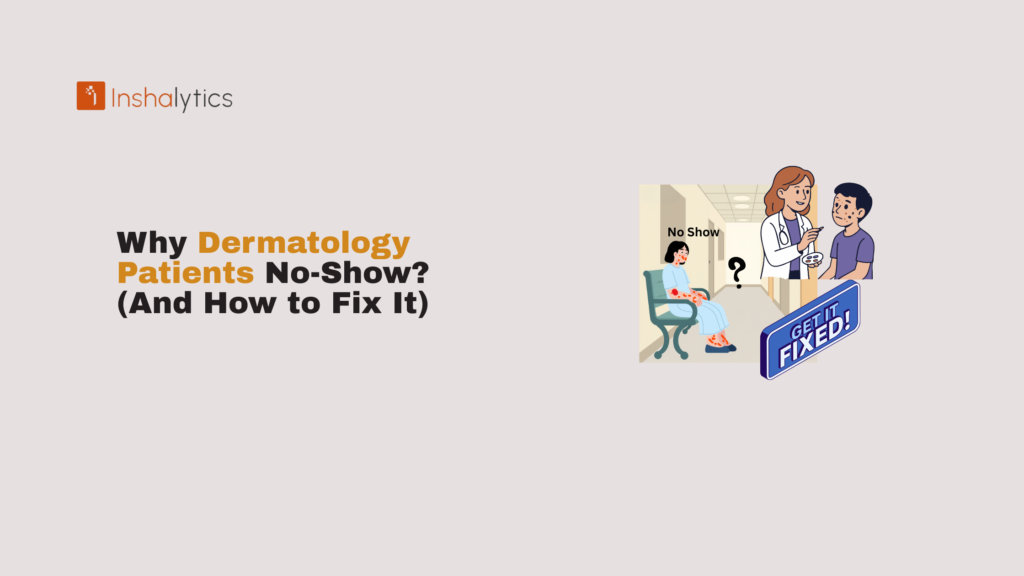
A dermatology patient doesn’t show up for their 2 PM appointment. The front desk staff waits 15 minutes, then marks them as a no-show. That empty slot represents $150-$200 in lost revenue that can never be recovered. Multiply this by the industry average of 17-31% no-show rates, and you’re looking at tens of thousands of dollars disappearing from your practice annually.
Dermatology patient no-shows aren’t just frustrating they’re a silent revenue drain that disrupts care continuity, blocks appointments for patients who desperately need care, and burns out your staff. But here’s the good news: no-shows are largely preventable through better communication systems, not stricter policies.
This guide breaks down why dermatology patients miss appointments, who’s most likely to no-show, and proven strategies that can cut your no-show rate by 38-50% within 90 days. You’ll discover the automation systems that top-performing practices use to keep patients engaged from booking to follow-up without adding more work to your team’s plate.
Navigate This Post
What Is the Average No-Show Rate for Dermatology Practices?
Dermatology practices face some of the highest no-show rates in healthcare. The average dermatology no-show rate ranges from 17% to 31%, according to multiple peer-reviewed studies published in JAMA Dermatology and the Journal of the American Academy of Dermatology.
This means that for every 10 patients you book, 2-3 simply won’t show up and often won’t call to cancel.
Industry Benchmarks: 17-31% No-Show Rates
Research across academic dermatology clinics and private practices consistently shows no-show rates hovering in this range. Some high-risk patient populations push rates as high as 30-35%, while practices with robust reminder systems can achieve rates as low as 4-8%.
To put this in perspective, primary care practices average 19% no-shows, while sleep clinics see the highest rates at 39%. Dermatology sits uncomfortably in the upper tier, likely due to long wait times between booking and appointments and the perceived non-urgent nature of many skin conditions.
The Financial Impact of Each Missed Appointment ($150-$200 Per No-Show)
Every no-show represents direct revenue loss. A typical dermatology consultation generates $150-$200 in revenue. Cosmetic consultations and procedural appointments can be worth significantly more.
Here’s the math for a mid-size practice: If you schedule 200 appointments per month with a 25% no-show rate, that’s 50 missed appointments. At $175 per appointment, you’re losing $8,750 monthly or $105,000 annually in completely preventable revenue loss.
This doesn’t account for the secondary costs: staff time spent trying to reach no-show patients, the disruption to your schedule, or the opportunity cost of patients who wanted that slot but couldn’t get in.
How Your Practice Compares to National Averages?
Track your no-show rate monthly by dividing missed appointments by total scheduled appointments. If you’re above 20%, you have significant room for improvement. Practices below 10% typically have automated reminder systems, waitlist management, and strategic scheduling protocols in place.
The good news? No-show rates aren’t fixed. Practices implementing comprehensive communication strategies see dramatic reductions in as little as 60-90 days.
The Top 7 Reasons Dermatology Patients Miss Their Appointments
Understanding why patients no-show is the first step toward solving the problem. Research shows these seven factors account for the vast majority of missed dermatology appointments.
Reason #1: Patients Simply Forgot (The #1 Cause)
Forgetfulness is the single biggest driver of no-shows, accounting for an estimated 40-50% of missed appointments according to patient surveys. This is especially true for dermatology appointments booked weeks or months in advance.
A patient books an appointment for a suspicious mole in January for an April slot. By the time April rolls around, that appointment has been pushed out of mind by dozens of other priorities. Without a reminder system, the appointment becomes invisible until it’s already passed.
This is a communication problem, not a patient problem. The solution isn’t expecting patients to remember appointments made 12 weeks ago it’s implementing automated reminder sequences that bring the appointment back to awareness at strategic intervals.
Reason #2: Long Wait Times Between Booking and Appointment
Dermatology practices notoriously have long wait times. It’s not uncommon for new patients to wait 8-12 weeks for an appointment, and even established patients might book follow-ups 6-8 weeks out.
The longer the gap between booking and appointment, the higher the likelihood something will come up: a schedule conflict, a resolved symptom, or simply forgetting the appointment exists.
Practices that offer online booking with real-time availability and maintain active waitlists can reduce this gap and improve attendance. When patients can book appointments closer to their desired date, they’re far more likely to attend.
If your schedule still has gaps after reminders and waitlists, it is worth comparing overbooking vs. waitlists for dermatology practices to see which approach recovers more lost appointment time.
Reason #3: Transportation and Scheduling Conflicts
Research consistently identifies transportation barriers as a major predictor of no-shows. Patients who depend on others for rides, use public transportation, or live in areas with limited transit options face higher no-show rates.
Work schedule conflicts also play a role. Patients may book an afternoon appointment weeks in advance, only to have their manager deny their time-off request a few days before. Without an easy way to reschedule, they simply don’t show up.
Multi-channel communication that allows patients to confirm or reschedule with a single text message removes friction from the rescheduling process and converts potential no-shows into managed cancellations.
Reason #4: Financial Concerns and Insurance Confusion
Patients facing financial uncertainty may skip appointments rather than explain they can’t afford the copay. This is particularly true for cosmetic dermatology or elective procedures where insurance doesn’t apply.
Insurance confusion creates similar barriers. Patients unsure whether their visit is covered may choose to skip the appointment rather than risk an unexpected bill. Clear communication about costs, insurance verification before the appointment, and flexible payment options all reduce financially-driven no-shows.
Reason #5: Language Barriers and Communication Gaps
Studies show that patients with limited English proficiency have significantly higher no-show rates. This isn’t about willingness to attend it’s about communication failures.
Appointment reminders sent only in English to patients who speak Spanish, Mandarin, or other languages at home simply don’t connect. Practices serving diverse populations need multilingual reminder systems and staff who can communicate appointment details in patients’ preferred languages.
Reason #6: Anxiety About Procedures or Diagnosis
Medical anxiety is real. Patients worried about a potential skin cancer diagnosis may avoid their appointment out of fear. Others anxious about procedures like biopsies or injections may convince themselves the issue isn’t urgent enough to warrant going through with it.
Compassionate pre-appointment communication that addresses common concerns, explains what to expect, and emphasizes the importance of early detection can help anxious patients follow through.
Reason #7: Lack of Perceived Urgency for Skin Conditions
Unlike a broken bone or severe infection, many skin conditions don’t feel urgent to patients. A rash that’s been present for months, acne that’s bothersome but not debilitating, or a mole that hasn’t changed recently might get deprioritized when life gets busy.
This is where patient education comes in. Reminders that explain why timely treatment matters not just generic appointment notifications help patients understand the value of keeping their appointments.
Who Is Most Likely to No-Show? Understanding High-Risk Patient Groups
Not all patients have the same no-show risk. Identifying high-risk groups allows you to implement targeted interventions where they’ll have the biggest impact.
Demographic Patterns: Age, Socioeconomic Status, and New Patients
Research from academic dermatology clinics identifies several demographic predictors of no-shows:
Younger patients (under 40) have higher no-show rates than older patients. This correlates with work schedule conflicts, childcare responsibilities, and generally higher life complexity.
New patients are 40-50% more likely to no-show than established patients. They lack familiarity with your practice, don’t have an established relationship with your providers, and may not fully understand appointment logistics.
Patients from zip codes with higher social vulnerability indices measuring factors like poverty, disability, and household composition show significantly elevated no-show rates. These patients face real barriers: unreliable transportation, inflexible work schedules, and competing demands on limited resources.
Appointment Type Matters: Medical vs. Cosmetic Consultations
Interestingly, procedural appointments and specialized consultations have lower no-show rates than general medical dermatology visits. Patients booking for melanoma screening, injections, or phototherapy procedures are more likely to attend.
Cosmetic consultations fall somewhere in the middle. Patients paying out-of-pocket for cosmetic services have higher attendance rates than insurance-covered medical visits, likely because they’ve already made a financial commitment.
Geographic and Transportation Access Factors
Distance from your clinic matters. Patients traveling more than 30 minutes show higher no-show rates, but not as much as you might expect. The bigger factor is mode of transportation patients dependent on others for rides or using public transit face substantially higher barriers.
Practices in areas with poor public transit can mitigate this through telehealth options for appropriate follow-ups and consultations, reducing the transportation burden while maintaining care continuity.
The Hidden Costs of Dermatology No-Shows Beyond Lost Revenue
The $150-$200 per appointment is just the beginning. No-shows create ripple effects throughout your practice that compound over time.
Disrupted Continuity of Care and Patient Health Outcomes
When patients miss appointments, they miss critical care. A missed appointment for a suspicious lesion could delay a skin cancer diagnosis by months. Patients with chronic conditions like psoriasis or eczema who skip follow-ups experience worse disease control and quality of life.
This doesn’t just hurt patients it increases downstream costs when conditions worsen and require more intensive intervention. The patient who skips their routine screening may end up needing Mohs surgery instead of a simple excision.
Staff Productivity and Morale Impact
Your front desk staff spends hours each week chasing down no-shows, calling to reschedule, and managing the administrative fallout. This time could be spent on revenue-generating activities or improving the patient experience for those who do show up.
Providers experience frustration when no-shows disrupt their carefully planned schedules, create unexpected downtime, and force them to stay late to accommodate rescheduled patients. This contributes to burnout in an already demanding specialty.
Blocked Appointment Slots That Could Serve Other Patients
Every no-show is an appointment slot that could have gone to a patient who genuinely needed care. When you’re already booking 8-12 weeks out, each missed appointment extends wait times further for everyone else.
This creates a vicious cycle: longer wait times lead to more no-shows, which underutilize your capacity and prevent you from improving access for patients who are waiting.
Long-Term Practice Reputation and Patient Retention
Patients who no-show often disappear entirely. 70% of patients who miss a primary care appointment don’t return within 18 months. While dermatology-specific data is limited, the pattern likely holds.
You lose not just one appointment’s revenue, but the lifetime value of that patient relationship all the follow-ups, procedures, and cosmetic services they might have pursued with consistent engagement.
Do No-Show Fees Actually Work? The Evidence May Surprise You
Many practices implement no-show fees, hoping to change patient behavior. The research suggests this approach is less effective than you’d think.
Research Shows Minimal Impact on Behavior Change
A comprehensive survey of dermatology practices found that offices with monetary fees averaged 7.6% no-show rates, while those without fees averaged 6.8% meaning no-show fees actually correlated with slightly higher no-show rates.
Multiple studies across medical specialties show that fines in the $20-$60 range don’t significantly reduce no-shows. Patients who face genuine barriers to attendance (transportation, financial stress, work conflicts) aren’t deterred by a $40 fee they simply can’t make the appointment work.
Ethical Considerations and Patient Relationship Damage
No-show fees disproportionately burden the patients who can least afford them. Charging fees to patients already struggling with transportation access, financial stress, or language barriers raises ethical concerns about equitable healthcare access.
The policy also damages patient relationships. Patients who feel they’re being punished may choose not to return at all, depriving them of needed care and your practice of future revenue.
Better Alternatives to Punitive Policies
Rather than penalizing patients for missing appointments, top-performing practices focus on removing barriers to attendance and rescheduling. This includes:
- Automated reminders that make appointments impossible to forget
- Easy one-click rescheduling that converts no-shows into managed cancellations
- Flexible scheduling policies that accommodate patients’ real-world constraints
- Waitlist systems that backfill cancellations and reduce pressure on individual appointments
The goal isn’t to punish patients it’s to make keeping appointments easier than missing them.
Proven Strategies to Reduce Dermatology No-Show Rates by 38-50%
Evidence-based interventions can cut your no-show rate nearly in half. Here’s what actually works, backed by research across thousands of patient encounters.
Multi-Channel Automated Reminder Systems (SMS, Email, Voice)
Text message reminders reduce no-show rates by 38%, according to research from Imperial College London. Email reminders achieve similar results. Voice call reminders are less effective but still valuable for older patients who prefer traditional communication.
The key is using all three channels to meet patients where they are. Younger patients respond to texts, tech-savvy patients check email, and some demographics still prefer phone calls.
Single-channel reminder systems leave gaps. Multi-channel systems ensure nearly every patient receives and sees their reminder in a format that works for them.
Strategic Timing: When to Send Reminders for Maximum Impact
Timing matters as much as the message. The most effective reminder sequence includes three touchpoints:
- 7-day advance reminder: Brings the appointment back to awareness with time to plan
- 48-hour reminder: Last opportunity to reschedule without disruption
- 24-hour reminder: Final confirmation with practical details (what to bring, how to prepare)
Sending reminders too early (2+ weeks) doesn’t reduce no-shows because patients forget again. Sending only a 24-hour reminder doesn’t give patients enough time to rearrange conflicts.
Two-Way Communication: Confirmation and Easy Rescheduling
The best reminder systems allow patients to confirm, cancel, or reschedule with a single click—no phone calls required. This converts potential no-shows into managed cancellations that you can backfill from your waitlist.
Two-way text communication also lets patients ask questions (“Do I need to fast before my appointment?”) without tying up your phone lines. This reduces anxiety and increases attendance.
Online Scheduling and 24/7 Booking Access
Patients increasingly expect to book appointments online, on their own schedule. Practices offering 24/7 online scheduling see higher attendance rates because patients can book when it’s convenient and review available slots without pressure.
Online scheduling also reduces the booking-to-appointment gap. Patients can see real-time availability and choose the earliest slot that works for their schedule, rather than accepting whatever’s available when they call during business hours.
Waitlist Management to Fill Last-Minute Cancellations
An active waitlist turns cancellations and no-shows from revenue losses into opportunities. When a patient cancels with 48 hours’ notice, automated waitlist systems immediately text patients on the waitlist offering the open slot.
Practices with waitlist automation report filling 60-70% of same-day cancellations—recovering revenue that would otherwise be lost entirely.
Patient Portal Activation and Digital Intake Forms
Research shows that patients who activate their patient portal have significantly lower no-show rates. Portal users are more engaged with their healthcare, can easily view upcoming appointments, and receive integrated appointment reminders through the portal.
Digital intake forms that patients complete before appointments also improve attendance. The act of filling out pre-visit paperwork reinforces the upcoming appointment and demonstrates patient commitment.
Personalized Follow-Up for High-Risk Patient Groups
For patients with prior no-shows, language barriers, or other risk factors, personalized outreach makes a measurable difference. This might include:
- Phone calls (not just texts) to confirm appointments
- Language-specific reminders for patients with limited English proficiency
- Additional reminder touchpoints for new patients
- Transportation assistance information for patients in low-access areas
This targeted approach focuses resources where they’ll have the biggest impact rather than treating all patients identically.
How Automated Appointment Systems Keep Dermatology Patients Engaged?
Modern automated systems do far more than send appointment reminders. They create a complete engagement loop that keeps patients connected to your practice from initial booking through follow-up care.
What Marketing Automation Can Do for Your Dermatology Practice?
Marketing automation in healthcare isn’t about promotional emails it’s about intelligent, timely communication that guides patients through their care journey. For dermatology practices, this means:
- Instant booking confirmations that reduce the anxiety of “Did my appointment actually schedule?”
- Automated reminder sequences that eliminate forgetfulness as a no-show factor
- Post-appointment follow-ups that encourage treatment compliance and rebooking
- Reactivation campaigns that bring back patients who haven’t visited in 12+ months
These systems run 24/7 without staff intervention, ensuring consistent communication even when your team is focused on in-office patient care.
Automated Booking Confirmations That Reduce No-Show Anxiety
Within seconds of booking an appointment whether online, by phone, or in person the patient receives an automated confirmation via their preferred channel. This confirmation includes:
- Date, time, and provider name
- Office location with map link
- What to bring and how to prepare
- Easy reschedule link if the time doesn’t work
This immediate confirmation creates psychological commitment. The patient knows the appointment is real, it’s in the system, and rescheduling is easy if needed. This reduces the “I’m not sure if they actually booked me” anxiety that leads some patients to simply not show up.
Smart Reminder Sequences: 7-Day, 48-Hour, and 24-Hour Touchpoints
The most effective reminder sequences use progressive detail:
7-day reminder: “You have an appointment with Dr. Smith on March 15 at 2 PM. Reply YES to confirm or RESCHEDULE to choose a different time.”
48-hour reminder: “Reminder: Your appointment is in 2 days (March 15, 2 PM). Please arrive 10 minutes early for check-in. Reply CANCEL if you can’t make it, so we can offer your slot to another patient.”
24-hour reminder: “Your appointment is tomorrow at 2 PM. Location: [address with map link]. What to bring: insurance card, list of current medications, and photo ID. See you soon!”
Each reminder serves a different purpose: confirmation, rescheduling opportunity, and practical preparation. This sequence dramatically outperforms single-reminder approaches.
Post-Appointment Follow-Up to Encourage Compliance and Rebooking
Patient engagement doesn’t end when they walk out of your office. Automated post-appointment messages can:
- Thank patients for their visit and reinforce treatment instructions
- Remind patients to schedule their follow-up if one is needed
- Check in on treatment progress (“How is the new medication working?”)
- Solicit feedback to improve your practice
For patients who need a follow-up in 3 months, an automated reminder at the 2.5-month mark (“Time to schedule your follow-up with Dr. Smith!”) dramatically improves compliance and prevents patients from falling out of care.
How Inshalytics Sets Up Your Complete Patient Engagement System
Implementing these systems doesn’t require expensive enterprise software or a dedicated IT team. Inshalytics specializes in setting up affordable, HIPAA-compliant marketing automation for dermatology practices that handles everything from booking confirmations to post-visit follow-up.
We integrate with your existing scheduling system and configure:
- Multi-channel automated reminders (SMS, email, voice) with customizable timing
- Two-way communication allows patients to confirm or reschedule via text
- Waitlist automation to backfill cancellations
- Post-appointment engagement sequences
- Reactivation campaigns for dormant patients
The entire system runs automatically once configured, requiring no ongoing work from your staff. Practices using our automation systems typically see no-show rates drop from 20-25% to 8-12% within 60-90 days, recovering tens of thousands in previously lost revenue.
Stop Losing Revenue to Preventable No-Shows
Dermatology patient no-shows aren’t an unavoidable cost of doing business. They’re a solvable problem that responds dramatically to better communication systems.
The practices seeing 8-12% no-show rates aren’t lucky they’ve implemented the automated engagement systems that make keeping appointments easier than missing them. They’ve removed friction from rescheduling, met patients in their preferred communication channels, and created multiple touchpoints that eliminate forgetfulness as a factor.
Your choice isn’t between accepting 25% no-show rates or investing months of staff time in manual outreach. Modern automation handles the entire patient engagement loop from booking confirmation through post-visit follow-up without adding work to your team’s plate.
Ready to recover tens of thousands in lost revenue? Inshalytics sets up complete patient engagement automation for dermatology practices at $500/month a fraction of what you’re losing to no-shows. We handle integration with your scheduling system, configure multi-channel reminders, and have you operational in under two weeks.
Stop bleeding revenue to preventable no-shows. Your schedule and your bottom line will thank you.