
Most marketing takes months to produce results. SEO rankings take 6–12 months. Social media followings take a year to build meaningful traction. Content marketing compounds over quarters, not weeks. For handymen who need work on the schedule this week, those timelines are useless.
Google Ads is different. A properly structured handyman Google Ads campaign can generate phone calls within 24 hours of launch, sometimes within the first hour. The catch is that “properly structured” part. Most handymen who try Google Ads give up within 30 days after burning $500–$1,500 on clicks that never converted. They blame the platform when the real problem was the campaign structure.
This guide walks through exactly how to build Google Ads campaigns that turn on the phone immediately, which keywords to target, which ad formats work best, how to filter out wasted clicks, and when to add Local Services Ads on top for maximum visibility.
Why Google Ads Is the Fastest Lead-Flow Channel for Handymen
Every marketing channel has a ramp-up period. Google Ads is the exception.
Instant Visibility vs. the 12-Month SEO Timeline
SEO is the highest-ROI long-term strategy for handymen, but it takes 6–12 months to produce meaningful ranking gains. Google Ads produces immediate visibility the moment your campaign activates. For handymen who need revenue flowing now, while SEO ramps in the background, paid ads fill the gap.
Why Handyman Searches Convert Quickly on Google
Handyman searches carry urgency. A homeowner doesn’t Google “handyman near me” out of casual curiosity. They have a broken door, a hole in drywall, a fan that won’t install, or a dozen accumulated small tasks they’ve been putting off. By the time they search, they’ve already decided to hire; they just need to find someone available.
This urgency makes handyman searches convert at significantly higher rates than browsing searches. Click-to-call rates on handyman search ads often exceed 25%.
What “Same-Day Leads” Actually Means for Your Business
“Same-day leads” isn’t hype. Handymen running properly structured Google Ads campaigns regularly see their first phone call within 1–3 hours of campaign launch. Depending on your budget, ad quality, and service area, you can realistically expect 3–15 leads per week from a $25–$75/day budget.
Google Ads vs. Local Services Ads: Which Works Better for Handymen?
Both channels have their place. Most handymen should run both once revenue supports it, but the right starting point depends on the business stage.
The Pay-per-Click vs. Pay-per-Lead Trade-off
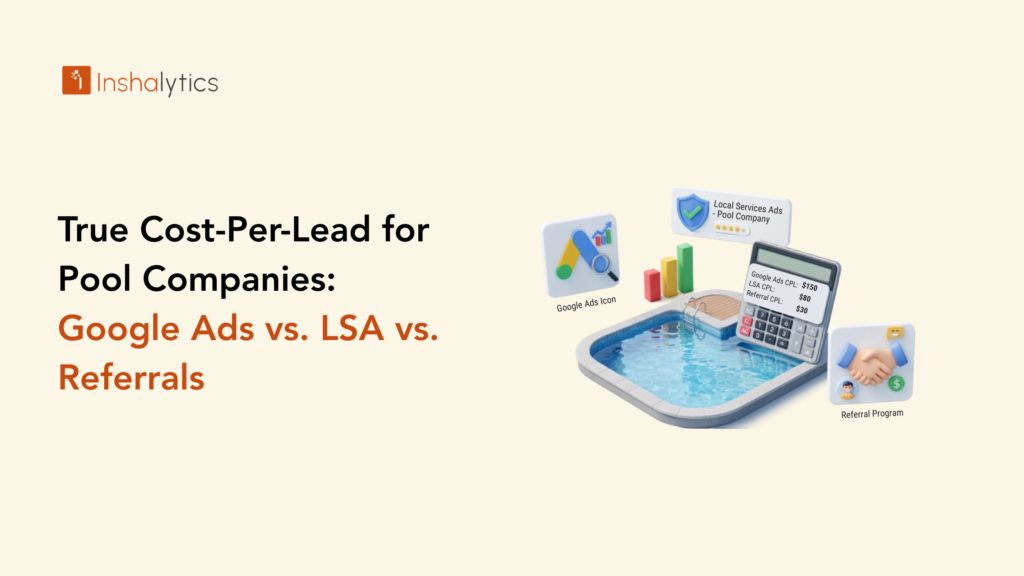
Google Ads charges per click (typically $2–$8 for handyman keywords). You pay whether or not the click becomes a lead. Local Services Ads charge per verified lead (typically $15–$30 for handyman services), with Google’s guarantee that you can dispute unqualified leads.
For early-stage handymen, LSAs often produce a lower cost-per-booked-job because you’re only paying for actual leads. For established handymen with high-converting landing pages and ad copy, Google Ads can produce leads even more cheaply.
Why LSAs Have the $250K Revenue Threshold
Local Services Ads have an informal but real revenue threshold. Below roughly $250K in annual revenue, handymen often lack the insurance coverage, workers’ compensation, and background check documentation that LSAs require. They also lack the capacity to handle the lead volume LSAs can produce at scale.
Above $250K, LSAs become a powerful channel that complements Google Search Ads.
Running Both for Maximum Top-of-Page Coverage
The real magic happens when you run both. Google displays LSAs above Search Ads above organic results. A handyman running both LSAs and Google Ads can occupy two of the top three positions on the page, blocking competitors and capturing more clicks than either channel alone.
How Do You Set Up Google Ads for a Handyman Business?
To set up Google Ads for a handyman business, create separate campaigns for your core services (general repair, drywall, electrical, plumbing, assembly), use call-only ad formats to drive direct phone calls, target emergency-intent and service-plus-city keywords, and target by ZIP code rather than broad metros. Set up conversion tracking for phone calls before spending a single dollar; without it, you can’t measure what’s working.
Campaign Structure: One Service Per Campaign
The biggest structural mistake handymen make is running one campaign with 50 mixed keywords. This forces Google’s algorithm to choose between different services competing for the same budget and leads to inconsistent performance.
Instead, create separate campaigns for:
- General handyman services
- Drywall repair
- Ceiling fan installation
- Furniture assembly
- Small plumbing repairs
- Small electrical jobs
- Door and window repair
Each campaign has its own budget, keywords, and ad copy. This structure lets you see which services produce the best ROI and allocate budget accordingly.
Call-Only Ads That Drive Direct Phone Calls
Call-only ads appear only on mobile devices and drive a direct phone call when tapped, no website visit required. For handyman services, this removes friction dramatically. Someone searching “handyman near me” doesn’t want to navigate a website. They want to press a button and talk to someone.
Call-only ads typically produce the highest conversion rates in handyman Google Ads accounts.
Geographic Targeting at the ZIP Code Level
Never target entire metro areas. That wastes budget on clicks from areas you don’t serve or don’t want to drive to. Target by specific ZIP codes or a tight radius around your service base (usually 10–15 miles maximum).
For handymen, a 15-mile radius at $5/click beats a 40-mile radius at $3/click every time the closer leads close higher and the travel time stays manageable.
Which Handyman Keywords Actually Generate Phone Calls?
Keyword selection determines whether your budget produces jobs or burns money.
Emergency-Intent Keywords (“Handyman Near Me Now”)
Highest-converting keywords signal immediate need:
- “Handyman near me”
- “Emergency handyman”
- “Handyman same day”
- “24-hour handyman”
- “Home repair near me”
These carry the highest click prices but also the highest conversion rates. Start with these keywords; even at lower volumes, they pay for themselves faster than cheaper, lower-intent keywords.
Service-Specific Keywords That Attract Qualified Leads
Service-specific keywords attract homeowners who’ve already identified what they need:
- “Drywall repair “
- “Ceiling fan installation “
- “Furniture assembly near me”
- “Deck repair “
- “Caulking services “
- “Door installation “
These typically have lower competition than broad “handyman” keywords and produce highly qualified leads.
City-Plus-Service Long-Tail Combinations
The most cost-effective handyman keywords combine city names with specific services. “Drywall repair Scottsdale,” “Ceiling fan installation Tempe,” “Home repair services Mesa.” These long-tail keywords have smaller search volumes individually but add up to significant traffic and carry lower click costs than broad terms.
Negative Keywords That Stop Budget Waste
Negative keywords prevent your ads from showing on irrelevant searches. Must-add negatives for handyman campaigns include:
- “Jobs,” “hiring,” “employment,” “career”
- “DIY,” “how to,” “tutorial,” “yourself.”
- “Free,” “cheap,” “discount” (unless intentional)
- “Training,” “school,” “certification”
- “Parts,” “manual,” “guide”
Review your Search Terms report weekly; it shows every actual search that triggered your ads. Add anything irrelevant to your negative list.
Writing Handyman Ad Copy That Converts Clicks Into Jobs
Good ad copy addresses the homeowner’s immediate concern and reduces hesitation to call.
Headlines That Match What Homeowners Are Actually Searching
Your first headline should mirror the search query as closely as possible. If someone searches “drywall repair Denver,” your headline reads “Drywall Repair in Denver Same Day Service.” Match headlines to search intent, and you win the click.
Same-Day Service and Speed-Focused Language
Speed-focused copy converts handyman searches. Winning phrases include:
- “Same-day service available”
- “Calls returned in under 30 minutes.”
- “Book today, fixed today.”
- “Quick response licensed & insured”
- “Local handyman, fast service”
These create an immediate mental picture of resolution.
Trust Signals That Get Strangers Invited Into Homes
Trust signals matter enormously for handyman services because customers are inviting strangers into their homes. Include:
- “Licensed & insured”
- “Background-checked technicians”
- “25+ five-star reviews”
- “Locally owned, [X] years serving “
- “Google Guaranteed”
These reduce the hesitation that kills handyman conversions.
Landing Page Requirements for Handyman Google Ads
Ad copy gets the click. Your landing page gets the phone call.
Why You Shouldn’t Send Handyman Ad Traffic to Your Homepage
Your homepage tries to serve too many purposes. It lists all your services, shows your about page, includes testimonials, and promotes everything at once. Google Ads traffic needs a single-focus landing page dedicated to one action: calling for service.
Sending paid traffic to homepages typically cuts conversion rates by 30–50%.
Mobile-First Design and Click-to-Call Prominence
The majority of handyman Google Ads traffic comes from mobile. Your landing page must:
- Load in under three seconds on mobile
- Display your phone number as the dominant element above the fold
- Include a sticky mobile phone bar that stays visible as users scroll
- Use a large tap-to-call button for thumb-friendly clicking
Test your landing page performance on multiple devices before driving paid traffic to it.
Trust Elements That Close the Loop
Trust elements on the landing page should reinforce the trust signals from your ads. Real photos of your team and trucks. Visible license and insurance information. Google review widgets showing actual reviews. A short FAQ addressing common handyman questions (“Do you do small jobs?” “Do you offer free estimates?” “How quickly can you come out?”).
Budget and Cost Benchmarks for Handyman Google Ads
Real cost benchmarks help you set realistic expectations.
Average Cost-per-Click: $2–$8 for Handyman Keywords
Handyman CPCs are significantly lower than HVAC or plumbing ($8–$50 range). Expect $2–$8 per click on typical handyman keywords, with premium keywords like “emergency handyman near me” reaching $10–$15 in competitive markets.
Cost-per-Lead Ranges by Market Competitiveness
Expected cost-per-lead by market:
- Small to mid-size markets: $15–$35/lead
- Mid-size metros: $25–$50/lead
- Competitive metros (Phoenix, Dallas, Atlanta): $40–$80/lead
If your cost-per-lead exceeds these ranges consistently, your campaign structure likely needs work.
Starting Budgets That Generate Meaningful Data
Minimum viable budget for a handyman Google Ads campaign is $750–$1,500/month. Below that, you don’t generate enough click volume for Google’s algorithm to optimize, and your performance plateaus. Above $1,500/month, you typically see steady improvement in cost-per-lead as the account accumulates data.
Scaling Up Once You Find Winning Campaigns
Once you’ve identified winning keywords, ads, and campaigns, scale budget incrementally by 20–30% increases per week. Doubling the budget overnight often produces worse results as Google’s algorithm has to re-learn at the new spend level.
How to Measure Handyman Google Ads ROI
Rankings and traffic are vanity metrics. Phone calls and booked jobs are what matter.
Setting Up Call Tracking Before You Launch
Call tracking assigns unique phone numbers to specific campaigns, ads, or keywords so you know exactly which ad produced each call. Without call tracking, you’re optimizing blind. Tools like [EXTERNAL LINK: CallRail and similar call tracking platforms] integrate directly with Google Ads and route calls to your real business line.
Cost-per-Lead vs. Cost-per-Booked-Job
Cost-per-lead is a starting metric. Cost-per-booked-job is the real number. If leads cost $30 and close at 50%, your cost-per-booked-job is $60. If leads cost $15 but close at 15%, your cost-per-booked-job is $100. Close rate matters as much as lead cost.
Revenue Attribution and Lifetime Value Tracking
Handyman customers often become repeat clients. The same homeowner who hires you for drywall repair today might call you for a ceiling fan installation next month. Track revenue per acquired customer over 12–24 months to see the true value of each lead. This typically reveals that leads worth $15 in initial revenue produce $200+ in lifetime value.
How Inshalytics Builds Handyman Google Ads That Scale Beyond $250K
Most handyman Google Ads accounts are set up once, then forgotten. We treat them as ongoing optimization projects.
Our Campaign Structure for Handyman Scale
Every Inshalytics handyman Google Ads engagement starts with campaign restructuring, separating services into dedicated campaigns, building tight keyword lists with aggressive negatives, creating dedicated landing pages, and installing proper call tracking. Foundation first, then optimization.
Integrating Google Ads With SEO and Referrals
Google Ads is a rented lead source. Every lead costs you per click. We integrate SEO and referral systems alongside paid ads so that over 12–18 months, your dependence on Google Ads decreases while your total lead volume grows. Owned leads compound; rented leads don’t.
Real Handyman Client Results
[CASE STUDY/TESTIMONIAL PLACEHOLDER] Our handyman clients typically see profitable campaign performance within the first 60 days and scale to 30–60% month-over-month lead growth in their first quarter.
Your First 7 Days on Google Ads as a Handyman
If you’re starting from zero, here’s exactly what the first week should look like.
Days 1–2: Account Setup and Keyword Research
Create a Google Ads account. Set up conversion tracking (calls and forms). Build your keyword list using the categories from earlier in this article. Draft a comprehensive negative keyword list. Configure ZIP-code-level geographic targeting.
Days 3–4: Ad Copy, Extensions, and Landing Pages
Write at least three ad variants per campaign. Configure all relevant ad extensions (call, location, callouts, structured snippets, sitelinks). Build a dedicated landing page for your primary service with phone prominence, trust signals, and fast mobile load speed.
Days 5–7: Launch, Monitor, and Optimize
Launch with conservative budgets ($25–$50/day per campaign). Monitor search terms daily for the first week and add negative keywords aggressively. Watch call tracking data to identify which keywords produce actual phone calls. By day seven, you should have enough data to begin scaling what works. Google Ads can be the fastest lever you pull for handyman lead generation if you avoid the common pitfalls that drain budget and frustrate contractors. Proper campaign structure, tight keywords, dedicated landing pages, and call tracking turn Google Ads from a money pit into a predictable lead source. If you want help building a handyman Google Ads campaign that actually pays for itself from week one, Inshalytics runs Google Ads campaigns tied to your revenue, not our fees. Get a free Google Ads audit, and we’ll show you exactly where your current campaigns are losing money or how to launch one that wins from day one.