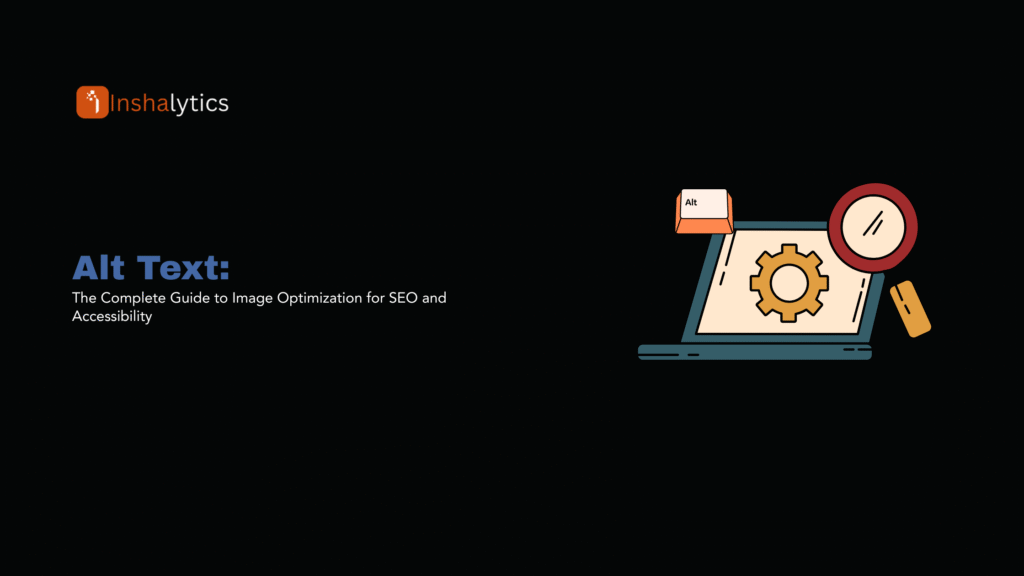
Alt text, short for “alternative text,” is one of those SEO elements that many website owners overlook, yet it plays a dual role in both search engine optimization and web accessibility. This HTML attribute provides a text alternative for images, serving users who can’t see them while simultaneously helping search engines understand and index your visual content. In this comprehensive guide, we’ll explore everything you need to know about alt text, from its basic purpose to advanced optimization strategies that can boost your search rankings and improve user experience.
Navigate This Post
What Is Alt Text?
Alt text is an HTML attribute added to image tags that describes the appearance and function of an image on a webpage. In HTML, it looks like this:
<img src=”golden-retriever-puppy.jpg” alt=”Golden retriever puppy playing with a tennis ball in a green park”>
When implemented correctly, alt text serves multiple purposes: it appears in place of images that fail to load, provides context for screen readers used by visually impaired users, and helps search engines understand what your images depict.
Why Alt Text Matters for SEO?
Image Search Optimization
Google Images drives billions of searches monthly, representing a significant traffic opportunity for websites. Without proper alt text, your images remain virtually invisible to search engines, missing out on potential visitors who could discover your content through image search.
When users search Google Images, the search engine relies heavily on alt text to determine which images match the query. Well-optimized alt text can help your images rank for relevant keywords, driving targeted traffic to your website.
Context for Overall Page Content
Search engine crawlers can’t “see” images the way humans do. They rely on alt text to understand what images show and how they relate to your page content. This context helps search engines better understand your page’s overall topic and relevance to specific search queries.
Pages with properly optimized alt text often perform better in regular web search results because search engines have a more complete understanding of the page’s content.
User Experience Signals
Images that fail to load whether due to slow connections, browser issues, or broken links display alt text instead. This ensures users still understand what the image was supposed to show, improving user experience even when technical problems occur.
Better user experiences lead to lower bounce rates and higher engagement, both of which are positive signals to search engines.
Alt Text and Web Accessibility
Beyond SEO, alt text serves a critical accessibility function. Approximately 2.2 billion people worldwide have some form of vision impairment, and many rely on screen readers to navigate the web. These assistive technologies read alt text aloud, allowing visually impaired users to understand your images.
Providing quality alt text isn’t just good practice it’s often legally required. The Americans with Disabilities Act (ADA) and similar laws in other countries mandate web accessibility, with alt text being a fundamental component of accessible websites.
How to Write Effective Alt Text?
Be Descriptive and Specific
Good alt text describes what’s in the image clearly and specifically. Instead of generic descriptions like “image” or “photo,” provide meaningful details that paint a picture for someone who can’t see the image.
Poor: “dog”
Better: “golden retriever puppy”
Best: “golden retriever puppy playing with a red tennis ball in a sunny park”
Keep It Concise
While you want to be descriptive, aim for alt text between 125 and 150 characters. Screen readers often cut off longer descriptions, and overly lengthy alt text can seem spammy to search engines. Focus on the most important and relevant details.
Include Keywords Naturally
If relevant keywords naturally fit your image description, include them. However, never force keywords or engage in “keyword stuffing.” Alt text should primarily describe the image; any SEO benefit should be a natural byproduct of accurate description.
Good: “woman using laptop for remote work at home office desk” Bad: “remote work laptop woman office work from home telecommuting remote job laptop computer desk”
Consider Context and Function
The same image might need different alt text depending on its context and purpose on the page. A logo serving as a home page link might have alt text like “Company Name Home,” while the same logo used decoratively might not need alt text at all.
For functional images like buttons or icons, describe the function rather than the appearance. A magnifying glass icon should have alt text like “search” rather than “magnifying glass icon.”
Avoid Redundant Phrases
Don’t start alt text with “image of” or “picture of” screen readers already announce that it’s an image. Jump straight to the description to maximize the limited character count.
Don’t write: “Image of a chocolate cake with strawberries.” Write: “Chocolate cake topped with fresh strawberries and whipped cream”
When Not to Use Alt Text?
Not every image needs alt text. Decorative images that don’t add informational value should have empty alt attributes (alt=””) so screen readers skip them. This includes:
- Decorative borders or spacers
- Images used purely for visual design
- Icons that have adjacent text labels
- Images that are already fully described in the nearby text
Using empty alt attributes for decorative images actually improves accessibility by preventing screen readers from announcing irrelevant content.
Alt Text for Different Types of Images
Product Images
E-commerce sites should describe products clearly, including important details like color, style, and key features visible in the image.
Example: “Women’s black leather ankle boots with side zipper and block heel”
Infographics
Infographics pose unique challenges because they contain substantial information. Provide a concise alt text describing the infographic’s main topic, and consider including a full text transcript elsewhere on the page.
Example: “Infographic showing the five stages of the customer journey from awareness to advocacy”
Charts and Graphs
Describe what the chart shows and its key takeaway. Provide detailed data in accompanying text or tables for accessibility.
Example: “Line graph showing 45% increase in website traffic from January to December 2024”
Screenshots
For screenshots, describe what the image shows and why it’s relevant to your content.
Example: “Google Analytics dashboard displaying visitor demographics and traffic sources”
People and Headshots
When featuring people, include relevant details like their name, role, or what they’re doing, depending on context.
Example: “Sarah Johnson, Senior Marketing Manager, presenting at the annual conference”
Common Alt Text Mistakes to Avoid
Keyword Stuffing
Cramming multiple keywords into alt text makes it less useful for accessibility and can appear manipulative to search engines. Write for humans first.
Using File Names
Never use auto-generated file names like “IMG_2847.jpg” as alt text. These provide no value to users or search engines.
Being Too Vague
Generic descriptions like “product” or “person” waste the opportunity to provide meaningful information.
Duplicating Surrounding Text
If your image caption or surrounding text already fully describes the image, don’t repeat the same information verbatim in alt text. Provide complementary details instead.
Forgetting Alt Text Entirely
Missing alt text is perhaps the biggest mistake. Even if you’re in a hurry, add basic alt text you can always refine it later.
Technical Implementation
HTML Implementation
The most straightforward implementation uses the alt attribute in the image tag:
<img src=”example.jpg” alt=”Description of image”>
CMS Platforms
Most content management systems make adding alt text simple:
- WordPress: Add alt text in the image details panel when uploading or editing images
- Shopify: Use the alt text field in the image editor
- Wix: Right-click images and select “Edit Alt Text”
- Squarespace: Access alt text through image block settings
Checking Your Alt Text
Use these methods to audit your alt text implementation:
- Browser inspection: Right-click images and select “Inspect” to view the HTML
- Screen readers: Test with free screen readers like NVDA or built-in options (macOS VoiceOver)
- SEO tools: Use tools like Screaming Frog or Semrush to identify missing alt text
- Accessibility checkers: WAVE or Lighthouse audits flag accessibility issues, including alt text problems
Alt Text and Image File Names
While not the same as alt text, image file names also contribute to SEO. Before uploading images, rename files descriptively using keywords separated by hyphens:
Poor: DSC_1847.jpg Good: chocolate-chip-cookies-recipe.jpg
Combined with proper alt text, descriptive file names strengthen your image SEO.
Measuring Alt Text Impact
Track these metrics to assess your alt text optimization efforts:
- Image search traffic: Monitor organic visits from Google Images in analytics
- Overall organic traffic: Well-optimized images contribute to better overall rankings
- Accessibility scores: Use Lighthouse or similar tools to track accessibility improvements
- User engagement: Better accessibility often correlates with improved engagement metrics
Advanced Alt Text Strategies
Structured Data for Images
Combine alt text with schema markup to provide even more context to search engines about your images.
Internationalization
For multilingual sites, ensure alt text is properly translated for each language version, maintaining cultural appropriateness and keyword relevance.
Dynamic Alt Text
For sites with user-generated content, implement systems that require or suggest alt text when users upload images.
Conclusion
Alt text represents a convergence of SEO, accessibility, and user experience. By providing thoughtful, descriptive alternative text for your images, you make your website more inclusive, improve your search visibility, and create a better experience for all users.
Remember that quality alt text isn’t about gaming search engines it’s about accurately describing your visual content for anyone who needs a text alternative. When you focus on genuine description and utility, the SEO benefits naturally follow.
Start auditing your website’s images today. Identify missing or poor alt text, implement the best practices outlined in this guide, and you’ll not only improve your search rankings but also make the web more accessible for everyone.