
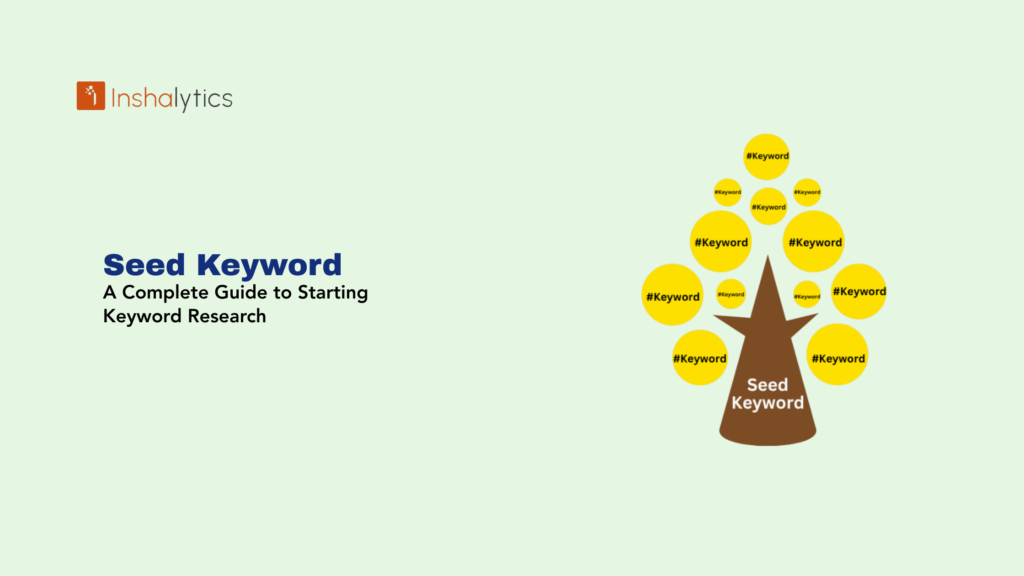
A seed keyword is a foundational term or phrase that serves as the starting point for comprehensive keyword research. These are typically short, broad keywords usually one or two words that represent your core business topics, products, or services. Seed keywords act as the “seeds” from which you grow a full keyword strategy, using them in keyword research tools to discover hundreds or thousands of related long-tail keywords, variations, questions, and search phrases that your target audience uses.
For example, if you run a digital marketing agency, your seed keywords might include “SEO,” “content marketing,” “social media,” and “email marketing.” While you wouldn’t necessarily target these broad terms directly due to high competition, they unlock a wealth of more specific, targetable keyword opportunities like “local SEO for small business,” “content marketing strategy template,” or “email marketing automation tools.”
Navigate This Post
Why Seed Keywords Matter
Seed keywords are the foundation of effective keyword research and content strategy for several critical reasons:
1. Expand Your Keyword Universe
Starting with 5-10 seed keywords can generate thousands of related keyword variations through keyword research tools. This expansion reveals opportunities you might never discover through brainstorming alone.
Example Expansion:
- Seed keyword: “coffee”
- Generates: “best coffee beans,” “cold brew coffee recipe,” “coffee shops near me,” “espresso vs coffee,” “coffee grinder reviews,” and thousands more
2. Discover User Language
Seed keywords help identify the actual terminology and phrases your audience uses, which often differs from industry jargon or internal company language.
Example:
- Your company term: “customer relationship management software”
- User seed keyword: “CRM”
- User variations: “best CRM for small business,” “CRM tools,” “customer database software”
3. Uncover Search Intent Patterns
By exploring variations of seed keywords, you discover different intent types—informational, navigational, commercial investigation, and transactional—allowing you to create content for each stage of the buyer journey.
4. Identify Topic Clusters
Seed keywords reveal related subtopics and themes, helping you structure content into comprehensive topic clusters that establish topical authority.
5. Competitor Analysis Starting Point
Seed keywords allow you to analyze which related terms competitors rank for, identifying gaps in their strategy and opportunities for your content.
6. Content Ideation Foundation
Rather than guessing content topics, seed keywords reveal what people actually search for, ensuring your content addresses real audience needs and questions.
How to Identify Seed Keywords
Finding effective seed keywords requires thinking about your business, audience, and market from multiple angles.
1. Start with Your Core Offerings
List your main products, services, or content categories in simple, broad terms.
E-commerce Example:
- Running shoes
- Yoga pants
- Fitness trackers
- Protein powder
Service Business Example:
- Web design
- SEO services
- Content writing
- Digital marketing
Content Site Example:
- Recipes
- Home improvement
- Personal finance
- Travel tips
2. Consider Your Niche or Industry
Add broader industry terms that encompass your business area.
Examples:
- Fitness
- Digital marketing
- Real estate
- Software development
- Interior design
3. Think Like Your Customers
What simple terms would someone unfamiliar with your business type into Google?
Not: “Performance-based digital advertising solutions” Instead: “online advertising,” “Google ads,” “Facebook ads”
4. Analyze Your Website Structure
Your main navigation categories and site sections often reveal natural seed keywords.
Website Navigation: Home | Products | Services | Blog | Contact Seed Keywords: [Your product categories], [Your service types]
5. Review Internal Search Data
If your website has search functionality, analyze what visitors search for on your site. These reveal the language they use and topics they’re interested in.
6. Mine Customer Conversations
Review:
- Customer support tickets and FAQs
- Sales call notes and questions
- Social media comments and messages
- Product reviews and feedback
- Email inquiries
The terminology customers use in conversations often differs from marketing language and reveals valuable seed keywords.
7. Explore Competitor Websites
Visit competitor sites and note:
- Main navigation categories
- Product/service names
- Blog topics and categories
- How they describe their offerings
8. Use Google’s Related Searches
Type a broad term into Google and scroll to “Related searches” at the bottom. These suggestions indicate popular related seed keywords.
9. Leverage Industry Knowledge
Consider:
- Common industry terms and acronyms
- Problem statements your business solves
- Benefits customers seek
- Alternative products or services
Using Seed Keywords in Keyword Research Tools
Once you’ve identified seed keywords, use them in keyword research platforms to expand your keyword list exponentially.
Google Keyword Planner
Process:
- Enter seed keyword (e.g., “yoga”)
- Tool generates related keywords with search volumes
- Filter by relevance, volume, and competition
- Export promising keywords for further analysis
Output Example:
- yoga mat (110,000 searches/month)
- yoga poses for beginners (33,100 searches/month)
- yoga near me (90,500 searches/month)
- hot yoga (74,000 searches/month)
Ahrefs Keywords Explorer
Process:
- Input seed keyword
- Review “Matching terms” (contains seed keyword)
- Explore “Related terms” (semantically related)
- Analyze “Questions” (question-based queries)
- Check “Newly discovered” keywords
Advanced Features:
- Keyword difficulty scores
- Traffic potential estimates
- SERP analysis
- Parent topic identification
SEMrush Keyword Magic Tool
Process:
- Enter seed keyword
- Browse keyword variations by match type
- Filter by intent, volume, or difficulty
- Group keywords by topic clusters
- Export keyword lists
Unique Features:
- Intent categorization
- Keyword clustering
- Competitive density metrics
Ubersuggest
Process:
- Type seed keyword
- Review suggestions and related keywords
- Analyze content ideas
- Export keyword opportunities
Budget-Friendly Option: Good for beginners or small budgets
Answer the Public
Process:
- Enter seed keyword
- Visualize questions, prepositions, comparisons
- Identify content opportunities from questions
- Note seasonal trends
Best For: Content ideation and FAQ creation
From Seed Keywords to Content Strategy
Step 1: Generate Keyword Variations
Use seed keywords in multiple tools to build comprehensive keyword lists. Aim for 100-500+ variations per seed keyword.
Step 2: Categorize by Intent
Organize discovered keywords by search intent:
Informational – “what is,” “how to,” “guide to”
- Focus: Educational content, blog posts, tutorials
Navigational – Brand names, specific sites
- Focus: Brand optimization, authority building
Commercial Investigation – “best,” “top,” “review,” “vs”
- Focus: Comparison pages, reviews, buying guides
Transactional – “buy,” “price,” “discount,” “near me”
- Focus: Product pages, service pages, local SEO
Step 3: Group into Topic Clusters
Organize related keywords into topic clusters around pillar content.
Seed Keyword: “email marketing” Topic Clusters:
- Email marketing strategy
- Email automation
- Email design best practices
- Email deliverability
- Email metrics and analytics
Step 4: Prioritize Based on Opportunity
Evaluate keywords using:
- Search volume (traffic potential)
- Keyword difficulty (ranking feasibility)
- Business relevance (conversion potential)
- Current ranking position (quick wins)
Priority Formula: (Search Volume × Relevance Score) ÷ Keyword Difficulty = Opportunity Score
Step 5: Create Content Roadmap
Map keywords to content types:
- Blog posts for informational keywords
- Product pages for transactional keywords
- Comparison pages for commercial investigation
- Landing pages for high-value conversions
Step 6: Monitor and Refine
Track ranking progress for targeted keywords and use performance data to refine your seed keyword list and discover new opportunities.
Seed Keyword Best Practices
1. Start Broad, Then Narrow
Begin with broad seed keywords to cast a wide net, then progressively narrow based on what you discover. Don’t start with overly specific seeds or you’ll miss opportunities.
2. Use Multiple Seed Keywords
Don’t rely on a single seed. Use 10-20 diverse seed keywords to capture different aspects of your business and audience interests.
3. Include Problem-Focused Seeds
Beyond product/service names, include seed keywords describing problems you solve:
- “back pain relief” (instead of just “chiropractor”)
- “website loading slow” (instead of just “web hosting”)
4. Consider Modifiers
Test seed keywords with common modifiers:
- Best [seed keyword]
- [seed keyword] for beginners
- How to [seed keyword]
- [seed keyword] near me
- [seed keyword] vs [alternative]
5. Don’t Skip Obvious Seeds
Sometimes the most obvious seed keywords are overlooked. Include basic, broad terms even if they seem too competitive—they’ll generate valuable variations.
6. Refresh Seed Keywords Regularly
Markets evolve, terminology changes, and new opportunities emerge. Revisit and update your seed keyword list quarterly.
7. Test Plural and Singular Forms
Both forms may generate different results:
- “running shoe” vs “running shoes”
- “SEO strategy” vs “SEO strategies”
8. Include Industry Synonyms
Different audiences use different terms:
- “lawyer” vs “attorney”
- “couch” vs “sofa”
- “physician” vs “doctor”
Common Seed Keyword Mistakes
Being Too Specific – Starting with long-tail keywords as seeds limits expansion potential. Seeds should be broad.
Using Only Industry Jargon – Your internal terminology may not match customer language. Test customer-facing terms.
Limiting to Branded Terms – Don’t only use your brand or product names as seeds. Include generic industry terms.
Ignoring Question Keywords – “How,” “what,” “why,” “when” combined with seeds reveal valuable question-based content opportunities.
Overlooking Local Modifiers – For local businesses, seed keywords should include location variations: “[service] ,” “[product] near me.”
Not Expanding Enough – Stopping after 20-30 keywords means missing the long-tail goldmine. Push for hundreds of variations per seed.
Forgetting Voice Search – Conversational seed keywords (“best way to…”) reveal voice search opportunities.
Seed Keywords vs. Target Keywords
Understanding the distinction is crucial:
Seed Keywords:
- Broad, generic terms (1-2 words)
- Starting point for research
- Usually too competitive to target directly
- Generate thousands of variations
- Foundation, not destination
Target Keywords:
- Specific phrases you actually optimize for
- Include modifiers and context (3-5+ words)
- Derived from seed keyword research
- Achievable ranking opportunities
- What you actually create content around
Example:
- Seed: “coffee”
- Target keywords: “best coffee beans for espresso,” “cold brew coffee ratio,” “organic fair trade coffee brands”
Measuring Seed Keyword Success
Effective seed keywords generate:
- Quantity – Hundreds to thousands of related variations
- Diversity – Different intents, formats, and specificity levels
- Relevance – Strong connection to your business offerings
- Opportunity – Mix of achievable and aspirational keywords
- Insights – Reveal customer language and pain points
If a seed keyword generates only 10-20 low-quality variations, it may be too narrow or not aligned with actual search behavior.
Conclusion
Seed keywords are the essential foundation of effective keyword research and content strategy. These broad, simple terms unlock comprehensive keyword universes through research tools, revealing the actual language your audience uses, the questions they ask, and the topics they care about. While you rarely target seed keywords directly due to high competition and broad intent, they serve as launchpads for discovering hundreds of more specific, targetable keyword opportunities.
The most successful SEO and content strategies start with thoughtful seed keyword selection—considering products, services, industry terms, customer language, and problem statements—then systematically expand through research tools to build comprehensive keyword lists organized by intent and priority. By treating seed keywords as starting points rather than destinations, you develop content strategies grounded in real search behavior rather than assumptions.
Whether you’re launching a new website, expanding content offerings, or refining existing strategies, revisiting and expanding your seed keywords ensures your content remains aligned with evolving audience needs and search trends.
Key Takeaway: A seed keyword is a broad, foundational term (usually 1-2 words) serving as the starting point for keyword research, used in tools like Google Keyword Planner, Ahrefs, and SEMrush to generate thousands of related keyword variations, questions, and long-tail opportunities. While too competitive to target directly, seed keywords like “SEO,” “recipes,” or “fitness” unlock comprehensive keyword strategies by revealing actual user language, search intent patterns, and content opportunities aligned with audience needs.