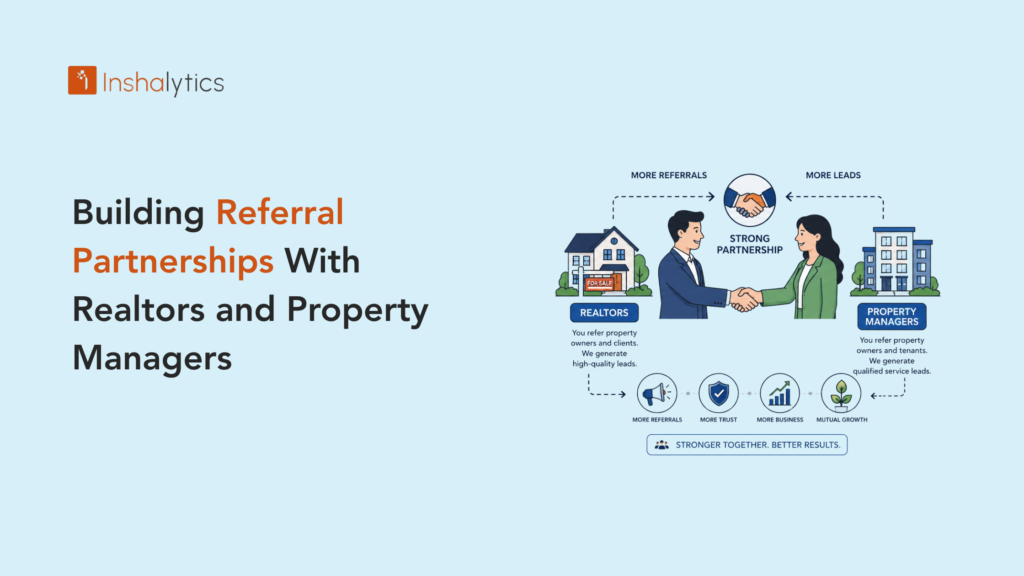
Every homeowner you work for is one job. Every realtor or property manager you build a relationship with is a pipeline of jobs, month after month, without a single dollar spent on ads. Realtors need reliable repairs before a listing goes live. Property managers need fast turnaround between tenants. Both groups need someone they can call without having to think twice or shop around first.
The problem is that most advice on this topic stops at “go network and build relationships,” without covering what to actually say, what the legal boundaries are, or how to keep a handful of partnerships from quietly falling apart once the initial enthusiasm fades. This guide covers all three, from the first message to a system that keeps every partner active.
Why Realtors and Property Managers Make Ideal Referral Partners
Before building a referral program, it helps to understand exactly why these two groups convert into such reliable, recurring work compared to other referral sources. Not every referral source is worth the same investment of time, and these two consistently rank among the highest-value ones available to a handyman business.
Fix-and-Flip and Listing Prep Repairs
Realtors regularly need quick, reliable repairs before a home goes on the market: patch and paint, fixture swaps, small fixes that would otherwise scare off a buyer during a walkthrough. Investors working fix-and-flip properties need the same thing on a larger scale and a tighter timeline, often with several properties moving through renovation at once.
A realtor who trusts one handyman to handle this reliably will keep sending listings your way indefinitely, since finding a dependable vendor for this kind of work is a real pain point most agents deal with constantly. Timing matters enormously in this world. A listing photo shoot scheduled for Friday means the repairs need to be done by Thursday, and a realtor who has been burned by a slow contractor once tends to stick loyally with whoever fixes that problem for them.
Tenant Turnover and Move-Out Maintenance
Property managers handle tenant turnover constantly, and every vacancy is lost income until the unit is repair-ready. A handyman who can turn a unit around quickly becomes someone a property manager calls automatically, without shopping around each time a lease ends.
This work also tends to be predictable and recurring, tied to lease cycles rather than one-off emergencies, which makes it easier to plan around than typical homeowner demand. A property manager overseeing forty units might have several turnovers happening in any given month, which adds up to steady, forecastable work rather than the feast-or-famine pattern of pure residential leads.
The Volume Advantage of One Relationship vs. One Homeowner
A single realtor might sell twenty homes a year. A single property manager might oversee dozens of units. One strong relationship with either can generate more repeat work than months of one-off homeowner leads, for a fraction of the ongoing marketing effort required to generate that same volume from ads or organic search.
This is the core economic argument for investing real time into these relationships even when the payoff isn’t immediate. A single afternoon spent building rapport with the right property manager can outperform weeks of ad spend chasing individual homeowners one at a time.
What to Know Before You Set Up a Referral Program
Referral partnerships work differently once money changes hands, and real estate has real rules around that. It is worth understanding before you build a formal program, not after a partner asks a question you can’t answer.
State Rules on Real Estate Referral Fees
Real estate is a regulated industry, and rules on referral compensation vary significantly by state. A realtor who receives a fee for referring you a client may have specific licensing or disclosure obligations that a handyman business would not otherwise need to think about, and getting this wrong can create real problems for your partner, not just you.
This does not rule out referral compensation. It just means a simple reciprocal arrangement, sending work back and forth without a formal fee, is often the easier starting point, with a paid referral structure considered later and reviewed against your state’s specific rules once the relationship is established.
Referral Bonus vs. Reciprocal Referral Structures
A referral bonus pays a partner directly for sending business your way. A reciprocal structure simply trades referrals back and forth: you refer clients who need a realtor, they refer clients who need repairs. Reciprocal arrangements are simpler to set up and avoid most of the compliance questions that come with direct payment.
Many successful partnerships never involve money changing hands at all. The value exchange is simply two businesses making each other look good to their own clients, which can be just as durable as a paid arrangement, and often more durable, since it doesn’t depend on either side needing the money badly enough to keep tracking it.
How Do You Approach and Pitch a Realtor or Property Manager?
You approach a realtor or property manager the same way you would approach any professional relationship: a short, specific introduction, a clear sense of what you offer, and no pressure for an immediate commitment. The goal of the first contact is simply to be remembered the next time they need a reliable vendor, not to close a deal on the spot.
The First Outreach Email or Message
Keep the first message short: who you are, what you do, and a specific reason it is relevant to them right now, such as handling quick turnover repairs or pre-listing punch lists. A generic “let’s partner” message gets ignored. A specific, useful offer gets a reply.
Mentioning a specific pain point, like fast turnaround before a listing photo shoot, shows you understand their business rather than just wanting theirs.
What to Bring to a Face-to-Face Introduction
If you get a meeting or run into a realtor or property manager at a local event, bring something concrete: a simple one-pager with services, licensing, and a way to reach you fast. A card alone gets lost in a stack of other cards. A one-pager with a clear service list gets remembered when the need actually comes up weeks or months later.
Local real estate association meetups, chamber of commerce events, and property manager association gatherings are all reliable places to find several of these introductions in a single afternoon, rather than waiting for a chance encounter.
Following Up Without Turning Into a Pest
Most partnerships do not form on the first contact. A short follow-up every few weeks, with something new each time such as availability, a seasonal offer, or a completed project, keeps you visible without becoming the vendor they start avoiding.
Patience matters here more than persistence. A realtor who feels pressured tends to remember that feeling longer than they remember the pitch itself.
Systemizing Referral Partnerships So They Don’t Depend on Memory
A handful of good relationships can quietly fall apart if the only thing holding them together is memory. Treating referral sources like a real channel, not a favor, is what keeps them alive long term.
Tracking Referral Sources in Your CRM
Every referral partner should be logged and tracked the same way any other lead source is, with a record of what was sent, when, and what came of it. Without this, it is easy to lose track of which relationships are actually producing work and which have quietly gone cold.
This tracking also makes it obvious which partnerships deserve more attention. A realtor who has sent five jobs this year is worth a very different level of ongoing effort than one who has sent zero.
Measuring Cost-Per-Booked-Job From Referral Channels vs. Paid Leads
Referral leads almost always book at a higher rate and lower cost-per-booked-job than shared marketplace leads, because the trust is already established before the first call. Tracking this comparison directly makes the case for investing more time in partnerships, not less, as the business grows and has to decide where to put its limited time.
Once this gap is visible in the numbers, it becomes much easier to justify time spent on relationship-building that doesn’t show an immediate return, the same way a marketing budget justifies an ad campaign that takes weeks to pay off.
Keeping Partners Warm With Simple Recurring Touchpoints
A quarterly check-in, a small seasonal gesture, or simply reporting back on how a referred job went keeps a partnership active. Relationships that go silent for a year tend to get replaced by whichever vendor stayed visible in the meantime.
This doesn’t need to be elaborate. A short message after a busy season thanking a partner for the referrals sent, with a quick note on how the jobs went, does most of the work.
Turning a Few Partnerships Into a Reliable Growth Channel
One good relationship is a nice bonus. A handful of them, actively maintained, is a real growth channel that does not depend on ad spend or algorithm changes.
Expanding From One Realtor to a Local Network
Once one relationship is working well, ask directly for an introduction to others in the same office or brokerage. Realtors and property managers tend to know several peers who face the exact same repair and turnaround needs, and a warm introduction from a trusted colleague carries far more weight than a cold outreach ever could.
This is often the fastest way to grow the channel, since one satisfied partner vouching for you does more in a single conversation than months of independent outreach to strangers.
When to Formalize a Referral Fee Agreement
Once a relationship is consistently producing real work, it may be worth formalizing terms in writing, reviewed against your state’s rules on referral compensation. A simple written agreement protects both sides and makes the arrangement easier to track and renew, rather than relying on an informal understanding that can drift over time.
Formalizing the relationship also signals to the partner that you take it seriously, which can encourage them to prioritize sending business your way over a less committed competitor.
Referral partnerships with realtors and property managers are not a side hustle to residential marketing. Handled well, they become one of the highest-converting, lowest-cost channels a handyman business has, precisely because the trust is already built in before the first call happens. The businesses that win at this treat it like a real channel: tracked, followed up on, and expanded deliberately instead of left to chance.
Want help turning your referral relationships into a tracked, repeatable pipeline instead of scattered contacts in a phone? Let’s talk about setting up lead-source tracking that captures every referral your business receives.