Definition: A nofollow link is a hyperlink with a rel=”nofollow” attribute that instructs search engines not to pass link equity (ranking power) to the destination page. Originally introduced by Google in 2005 to combat comment spam, nofollow has evolved into a nuanced tool for managing link relationships, compliance with webmaster guidelines, and controlling how link authority flows across the web.
Navigate This Post
What Is a Nofollow Link?
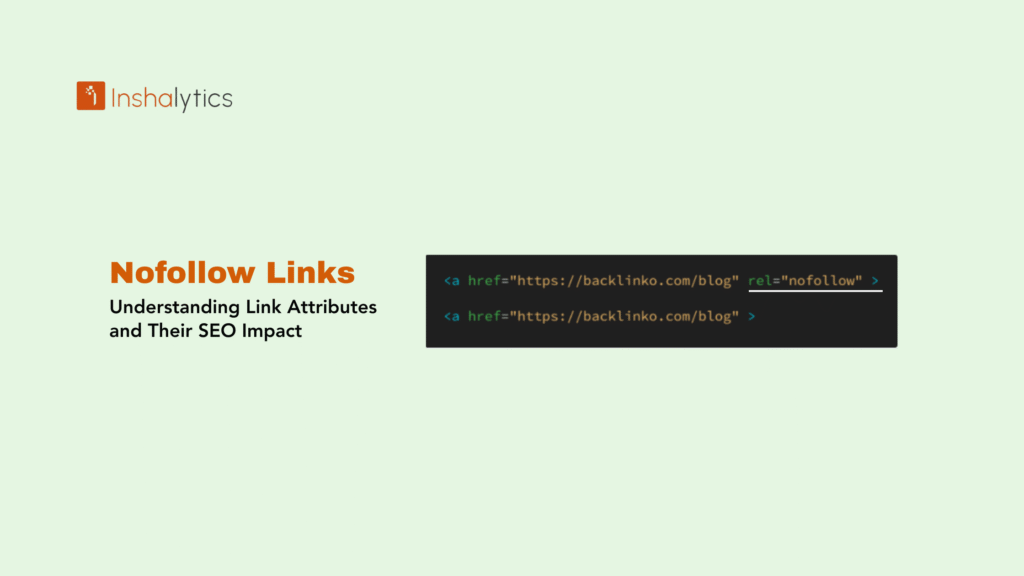
A nofollow link contains an HTML attribute that signals to search engines they should not follow the link for indexing purposes or pass PageRank (link equity) to the linked page. In practice, search engines may still crawl nofollow links to discover content, but they treat them differently than standard “followed” links when calculating rankings.
Standard HTML link (followed by default):
<a href=”https://example.com”>Link Text</a>
Nofollow link:
<a href=”https://example.com” rel=”nofollow”>Link Text</a>
The key difference lies in the rel=”nofollow” attribute, which modifies search engine behavior regarding that specific link without affecting how users interact with it visitors can still click nofollow links normally.
The History and Evolution of Nofollow
Understanding nofollow’s origins and changes reveals its current role in SEO.
2005: Original Introduction
Google, Yahoo, and Microsoft introduced nofollow to combat comment spam automated or manual spam comments containing links intended solely to manipulate search rankings. Webmasters could add rel=”nofollow” to user-generated links, preventing spammers from benefiting while maintaining user functionality.
2005-2019: Directive Interpretation
During this period, Google treated nofollow as a directive an instruction it strictly followed. Nofollow links absolutely did not pass PageRank or contribute to ranking calculations.
2019: Shift to Hint Status
Google announced a significant change: nofollow (and new attributes like “sponsored” and “ugc”) became hints rather than directives. Google may choose to follow these links or consider them for ranking purposes in certain circumstances, though they typically still don’t pass link equity.
2020: Additional Attributes
Google introduced two new link attributes providing more nuanced relationship descriptions:
- rel=”sponsored”: For paid or sponsored links
- rel=”ugc”: For user-generated content links
These complement nofollow, offering clearer context about link relationships.
When to Use Nofollow Links
Understanding appropriate nofollow use ensures compliance with search engine guidelines and ethical linking practices.
Paid Links and Sponsored Content
Requirement: All paid links, sponsored posts, or any links exchanged for compensation must use rel=”nofollow” or rel=”sponsored”.
Rationale: Search engines prohibit selling PageRank. Paid links must be marked to avoid manipulating rankings.
Examples:
- Sponsored blog posts
- Paid product reviews
- Advertising links
- Affiliate links (though sponsored is preferable)
User-Generated Content
Recommendation: Links in comments, forums, user profiles, or any content created by untrusted third parties should use rel=”nofollow” or rel=”ugc”.
Rationale: Prevents spam from benefiting and protects your site from associating with potentially low-quality destinations.
Examples:
- Blog comments
- Forum signatures
- User-submitted reviews
- Social media posts
- Wiki-style collaborative content
Untrusted Content
Guideline: Link to content you cannot vouch for or verify using nofollow.
Rationale: Protects your site’s reputation and prevents inadvertently endorsing problematic content.
Examples:
- Links to questionable sources
- Content you haven’t verified
- Sites with uncertain quality
Widget and Embedded Content Links
Best Practice: Links within widgets distributed to other sites should include nofollow.
Rationale: Prevents widget distribution from becoming a link scheme.
Examples:
- Blog badges
- Social media widgets
- Embedded tools or calculators
When NOT to Use Nofollow
Several situations don’t require nofollow despite common misconceptions.
Editorial Links
Natural editorial links to quality resources, sources, or relevant content don’t need nofollow. These legitimate references are exactly what search engines want to see.
Legitimate Outreach-Earned Links
Links earned through ethical outreach guest posts, partnerships, or collaborative content don’t require nofollow unless compensation is involved.
Internal Links
Links within your own website should almost never use nofollow, as this prevents proper link equity distribution and can confuse site architecture signals.
Citations and References
Academic, journalistic, or professional citations of authoritative sources should use standard followed links, demonstrating well-researched content.
How Nofollow Affects SEO
The impact of nofollow links on SEO involves several considerations beyond simple “passes/doesn’t pass PageRank” distinctions.
Direct SEO Impact
No PageRank transfer: Nofollow links traditionally don’t pass link equity contributing to rankings.
Limited ranking influence: They typically don’t help destination pages rank better in search results.
Possible crawl impact: Search engines may still crawl nofollow links to discover content, though priority might be lower than followed links.
Hint interpretation: Since 2019, Google may occasionally consider nofollow links when appropriate, though this remains exception rather than rule.
Indirect SEO Benefits
Referral traffic: Nofollow links from high-traffic sites drive valuable visitors regardless of PageRank transfer.
Brand visibility: Appearing on authoritative sites, even with nofollow links, builds brand awareness and authority.
Natural link profile: Healthy link profiles include both followed and nofollow links, appearing more natural than profiles with only followed links.
Discovery pathway: Nofollow links can lead to natural followed links when people discover your content through nofollow references.
Social signals: Nofollow social media links may correlate with other positive signals search engines consider.
Nofollow, Sponsored, and UGC Attributes
Google’s 2019-2020 updates introduced additional attributes providing clearer context.
rel=”nofollow”
Use for: General cases where you’re linking but don’t want to pass endorsement.
Current status: Treated as a hint; Google may occasionally use these links.
rel=”sponsored”
Use for: Paid links, advertisements, sponsored content, or any compensation-based links.
Benefits: Provides clear context that the link represents a business relationship.
rel=”ugc”
Use for: User-generated content like comments, forums, or reviews.
Benefits: Distinguishes editorial links from community-contributed links.
Combining Attributes
Multiple attributes can be combined when appropriate:
<a href=”example.com” rel=”nofollow ugc”>User comment link</a>
<a href=”example.com” rel=”nofollow sponsored”>Paid sponsor link</a>
Identifying Nofollow Links
Several methods reveal whether links use nofollow attributes.
Inspect Element Method
- Right-click the link
- Select “Inspect” or “Inspect Element”
- View the HTML code
- Look for rel=”nofollow” in the anchor tag
Browser Extensions
NoFollow: Chrome extension highlighting nofollow links on pages Strike Out Nofollow Links: Visually strikes through nofollow links SEO Minion: Shows nofollow status among other SEO details
SEO Tools
Ahrefs: Site Explorer shows dofollow vs nofollow status for backlinks SEMrush: Backlink Analytics indicates link type Moz Link Explorer: Displays rel attribute information
View Page Source
Search page source for links to your domain and check for rel=”nofollow” attribute in the anchor tags.
Common Nofollow Misconceptions
Several myths about nofollow persist despite clarification from search engines.
Myth: Nofollow links have zero SEO value Reality: They drive traffic, aid discovery, contribute to natural profiles, and may occasionally be considered by search engines.
Myth: All external links should be nofollow Reality: Editorial links to quality sources should be followed, demonstrating well-researched content.
Myth: Nofollow is a penalty Reality: Nofollow is a relationship descriptor, not a negative signal. Sites with nofollow links aren’t penalized.
Myth: You should nofollow competitors Reality: Natural editorial links to competitors when relevant actually demonstrates confident, quality content.
Myth: Internal links should be nofollow to control PageRank flow Reality: “PageRank sculpting” through internal nofollow is outdated and ineffective; it may harm rather than help.
Myth: Requesting nofollow removal always helps Reality: Google treats requests for nofollow removal skeptically and may view campaigns for removal as manipulation.
Nofollow and Link Building Strategy
Understanding how nofollow fits into broader link building strategies helps set realistic expectations.
Balanced Acquisition
Realistic acceptance: Some valuable placements naturally include nofollow (major news sites, high-authority platforms).
Don’t avoid opportunities: High-quality nofollow links from authoritative sites still provide value through traffic, brand exposure, and potential secondary links.
Focus on followed links: Prioritize earning followed links when possible, as these provide direct SEO benefit.
Quality Over Type
A nofollow link from The New York Times carries more value than a followed link from an obscure spam blog quality and relevance matter more than attribute status.
Natural Profile Appearance
Exclusively followed links can appear suspicious. Natural profiles include mix of followed and nofollow links from various source types.
Long-Term Thinking
Today’s nofollow placement might lead to tomorrow’s followed link as relationships develop and content proves valuable.
Technical Implementation
Webmasters need to implement nofollow correctly across different scenarios.
Manual Implementation
Add rel=”nofollow” to individual links in HTML:
<a href=”https://example.com” rel=”nofollow”>Link Text</a>
WordPress
Most WordPress themes and plugins handling comments automatically add nofollow. Check settings to ensure proper configuration.
Comment Systems
Popular comment platforms (Disqus, Facebook Comments) typically add nofollow automatically. Verify default settings align with your preferences.
Dynamic Implementation
Use server-side scripts to automatically add nofollow to specific link categories based on rules you define.
Validation
Regularly audit your site ensuring nofollow appears where needed and doesn’t appear where it shouldn’t.
The Future of Nofollow
Link attributes continue evolving as search engines refine how they interpret link relationships.
Increased nuance: Expect more granular attributes providing clearer relationship context beyond simple nofollow.
AI interpretation: Machine learning may better understand link context, making rigid attributes less critical.
Continued hint status: Nofollow will likely remain a hint rather than returning to directive status.
Greater transparency expectations: Search engines may require clearer disclosure of link relationships beyond just technical attributes.
Conclusion
Nofollow links hyperlinks with rel=”nofollow” attributes instructing search engines not to pass link equity serve important purposes in maintaining ethical linking practices and complying with search engine guidelines. While they traditionally don’t pass PageRank or directly boost rankings, nofollow links provide value through referral traffic, brand visibility, natural profile appearance, and discovery pathways leading to future followed links.
Understanding when to use nofollow (paid links, user-generated content, untrusted sources) versus when followed links are appropriate (editorial citations, quality references) ensures compliance while maximizing SEO benefits. The evolution from directive to hint status means search engines may occasionally consider nofollow links, though expecting direct ranking benefit remains unrealistic.
Strategic link building acknowledges that some valuable placements naturally include nofollow without diminishing their worth. A high-quality nofollow link from an authoritative source often surpasses a followed link from a questionable one. Focus on earning quality links regardless of attribute, use nofollow appropriately to maintain guideline compliance, and recognize that healthy link profiles naturally include both followed and nofollow links reflecting diverse, organic acquisition.
Key Takeaways
- Nofollow links contain rel=”nofollow” attribute preventing PageRank transfer
- Required for paid links, sponsored content, and user-generated content
- Provide indirect value through traffic, visibility, and natural profile appearance
- Evolved from directive to hint status in 2019
- New attributes (sponsored, ugc) provide additional relationship context
- Quality and relevance matter more than nofollow vs followed status
- Healthy link profiles include both followed and nofollow links
- Use appropriately for compliance, not to control all external linking