A homeowner stares at a green pool on a Saturday morning, types “pool cleaning near me” into their phone, and calls the first company that looks trustworthy. Is that company yours, or the one two towns over with a half-finished website and forty more reviews? In this guide, we cover local SEO for pool service companies and what to do next.
Local SEO for pool companies decides who gets that call. It controls whether you show up in the map results, whether your service pages answer the questions homeowners ask, and whether Google trusts your business enough to recommend it.
This guide covers how pool searches work in 2026, how to rank, how to set up your Google Business Profile, what content to publish, and how to measure it all. You will also get a seasonal calendar built around opening, closing, and green-pool spikes.
Why Local SEO Matters for Pool Service Companies
Pool work is local by nature. You cannot service a pool two hours away, and homeowners know it, so they search for someone close, available, and well reviewed. Local SEO puts your business in front of those people at the exact moment they need help.
It also fits how pool companies make money. A weekly route customer pays month after month, so every new account keeps paying you long after the click that won it. The rest of this section shows how searches happen, where results appear, and why organic visibility compounds.
How homeowners search for pool service today
Homeowners rarely search for “pool service company” in the abstract. They search from a problem: “pool turned green overnight,” “pool pump making noise,” “weekly pool cleaning near me,” or “who opens pools in my town.” Most of those searches happen on a phone, often in a hurry, and often with a clear preference for someone nearby.
Many also ask conversational questions, such as how much weekly service costs or whether a green pool can be saved. Your site needs pages that answer those questions in plain language. If your content only says “we offer pool services,” you will lose to the competitor who answers the exact question.
Local pack, organic results, and AI Overviews
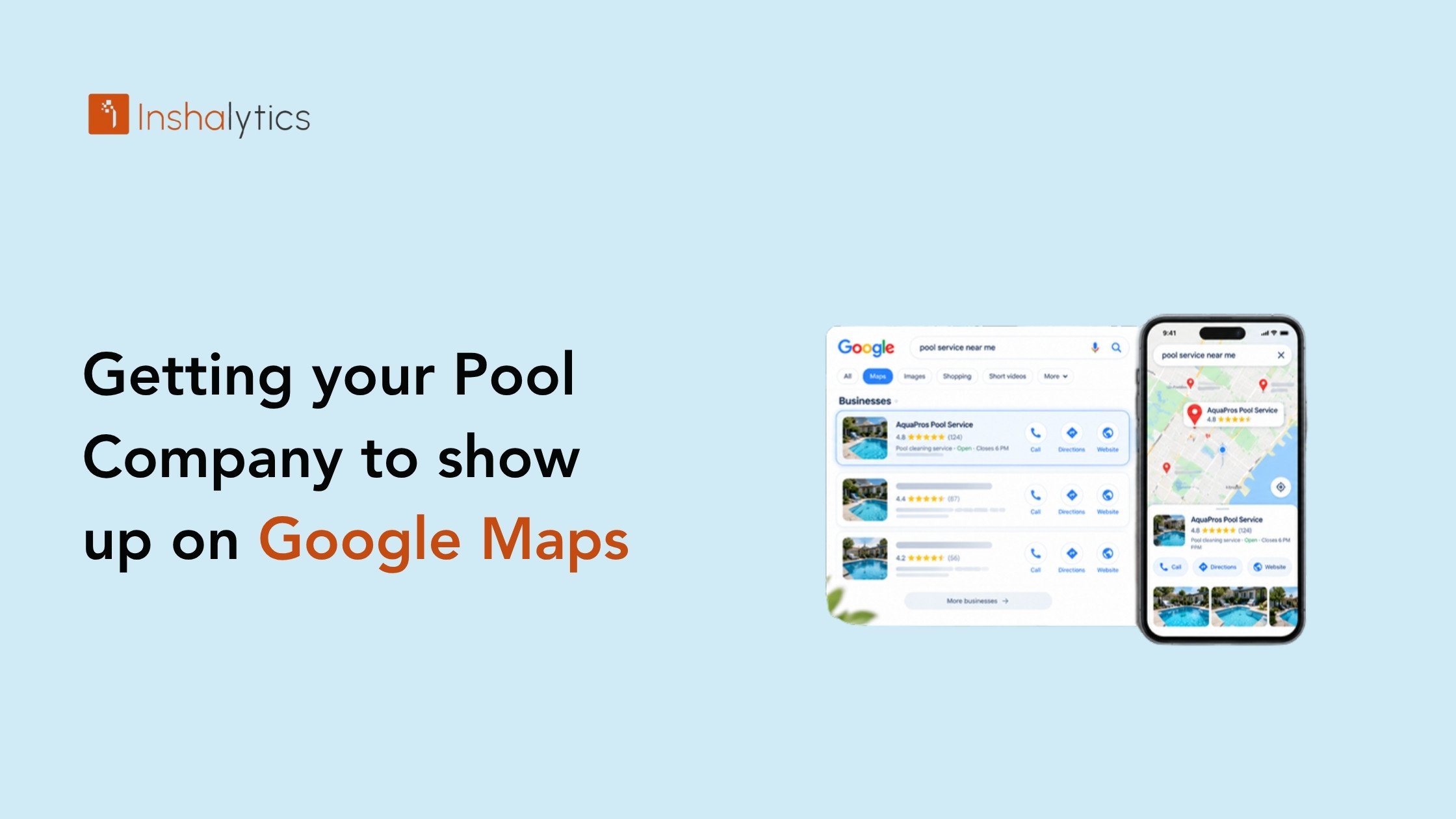
Google shows three kinds of results for pool searches. The local pack is the map with three businesses at the top, the organic results are the regular blue links below, and AI Overviews are the generated summaries that sometimes appear above both.
Each one rewards different work. The local pack leans on your Google Business Profile, reviews, and proximity. Organic results lean on your website content. AI Overviews tend to draw on clear, well-structured pages that answer a question directly, so short definitions, specific details, and consistent business information help you get cited.
You cannot control whether an Overview appears. You can make your business the easiest one for Google to understand and quote.
Why local SEO beats paid ads for recurring-route growth
Paid ads work, but you rent the traffic. When you stop paying, the calls stop. Local SEO builds assets you keep: a profile with reviews, pages that rank, and a reputation Google recognizes.
The math favors organic for route businesses. A one-time repair lead is worth a single job, while a route customer is worth many months of service, so even slow, steady rankings pay back well. We still use paid campaigns for fast wins, like the first warm weekend of spring. The same principle applies in another trade, and our breakdown of local SEO for handyman services shows how we think about building organic visibility for a service business.
How Do You Rank a Pool Service Company on Google?
You rank a pool service company on Google by optimizing a complete Google Business Profile, building service and city pages that match real searches, earning steady reviews, keeping your name, address, and phone number consistent online, and collecting local links. Then you track calls and map rankings so you can see what is working.
The 3 local ranking factors: relevance, distance, prominence
Google says local results come down to three factors. Relevance is how well your profile and website match what the person searched. Distance is how close your business, or your service area, is to the searcher. Prominence is how well known and trusted you appear, based on reviews, links, mentions, and overall web presence.
You cannot change where a searcher stands, but you can influence the other two. Relevance comes from the right categories, services, and page content. Prominence comes from reviews, citations, and local links. Most pool companies lose on relevance first, simply because their profile and website never say what they actually do.
A 7-step local SEO checklist (snippet-ready list)
Here is the order we recommend, from highest impact to ongoing upkeep:
- Claim and verify your Google Business Profile with the correct primary category and a complete service list.
- Set your service areas to the cities you actually serve, and hide your address if you work from home.
- Build one page per core service, such as weekly cleaning, green pool recovery, and equipment repair.
- Create city pages for your top service areas, each with genuinely local detail.
- Ask every happy customer for a review during route visits, and reply to each one.
- Fix your citations so your name, address, and phone number match everywhere.
- Track calls and map rankings monthly, then adjust based on the results.
Google Business Profile Setup for Pool Service Companies
Your Google Business Profile is the single most important local asset you own. It drives the map results, the call button, and the direction requests. A profile that is complete, accurate, and active outranks a lazy one almost every time.
Setup is not complicated, but the details matter. The three areas below, categories, service areas, and media, are where most pool companies leave ranking power on the table.
Primary and secondary categories
Your primary category is the strongest relevance signal on the profile. Pick the one that matches your main revenue, whether that is pool cleaning, pool maintenance, or pool repair, and choose it deliberately rather than by default. If you build or resurface pools, your primary category should reflect the work you most want to be found for.
Add secondary categories for the other services you offer, but only the ones you really perform. Stuffing in unrelated categories can dilute your relevance and invite suspensions. Then fill out the services list with specific names and short descriptions, because this is where “Google Business Profile for pool cleaners” gets its detail.
Service areas when you have no storefront
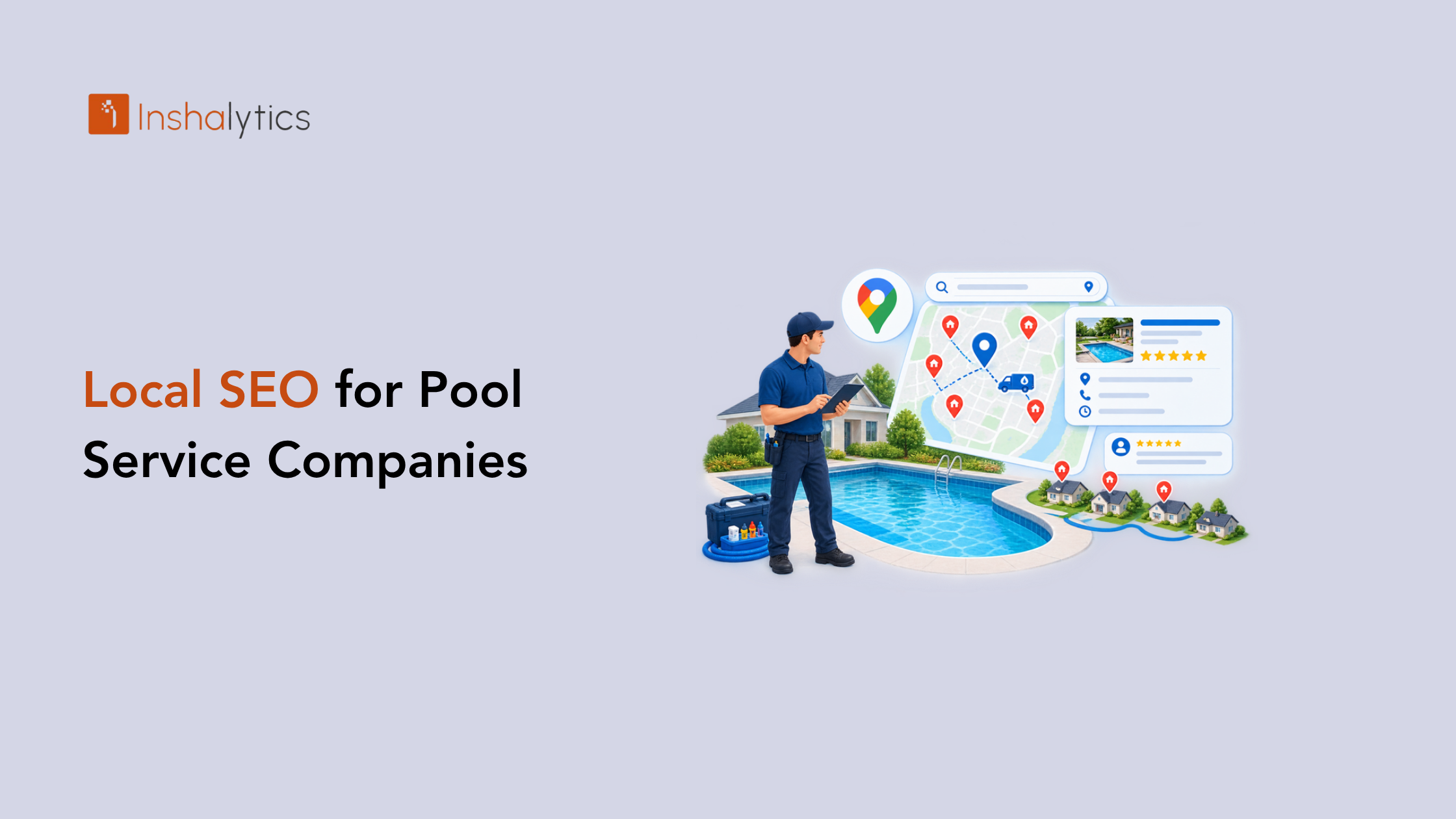
Most pool service companies work from a truck and a home office. You can hide your home address and still rank by setting up your profile as a service-area business. Google then shows the areas you serve instead of a pin at your house.
Choose service areas you can reach on your actual routes, not every city within an hour. Think in route clusters: the neighborhoods where you already have customers, because tight routes are more profitable and more believable. Be aware that distance still matters, so ranking in a city where you have no office is harder. You close that gap with city pages, local reviews that mention the town, and links from businesses in that area.
Photos, posts, and Q&A
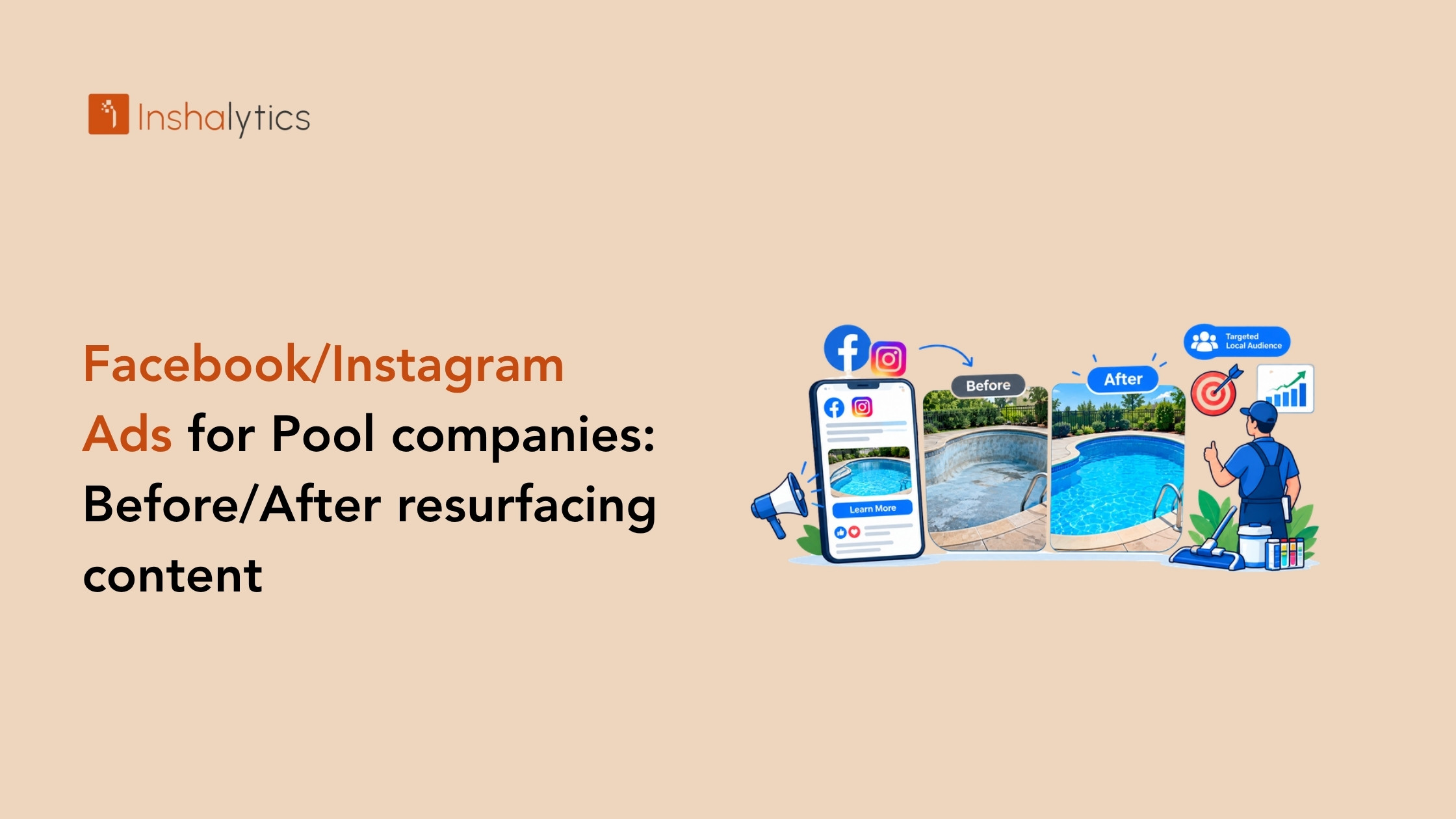
Photos prove you do real work. Upload before-and-after shots of green pools, clean filters, tidy equipment pads, and your branded truck, and add new ones regularly. Skip stock images, which add nothing for a homeowner deciding whether to trust you.
Use posts to announce seasonal offers, such as opening slots or green-pool recovery availability. Add common questions and answers to your profile yourself, covering topics like service frequency, chemical costs, and coverage areas. Check the profile weekly for unwanted edits or questions from customers.
Local SEO Content: Service and City Pages That Rank
Your profile gets you into the map. Your website decides whether Google and homeowners believe you deserve the click. Strong content does both jobs: it matches searches and convinces visitors to call.
This is where pool service SEO separates winners from everyone else. Most competitors have one “Services” page and a list of towns. A site with a dedicated page for each service and each priority city gives Google far more to work with.
Service pages (weekly cleaning, green pool recovery, equipment repair)
Give each core service its own page, and write it around the questions a homeowner has at that moment. A weekly cleaning page should explain what a visit includes, how chemicals are handled, and how scheduling works. A green pool recovery page should explain what causes algae blooms, what the process looks like, and how long recovery usually takes in general terms.
An equipment repair page should name the equipment you work on, such as pumps, filters, heaters, and salt systems. Each page needs a clear call to action, a phone number visible without scrolling, and a short FAQ. If your site is slow or confusing on mobile, fix that first, because traffic you cannot convert is wasted.
City and neighborhood pages without thin content
A city page that only swaps the town name is thin content, and Google treats it that way. Each page needs details that could only be true for that place: the neighborhoods you serve, common pool types or lot styles, local water or climate quirks, HOA considerations, and your actual route days if you share them.
Add real project photos from that area and reviews from customers there. Link to the relevant service pages and keep the page useful even if no one searches the city name. We cover the full method in our guide to building city-specific pages that generate leads, written for handyman businesses but built on a principle that carries over to pool companies.
Seasonal content calendar for opening and closing
Pool demand moves in waves, and your content should arrive before each wave, not during it. Publish and refresh pages early so they have time to rank. The calendar below assumes a climate with a distinct swimming season, so shift the months to match yours.
| Timing | Content to publish or refresh | Search intent it captures | | — | — | — | | Late winter | Pool opening service page, opening checklist, booking announcement post | “Pool opening near me” | | Spring | Weekly cleaning page, new-customer route availability, equipment tune-up | “Pool cleaning near me” | | Early summer | Green pool recovery page, algae prevention guide, heat-wave tips | “Green pool help” | | Late summer | Closing service page, closing checklist, winter prep reminders | “Pool closing near me” | | Fall | Closing booking push, leaf-removal and cover guidance | “Winter pool cover service” | | Winter | Repair and equipment upgrade content, off-season Q&A | “Pool pump repair” |
Our post on seasonal marketing strategies for deck and fence handyman businesses applies the same timing logic to another weather-driven trade.
Reviews, Citations, and Local Links
Prominence is the ranking factor you build over time, and it comes from three sources: what customers say about you, how consistently your business appears online, and who links to you. None of it is glamorous, and all of it works.
Competitors with more reviews and stronger local signals will keep beating you until you close that gap. The good news is that route businesses have a built-in advantage, because you see your customers every week.
A review-request process built into route visits
Most customers will leave a review if you ask at the right moment and make it easy. Your technician sees happy customers constantly, so turn that into a routine. After a service visit that went well, send a text with a direct link to your Google review page within the hour.
Train technicians to mention it in person first, so the text feels expected. Ask for specifics, such as the type of service and the neighborhood, because detail helps both readers and relevance. Reply to every review, positive or negative, promptly and professionally. Never offer incentives in exchange for reviews or ask in bulk through gated surveys, since Google’s policies prohibit both.
NAP consistency and the citations that matter
NAP stands for name, address, and phone number. Your citations are mentions of that information across directories, maps, and data aggregators. Inconsistent details, like an old phone number or a different business name format, create doubt about whether you are the same company.
Start with the major platforms and the directories that matter in your trade and region, such as home-service and pool industry listings. Use the exact business name and phone number from your Google profile everywhere. If you hide your address on Google, use the same approach across other platforms where possible. Audit once, fix the errors, and then check yearly.
Local link opportunities (HOAs, suppliers, chambers)
Links from local, relevant sites tell Google you are a real part of the community. Pool companies have more natural options than they realize. HOAs and property managers often list vendor recommendations, and a sponsored community event can earn a page with your name on it.
Look at your suppliers and manufacturers, since some publish dealer or installer lists. Chambers of commerce and local business associations usually link to members. Local news sites and school fundraisers are worth a call too. Each link should come from a real relationship, never a bought package, because quality beats quantity every time.
Local SEO for Pool Companies: What Inshalytics Delivers
Everything above takes time, and most pool owners would rather spend that time on routes and repairs. That is where an experienced partner helps. Our search engine optimization services cover the full local stack for service businesses.
We do not claim a track record in the pool industry. What we bring is a repeatable process for local service businesses, adapted to how pool companies operate: routes, seasons, and service areas. Here is how we would approach your SEO.
Technical and on-page foundations
We start with the website itself. That means an audit of speed, mobile usability, crawlability, and structure, followed by fixes. Then we build the on-page layer: service pages, city pages, titles, headings, internal links, and structured data that helps search engines and AI summaries understand your business.
We also check that your phone number, forms, and calls to action work on mobile, because that is where most pool searches happen. A fast, clear site converts the traffic you earn, so this foundation supports every other step.
Ongoing GBP and review management
Local SEO is not a one-time project. We would optimize your Google Business Profile, manage categories and services, publish seasonal posts, and monitor for unwanted changes. We also set up the review-request process so your technicians and office staff can follow it without extra work.
Review replies, photo updates, and Q&A upkeep happen on a schedule. If you want help with this, we can walk through what ongoing management would look like for your routes and service areas.
Rank and call tracking
You cannot improve what you cannot see. We set up call tracking, form tracking, and map-rank reporting so you know which searches turn into customers. Reports focus on business outcomes, such as calls and booked estimates, not vanity numbers.
That clarity lets you decide where to push harder, whether it is a city page, a service, or a seasonal offer. It also keeps everyone honest about what is working and what needs adjusting.
How to Measure Local SEO Results
Rankings matter only if they lead to customers. Measure the signals that connect to revenue first, then use ranking data to explain why they move. Review your numbers monthly and compare them against the same season last year, since pool demand swings so much.
Calls, direction requests, and form fills
Your Google Business Profile reports calls, website clicks, and direction requests. Pair those with call tracking and form submissions on your website to see the full picture. Track which pages and which seasons drive the most contact.
Ask new customers how they found you, and record the answer in your scheduling or CRM tool. Compare lead quality, not just volume. A steady flow of route inquiries beats a spike of one-off questions you cannot serve.
Geo-grid rank tracking
Local rankings change by location, so one search from your office tells you very little. A geo-grid tool checks your map position from many points across your service area and plots the results on a grid. You see where you appear in the top three, where you slip, and where competitors dominate.
This is especially useful for service-area businesses. If you rank well near your base but vanish in a city three towns away, the grid shows it clearly. That tells you where to add city pages, collect local reviews, or build links.
Conclusion: Make Your Pool Company the Obvious Local Choice
Local SEO for pool companies comes down to a clear sequence: build a complete Google Business Profile, publish pages that match real searches, earn reviews on every route, keep your business details consistent, and measure what turns into calls. Do it ahead of each season, and your phone rings when homeowners need you instead of when your competitors are ready.
The work compounds. Every review, page, and local link makes the next customer easier to win, and every route customer keeps paying long after they find you.
Ready to get found before your next opening rush? Contact Inshalytics and let’s build a local SEO plan around your routes, your service areas, and your season.