In Google’s quest to deliver the most reliable, helpful search results, the company has established clear guidelines for evaluating content quality. E-E-A-T—Experience, Expertise, Authoritativeness, and Trustworthiness—represents Google’s framework for assessing whether content deserves to rank highly in search results. Understanding and implementing E-E-A-T principles has become essential for digital marketers, content creators, and website owners who want to build sustainable search visibility and genuine credibility with their audiences.
Navigate This Post
What Is E-E-A-T?
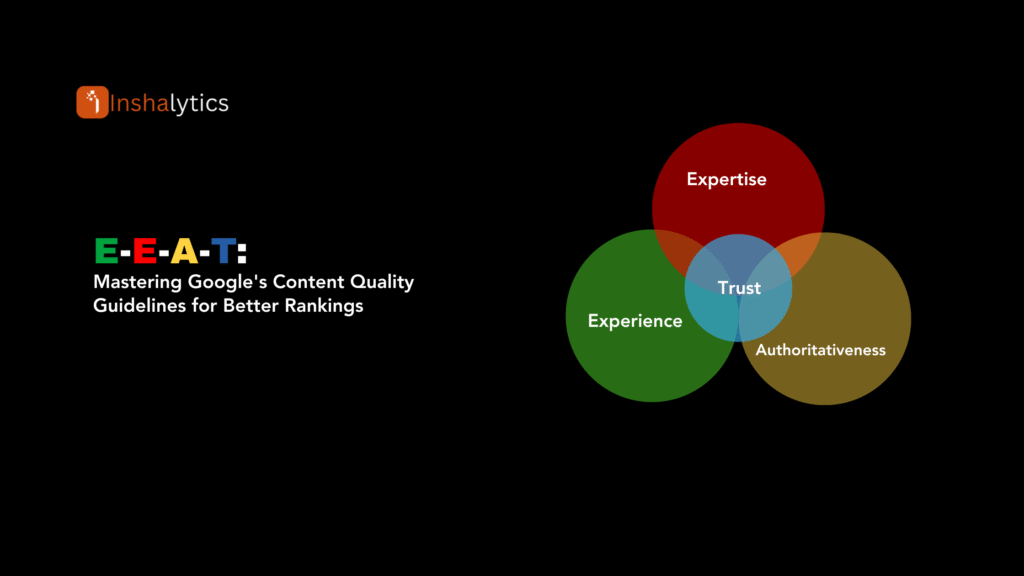
E-E-A-T stands for Experience, Expertise, Authoritativeness, and Trustworthiness—Google’s quality guidelines for evaluating content credibility. This framework guides Google’s human quality raters who evaluate search results and provide feedback that helps refine ranking algorithms. While E-E-A-T itself isn’t a direct ranking factor with a specific algorithmic score, the signals that demonstrate E-E-A-T do influence rankings through various algorithmic mechanisms.
Google originally introduced E-A-T (Expertise, Authoritativeness, Trustworthiness) in its Search Quality Rater Guidelines, then added the first “E” for Experience in December 2022, recognizing that first-hand experience with a topic can be as valuable as formal expertise. This evolution reflects Google’s understanding that different topics require different types of credibility—a restaurant review benefits from personal dining experience, while medical advice requires professional healthcare expertise.
E-E-A-T particularly matters for “Your Money or Your Life” (YMYL) topics—content that could impact someone’s health, financial stability, safety, or well-being. Medical information, financial advice, legal guidance, and similar high-stakes topics face especially rigorous E-E-A-T evaluation. However, E-E-A-T applies across all topics, with varying degrees of importance based on potential impact on readers.
Understanding Each E-E-A-T Component
Each element of E-E-A-T addresses a distinct aspect of content credibility.
Experience
Experience refers to the extent to which content creators have first-hand, practical experience with the topic they’re discussing. This is the newest addition to Google’s quality framework and reflects recognition that lived experience provides unique value that formal credentials cannot always replace.
Experience manifests through:
- Personal stories and anecdotes demonstrating direct involvement
- Original photos, videos, or documentation from first-hand experiences
- Detailed insights that only someone with hands-on experience could provide
- Specific examples, observations, and nuances from personal engagement
For example, a product review written by someone who actually purchased and used the product for months carries more weight than one based solely on manufacturer specifications. A travel guide written by someone who visited a destination provides more valuable insights than one compiled from other sources. A recipe shared by someone who cooked it multiple times and adjusted it based on results offers more credibility than one copied from elsewhere.
Expertise
Expertise measures whether content creators possess the knowledge, qualifications, or skills necessary to provide accurate, comprehensive information about their subject matter. The type and level of expertise required varies by topic—medical content demands professional credentials, while hobby advice might require demonstrated skill and knowledge rather than formal education.
Expertise indicators include:
- Relevant educational credentials and professional qualifications
- Years of experience working in the field
- Recognition from professional organizations or peers
- Published research, books, or other authoritative works
- Demonstrated depth of knowledge through comprehensive, accurate content
A cardiologist writing about heart health demonstrates clear expertise through medical training and practice. A professional photographer with decades of experience teaching photography workshops demonstrates expertise through both credentials and proven results. A software developer who has built multiple successful applications demonstrates technical expertise through practical achievement.
Authoritativeness
Authoritativeness reflects whether content creators and their websites are recognized as go-to sources for information on specific topics. Authority is earned through consistent demonstration of expertise and experience over time, combined with recognition from others in the field.
Authority signals include:
- Backlinks from other authoritative sites in the same niche
- Citations and references by reputable sources
- Awards, recognition, or featured appearances in media
- Speaking engagements at industry conferences
- Positive mentions and recommendations from peers
- Strong social media following within the relevant community
- Wikipedia presence or mentions in authoritative directories
The Mayo Clinic demonstrates authority in healthcare through decades of excellence, research contributions, and universal recognition. A technology blog might build authority through consistently accurate reporting that other tech publications reference. A local business can establish local authority through positive reviews, community involvement, and consistent quality service.
Trustworthiness
Trustworthiness is the foundation of E-E-A-T, encompassing whether users can rely on content to be accurate, honest, and safe. Trust extends beyond content to include website security, transparency, and business practices.
Trust factors include:
- Accurate, well-researched content with proper citations
- Transparent about authorship, ownership, and purpose
- Secure website with HTTPS encryption
- Clear contact information and customer service access
- Privacy policy and terms of service
- Transparent advertising disclosure and affiliate relationships
- Positive reputation and reviews
- Correction of errors when discovered
- Protection of user data and financial information
Trust is particularly critical for e-commerce sites handling transactions, financial sites managing sensitive information, and any YMYL content where inaccurate information could cause harm. A single trustworthiness failure—such as a security breach or misleading content—can undermine all other E-E-A-T elements.
Why E-E-A-T Matters for SEO
E-E-A-T influences search rankings through multiple mechanisms, even though it’s not a single algorithmic factor.
Algorithm correlation exists between E-E-A-T signals and ranking factors. While Google doesn’t have an “E-E-A-T score,” many signals that demonstrate E-E-A-T—such as backlinks from authoritative sites, positive reviews, and comprehensive content—do directly influence rankings.
Quality rater feedback helps Google refine its algorithms. When human raters consistently identify high E-E-A-T content that ranks poorly or low E-E-A-T content ranking well, Google adjusts algorithms to better align results with quality principles.
YMYL content scrutiny means sites covering health, finance, legal, or safety topics face stricter evaluation. Weak E-E-A-T on YMYL topics can severely limit rankings, while strong E-E-A-T provides competitive advantages in these high-stakes areas.
User satisfaction correlation connects E-E-A-T to engagement metrics. High E-E-A-T content typically generates longer dwell time, lower bounce rates, and more conversions—all signals that potentially influence rankings.
Competitive differentiation emerges in crowded niches where multiple sites offer similar content. Strong E-E-A-T becomes the tiebreaker that determines which sites rank highest.
Building Experience Signals
Demonstrating genuine first-hand experience requires authentic content creation practices.
Create original content from personal involvement. Share your actual experiences, including both successes and failures. Readers value honest accounts more than perfect promotional narratives.
Include original images, videos, and documentation from your experiences. Stock photos signal lack of genuine involvement, while original visuals prove you actually engaged with the topic.
Provide specific details and observations that only someone with direct experience would know. Generic information could come from anywhere; specific insights demonstrate genuine engagement.
Show the process, not just results. Document your journey, methodology, and learning curve. This transparency builds credibility more effectively than polished final outcomes alone.
Update content based on continued experience. As you gain more experience with a topic, update existing content to reflect new insights, demonstrating ongoing engagement rather than one-time involvement.
Establishing Expertise
Building recognized expertise requires both developing knowledge and communicating it effectively.
Obtain relevant credentials and education in your field. While not always necessary, formal qualifications provide immediate credibility, especially for YMYL topics.
Create comprehensive, in-depth content that demonstrates thorough understanding. Superficial treatment of topics signals limited knowledge, while nuanced analysis proves expertise.
Contribute to your field through research, publications, speaking engagements, or professional involvement. Active participation in your industry builds recognition.
Showcase credentials prominently through author bios, about pages, and credential displays. Don’t hide your qualifications—they’re key trust signals.
Cite sources and reference research to demonstrate familiarity with your field’s knowledge base. Experts know what others have contributed and build upon that foundation.
Developing Authoritativeness
Authority grows through consistent demonstration of expertise and experience combined with external recognition.
Build high-quality backlinks by creating content worthy of citation. When other authoritative sites link to you, it signals your authority to search engines.
Earn media mentions and features through public relations, guest contributions, and thought leadership. Coverage in reputable publications builds authority.
Engage with your professional community through conferences, associations, and collaborative projects. Authority often comes through peer recognition.
Maintain consistency and longevity. Authority typically requires years of demonstrated expertise. New sites must prove themselves over time.
Develop a strong brand presence across relevant channels. Authority isn’t just about search engines—it includes social media, professional networks, and offline recognition.
Enhancing Trustworthiness
Trust forms the foundation that allows expertise, experience, and authority to translate into credibility.
Implement HTTPS security across your entire site. This fundamental security measure is non-negotiable for trustworthiness.
Display clear contact information including physical address, phone number, email, and customer service channels. Transparency builds trust.
Create comprehensive about and author pages explaining who creates content, their qualifications, and why they’re credible. Anonymous content faces trust challenges.
Establish transparent policies for privacy, terms of service, corrections, and editorial standards. Clear policies demonstrate professionalism.
Disclose relationships and conflicts of interest including affiliate links, sponsorships, or financial relationships. Transparency about monetization maintains trust.
Maintain accurate, well-researched content with proper citations. Cite original sources, link to authoritative references, and fact-check rigorously.
Monitor and respond to reviews professionally. How you handle both positive and negative feedback signals trustworthiness.
Correct errors promptly and transparently. Everyone makes mistakes; trustworthy sources acknowledge and fix them rather than hiding errors.
E-E-A-T for Different Content Types
E-E-A-T application varies by content type and topic.
YMYL content requires the highest E-E-A-T standards. Medical advice should come from healthcare professionals, financial guidance from qualified advisors, and legal information from attorneys. No amount of SEO optimization overcomes inadequate credentials for high-stakes topics.
Product reviews benefit most from demonstrated experience. Original testing, long-term usage reports, and comparative analysis prove genuine experience more valuable than expertise credentials.
How-to guides require both expertise in the subject matter and experience actually performing the tasks. The best tutorials come from people who’ve taught others successfully.
News and journalism depend on authoritativeness through reputation, fact-checking rigor, and editorial standards. Established news organizations have built-in authority advantages.
Entertainment and lifestyle content may prioritize experience and authenticity over formal expertise. Personal perspective and genuine enthusiasm can demonstrate credibility.
Common E-E-A-T Mistakes
Several errors undermine E-E-A-T despite good intentions.
Anonymous or vague authorship prevents readers from evaluating credibility. Every significant piece of content should have a clearly identified author with credentials.
Copied or thin content demonstrates neither expertise nor experience. Original, comprehensive content is essential for E-E-A-T.
Lack of author credentials on YMYL topics is particularly damaging. Don’t publish medical advice without medical professionals or financial guidance without qualified advisors.
Poor website security or trust signals undermine even excellent content. Broken HTTPS, missing contact information, or absent privacy policies damage trustworthiness.
Inconsistent quality confuses both users and search engines about your authority level. Maintain consistent standards across all content.
Measuring E-E-A-T Success
While you can’t directly measure E-E-A-T scores, several indicators reveal whether your efforts are working.
Backlink growth from authoritative sources suggests increasing recognition of your authority.
Improving rankings for YMYL topics indicates Google views your E-E-A-T as sufficient for sensitive subjects.
Increasing brand searches show users specifically seeking your content, demonstrating established authority.
Growing engagement metrics including time on page, return visitors, and conversions suggest users trust your content.
Positive sentiment in reviews and social media reflects perceived trustworthiness.
Conclusion
E-E-A-T represents Google’s framework for evaluating content quality through Experience, Expertise, Authoritativeness, and Trustworthiness. While not a direct ranking factor with a simple score, E-E-A-T principles influence rankings through various algorithmic signals that correlate with these quality characteristics. More importantly, E-E-A-T aligns SEO success with genuine value creation—sites that demonstrate strong E-E-A-T typically provide better user experiences and more reliable information.
Building E-E-A-T requires authentic commitment to quality rather than quick optimization tricks. Develop genuine expertise through education and practice, gain experience through hands-on involvement, build authority through consistent excellence and peer recognition, and establish trust through transparency, accuracy, and security. These efforts create sustainable competitive advantages that benefit both search rankings and business success.
The beauty of optimizing for E-E-A-T lies in its alignment with long-term success. The same practices that improve E-E-A-T—creating authoritative content, building genuine expertise, demonstrating real experience, and maintaining trustworthiness—also build brand value, customer loyalty, and business growth. By focusing on E-E-A-T, you optimize not just for search engines but for sustainable success in your market.