Most handymen assume Facebook and Instagram are for big brands with big budgets. That assumption is costing them jobs. Meta’s advertising platform gives local handyman businesses access to hyper-targeted audiences, new movers, homeowners, and neighborhood groups at a fraction of what directory platforms charge for shared, recycled leads. The question isn’t whether Facebook and Instagram lead ads can work for handymen. The question is whether you’re running them the right way.
This guide breaks down exactly how Meta lead ads work for handyman services, what they actually cost, what creative converts, and how to know if they’re worth adding to your marketing budget.
Why Most Handymen Overlook Meta Ads And Why That’s a Mistake
Many handymen dismiss social advertising because it feels disconnected from how their customers actually behave. Someone with a leaky faucet doesn’t scroll Instagram looking for help; they Google it. That’s true. But that’s only one slice of the handyman lead picture.
The Trust Barrier: Why Homeowners Hesitate Before Hiring a Stranger
Homeowners are cautious about who they let into their homes. They’re not just looking for a handyman; they’re looking for a handyman they can trust. That trust gap is exactly where Meta advertising has an edge. When a homeowner in your service area sees your face, your van, your reviews, and your recent jobs in their neighborhood before they ever need you, you’re not a stranger anymore when they finally do.
Meta ads build the kind of ambient trust that makes everything else in your funnel convert better. The homeowner who’s seen your Facebook ad three times is far more likely to book you over a competitor they’ve never heard of, even if that competitor shows up first in Google.
How Meta’s Targeting Can Reach New Movers, Homeowners, and Neighborhood Communities
Meta’s audience targeting is one of the most powerful local targeting tools available to small businesses. As a handyman, you can show ads specifically to:
- Homeowners (not renters) within a 10-mile radius of your base
- People who have recently moved into a new home are one of the highest-intent handyman audiences that exists
- Individuals with household income above a set threshold
- Facebook and Instagram users who engage with home improvement content
New movers are worth calling out specifically. Within 90 days of moving in, they’re discovering every deferred maintenance issue the previous owner left behind, and they don’t know any local contractors yet. A well-timed Meta ad that reaches this audience before your competitors do is genuinely valuable.
Search Intent vs. Interruption Marketing: Where Handyman Jobs Actually Come From
Google Ads captures homeowners at the exact moment they need a handyman. Meta ads interrupt homeowners before that moment, building awareness and trust so that when the moment does come, you’re already the name they recognize.
Neither channel is better in isolation. The handyman businesses that stay fully booked use both Google and LSA for high-intent emergency and immediate jobs, and Meta for ongoing brand presence and planned or recurring work. Learn how SEO and paid ads work together for handymen.
How Do Facebook & Instagram Lead Ads Actually Work for Handymen?
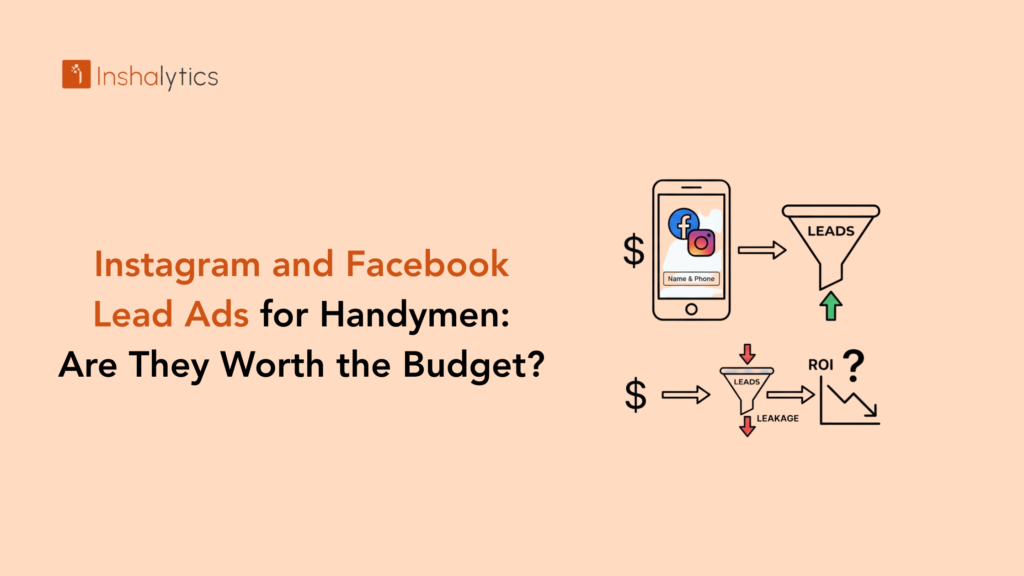
Facebook Lead Ads are a specific ad format designed to capture contact information without sending the homeowner away from the platform. When someone taps your ad, a pre-filled form appears inside Facebook or Instagram with their name, email, and phone number already populated from their profile data.
What a Lead Ad Is and How It Captures Contact Info Without a Landing Page
Instead of clicking your ad and waiting for a landing page to load, the homeowner sees an instant form. They confirm their details, hit submit, and you receive the lead directly. No landing page needed. No friction from a slow-loading page. No drop-off.
This matters because the majority of your potential customers are on mobile, and mobile users abandon external landing pages at high rates. Lead ads solve that problem by keeping everything inside the Meta ecosystem.
The Pre-Filled Form Advantage: Lower Friction, Higher Volume
Because Meta pre-fills the form with data from the user’s profile, the effort required to become a
The trade-off is lead quality. Because it’s so easy to submit, some users do so without strong intent. This is why your follow-up speed matters more with lead ads than almost any other channel. Contacting leads within 5 minutes dramatically increases conversion rates.
Setting Up a Lead Form: The 3–5 Fields That Qualify Without Killing Conversions
The sweet spot for a handyman lead form is 3–5 fields. Beyond name, email, and phone, consider adding:
- “What type of work do you need help with?” (dropdown with your service categories)
- “When do you need service?” (options: ASAP, within a week, planning)
These two qualification questions filter out low-intent submissions without adding enough friction to hurt your volume. Keep it simple; the goal is a phone number you can call, not a full intake form.
Is the Cost-Per-Lead Worth It for Handyman Services?
The honest answer depends on what jobs you’re booking. A Meta lead ad that produces calls for $25 each and converts to a $500 handyman job is an exceptional ROI. A campaign generating $50 leads that produce mostly $150 jobs needs to be optimized.
Industry CPL Benchmarks: What Handymen Should Expect to Pay Per Lead
Home services as a category is one of the most active verticals for Facebook Lead Ads. The average cost per lead for home service businesses on Meta sits in the $25–$60 range, though handyman specifically tends toward the lower end of that range because the audience targeting is less competitive than emergency trades like HVAC or roofing.
With a well-optimized campaign targeting the right audiences with the right creative, handymen can realistically expect a CPL in the $20–$40 range.
Lead Quality vs. Lead Volume: Why Speed-to-Follow-Up Changes Everything
Meta leads are warm, not hot. They didn’t just search “handyman near me,” they responded to an ad while scrolling. That distinction means your follow-up process is the single biggest variable in your Meta ad ROI. Research consistently shows that leads contacted within 5 minutes are dramatically more likely to convert than those contacted hours later.
If you can’t follow up fast, either personally or through automation, Meta lead ads will underperform. If you can, they’ll outperform almost every other paid channel on a cost-per-booked-job basis.
Comparing Meta Lead Costs to Google Ads and LSA for Handyman Work
Google Local Services Ads for handymen typically run $20–$50 per lead, depending on your market, but those leads have much higher intent, as the homeowner was actively searching. Google Search Ads (PPC) can run $5–$15 per click with no guarantee of a call. Meta lead ads sit in a middle ground: volume is typically higher than LSA, intent is lower than Google, and cost is often competitive with both.
The right answer is to use all three, but Meta fills a specific role in the funnel that neither Google product does. Explore how pay-per-click and social ads complement each other.
Creative That Converts: What Actually Works in Handyman Meta Ads
Your targeting can be perfect and your budget generous, but if your creative doesn’t stop the scroll, none of it matters. Authenticity beats polish on Meta by a wide margin.
Before/After Photos and Job-Site Video vs. Polished Studio Creative
The best-performing handyman ads aren’t slick or designed. They’re real. A photo of the cabinet door you fixed, the drywall patch that’s now invisible, the deck boards that were rotting and now look new. These images communicate competence faster than any headline.
Job-site video filmed on a smartphone outperforms professionally produced content for local service businesses. A 15–30 second Reel showing you doing the work, explaining what you fixed, and showing the finished result is the highest-ROI ad creative a handyman can produce.
Hyperlocal Social Proof: Why Neighborhood-Specific Ads Outperform Generic Ones
If you’ve done work in a specific neighborhood, use that in your ad copy. “Just finished a project in [Neighborhood Name] if your neighbor’s home could use a tune-up, here’s what we do” is one of the highest-converting handyman ad angles that exists. When homeowners see that you’ve worked on their street, you’re no longer an unknown; you’re the person who did that great work three houses down.
Ad Formats Ranked: Single Image, Reels, Carousels for Handyman Services
For handyman services, here’s how the formats stack up:
- Reels/short videos have the highest engagement, are best for trust-building, and are used before/after reveals
- Single image reliable, easy to produce, and works well with strong local copy
- Carousel effective for showcasing multiple services or a multi-step project
Start with a single strong image or short video. Once you find a format that converts, test variations before expanding.
Is There a Right Time to Run Meta Ads as a Handyman?
Unlike emergency trades, handyman demand has seasonal patterns that should influence when and how you advertise.
Seasonal Demand Patterns and When Homeowners Book Handyman Jobs
Spring (March–May) and fall (September–October) are the peak seasons for handyman work, as homeowners are prepping for summer or winterizing before cold weather. Running more aggressive Meta campaigns during these windows and scaling back slightly in deep winter or summer heat produces better returns than spending evenly year-round.
That said, new movers book handyman services year-round, and this audience should be a constant targeting layer regardless of season.
Using Retargeting to Capture Warm Leads Who Didn’t Book the First Time
Not everyone who sees your ad and submits a form will book immediately. Retargeting lets you run follow-up ads to people who viewed your ad, visited your website, or submitted but never responded to your follow-up. A retargeting ad with a time-limited offer (“Book this week and get 10% off your first job”) can convert a large portion of leads who went cold after initial contact.
Learn how tracking handyman lead sources improves retargeting ROI.
How Inshalytics Sets Up and Manages Meta Lead Ads for Handymen
Running a profitable Meta lead ad campaign for a handyman business requires more than boosting a post. It requires proper pixel installation, audience architecture, creative testing, lead routing, and attribution, all working together.
Full-Funnel Integration: Meta Ads + SEO + Google Ads Working Together
At Inshalytics, we don’t run Meta ads in isolation. Every handyman client’s social campaign is built to complement their SEO and Google Ads strategy, feeding the top of the funnel while Google captures the bottom. A homeowner who sees your Facebook ad, Googles you later, and finds you at the top of the Map Pack is far more likely to call.
If you’re running ads on one channel and ignoring the others, you’re leaving revenue on the table every day.
Tracking, Reporting, and Proving ROI from Your Social Ad Spend
We connect every Meta campaign to call tracking and CRM data, so you know exactly which leads came from Facebook or Instagram and how many of them became booked jobs. Reporting isn’t clicks and impressions, it’s cost-per-booked-job and return on ad spend tied to real revenue.
What a Managed Meta Campaign Looks Like in Your First 90 Days
In the first 30 days, we build your audience layers, install tracking, and launch the initial creative. Days 31–60 are about testing and optimization, finding which creative and audience combinations produce the lowest CPL. By day 90, you’ll have a clear picture of what your Meta lead ads cost per booked job and how they compare to your other channels.
The Verdict: Should Handymen Run Facebook and Instagram Lead Ads?
Facebook and Instagram lead ads are worth the budget for most handyman businesses with the right expectations. They’re not a replacement for Google Ads or LSA if you need emergency call volume. They’re an addition to your marketing stack that builds local brand recognition, reaches new movers, and re-engages homeowners who haven’t needed you yet.
Scenarios Where Meta Ads Work Best for Handyman Businesses
Meta lead ads work best when:
- You have a clear follow-up process to contact new leads within minutes
- You’re targeting a defined service area where you’ve done work and have social proof
- You want to supplement emergency-intent channels with planned and recurring work
- You’re willing to test creative and iterate rather than set-and-forget
When to Prioritize Google Ads or LSA Instead
If your primary goal is capturing homeowners who need a handyman right now, start with Google LSA. Meta builds awareness, Google captures active intent. The right sequence for most handyman businesses is Google LSA first, Google Ads second, and Meta as the third layer once your core channels are producing.
Ready to build a Meta lead ad system that books real handyman jobs? Inshalytics specializes in social media marketing for home service businesses, and we tie every campaign to leads you own, not rent. Let’s talk about what a managed campaign would look like for your market.