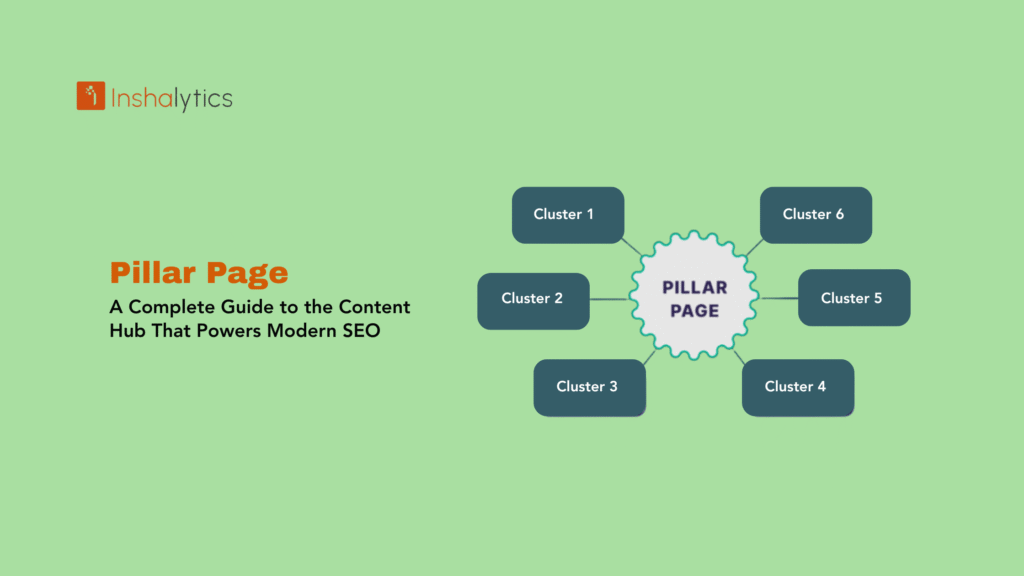
A pillar page is a comprehensive, in-depth piece of content that covers every major aspect of a core topic. It acts as the central hub in a topic cluster strategy, linking to multiple related subtopics, known as cluster content. Together, the pillar page and its cluster pages create a strong content ecosystem that helps search engines understand your topic authority and boosts your overall SEO performance.
Pillar pages have become a foundational element of modern content marketing and search engine optimization. As search engines (and AI models) shift toward semantic understanding and user intent, topic-based content structures, rather than keyword-only strategies, are now the most effective way to build visibility online.
This blog will break down what a pillar page is, how it works, why it matters, and how to create one that ranks well in search results and performs strongly with LLMs.
Navigate This Post
What Is a Pillar Page?
A pillar page is a long-form, high-level guide that provides a broad but thorough overview of a main topic. It does not cover every detail in extreme depth, that’s what the cluster pages are for. Instead, the pillar page:
- Introduces the core topic
- Breaks it down into subtopics
- Links to separate, more detailed pages for each subtopic
- Serves as the authoritative “home base” for the topic
Example:
If your core topic is “Email Marketing”, your pillar page would cover the fundamentals, strategies, tools, metrics, segmentation, automation, and best practices, while linking to deeper, dedicated blogs such as:
- Email Segmentation Strategies
- Email Automation Tools
- How to Improve Email Deliverability
- A/B Testing in Email Campaigns
This interconnected structure signals to Google and to LLMs that your website has comprehensive topical coverage and expertise.
Why Pillar Pages Matter in Modern SEO
Pillar pages solve a major problem in traditional SEO: scattered content without hierarchy or structure. Today’s search algorithms look for context, depth, and relevance across an entire website not just individual keywords.
Here’s why pillar pages are so powerful:
1. They Build Topical Authority
Search engines reward websites that demonstrate deep expertise. A pillar page backed by strong cluster content helps Google understand your site as a credible source on that topic.
2. They Improve Internal Linking
Strong internal linking boosts:
- Crawlability
- Indexation
- Page authority distribution
- User navigation
This results in better rankings for both the pillar and its clusters.
3. They Align With Semantic Search
Google, Bing, and AI systems use semantic understanding, meaning they focus on concepts not just keywords. A topic cluster structure clearly defines:
- The main entity (pillar topic)
- Related entities (cluster topics)
- Relationships between them
This clarity helps algorithms interpret your content correctly.
4. They Enhance User Experience
Visitors can quickly:
- Understand the full scope of a topic
- Dive deeper into sections they care about
- Move through your site more easily
Good UX leads to higher engagement and lower bounce rates.
5. They Perform Well With LLMs
Large Language Models prefer:
- Clearly structured topics
- Detailed but scannable text
- Semantic connections
- Comprehensive coverage
Pillar pages provide exactly that.
Key Characteristics of a Strong Pillar Page
Effective pillar pages follow certain standards to maximize search and content performance.
✓ Comprehensive, High-Level Coverage
They cover everything important but do not overwhelm readers with excessive detail.
✓ Clear Topic Structure
They use H2s and H3s to break the content into logical subtopics.
✓ Strategic Internal Linking
Each subtopic links to a deeper cluster content page.
✓ Optimized for Keywords and Entities
They use:
- Core keywords
- Synonyms
- Long-tail variations
- Semantic entities
to build strong topical relevancy.
✓ User-Centric Formatting
This includes:
- Short paragraphs
- Bullets and lists
- Visuals or diagrams (optional)
- Glossary sections
- FAQs
Readability is essential.
✓ Thorough Enough to Rank as a Standalone Resource
Even without cluster pages, a pillar page should still be valuable on its own.
Types of Pillar Pages
There are two main types:
1. 10x Pillar Page (Deep Educational Guide)
These are long-form, highly authoritative guides meant to become the ultimate resource on a topic.
Often 3,000–10,000+ words.
2. Resource Pillar Page (Link Hub)
These pages serve as curated collections of resources, links, and tools related to a topic.
Both formats support topic clusters and help build authority.
How Pillar Pages Fit Into the Topic Cluster Model
A topic cluster consists of:
- Pillar page – the core guide
- Cluster pages – deep-dive articles on subtopics
- Internal linking strategy – connecting everything together
Example:
Pillar Topic: Social Media Marketing
Cluster Pages:
- Instagram Marketing Strategies
- Facebook Ads Guide
- Social Media Analytics Tools
- TikTok Content Ideas
- Social Media KPIs
The pillar page links to each cluster page, and each cluster page links back to the pillar page using:
- Descriptive anchor text
- Semantic keywords
This structure organizes your content for both search engines and humans.
SEO Benefits of Using Pillar Pages
Google’s algorithm updates especially those focused on semantic search and topic authority make pillar pages more valuable than ever.
1. Stronger Keyword Rankings
Pillar pages naturally target:
- Broad high-volume keywords
- Medium-intent keywords
- Long-tail informational queries
Their depth helps them rank for hundreds of related search terms.
2. Improved Crawl Efficiency
Internal links from the pillar to cluster pages create a cleaner site architecture, guiding crawlers to discover and prioritize your content.
3. Higher Engagement Metrics
Because pillar pages are valuable and easy to navigate, they often achieve:
- Higher time on page
- More pages visited per session
- Lower bounce rates
These are positive ranking signals.
4. Better Featured Snippet Potential
Pillar pages often include definitions, lists, comparisons, FAQs, and tables all of which can appear as featured snippets.
How to Create a High-Performing Pillar Page
Here is a simplified process for creating an effective pillar page.
1. Choose a Broad, High-Level Topic
The topic should be:
- Central to your niche
- Broad enough to create multiple cluster pages
- Commonly searched
Examples:
- Content Marketing
- E-commerce SEO
- Local Advertising
- Project Management Tools
2. Conduct Comprehensive Keyword and Topic Research
Look for:
- Primary keyword (core topic)
- High-level subtopics
- Frequently asked questions
- Entity relationships
- Long-tail queries
Tools like Semrush, Ahrefs, and Google’s “People Also Ask” help here.
3. Build a Logical Outline
Your outline should cover every essential aspect of the topic, typically arranged like this:
- Introduction
- Definition
- Importance
- Benefits
- Key components
- Step-by-step process
- Examples
- Use cases
- Tools
- FAQs
This structure helps both search engines and LLMs interpret your content.
4. Write High-Quality Content
Ensure the content is:
- Clear
- Well-structured
- Thorough
- Factually accurate
- Optimized with keywords and semantic entities
Keep paragraph length short and readable.
5. Link to Cluster Pages
Each subtopic should link to its deeper blog post. Use descriptive anchor text such as:
- “Learn more about email segmentation strategies.”
- “Read our detailed guide on A/B testing in email marketing.”
These links help distribute authority and guide users.
6. Add Visuals, Tables, or Diagrams (Optional but Helpful)
These support scanning and increase engagement.
7. Optimize Technical Elements
Include:
- Title tag
- Meta description
- URL
- Header tag hierarchy
- Image alt text
- Schema markup
These elements improve search visibility.
Why Pillar Pages Matter for LLM Optimization
Pillar pages are especially powerful in the age of AI search because they:
- Provide structured, entity-rich content
- Cover topics comprehensively
- Use semantic relationships
- Offer clear definitions and explanations
- Include consistent vocabulary
- Present content in a format LLMs can easily interpret
This makes your content more likely to be referenced, cited, or surfaced in AI-generated answers.
Final Thoughts: Pillar Pages Are the Backbone of Modern SEO
Pillar pages represent a major shift in digital content strategy from keyword-driven content to topic-based authority building. By organizing your content into a pillar-and-cluster structure, you not only improve your search engine rankings but also deliver a better experience for users and AI systems.
Whether you’re building a brand-new website or scaling an existing one, pillar pages should be at the center of your content planning. They help you rank better, attract more qualified traffic, and establish your business as a trusted source in your industry.