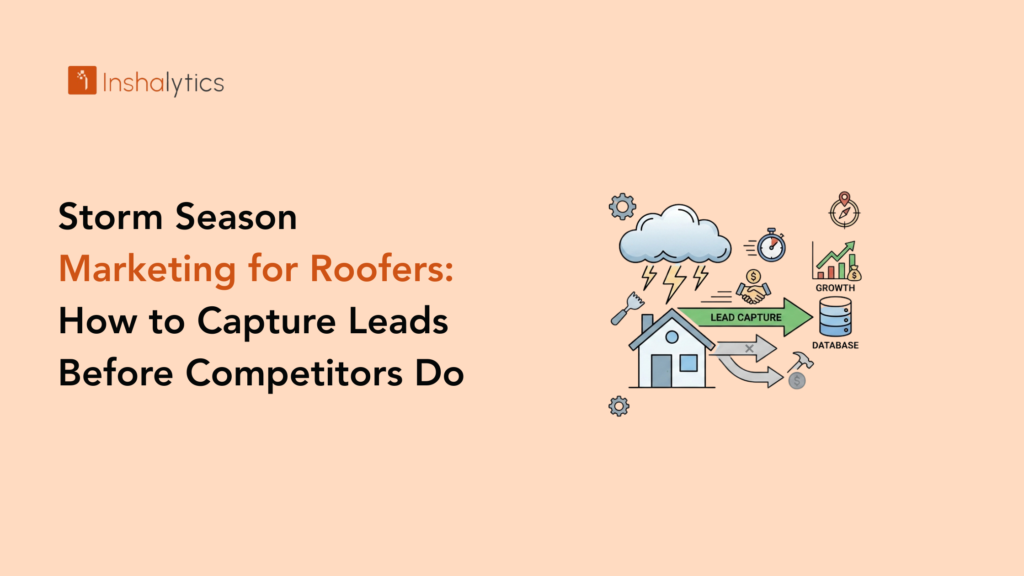
A hailstorm in your market can create six months of revenue in one afternoon. The roofers who capture those leads aren’t the ones who scramble to set up campaigns after the storm; they’re the ones who had campaigns built, paused, and ready to activate before the first hailstone hit.
Storm season marketing isn’t about spending more when it rains. It’s about preparation. This guide covers the pre-storm, during-storm, and post-storm marketing strategy that lets you own your market when demand spikes and competitors are still logging into their Ads accounts.
Why Most Roofers Lose the Storm Season Battle
The critical window after a major storm is narrow. Homeowners contact two to three contractors within the first 24–48 hours and make a hiring decision within 72 hours. The contractor who performs an inspection within 72 hours of a storm event books the job 68–74% of the time even if subsequent bids come in lower. The first roofer on-site wins.
The Reactive Marketing Trap
Most roofing companies respond to storms reactively: a storm hits, they try to put together a campaign. By the time their ads are live, competitors who prepared in advance are already booking the first wave of jobs. Google Ads costs during the first 48 hours of a major storm spike 40–120% as out-of-market storm chasers flood the auction. See the full cost breakdown in our Google Ads vs. LSA for roofers guide.
The Preparation Advantage
Companies with pre-built storm response systems capture 70% more storm leads than those who respond reactively. A $55 click that converts at 20% during a storm surge is a $275 cost per lead. For an $18,000 replacement job, that math works overwhelmingly.
Building Your Pre-Storm Marketing Infrastructure
Pre-Paused Google Ads Storm Campaigns
Build three separate Google Ads campaigns and pause them until they’re needed. Campaign 1 Hail Damage: keywords like ‘hail damage roof repair ,’ ‘roof hail damage inspection,’ ‘insurance claim roofing company.’ Campaign 2: Wind/Storm Damage: ‘storm damage roof repair,’ ’emergency roof tarping.’ Campaign 3 Insurance Claims: ‘roof insurance claim help,’ ‘roofing company that works with insurance.’ Write the ad copy and build dedicated landing pages in advance. When a qualifying storm event hits, activate all three campaigns within two hours. Our pay-per-click service builds and manages this infrastructure for roofing clients.
Storm-Specific Landing Pages Built in Advance
Each storm campaign needs a landing page that speaks directly to the storm-damage homeowner, addressing the insurance process directly, offering a free inspection, and displaying a click-to-call phone number prominently. For the design principles behind high-converting roofing pages, see our roofing website design guide.
The 48-Hour Storm Response Playbook
Hours 0-24: Digital Activation
Activate your pre-built Google Ads campaigns. Launch geo-targeted Meta ads to the affected zip codes within 24 hours, reaching homeowners before they’ve even started Googling. CPCs on Facebook during this window are still low because the post-storm Google auction hasn’t inflated yet. This two-channel approach captures demand across the entire funnel simultaneously. For the paid vs. organic balance of storm leads, see our companion storm damage leads guide.
Hours 24-72: Content and Community
Publish a quick blog post or Google Business Profile update targeting the affected city name plus ‘roof repair.’ This boosts local relevance and catches surge searches from homeowners in affected neighborhoods. Share storm damage content on social media with zip-code-specific targeting and before/after photos from jobs you’re already completing.
Contact local insurance adjusters proactively. A relationship with even five to ten independent adjusters can generate 15–40 qualified leads per year per adjuster, often before the homeowner has searched online.
Pre-Season Authority Building: The Real Competitive Advantage
Building Local Authority Before Storms Arrive
Content published 30–45 days before peak storm season ranks by the time homeowners are searching. A Colorado roofer who published ‘How Hailstorms Damage Roofs in Denver’ in March, before the May hail season, captured early traffic that a competitor who published the same content in April missed entirely. For the Google Maps ranking foundation that makes organic strategy work, see our Google Maps ranking guide for roofers.
Year-Round Brand Presence in Your Service Area
The roofers who capture storm leads most efficiently are already familiar brands in their market before the storm hits. Yard signs, truck wraps, local sponsorships, and consistent social media presence mean that when a homeowner sees storm damage, they already have a name in mind. Our lead generation service builds the year-round visibility foundation that storm season campaigns run on top of.
How Inshalytics Prepares Roofing Companies for Storm Season
Storm season marketing isn’t a campaign you launch; it’s a system you build. At Inshalytics, we create pre-storm infrastructure for roofing clients: pre-built, pre-paused Google Ads campaigns, storm-specific landing pages, geo-targeting lists for Facebook activation, and Google Business Profile content scheduled to publish before peak storm windows. Get in touch to build your storm system before the season arrives.
Storm Season Is Won Before the First Drop Falls
Build your campaigns. Create your landing pages. Warm your Google Business Profile with storm-related content. Develop relationships with local adjusters. Maintain a review velocity that keeps you in the Map Pack. For the paid vs. organic breakdown of how to capture storm damage leads year-round, see our storm damage leads guide.