Backlinks remain one of the strongest ranking factors in search engine optimization. But Google doesn’t only look at how many links a website earns it also evaluates how fast those links are being acquired. This rate of link acquisition (or loss) is known as Link Velocity.
Understanding link velocity is essential for any SEO professional because it helps you evaluate whether your backlink growth appears natural, consistent, and aligned with Google’s quality guidelines. Both sudden spikes and sharp declines in backlinks can affect your search performance, making link velocity a key metric in long-term SEO strategy.
In this guide, you’ll learn what link velocity is, how it works, why it matters, and how to maintain a healthy, natural backlink growth pattern.
Navigate This Post
What Is Link Velocity?
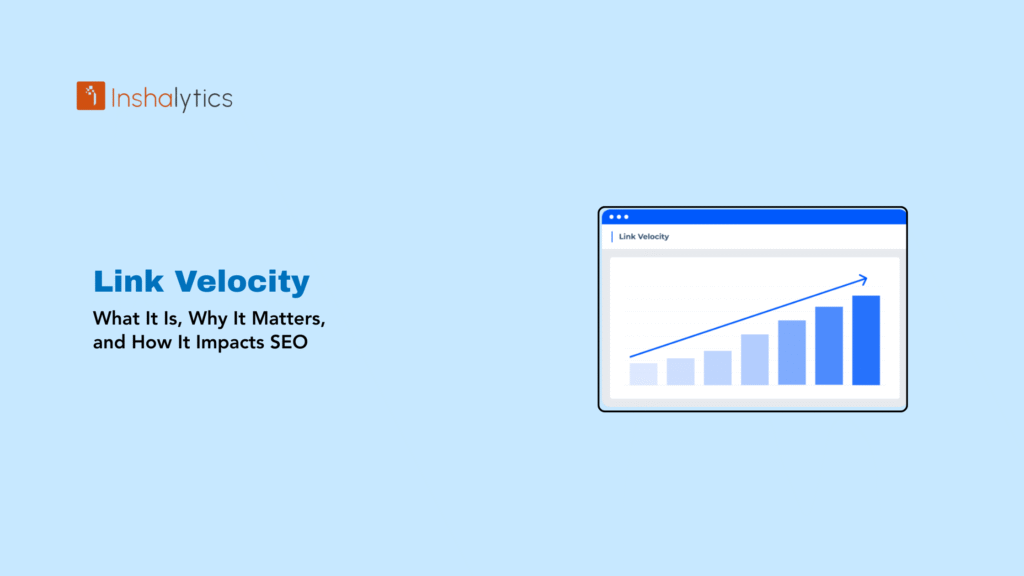
Link Velocity refers to the rate at which a website gains or loses backlinks over time.
It measures how quickly new backlinks are being created and how many existing backlinks are disappearing.
In simple terms, link velocity shows:
- How fast your link profile is growing
- Whether the rate appears natural or suspicious
- How your website’s authority is evolving over time
For example:
- If your site gains 50 backlinks this month and 100 next month, your link velocity is positive.
- If your site suddenly loses 200 backlinks, your link velocity becomes negative.
Search engines monitor these patterns to detect natural growth versus potential manipulation or spam.
Why Link Velocity Matters in SEO
Link velocity plays a significant role in search engine ranking evaluations. While Google does not explicitly confirm how link velocity affects rankings, industry observations and data trends show clear patterns.
Here’s why link velocity is important:
1. Detecting Natural vs. Manipulated Link Growth
Google checks whether your backlink growth matches typical patterns within your industry.
- Natural link velocity: gradual, steady increases
- Unnatural link velocity: sudden spikes, purchased links, automated links
If Google suspects manipulation, your rankings can drop, or your site can be flagged for spam.
2. Evaluating Content Popularity
High link velocity—when legitimate—signals that your content is gaining traction.
For example, if a research report suddenly goes viral and earns 200 backlinks in a few days, Google sees it as a sign of value and authority.
3. Measuring Domain Authority Growth
Consistent backlink growth contributes to higher overall domain authority, helping new pages rank faster and strengthening your website’s trustworthiness.
4. Identifying SEO Problems Quickly
Negative link velocity (loss of backlinks) can indicate:
- Removed content
- Penalized sites linking to you
- Expired domains
- Toxic links disappearing
- Competitors copying your content and replacing your link
Monitoring link velocity helps you react quickly to issues before they impact rankings.
Positive vs. Negative Link Velocity
Understanding link velocity involves looking at both types of changes: growth and decline.
Positive Link Velocity
This means your website is gaining more backlinks than it is losing.
It typically happens due to:
- Publishing high-quality content
- Running link-building campaigns
- Earning mentions in blogs or news outlets
- Going viral on social media
- Launching a new product or feature
Positive link velocity is a strong indicator of growing authority and relevance.
Negative Link Velocity
This happens when you lose backlinks faster than you gain them.
Common causes:
- Linking pages were deleted
- URLs changed without proper redirects
- Sites removed your link during updates
- Toxic links were removed
- Natural link decay
- Competitors outranking your content and replacing your link
A short-term drop is not dangerous, but a long-term negative trend can signal deeper SEO issues.
What Google Thinks About Link Velocity
Google has repeatedly stated that it doesn’t directly track “link velocity” as a specific metric.
However, Google does track unnatural link patterns and sudden manipulative changes.
This means:
- Link velocity itself is not a ranking factor
- Unnatural link velocity patterns can trigger algorithmic suspicion
- Steady link growth indicates trustworthy, organic popularity
So while link velocity isn’t directly scored, it influences how trustworthy your backlink profile appears.
Factors That Influence Link Velocity
Link velocity is shaped by several factors—some within your control, some outside of it.
1. Content Quality
Content that is helpful, original, and insightful naturally attracts consistent backlinks.
2. Marketing and Promotion Efforts
Activities like:
- Guest posting
- Digital PR
- Content marketing
- Social media campaigns
increase your link acquisition rate.
3. Industry Trends
During major events, certain topics trend and naturally earn backlinks at high velocity.
4. Competitor Actions
If competitors replicate your strategy or overtake your ranking, you may lose backlinks to them.
5. Algorithm Updates
Google updates sometimes remove spammy links, creating sudden negative link velocity spikes.
What Is Considered a “Healthy” Link Velocity?
A healthy link velocity is:
- Consistent
- Gradual
- Organic
- Aligned with your site’s authority and niche
For example:
- A small blog gaining 20 new links in a month is healthy
- A brand-new site gaining 500 links overnight is suspicious
- A large authoritative site gaining hundreds of links daily is normal
There is no universal benchmark—Google compares link velocity within your niche and your site’s history.
How to Maintain a Natural Link Velocity
To avoid red flags and build long-term authority, focus on ethical, steady link acquisition. Here’s how:
1. Publish Link-Worthy Content Regularly
The more high-quality content you produce, the more opportunities you create for natural backlinks.
Examples:
- Data reports
- Ultimate guides
- Tools or calculators
- Templates
- Case studies
- Original research
These attract stable, consistent link growth.
2. Build a Sustainable Link-Building Strategy
Avoid buying links or pursuing quick wins. Instead:
- Do outreach
- Build relationships
- Write guest posts
- Collaborate with influencers
- Use HARO or journalist requests
Small, steady wins are more valuable than big, risky gains.
3. Focus on Internal Link Growth
Internal linking doesn’t affect link velocity directly, but it helps:
- Pass the authority you earn
- Strengthen new pages
- Distribute link equity evenly
Strong internal structure complements gradual external link growth.
4. Monitor Competitors
Use tools like Ahrefs, Moz, or Semrush to track competitor link velocity.
This helps you understand:
- Industry pace
- New opportunities
- Where you’re falling behind
If your competitors gain backlinks faster, you may need to increase your own efforts.
5. Keep Your Content Updated
Old content tends to lose backlinks.
Refresh content to keep it ranking, relevant, and linkable.
6. Identify and Replace Lost Backlinks
Use SEO tools to find broken or removed backlinks.
Reach out to the linking site and request:
- An updated link
- A replacement link
or - A redirect to your new URL
Recovering lost links stabilizes negative link velocity.
Risks of Unnatural Link Velocity
Google’s algorithms are sophisticated and can detect suspicious patterns.
Unnatural link velocity can lead to:
1. Manual Penalties
If Google suspects manipulative link schemes.
2. Ranking Drops
Sudden spikes may signal a link-buying campaign.
3. Weakening Domain Authority
Low-quality links can negatively affect trust.
4. Crawling and Indexing Issues
Google may slow crawl your site if it appears untrustworthy.
5. Long-Term SEO Damage
Recovering from a penalty or severe drop takes months.
Avoid shortcuts—slow and steady wins the SEO race.
How to Track Link Velocity
Use tools like:
- Ahrefs (Backlink profile → New & Lost links)
- Semrush (Backlink Analytics → Backlink Audit)
- Moz (Link Explorer → Linking domains)
- Google Search Console (Links → Top linking sites)
Track these metrics monthly:
- Number of new backlinks
- Number of lost backlinks
- Rate of change over time
- Referring domain growth
- Quality of acquired links
Visualizing link velocity trends helps you refine your SEO strategy.
Final Thoughts
Link Velocity may not be a formal ranking factor, but it influences how trustworthy and authoritative your backlink profile appears to search engines. A healthy link velocity reflects natural content visibility, audience interest, and ethical SEO practices.
To maintain healthy link velocity:
- Build backlinks gradually
- Focus on quality, not quantity
- Avoid manipulative link schemes
- Monitor new and lost links
- Publish consistently valuable content
- Keep your overall backlink profile clean
Ultimately, sustainable link velocity supports long-term growth, higher rankings, and stronger domain authority—making it an essential concept for every digital marketer, SEO practitioner, and website owner.