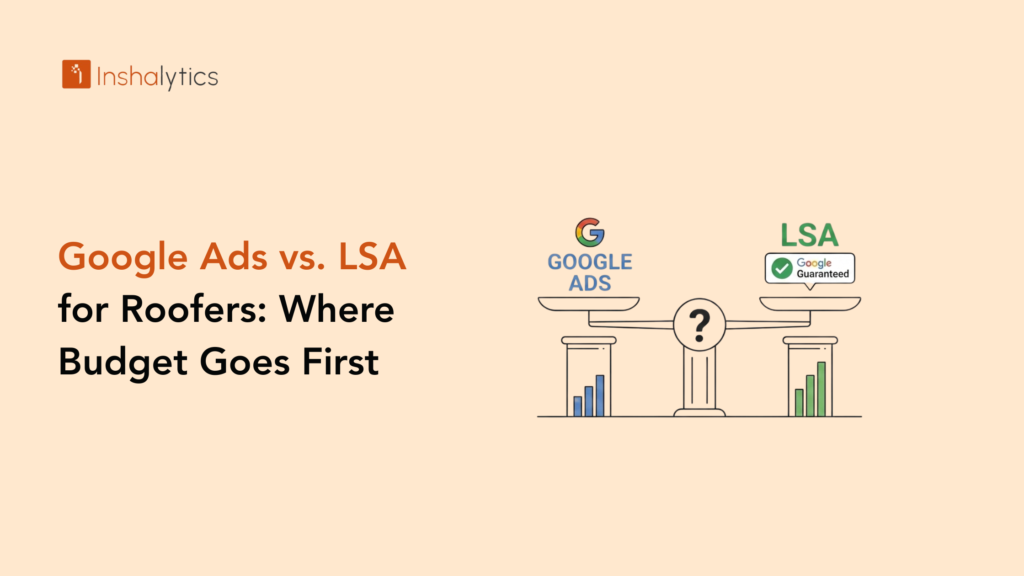
Google gives roofers two paid channels. Both appear at the top of the search results. Both can generate qualified calls. But they work differently, cost differently, and serve different strategic purposes. Understanding which one to prioritize and when to run both is the difference between a marketing budget that delivers and one that just costs money.
The Core Difference Between LSA and Google Ads for Roofers
How Google Local Services Ads Work
LSA appears at the very top of search results above the regular Google Ads, above the Map Pack, and above all organic results. You pay per qualified lead (a call or message from a homeowner), not per click. The ‘Google Guaranteed’ badge builds immediate trust, and LSA rankings are determined by review count, rating, response time, and proximity to the searcher. The current average cost per lead for roofers on LSA is $40–$120, depending on the market.
How Google Search Ads Work for Roofers
Google Search Ads operate on a pay-per-click model. You bid on specific keywords, create ads that appear when those keywords are searched, and pay each time someone clicks, whether they call you or not. This gives you far more control: you can target specific zip codes, adjust bids by time of day, and create separate campaigns for each roofing service. Cost per lead typically runs $80–$200 per qualified lead in competitive roofing markets.
LSA vs. Google Ads: The Numbers That Matter
Cost Per Lead and Close Rate Comparison
LSA leads convert at 15–25% compared to 8–15% for standard Google Ads. The combination of lower CPL and higher close rate often makes LSA the more profitable channel on a cost-per-booked-job basis, but this math only holds if your response time is under five minutes. LSA rankings drop when response rates are slow. For full budget planning around both channels, see our roofing marketing agency cost guide.
Scalability: Where Each Channel Has Limits
LSA has a ceiling; it distributes a fixed number of leads based on market demand. Google Ads, by contrast, are highly scalable. This is why most established roofers eventually run both LSA for the steady, high-intent baseline and Google Ads when they need to push for more volume. Our pay-per-click service manages both channels as one integrated strategy.
Which Should Roofers Start With?
Why LSA First for Most Roofers
LSA is simpler to set up, lower risk (you pay per lead rather than per click), and delivers high-intent leads at lower cost. The 2–4 week verification process (background check, license verification, insurance confirmation) is worth doing first since it takes time. The ‘Google Guaranteed’ badge also immediately separates you from less-established competitors.
When to Add Google Ads
Add Google Search Ads when your LSA budget is maxed out, and you’re still leaving demand on the table, or when you need more granular control over targeting. Google Ads also becomes essential for storm surge campaigns, where you need to scale spend rapidly and target specific keywords like ‘hail damage roof repair.’ See our storm damage leads guide for how we structure storm-specific Google Ads campaigns.
Running Both: The Strategy That Dominates Search Results
Budget Allocation Between LSA and Google Ads
A common starting allocation: 60% LSA, 40% Google Ads. Adjust based on cost per booked job. At scale, many roofers spend $2,000–$8,000 per month across both channels in competitive metros. See our roofing marketing agency cost guide for what these programs realistically cost when managed by an agency.
Don’t Forget the System Behind the Ads
Neither LSA nor Google Ads will produce the ROI they’re capable of without the infrastructure behind them: a fast-loading, conversion-optimized landing page, call tracking, and a response system that answers every lead within two minutes. For the landing page side of this, see our roofing website design guide.
How Inshalytics Manages Google Ads and LSA for Roofers
At Inshalytics, we set up and manage both LSA and Google Ads for roofing contractors as part of an integrated lead generation system. We handle LSA verification, campaign structure, negative keyword management, and the tracking infrastructure that connects ad spend to booked jobs. For storm surge, we build pre-paused campaigns ready to activate within hours of a weather event. Explore our pay-per-click service or contact us to discuss your market.
The Right Channel Depends on Where You Are
Start with LSA if you’re new to paid advertising and want lower risk. Add Google Search Ads when you want more volume or need storm surge capability. Run both if you’re in a competitive market and want to own the top of search results. For the organic foundation that supports both channels, see our roofing SEO guide.