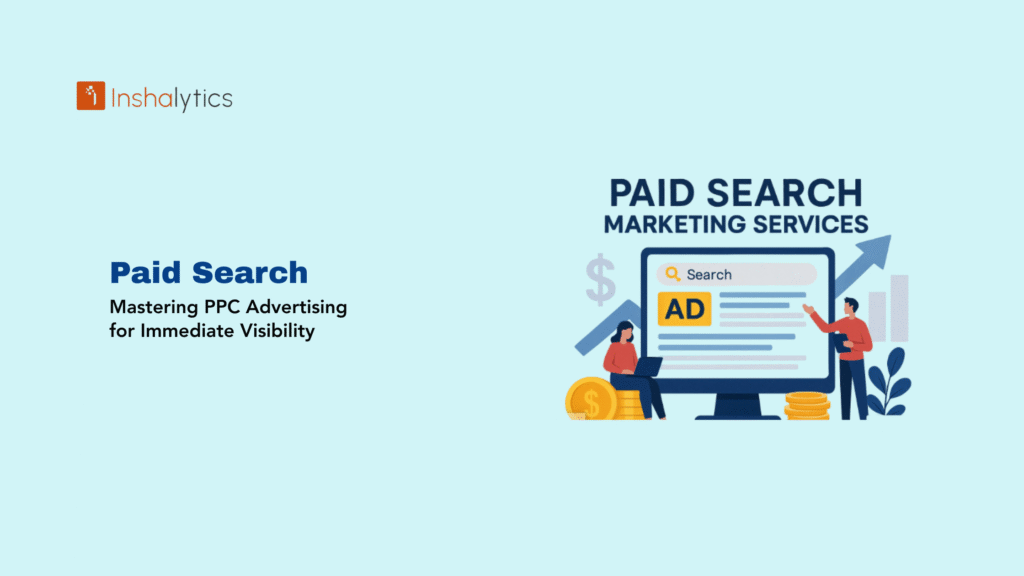
Definition: Paid search is search engine advertising where businesses pay to display ads in search results, typically through pay-per-click (PPC) models. When users search for specific keywords, paid ads appear prominently above or below organic results, labeled as “Sponsored” or “Ad,” providing immediate visibility to targeted audiences. Advertisers bid on keywords, create compelling ad copy, and pay only when users click their ads, making paid search a performance-based, measurable advertising channel delivering instant traffic and conversions.
Navigate This Post
What Is Paid Search?
Paid search, also called search engine marketing (SEM) or pay-per-click (PPC) advertising, enables businesses to purchase prominent placement in search engine results pages (SERPs) for specific keywords. Unlike organic search results earned through SEO, paid search positions are bought through auction-based systems where advertisers bid on keywords, create targeted ads, and pay predetermined amounts each time users click their advertisements.
Key characteristics of paid search:
Auction-based pricing: Advertisers bid on keywords in competitive auctions Immediate visibility: Ads appear as soon as campaigns launch Pay-per-click model: Costs incurred only when users click ads Prominent placement: Ads typically appear above organic results Precise targeting: Control over keywords, locations, demographics, devices, and timing Performance tracking: Detailed metrics measuring clicks, conversions, and ROI Budget control: Set daily or campaign-level spending limits Ad labeling: Clearly marked as “Sponsored,” “Ad,” or similar designations
Major paid search platforms include Google Ads (formerly Google AdWords), Microsoft Advertising (Bing Ads), Yahoo Search Ads, and Amazon Advertising for product searches.
How Paid Search Works
Understanding the mechanics of paid search advertising helps optimize campaign performance and maximize return on investment.
The Paid Search Process
1. Keyword Research: Identify search terms potential customers use when seeking products or services you offer.
2. Campaign Creation: Organize keywords into themed ad groups within campaigns structured around business objectives.
3. Ad Development: Write compelling ad copy with headlines, descriptions, and calls-to-action that encourage clicks.
4. Bidding Strategy: Set maximum amounts willing to pay per click, choosing manual or automated bidding approaches.
5. Auction Participation: When users search your keywords, automated auctions determine which ads appear and in what order.
6. Ad Display: Winning ads appear in search results with “Sponsored” labels, typically above or below organic listings.
7. Click and Charge: Users clicking ads trigger charges to advertiser accounts at agreed-upon cost-per-click rates.
8. Landing Page Experience: Clicked users reach designated landing pages optimized for conversion actions.
9. Performance Measurement: Track impressions, clicks, conversions, costs, and ROI through platform analytics.
10. Optimization: Continuously refine keywords, bids, ad copy, and targeting based on performance data.
Ad Rank Determination
Paid search auctions don’t simply award placements to highest bidders ad rank considers multiple factors:
Ad Rank = Bid Amount × Quality Score + Ad Extensions Impact
Quality Score evaluates:
- Click-through rate: Historical and expected CTR compared to competitors
- Ad relevance: How well ad copy matches search intent
- Landing page experience: Page quality, relevance, and user experience
- Ad format: Use of extensions and additional features
This system rewards relevant, high-quality ads with better placements at lower costs, while penalizing poor-quality ads regardless of bid amounts.
Paid Search vs. Organic Search
Understanding distinctions between paid and organic search clarifies their complementary roles in digital marketing.
Paid Search Advantages
Immediate results: Visibility begins instantly upon campaign launch Precise targeting: Control over keywords, demographics, locations, devices, schedules Predictable costs: Clear cost-per-click and budget management Flexibility: Quick adjustments to bids, targeting, and messaging Testing opportunities: Rapidly test different messages, offers, and approaches Measurable ROI: Direct attribution of revenue to specific ads and keywords Competitive visibility: Appear even when organic rankings lag behind competitors
Organic Search Advantages
No per-click costs: Free traffic once rankings achieved Higher trust: Many users prefer organic results over ads Sustainability: Continues generating traffic without ongoing spending Compound returns: Investment builds lasting authority and rankings Broader coverage: Rank for many keywords without per-keyword costs Better click-through rates: Often higher CTR for informational queries
Strategic Integration
Effective digital marketing combines both approaches:
- Paid search provides immediate traffic, tests messaging, and captures high-intent queries
- Organic search builds sustainable long-term presence and authority
- Together they maximize total search visibility and capture different user segments
Types of Paid Search Ads
Modern paid search encompasses various ad formats beyond traditional text listings.
Search Text Ads
Standard text-based ads appearing in search results with headlines, descriptions, display URLs, and ad extensions. These foundation formats work across all industries and objectives.
Shopping Ads
Product-focused ads displaying images, prices, and merchant names, particularly effective for e-commerce. Google Shopping and Microsoft Shopping Ads showcase products directly in search results.
Responsive Search Ads
Dynamic ads where advertisers provide multiple headlines and descriptions, with platforms automatically testing combinations to identify best-performing variants.
Call-Only Ads
Mobile-specific ads designed to generate phone calls rather than website visits, ideal for service businesses prioritizing direct contact.
Dynamic Search Ads
Automated ads generated based on website content, useful for large inventories where manual keyword targeting proves impractical.
Local Services Ads
Special format for local service businesses (plumbers, electricians, lawyers) featuring prominent placement with Google Guarantee badges.
Key Paid Search Metrics
Measuring success requires tracking performance indicators aligning with business objectives.
Primary Metrics
Impressions: Number of times ads displayed in search results Clicks: Total ad clicks received Click-through rate (CTR): Percentage of impressions resulting in clicks Cost-per-click (CPC): Average amount paid for each click Total spend: Aggregate advertising costs across campaigns Conversions: Desired actions completed (purchases, signups, calls) Conversion rate: Percentage of clicks resulting in conversions Cost-per-acquisition (CPA): Average cost to acquire each conversion Return on ad spend (ROAS): Revenue generated divided by advertising costs
Advanced Metrics
Quality Score: Google’s 1-10 rating of keyword/ad/landing page relevance Impression share: Percentage of eligible impressions your ads received Search lost impression share: Opportunities missed due to budget or rank Average position: Typical ad placement on search results pages Bounce rate: Percentage leaving landing pages without interaction Time on site: Engagement duration indicating relevance
Paid Search Best Practices
Strategic optimization maximizes paid search effectiveness and return on investment.
Keyword Strategy
Target intent-appropriate keywords: Match keywords to user intent stages Use negative keywords: Exclude irrelevant searches wasting budget Organize tightly: Create focused ad groups with 5-20 closely related keywords Include match types: Balance broad, phrase, and exact match keywords Monitor search terms: Review actual queries triggering ads and adjust
Ad Copy Excellence
Compelling headlines: Grab attention with relevant, benefit-focused headlines Clear value propositions: Communicate unique advantages immediately Strong calls-to-action: Use action verbs encouraging specific responses Include keywords: Match ad copy to search queries improving relevance Test variations: Continuously experiment with different messaging approaches Use ad extensions: Enhance ads with sitelinks, callouts, structured snippets
Landing Page Optimization
Message match: Ensure landing pages deliver on ad promises Clear conversion paths: Remove friction from desired actions Mobile optimization: Perfect mobile experience given mobile search dominance Fast loading: Page speed directly impacts conversion and Quality Score Relevant content: Provide information users expect based on ads Trust signals: Include testimonials, security badges, guarantees
Bidding Strategy
Start conservative: Begin with moderate bids while gathering data Monitor competition: Adjust based on competitive landscape Use bid adjustments: Modify bids by device, location, time, audience Leverage automation: Consider Smart Bidding for optimization at scale Focus on value: Optimize for conversions and revenue, not just clicks
Common Paid Search Mistakes
Avoiding frequent errors prevents wasted budget and improves campaign performance.
Poor keyword targeting: Bidding on irrelevant or too-broad keywords Ignoring negative keywords: Allowing wasteful irrelevant clicks Weak ad copy: Generic messaging failing to differentiate or compel action Sending all traffic to homepage: Not using specific, relevant landing pages Not tracking conversions: Unable to measure true campaign effectiveness Set-and-forget approach: Failing to monitor and optimize ongoing Neglecting mobile: Ignoring that majority of searches occur on mobile Overlooking Quality Score: Focusing solely on bids while ignoring relevance No testing: Running same ads indefinitely without experimentation Budget misallocation: Spreading budgets too thin or concentrating unwisely
Paid Search Platforms
Different platforms offer unique advantages and audience access.
Google Ads
Market share: Dominates search advertising with 90%+ global search market Reach: Billions of daily searches across Google Search, Maps, Shopping, YouTube Features: Most advanced targeting, automation, and optimization tools Cost: Generally higher CPCs due to competition Best for: Nearly all businesses given massive reach
Microsoft Advertising (Bing)
Market share: 6-7% of search market (higher in certain demographics) Audience: Tends toward older, higher-income desktop users Cost: Often lower CPCs than Google with less competition Integration: Syncs with Google Ads for easy campaign import Best for: B2B, enterprise, professional services targeting specific demographics
Amazon Advertising
Context: Product searches on Amazon platform Intent: Extremely high commercial intent from ready-to-buy users Format: Primarily product-focused shopping ads Best for: E-commerce brands selling on Amazon
Measuring Paid Search Success
Determining campaign effectiveness requires aligning metrics with business objectives.
E-commerce Goals
Focus on ROAS, CPA, conversion rate, and revenue attribution to specific ads and keywords proving direct ROI.
Lead Generation Goals
Track cost-per-lead, lead quality, lead-to-customer conversion rates, and customer lifetime value attributed to paid search sources.
Brand Awareness Goals
Monitor impression share, reach, branded search lift, and engagement metrics demonstrating expanded brand recognition.
Local Business Goals
Measure call volume, direction requests, store visits (where available), and foot traffic increases correlating with campaign activity.
The Future of Paid Search
Paid search continues evolving with technology and changing user behavior.
AI and automation: Machine learning increasingly handles bidding, targeting, and optimization Audience targeting: Expanding beyond keywords to interest-based and behavioral targeting Visual search: Image-based searches creating new ad inventory opportunities Voice search: Conversational queries influencing keyword strategies and ad formats Privacy changes: Cookie deprecation and privacy regulations affecting tracking and targeting Integration: Deeper connections between paid search and other marketing channels Performance Max: Automated campaign types optimizing across multiple Google properties
Conclusion
Paid search, search engine advertising where businesses pay to display targeted ads in search results, provides immediate visibility to specific audiences through performance-based pay-per-click models. This measurable, controllable advertising channel delivers instant traffic from users actively searching for relevant products, services, or information, making it essential for businesses seeking quick market entry, promoting time-sensitive offers, or supplementing organic search presence.
Success requires strategic keyword selection targeting appropriate intent stages, compelling ad copy differentiating offerings and encouraging clicks, optimized landing pages converting traffic efficiently, continuous optimization based on performance data, and integration with organic search for comprehensive visibility. While requiring ongoing investment unlike earned organic rankings, paid search delivers predictable results, precise targeting, and measurable return on investment that justify costs for businesses understanding how to optimize campaigns effectively.
The combination of immediate results, granular control, and clear attribution makes paid search indispensable in modern digital marketing, complementing long-term organic strategies with controllable, scalable traffic generation that produces measurable business outcomes through strategic bidding, relevant messaging, and conversion-optimized experiences meeting users’ specific search intent.
Key Takeaways
- Paid search provides immediate visibility through pay-per-click advertising in search results
- Advertisers bid on keywords in auctions considering both bid amount and Quality Score
- Cost incurred only when users click ads, making it performance-based
- Precise targeting controls keywords, locations, demographics, devices, and timing
- Requires continuous optimization of keywords, bids, ad copy, and landing pages
- Complements organic search by providing instant traffic and testing opportunities
- Success measured through conversions, CPA, ROAS, and business-specific objectives
- Google Ads dominates but Microsoft Advertising offers valuable alternative reach
- Quality Score rewards relevant ads with better placement at lower costs
- Future emphasizes automation, AI optimization, and audience-based targeting