
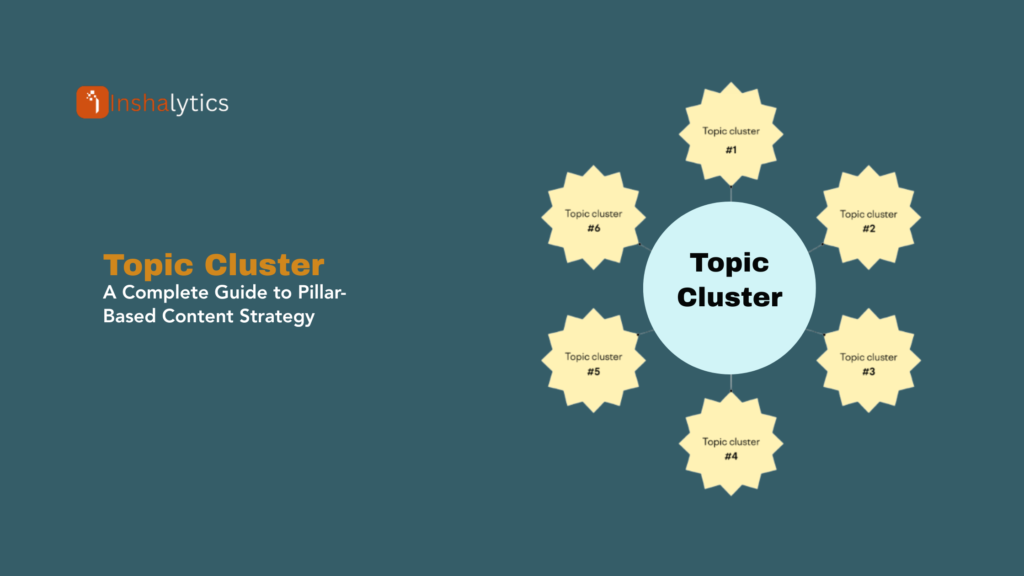
A topic cluster is a content organization strategy that groups related articles and pages around a central “pillar page,” creating a comprehensive knowledge hub on a specific topic. The pillar page provides a broad overview of the main topic, while individual cluster content pieces dive deep into specific subtopics, all interconnected through strategic internal linking. This hub-and-spoke model signals topical authority to search engines, improves site architecture, enhances user experience, and typically outperforms traditional isolated blog post strategies for SEO performance.
Developed as search engines evolved to understand topics rather than just keywords, the topic cluster model aligns with how Google’s algorithms particularly RankBrain, BERT, and MUM evaluate content comprehensiveness and semantic relationships. Rather than creating disconnected articles targeting individual keywords, topic clusters establish your website as an authoritative resource on entire subjects, improving rankings across all related queries while providing users with comprehensive, well-organized information.
Navigate This Post
How Topic Clusters Work
The Three Core Components
1. Pillar Page (Hub)
The central, comprehensive page covering the broad topic at a high level.
Characteristics:
- 3,000-5,000+ words typically
- Covers topic breadth, not depth
- Includes overview sections for all major subtopics
- Links out to all cluster content
- Serves as the authority page for the main topic
- Designed for broad, high-volume keywords
Example: A pillar page on “Email Marketing” would cover:
- What email marketing is
- Benefits and importance
- Key strategies overview
- Best practices at high level
- Tools and platforms overview
- Metrics and measurement basics
2. Cluster Content (Spokes)
Individual pages exploring specific subtopics in detail.
Characteristics:
- 1,500-3,000 words each
- Deep dive into one specific aspect
- Links back to pillar page
- Links to related cluster content
- Targets long-tail, specific keywords
- Answers specific questions
Example Cluster Content for “Email Marketing” pillar:
- How to Build an Email List from Scratch
- Email Subject Line Best Practices
- Email Automation Workflows Guide
- Email Segmentation Strategies
- A/B Testing Email Campaigns
- GDPR Compliance for Email Marketing
- Email Deliverability Optimization
3. Internal Linking Structure
Strategic hyperlinks connecting all components.
Linking Pattern:
- Pillar page links to all cluster content
- All cluster content links back to pillar
- Related cluster pages link to each other
- Contextual anchor text using relevant keywords
- Bidirectional linking reinforcing relationships
Why Topic Clusters Work for SEO
Topical Authority
Search engines reward websites demonstrating comprehensive expertise on topics. Topic clusters prove you’re an authority by covering subjects thoroughly from multiple angles.
Signal to Search Engines: “This site doesn’t just have one article about email marketing—they have 15 interconnected pages covering every aspect. They’re clearly experts.”
Semantic Relationship Recognition
Modern search algorithms understand topic relationships beyond keyword matching. Internal linking between related content helps search engines map your content’s semantic connections.
Improved Site Architecture
Topic clusters create logical, hierarchical site structures that both users and crawlers can navigate easily. Clear organization improves crawlability and indexation.
Internal Link Equity Distribution
Strategic internal linking passes authority from high-performing pages to related content, lifting the entire cluster’s ranking potential.
Lower Keyword Cannibalization
Instead of multiple pages competing for the same keywords, topic clusters clearly delineate which page targets which search intent, reducing internal competition.
Better User Experience
Organized content structures help users find related information easily, increasing engagement metrics (time on site, pages per session) that correlate with better rankings.
Featured Snippet Opportunities
Comprehensive topic coverage increases chances of capturing featured snippets across multiple related queries.
Creating an Effective Topic Cluster
Step 1: Choose Your Core Topic
Select broad topics central to your business, industry, or audience interests.
Ideal Topic Characteristics:
- Broad enough to support 10-15+ subtopics
- Relevant to your business goals
- Sufficient search volume across related keywords
- Expertise you can credibly demonstrate
- Not too competitive for your domain authority
Examples:
- Digital marketing agency: “Content Marketing,” “SEO,” “Social Media Marketing”
- SaaS company: “Project Management,” “Team Collaboration,” “Remote Work”
- E-commerce: “Sustainable Fashion,” “Home Organization,” “Fitness Nutrition”
Step 2: Research Subtopics and Keywords
Identify all related subtopics and questions your audience searches for.
Research Methods:
Keyword Research Tools:
- Google Keyword Planner – Related keywords and search volumes
- Ahrefs Keywords Explorer – Questions and related terms
- SEMrush Keyword Magic Tool – Topic variations
- Answer the Public – Common questions
SERP Analysis:
- “People Also Ask” boxes
- Related searches at bottom of results
- Competitor content coverage
- Google autocomplete suggestions
Customer Intelligence:
- Support ticket common questions
- Sales call frequently asked questions
- Social media comments and messages
- Customer survey responses
Subtopic Criteria:
- Related to core topic
- Sufficient search volume (100+ monthly searches)
- Specific enough for dedicated content
- Matches different search intents
Step 3: Organize Content Hierarchy
Structure your pillar and cluster content logically.
Organization Framework:
PILLAR PAGE: Email Marketing
├── CLUSTER: Email List Building
│ ├── Lead Magnets That Convert
│ ├── Landing Page Optimization for Email Signups
│ └── Email Popup Best Practices
├── CLUSTER: Email Campaign Strategy
│ ├── Welcome Email Series Templates
│ ├── Newsletter Content Ideas
│ └── Promotional Email Timing
├── CLUSTER: Email Automation
│ ├── Drip Campaign Setup Guide
│ ├── Behavioral Trigger Workflows
│ └── Cart Abandonment Email Sequences
└── CLUSTER: Email Analytics
├── Key Email Metrics to Track
├── A/B Testing Email Elements
└── Improving Email Deliverability
Step 4: Create the Pillar Page
Develop your comprehensive core resource.
Pillar Page Elements:
Comprehensive Overview
- Cover all major aspects of the topic
- Provide context and definitions
- Explain importance and benefits
- Include relevant statistics and data
Table of Contents
- Linked navigation to sections
- Improves scannability
- Enhances user experience
- Provides internal link structure
Section for Each Subtopic
- 200-400 word overview of each cluster topic
- Link to corresponding cluster content
- Brief explanation before deep dive link
- Use descriptive anchor text
Visual Elements
- Infographics summarizing key concepts
- Charts and diagrams
- Videos explaining complex topics
- Process flowcharts
CTA and Next Steps
- Guide users to most relevant cluster content
- Offer lead magnets or tools
- Encourage deeper engagement
Step 5: Develop Cluster Content
Create detailed individual pieces for each subtopic.
Cluster Content Requirements:
Deep Focus
- Thoroughly explore single subtopic
- Answer specific questions completely
- Provide actionable advice
- Include examples and case studies
Strategic Internal Links
- Link to pillar page in introduction
- Link to 2-3 related cluster articles
- Use contextual anchor text
- Natural link placement in content flow
Optimized for Long-Tail Keywords
- Target specific search queries
- Match precise search intent
- Include question variations
- Optimize title and headers
High Quality Standards
- Original insights and perspectives
- Comprehensive coverage
- Proper formatting and readability
- Engaging multimedia elements
Step 6: Implement Internal Linking
Connect all components systematically.
Linking Best Practices:
From Pillar to Clusters:
Email segmentation allows you to send targeted messages to specific subscriber
groups. Learn more about (link) to improve your
campaign performance.
From Clusters to Pillar:
For a comprehensive overview of email marketing fundamentals, see our
[complete email marketing guide](pillar-link).
Between Related Clusters:
Once you’ve built your email list using these strategies, optimize your
[welcome email series](related-cluster-link) to engage new subscribers.
Anchor Text Guidelines:
- Use descriptive, keyword-rich phrases
- Vary anchor text naturally
- Avoid generic “click here” links
- Match link context to destination content
Step 7: Monitor and Expand
Track performance and continuously improve your cluster.
Metrics to Monitor:
- Organic traffic to pillar and cluster pages
- Rankings for target keywords
- Internal link click-through rates
- Time on page and engagement
- Conversion rates from cluster content
Expansion Strategies:
- Add new cluster content as questions arise
- Update pillar page with new subtopic sections
- Refresh existing content regularly
- Respond to emerging subtopics in your industry
Topic Cluster Examples by Industry
Digital Marketing Agency
Pillar: SEO Guide Clusters: Keyword Research, On-Page SEO, Link Building, Technical SEO, Local SEO, SEO Tools, Algorithm Updates
SaaS Company
Pillar: Remote Team Management Clusters: Communication Tools, Productivity Tips, Time Zone Coordination, Virtual Meetings, Team Building Activities, Performance Tracking, Security Best Practices
E-commerce Store
Pillar: Sustainable Living Clusters: Eco-Friendly Products, Zero Waste Tips, Sustainable Fashion, Green Cleaning, Renewable Energy, Ethical Shopping, Reducing Carbon Footprint
B2B Service Provider
Pillar: Content Marketing Strategy Clusters: Content Planning, Blog Writing, Video Marketing, Podcast Production, Content Distribution, Measuring ROI, Content Repurposing
Common Topic Cluster Mistakes
Creating Too Narrow Topics
Problem: Choosing topics without enough subtopic potential.
Example: “Email Subject Lines” is too narrow—better as cluster content within “Email Marketing” pillar.
Solution: Select topics supporting 10-15+ substantial subtopic articles.
Weak Internal Linking
Problem: Minimal linking or one-directional links only.
Solution: Implement comprehensive bidirectional linking—pillar to clusters, clusters to pillar, clusters to related clusters.
Thin Pillar Pages
Problem: Pillar pages that are too short or lack comprehensiveness.
Solution: Create substantial pillar pages (3,000+ words) covering all aspects at overview level.
Ignoring Search Intent
Problem: Creating cluster content without considering what users actually search for.
Solution: Base cluster topics on actual keyword research and user questions, not assumptions.
Neglecting Updates
Problem: Creating clusters then abandoning them without updates.
Solution: Regularly refresh content, add new cluster pieces, and update pillar pages as topics evolve.
Poor Content Quality
Problem: Creating numerous shallow articles to build clusters quickly.
Solution: Prioritize quality over quantity—fewer excellent pieces outperform many mediocre ones.
Measuring Topic Cluster Success
Ranking Improvements
Track keyword rankings for:
- Pillar page target keywords
- Cluster content long-tail keywords
- Related semantic variations
Traffic Growth
Monitor organic traffic:
- Individual page performance
- Cluster-wide traffic totals
- Traffic trends over time
- Pages entering top 10 rankings
Engagement Metrics
Analyze user behavior:
- Average time on page
- Pages per session
- Internal link click-through
- Bounce rate reductions
Conversion Impact
Measure business results:
- Lead generation from cluster content
- Sales influenced by topic cluster pages
- Email signups and downloads
- Tool trials or demo requests
Domain Authority Growth
Observe overall domain improvements:
- Backlinks to cluster content
- Mentions and brand searches
- Overall domain authority metrics
- Topic-specific authority recognition
Conclusion
Topic clusters represent a fundamental shift from isolated keyword targeting to comprehensive topical authority building. By organizing related content around central pillar pages connected through strategic internal linking, this approach aligns with how modern search engines understand and rank content while providing superior user experiences through logical, navigable content structures.
Success with topic clusters requires thoughtful planning—selecting sufficiently broad topics, thorough subtopic research, creating comprehensive pillar pages, developing high-quality cluster content, and implementing strategic internal linking. The investment pays dividends through improved rankings across multiple related keywords, increased organic traffic, enhanced user engagement, and established authority positioning.
As search algorithms continue evolving toward semantic understanding and topic expertise evaluation, topic clusters will become increasingly critical for competitive SEO performance. Start by identifying your core expertise areas, map related subtopics your audience cares about, and systematically build comprehensive content hubs that demonstrate your authority while serving user needs completely.
Key Takeaway: Topic clusters are content organization strategies grouping 10-15+ related articles around central pillar pages (3,000+ word comprehensive overviews) connected through strategic internal linking in a hub-and-spoke model. This approach establishes topical authority, improves site architecture, enhances user experience, and aligns with modern search algorithms that reward comprehensive topic coverage, typically outperforming isolated content strategies for SEO performance and organic traffic growth.