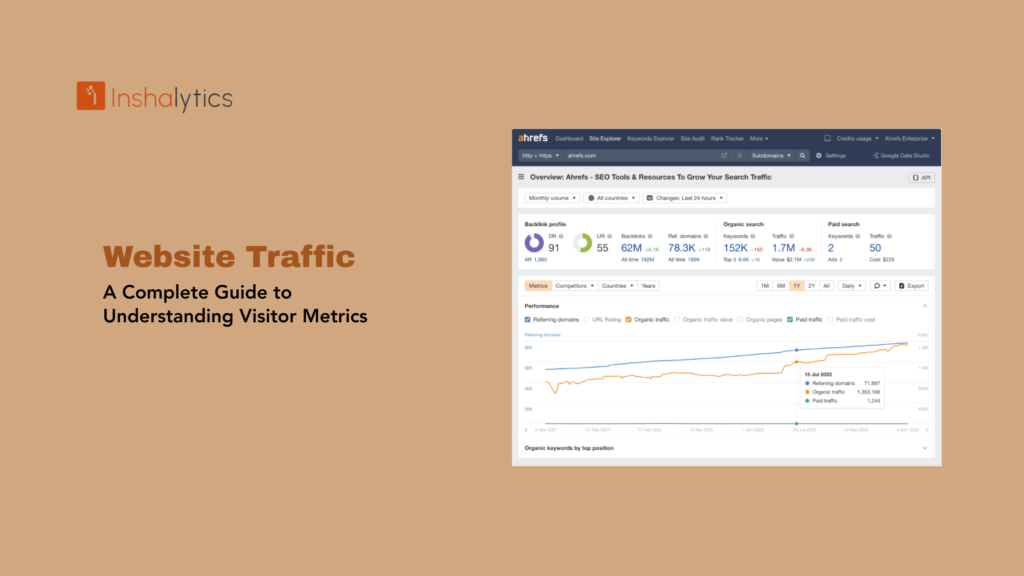
Website traffic refers to the volume of visitors who arrive at your website from various sources, measured through metrics like sessions, users, and pageviews. Traffic represents the lifeblood of online businesses, blogs, and digital properties without visitors, websites cannot achieve their goals whether those are sales, lead generation, brand awareness, or content engagement. Understanding traffic sources, patterns, and quality helps businesses optimize marketing strategies, improve user experience, and maximize return on investment from digital efforts.
Traffic is measured and analyzed through analytics platforms like Google Analytics, which track not just volume but also visitor behavior, demographics, source channels, and conversion patterns. While raw traffic numbers provide a starting point, sophisticated traffic analysis examines quality metrics bounce rates, time on site, pages per session, and conversion rates to determine whether visitors are genuinely engaged and valuable to business objectives rather than just inflating vanity metrics.
Navigate This Post
Types of Website Traffic
Traffic is categorized by source, revealing where visitors originate and how they discover your website.
1. Organic Traffic
Visitors arriving through unpaid search engine results.
Source: Google, Bing, Yahoo, DuckDuckGo, and other search engines
Characteristics:
- Results from SEO efforts
- Free traffic (no per-click cost)
- High purchase intent
- Sustainable long-term source
- Requires 3-6+ months to build
- Compounds over time
Advantages:
- Cost-effective at scale
- High-quality, intent-driven visitors
- Builds sustainable traffic foundation
- Continues generating traffic without ongoing spending
How to Increase:
- Keyword research and optimization
- High-quality content creation
- Technical SEO improvements
- Backlink building
- Regular content updates
Typical Conversion Rate: 2-5% (varies by industry)
2. Direct Traffic
Visitors who type your URL directly, use bookmarks, or arrive through untrackable sources.
Sources:
- Typing URL in browser
- Bookmarked pages
- Clicks from untracked email clients
- Some mobile app traffic
- Offline marketing references
Characteristics:
- Brand awareness indicator
- Often returning visitors
- Higher engagement rates
- Can include “dark social” (private messaging)
- Mixed attribution accuracy
Advantages:
- Indicates strong brand recognition
- Typically high-intent visitors
- Often loyal customers or engaged users
- Lower bounce rates
How to Increase:
- Build brand awareness through marketing
- Offline advertising with memorable URLs
- Encourage bookmarking valuable resources
- Create memorable brand name and domain
- Email marketing (with proper tracking)
3. Referral Traffic
Visitors clicking links from other websites.
Sources:
- Blog mentions and articles
- News publications
- Industry directories
- Partner websites
- Forum discussions
- Resource pages
Characteristics:
- Pre-qualified through endorsement
- Variable quality based on source
- Often highly engaged
- Indicates content value and reach
- Builds through content quality
Advantages:
- Comes from trusted sources
- Often niche-targeted and relevant
- Can indicate growing authority
- Typically mid-to-high quality
How to Increase:
- Guest blogging on authoritative sites
- Digital PR and outreach
- Create link-worthy content assets
- Build industry relationships
- Participate in online communities
4. Social Traffic
Visitors from social media platforms.
Sources:
- Facebook, Instagram, Twitter (X)
- LinkedIn, Pinterest, TikTok
- Reddit, YouTube
- Social bookmarking sites
Characteristics:
- Often discovery-based browsing
- Can be viral and spike suddenly
- Variable engagement quality
- Platform-dependent behavior patterns
- Requires ongoing content creation
Advantages:
- Rapid traffic spikes possible
- Builds brand awareness
- Facilitates audience engagement
- Low barrier to entry
Challenges:
- Generally lower conversion rates
- High bounce rates common
- Platform algorithm dependency
- Requires consistent effort
How to Increase:
- Regular, engaging social content
- Paid social advertising
- Influencer partnerships
- Community building
- Shareable content creation
5. Paid Traffic
Visitors from paid advertising campaigns.
Sources:
- Google Ads (Search, Display, Shopping)
- Facebook/Instagram Ads
- LinkedIn Ads
- Display advertising networks
- Native advertising platforms
Characteristics:
- Immediate results
- Highly scalable
- Predictable costs and results
- Stops when budget ends
- Requires ongoing investment
Advantages:
- Instant visibility and traffic
- Precise targeting options
- Measurable ROI
- Controllable volume
- Testing and optimization opportunities
Disadvantages:
- Ongoing costs required
- Can be expensive in competitive niches
- Requires expertise to optimize
- Stops generating traffic when paused
How to Optimize:
- Target high-intent keywords
- A/B test ad creative
- Optimize landing pages
- Refine audience targeting
- Monitor and adjust bids
6. Email Traffic
Visitors clicking links in email campaigns.
Sources:
- Newsletter campaigns
- Promotional emails
- Automated email sequences
- Transactional emails
Characteristics:
- Warm audience (existing relationship)
- High engagement potential
- Owned marketing channel
- Requires list building
- Highly targeted messaging
Advantages:
- Direct access to engaged audience
- High conversion rates
- Owned channel (not algorithm-dependent)
- Cost-effective at scale
- Personalization opportunities
How to Increase:
- Build email list through lead magnets
- Segment for targeted messaging
- Compelling subject lines and content
- Regular but not excessive frequency
- Clear calls-to-action
Key Traffic Metrics
Sessions
A session represents a single visit to your website, encompassing all interactions within a specific timeframe (typically 30 minutes of inactivity ends a session).
What It Measures: Total visits to your site
Why It Matters: Indicates overall site activity and marketing effectiveness
Users
Unique individuals visiting your site within a specified timeframe.
What It Measures: Distinct visitors (tracked via cookies/IDs)
Distinction from Sessions: One user can generate multiple sessions
Pageviews
Total number of pages viewed across all sessions.
What It Measures: Content consumption volume
Related Metric: Pages per session indicates engagement depth
Bounce Rate
Percentage of single-page sessions where visitors leave without interaction.
What It Measures: Engagement quality
Interpretation:
- High bounce (70%+): Poor relevance, slow loading, or satisfied one-page visits
- Low bounce (30-40%): Engaging content, good navigation, relevant traffic
Average Session Duration
Mean time visitors spend on your site per session.
What It Measures: Engagement level
Benchmarks:
- 2-3 minutes: Average
- 3-5 minutes: Good engagement
- Under 1 minute: Potential quality issues
New vs. Returning Visitors
Ratio of first-time visitors to repeat visitors.
What It Reveals:
- High new visitors: Strong acquisition
- High returning visitors: Good retention and loyalty
- Balanced ratio: Healthy site growth
Traffic Quality vs. Quantity
Quality Indicators
High-Quality Traffic Shows:
- Low bounce rates (under 50%)
- Multiple pages per session (3+)
- Longer session durations (2+ minutes)
- Higher conversion rates
- Returning visitor patterns
- Goal completions
Low-Quality Traffic Shows:
- High bounce rates (70%+)
- Single-page sessions
- Short durations (under 30 seconds)
- No conversions
- Immediate exits
- Bot or spam traffic
Why Quality Matters More Than Quantity
Scenario Comparison:
Site A:
- 10,000 monthly visitors
- 2% conversion rate
- 200 conversions
Site B:
- 5,000 monthly visitors
- 5% conversion rate
- 250 conversions
Site B generates more business results despite half the traffic because visitors are more qualified and targeted.
Improving Traffic Quality
1. Target Better Keywords
- Focus on buyer-intent keywords
- Use long-tail, specific phrases
- Match content to search intent
2. Improve Targeting
- Refine audience demographics
- Use negative keywords in paid campaigns
- Create personas for content creation
3. Optimize Landing Pages
- Match content to traffic source
- Clear value propositions
- Strong calls-to-action
- Fast load times
4. Filter Bot Traffic
- Enable bot filtering in analytics
- Use CAPTCHA on forms
- Block known spam referrers
- Monitor for traffic anomalies
Analyzing Traffic with Google Analytics
Setting Up Traffic Tracking
Essential Implementation:
- Install Google Analytics 4 (GA4)
- Configure conversion tracking
- Set up goal tracking
- Implement UTM parameters for campaigns
- Enable enhanced measurement
Key Reports to Monitor
Acquisition Reports
- Traffic by source/medium
- Channel performance comparison
- Campaign effectiveness
- Landing page performance
Engagement Reports
- Page views and engagement
- Events and conversions
- User demographics
- Technology and device usage
User Reports
- New vs. returning visitors
- User lifetime value
- Cohort analysis
- User retention
UTM Parameters for Campaign Tracking
Track specific campaigns by adding UTM parameters to URLs:
Key Parameters:
- utm_source: Traffic source (facebook, newsletter, google)
- utm_medium: Channel type (social, email, cpc)
- utm_campaign: Specific campaign name (spring_sale, product_launch)
- utm_content: Ad variation (blue_button, image_a)
- utm_term: Paid keywords (running_shoes)
Increasing Website Traffic
Short-Term Strategies (Results in Days/Weeks)
Paid Advertising
- Google Ads search campaigns
- Social media advertising
- Display advertising
- Retargeting campaigns
Social Media Promotion
- Paid social posts
- Influencer partnerships
- Social media contests
- Community engagement
Email Marketing
- Newsletter campaigns
- Promotional emails
- Re-engagement campaigns
Long-Term Strategies (Results in Months)
- Keyword research and content creation
- Technical SEO optimization
- Link building
- Content updates and expansion
Content Marketing
- Regular blog publishing
- Video content creation
- Podcasting
- Infographics and visual content
Community Building
- Forum participation
- Guest blogging
- Speaking engagements
- Industry partnerships
Sustainable Traffic Growth
Best Approach: Combine multiple channels
- 40% organic search (long-term foundation)
- 20% direct traffic (brand building)
- 15% referral traffic (partnerships)
- 15% social traffic (engagement)
- 10% paid traffic (quick wins and testing)
Diversification reduces risk from algorithm changes, platform shifts, or channel-specific challenges.
Common Traffic Mistakes
Chasing Vanity Metrics – Focusing on traffic volume without considering quality, engagement, or conversions.
Single Channel Dependency – Relying entirely on one traffic source creates vulnerability to algorithm changes or platform issues.
Ignoring Mobile Traffic – With 60%+ of traffic from mobile, poor mobile experience severely limits growth.
Not Tracking Traffic Sources – Without proper analytics, you can’t identify what’s working or optimize effectively.
Buying Traffic – Purchased traffic is typically low quality, includes bots, and doesn’t convert.
Neglecting Existing Traffic – Focusing only on acquisition while ignoring retention and optimization of current visitors wastes opportunities.
Conclusion
Website traffic represents the fundamental metric of digital presence and success, measuring the volume and sources of visitors arriving at your site. However, understanding traffic requires looking beyond raw numbers to analyze source channels, quality indicators, user behavior, and conversion performance. The most successful websites balance traffic acquisition across multiple channels—organic search, direct visits, referrals, social media, paid advertising, and email—while consistently optimizing for quality over quantity.
Building sustainable traffic requires patient investment in long-term strategies like SEO and content marketing while strategically deploying short-term tactics like paid advertising and social promotion. Regular analysis through platforms like Google Analytics reveals which channels drive the most valuable visitors, enabling data-driven optimization and resource allocation.
Remember that traffic is a means to an end, not the end itself. The ultimate goal isn’t maximum visitors but qualified, engaged visitors who complete desired actions—purchases, signups, downloads, or engagement—that advance business objectives and deliver measurable ROI.
Key Takeaway: Website traffic is the volume of visitors arriving at your website from various sources including organic search, direct visits, referrals, social media, paid advertising, and email. Measured through metrics like sessions, users, and pageviews, traffic analysis examines both quantity and quality indicators—bounce rate, session duration, conversions—to determine visitor value. Successful traffic strategies diversify across multiple channels while prioritizing quality over quantity, focusing on attracting qualified visitors who engage meaningfully and convert rather than simply maximizing visitor counts.