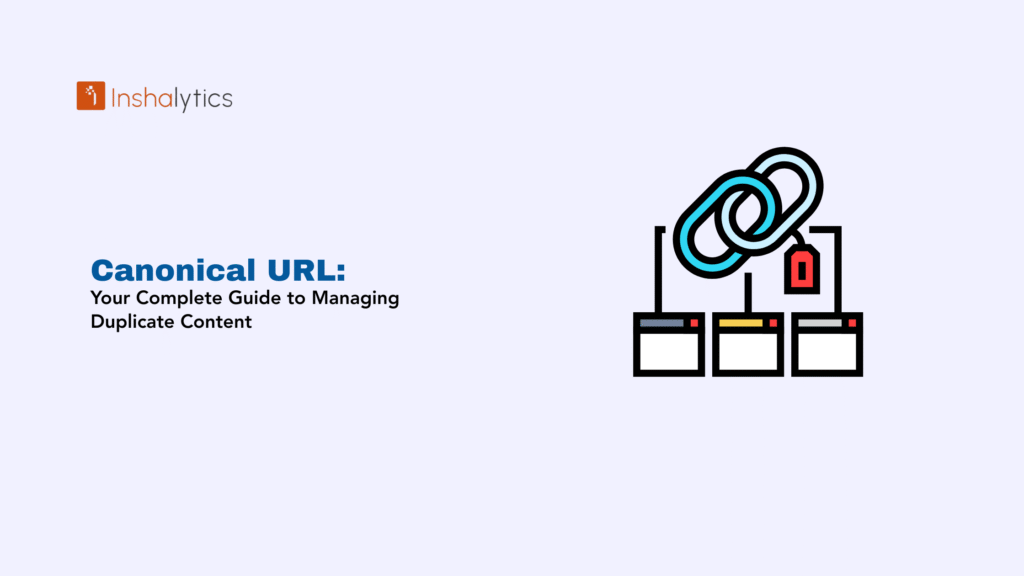
Duplicate content remains one of the most misunderstood and potentially damaging issues in search engine optimization. When multiple versions of the same page exist across your website, search engines face a dilemma: which version should they rank? The canonical URL solves this problem by explicitly telling search engines which version you consider the authoritative source. Understanding and properly implementing canonical tags is essential for any digital marketer serious about SEO performance.
Navigate This Post
What Is a Canonical URL?
A canonical URL is the preferred version of a webpage that you want search engines to index and rank when duplicate or very similar content exists across multiple URLs. The canonical tag is an HTML element that specifies this preferred URL, helping search engines understand which version should be treated as the primary source.
The canonical tag appears in the head section of an HTML page and looks like this:
<link rel=”canonical” href=”https://www.example.com/preferred-page/” />
This simple line of code tells search engines: “Even though you found this content at various URLs, this is the version I want you to prioritize.” It’s a signal rather than a directive—search engines will usually respect your canonical preference but aren’t obligated to follow it.
Why Canonical URLs Matter for SEO
Duplicate content creates several significant problems for search engine optimization. When search engines discover multiple pages with identical or very similar content, they must decide which version to show in search results. Without clear guidance, they might choose the wrong version, or worse, they might not rank any version effectively because the ranking signals are diluted across multiple URLs.
Consolidating ranking signals is perhaps the most important benefit of canonical tags. When you specify a canonical URL, you’re directing search engines to attribute all ranking signals—backlinks, social shares, and other authority indicators—to your preferred version. Without canonicalization, these valuable signals get split across multiple URLs, weakening your overall search performance.
Preventing keyword cannibalization becomes easier when you use canonical tags properly. When multiple pages target the same keywords, they compete against each other in search results. Canonical tags help you consolidate these pages under one authoritative URL, improving your chances of ranking well for those target keywords.
Improving crawl efficiency matters more than many marketers realize. Search engine crawlers have limited resources and time to spend on your site. When they encounter duplicate content, they waste valuable crawl budget on redundant pages. Canonical tags guide crawlers toward your most important content, ensuring they spend their time indexing pages that matter.
Enhancing user experience happens indirectly through canonical implementation. By ensuring the right version appears in search results, you direct users to your preferred page—typically the one with the best design, most complete information, or optimal conversion path.
Common Causes of Duplicate Content
Understanding why duplicate content exists helps you implement canonical tags more strategically. Many duplicate content issues arise from technical website configurations rather than intentional content duplication.
URL variations create some of the most common duplicate content problems. A single page might be accessible through multiple URL formats: with or without “www,” with or without trailing slashes, or through both HTTP and HTTPS protocols. For example, these URLs might all show the same content:
- https://example.com/page/
- https://www.example.com/page
- http://example.com/page/
- https://example.com/page
Parameter-driven URLs generate duplicates on dynamic websites. E-commerce sites frequently create multiple URLs for the same product based on sorting options, filters, session IDs, or tracking parameters. A product page might appear at dozens of different URLs depending on how users reached it, even though the core content remains identical.
Printer-friendly versions and mobile-specific URLs create intentional duplicates that still require canonical implementation. While these variations serve legitimate purposes, they need canonical tags pointing to the main version to avoid SEO issues.
Content syndication causes duplicate content when you publish the same article on multiple platforms. If you republish your blog posts on Medium, LinkedIn, or industry publications, canonical tags should point back to your original content.
Pagination and filtering on category pages can create duplicate content. Product listings that allow users to view the same items in different orders or filtered by various attributes generate multiple URLs with overlapping content.
How to Implement Canonical Tags Correctly
Proper canonical tag implementation requires attention to detail and adherence to several critical best practices.
Always use absolute URLs in your canonical tags, not relative paths. Instead of <link rel=”canonical” href=”/page/” />, use the complete URL including the protocol and domain: <link rel=”canonical” href=”https://www.example.com/page/” />. This prevents ambiguity and ensures search engines understand exactly which page you’re specifying.
Point canonical tags to indexable pages only. Never set a canonical URL that returns a 404 error, redirects to another page, or contains a noindex tag. The canonical URL must be a live, accessible, indexable page that search engines can actually crawl and rank.
Use self-referencing canonical tags on your preferred pages. Every page should include a canonical tag, even if no duplicates exist. Self-referencing canonicals reinforce which version is authoritative and provide insurance against accidental duplicate creation.
Ensure consistency across pages. If multiple pages have duplicate content, they should all have canonical tags pointing to the same preferred URL. Mixed signals confuse search engines and undermine the effectiveness of your canonicalization strategy.
Match canonical URLs with hreflang tags when using international targeting. If you’re implementing hreflang for multi-language sites, ensure your canonical tags don’t conflict with your hreflang annotations. Each language version should have a self-referencing canonical.
Implement HTTPS canonicals if your site uses SSL. Always canonicalize to your HTTPS version, not HTTP, assuming your entire site runs on a secure connection.
Canonical Tags vs. 301 Redirects
Many digital marketers struggle to understand when to use canonical tags versus 301 redirects. While both address duplicate content, they serve different purposes and scenarios.
Use 301 redirects when you want to permanently consolidate duplicate URLs. Redirects physically send users and search engines from one URL to another. They’re appropriate when URLs have permanently changed, old pages should no longer be accessible, or you’re merging duplicate pages into a single version.
Use canonical tags when you need multiple URLs to remain accessible to users but want search engines to treat one as authoritative. This works well for filtered product views, printer-friendly versions, tracking URLs, or syndicated content where both versions need to exist.
The key difference is accessibility: 301 redirects make the old URL inaccessible by forwarding visitors elsewhere, while canonical tags allow the duplicate URL to remain functional while directing search engines to prioritize a different version.
Common Canonical Tag Mistakes
Several common errors can render your canonical implementation ineffective or even harmful.
Canonicalizing to noindex pages creates contradictory signals. You’re telling search engines both “index this page” (via canonical) and “don’t index this page” (via noindex). Search engines will typically respect the noindex directive and ignore the canonical.
Creating canonical chains happens when page A canonicalizes to page B, which canonicalizes to page C. Keep canonical relationships direct—always point to the final destination URL without intermediary pages.
Using relative URLs instead of absolute URLs can cause search engines to misinterpret your canonical preferences, especially when content appears on multiple domains or subdomains.
Canonicalizing across different content is a serious mistake. Canonical tags should only connect truly duplicate or extremely similar pages. Don’t use them to consolidate different products, articles, or page types just to boost ranking signals.
Forgetting to update canonicals after site changes leads to broken canonical relationships. After domain migrations, HTTPS implementation, or URL structure changes, audit all canonical tags to ensure they point to current, correct URLs.
Monitoring and Auditing Canonical Implementation
Regular monitoring ensures your canonical tags remain effective over time.
Use Google Search Console to check how Google interprets your canonicals. The URL Inspection tool shows which URL Google has selected as canonical for any given page, whether it matches your declared canonical, and whether Google discovered the page through your canonical declaration.
Conduct regular site audits using SEO tools like Screaming Frog, Ahrefs, or SEMrush. These tools can identify canonical issues including broken canonicals, canonical chains, and conflicting signals.
Monitor duplicate content issues in Search Console’s Coverage report. Look for warnings about duplicate pages without user-selected canonical tags, which indicate areas needing attention.
Check for canonical conflicts by ensuring your canonical tags align with your XML sitemap. URLs in your sitemap should match your canonical URLs—don’t include non-canonical versions in your sitemap.
Advanced Canonical Considerations
Some scenarios require more sophisticated canonical strategies.
Cross-domain canonicals allow you to specify a canonical URL on a different domain, useful for content syndication. If you republish content on external sites, those sites can implement canonical tags pointing back to your original article, preserving your SEO value.
Paginated content presents special challenges. For paginated series, each page should typically have a self-referencing canonical rather than all pointing to page one. This ensures individual pages can rank for relevant queries while maintaining clear relationships between pages.
Dynamic content that changes based on user preferences, location, or personalization should generally use self-referencing canonicals unless the variations create substantially similar pages that compete in search results.
Conclusion
Canonical URLs represent one of the most powerful yet underutilized tools in technical SEO. By explicitly telling search engines which version of your content to prioritize, you consolidate ranking signals, prevent keyword cannibalization, and improve crawl efficiency. These benefits directly translate to better search visibility and improved organic traffic.
The key to successful canonical implementation lies in understanding when and how to use canonical tags appropriately. Use them to manage legitimate duplicate content scenarios while maintaining accessible URLs for users. Avoid common mistakes like canonical chains, broken links, and conflicting signals. Regularly audit your implementation to catch issues before they impact rankings.
For digital marketers managing complex websites—particularly e-commerce platforms, content hubs, or sites with multiple URL parameters—mastering canonical tags is non-negotiable. This relatively simple HTML element can mean the difference between diluted search performance and consolidated authority that drives meaningful organic growth. Implement canonical tags thoughtfully, monitor them consistently, and watch as your search rankings benefit from the clarity and consolidation they provide.