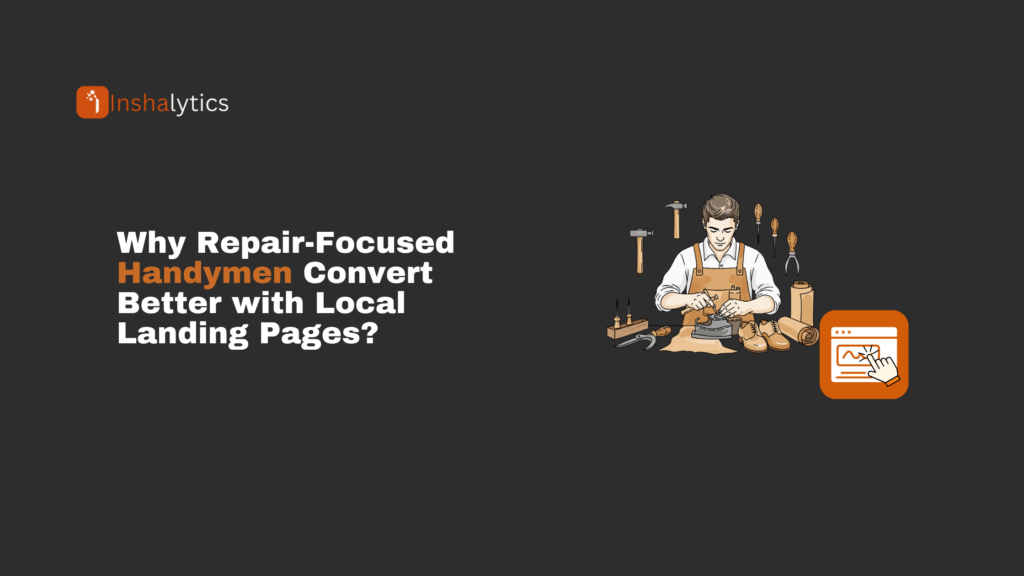
A homeowner in Cedar Park, Texas has a broken garbage disposal at 7 PM on a Tuesday. They grab their phone and search “garbage disposal repair Cedar Park.” Two handyman websites appear. One says “Handyman Services , We Do It All.” The other says “Cedar Park Appliance Repair Specialists , Same-Day Garbage Disposal Service.” Here is why local landing pages for handymen turn those urgent searches into booked jobs.
Which one gets the call?
The specialist wins almost every time. And when that specialist has a dedicated local landing page for Cedar Park , not just a generic service page mentioning fifty cities , they convert at rates that leave generalist competitors wondering where all their leads went.
This is the compounding advantage repair-focused handymen unlock when they combine niche expertise with location-specific landing pages. The math is simple: specialization builds trust, local pages capture intent, and together they create a conversion engine that turns searchers into paying customers.
Navigate This Post
What Makes Repair-Focused Handymen Different from General Handymen?
The handyman industry splits into two camps. On one side, you have the “jack of all trades” operators marketing themselves with phrases like “no job too small” and “I do it all.” On the other, you have specialists who focus on specific repair categories , appliance repair, drywall and patching, door and window fixes, or plumbing repairs.
The income gap between these two approaches tells the story. General handymen typically earn in the lower range of the industry, while specialists command premium rates and stay booked weeks in advance.
The Specialist Advantage in Home Repair Services
Homeowners searching for someone to fix a specific problem want confidence, not versatility. When a refrigerator stops cooling or a deck railing feels wobbly, they are not looking for someone who “could probably handle it.” They want someone who has fixed this exact problem hundreds of times.
Repair-focused handymen develop efficiency through repetition. They know which parts fail most often, carry the right tools, and complete jobs faster because they have done the same repair dozens of times before. This efficiency translates directly into profitability; faster jobs mean more jobs per day, and expertise justifies higher rates.
The trust factor matters even more than speed. A homeowner will pay more for a specialist because the perceived risk drops dramatically. Nobody wants to hire a generalist for a four-figure appliance repair and hope for the best.
Why Niche Expertise Commands Higher Trust and Rates?
Specialization creates a reputation flywheel. When you focus on specific repairs, satisfied customers refer you to neighbors with the same problems. Your reviews accumulate around specific services, building social proof that speaks directly to prospects with matching needs.
This word-of-mouth effect compounds over time. A handyman known for deck repairs in a specific neighborhood becomes the default choice for every deck problem in that area. The generalist down the street might be equally capable, but they are invisible when homeowners ask their neighbors for recommendations.
Specialized handymen also avoid the quoting trap that drains generalist profits. When you handle dozens of different job types, estimating becomes guesswork. You underprice unfamiliar jobs and lose money, or overprice and lose bids. Specialists know exactly how long each repair takes and price with confidence.
How Local Landing Pages Drive Higher Conversion Rates for Service Businesses?
A local landing page is a dedicated web page optimized for a specific geographic area. Instead of one generic “Services” page trying to rank everywhere, you create individual pages for each city, town, or neighborhood you serve.
For service businesses like handyman operations, this strategy transforms how potential customers find and choose you. The difference between ranking for “handyman services” and ranking for “appliance repair in Pflugerville” is the difference between competing with everyone and dominating your territory.
The Psychology Behind Local Search Intent
People searching for local services behave fundamentally differently from those browsing for information. When someone types “emergency plumber near me” at 10 PM, they are not researching; they are ready to hire immediately. The urgency is real, the intent is clear, and the decision happens fast.
Local searches carry this urgency across nearly every home service category. A search for “broken window repair Austin” comes from someone staring at a broken window who needs it fixed today. Generic content about window repair techniques does not help them. They need a local expert who can show up and solve the problem.
This intent difference explains why local pages convert at dramatically higher rates than generic service pages. The visitor has already decided they need help. Your only job is to prove you are the right local choice.
Why 88% of Local Searchers Take Action Within 24 Hours?
Google’s research on local search behavior reveals a staggering statistic: 88% of consumers who conduct a local search on their smartphone visit or call a business within 24 hours. This is not casual browsing. This is purchase-ready behavior.
For repair-focused handymen, this urgency works in your favor, but only if you appear when and where these searches happen. A homeowner with a running toilet at midnight is not going to scroll through pages of generic results. They will call the first credible local option they find.
Local landing pages position you to capture this immediate-action traffic. When your page specifically addresses “toilet repair in Round Rock” and appears at the top of results for that exact search, you become the obvious choice for someone who needs that exact service in that exact location.
Why Generic Service Pages Fail Repair-Focused Handymen?
Most handyman websites make the same mistake: they create one service page, mention every city they serve in a footer list, and expect Google to figure out the rest. This approach fails for two reasons: it confuses search engines, and it fails to connect with local customers.
The Problem with One-Size-Fits-All Website Content
Search engines struggle to determine relevance when a single page tries to target multiple locations. If your “Appliance Repair” page mentions Austin, Round Rock, Cedar Park, Georgetown, and Pflugerville all in the same content, Google has no clear signal about which location you serve best.
The result is mediocre rankings across all locations instead of strong rankings in any single market. You become a generalist in Google’s eyes even if your actual service is highly specialized.
Worse, potential customers sense this generic approach immediately. A Cedar Park homeowner landing on a page that vaguely mentions “serving the greater Austin area” feels less confident than one landing on a page specifically about Cedar Park appliance repair. The generic page says, “We might come to your area.” The local page says, “We know your neighborhood.”
How Diluted Messaging Loses High-Intent Customers?
Every word on a generic service page must apply to every location, which means no word can speak specifically to any location. You cannot mention local landmarks, reference neighborhood-specific housing issues, or address the particular concerns of customers in each area.
This dilution kills conversion rates. A homeowner in an older Georgetown neighborhood with galvanized plumbing has different concerns than someone in a new Leander development. A page that speaks to neither specifically will lose both to competitors who address their exact situation.
High-intent local searchers want to feel understood. They want to know you have worked in their area, understand their local challenges, and can respond quickly because you are nearby. Generic pages cannot deliver this reassurance, no matter how well-written they are.
How to Build Local Landing Pages That Convert for Handyman Services?
Creating effective local landing pages requires more than adding city names to existing content. Each page needs unique, locally relevant information that demonstrates genuine expertise in serving that specific area.
Essential Elements of a High-Converting Local Service Page
The structure of your local landing page should guide visitors from initial interest to contact as quickly as possible. Above the fold, the portion visible without scrolling, needs to accomplish three things: confirm you serve their location, establish your specialty, and make contacting you effortless.
Your headline should combine service and location explicitly. “Cedar Park Garbage Disposal Repair, Same-Day Service” tells visitors exactly what you do and where you do it within seconds of landing on the page.
Below the headline, include a brief introduction that reinforces your local expertise. Mention how long you have served the area, reference specific neighborhoods or housing developments you have worked in, and establish why local customers choose you over competitors.
The page body should cover your specific repair services in detail, explain your process, and address common customer concerns. Include pricing transparency where possible, even a starting price or price range, to reduce friction and attract serious buyers while filtering tire-kickers.
Optimizing Your NAP Information and Service Area Details
NAP stands for Name, Address, and Phone Number, the foundational local SEO elements that must remain consistent across your website and all online directories. On each local landing page, display your business name, the physical address (or service area designation if you operate as a service-area business), and a clickable phone number prominently.
For repair-focused handymen covering multiple areas, specify your service radius from your base location or list the specific cities and neighborhoods you serve. Be precise rather than vague. “Serving Cedar Park, Leander, and Northwest Austin within 20 miles of our base” builds more confidence than “Serving the greater Austin metro.”
Include an embedded Google Map showing your service area. This visual confirmation reassures visitors that you actually cover their location and provides another local relevance signal to search engines.
Adding Social Proof and Local Trust Signals
Reviews and testimonials become exponentially more powerful when they reference specific locations. A five-star review mentioning “fixed our dishwasher in Pflugerville” speaks directly to other Pflugerville residents considering your service.
Feature location-specific reviews on each local landing page. If you have worked in that area, showcase testimonials from customers in that exact city or neighborhood. If you are expanding into a new area, feature reviews from nearby locations to demonstrate quality while you build local proof.
Display trust badges relevant to your services, licensing information, insurance verification, manufacturer certifications, and membership in professional associations. These credibility markers reduce perceived risk and justify your premium pricing.
Crafting Location-Specific Calls to Action
Your calls to action should reflect the urgency of local repair searches. Generic CTAs like “Learn More” waste the high intent that brought visitors to your page. Instead, use action-oriented language that matches what customers want to do: “Call Now for Same-Day Repair” or “Schedule Your Cedar Park Service Visit.”
Include multiple contact options, phone number, contact form, and text message if you offer it. Different customers prefer different communication methods, and making contact easy from any preference removes friction from conversion.
Position your primary CTA above the fold and repeat it throughout the page. A visitor ready to call should never need to scroll to find your phone number.
Local SEO Strategies That Put Repair Handymen at the Top of Search Results
Building local landing pages creates the foundation. Optimizing those pages for local search ensures they actually appear when customers need them.
Targeting City-Specific Keywords for Each Service Area
Keyword research for local pages focuses on combining your repair specialty with each location you serve. The pattern is straightforward: [service] + captures the exact searches your ideal customers make.
For a garbage disposal repair specialist serving the Austin suburbs, target keywords would include “garbage disposal repair Cedar Park,” “garbage disposal installation Round Rock,” “disposal replacement Pflugerville,” and similar combinations for each service area.
Long-tail variations capture even more specific intent. “Same day garbage disposal repair Cedar Park” or “emergency disposal fix near me” attract customers with immediate needs and high conversion potential.
Use these keywords naturally throughout your page, in the title tag, meta description, H1 heading, first paragraph, and scattered through the body content. Avoid keyword stuffing, which search engines penalize, but ensure the location-service combination appears in all the places search engines check for relevance.
Google Business Profile Optimization for Multi-Area Coverage
Your Google Business Profile acts as the hub of your local search presence. For repair-focused handymen, optimizing this profile correctly determines whether you appear in the map pack results that dominate local searches.
Complete every section of your profile with accurate, detailed information. Choose primary and secondary categories that match your repair specialties. Add all the service areas you cover. Upload high-quality photos of your work, your vehicle, and yourself. Real images build trust far more than stock photos.
Post regularly to your profile with updates about services, seasonal tips, and completed projects. These posts signal to Google that your business is active and engaged, which improves your visibility in local results.
Respond to every review, positive or negative. Thank satisfied customers specifically for what you helped them with. Address negative reviews professionally and offer to make things right. This engagement demonstrates customer service quality and keeps your profile active.
Building Local Citations and Backlinks That Matter
Citations are mentions of your business name, address, and phone number on other websites, directories, industry associations, local business listings, and similar sources. Consistent citations across the web confirm your legitimacy to search engines and improve local rankings.
Start with the major directories: Google Business Profile, Yelp, Angi, Thumbtack, HomeAdvisor, and the Better Business Bureau. Ensure your NAP information matches exactly across all platforms. Even small discrepancies, “Street” versus “St.” or different phone number formats, can confuse search engines and dilute your local authority.
Local backlinks carry particular weight for service-area businesses. Seek links from local business associations, chamber of commerce websites, neighborhood blogs, and community organizations. A link from your city’s small business directory signals local relevance more powerfully than a generic industry link.
How Many Local Landing Pages Does Your Handyman Business Need?
The question of scale depends on your service area size and the number of distinct repair categories you offer. Too few pages leaves local traffic on the table. Too many pages with thin content triggers search engine penalties.
The Service-Times-Location Formula for Page Planning
A practical formula: create one landing page for each primary service in each significant service area. If you offer three core repair specialties and serve five cities, that suggests fifteen local landing pages.
Prioritize based on population and competition. Larger cities warrant dedicated pages immediately. Smaller towns or neighborhoods can share pages initially, then receive dedicated pages as your business grows and you accumulate location-specific reviews and content.
Quality always beats quantity. Five excellent local pages will outperform fifty thin pages that merely swap city names. Search engines increasingly penalize obvious template pages with minimal unique content.
Avoiding Thin Content Penalties with Unique Localized Content
Each local landing page needs genuinely unique content, not just the same text with different city names inserted. This requirement takes effort but delivers compounding returns.
Differentiate pages by referencing local specifics: common housing types in each area, neighborhood-specific issues you have encountered, local landmarks that help customers direct you, and testimonials from customers in that specific location.
Discuss how your service applies to local conditions. Older neighborhoods might have more vintage appliance repairs. New developments might need installation services. Mentioning these specifics proves you actually know and serve each area.
Keep location pages to roughly 20% or less of your total site content. A site with fifty thin location pages and little else looks like a spam operation to search engines. Balance local pages with robust service descriptions, helpful blog content, and other substantive pages.
Measuring Success: Conversion Metrics for Handyman Local Pages
Building local pages means nothing without tracking their performance. The data tells you which locations convert best, which pages need improvement, and where to focus your expansion efforts.
Tracking Calls, Form Fills, and Booking Rates by Location
Set up call tracking with unique phone numbers for each local landing page. This reveals exactly which locations generate calls and which underperform despite traffic. A page with high traffic but few calls needs conversion optimization. A page with few visits but high conversion rates needs more traffic.
Track form submissions by source page to understand which locations produce the most quote requests. Compare inquiry quality across locations; some areas may produce more serious buyers, while others generate tire-kickers.
If you use scheduling software, monitor booking rates by location. This end-to-end view shows not just who contacts you but who actually becomes a paying customer. Some locations may convert browsers to callers easily but struggle to convert callers to bookings.
Benchmarking Your Performance Against Industry Standards
Home service businesses typically see website conversion rates between 2% and 5%, with well-optimized local pages reaching 4% to 6% or higher. If your local pages convert below 2%, something is blocking visitors from taking action, such as slow load times, missing trust signals, or weak calls to action.
Compare performance across your own pages before worrying about industry benchmarks. Your best-performing local page reveals what works for your specific business. Apply those lessons to underperforming pages.
Track trends over time rather than obsessing over daily fluctuations. Local SEO takes months to show results. A page ranking poorly today may climb steadily over six months as it accumulates authority and reviews.
Why DIY Local SEO Falls Short for Busy Handymen?
The strategy behind local landing pages is straightforward. The execution is where most handymen get stuck. Building, optimizing, and maintaining multiple location pages while running a repair business full-time stretches anyone thin.
The Hidden Time Cost of Managing Multiple Location Pages
Creating one high-quality local landing page takes several hours, keyword research, content writing, image optimization, schema markup, and technical setup. Multiply that by ten or twenty locations, and you are looking at weeks of work before a single page goes live.
Maintenance adds ongoing demands. Reviews need responses. Content needs updates. New competitors require monitoring. Google algorithm changes require adjustments. Each hour spent on website management is an hour not spent on billable repair work.
Most DIY efforts stall after initial enthusiasm fades. Handymen build a few pages, get busy with actual work, and let the website languish. Months later, competitors with consistent effort have passed them in rankings.
How Professional Local SEO Services Accelerate Results?
Working with a marketing team that specializes in local service businesses eliminates the execution bottleneck. The strategy you cannot find time to implement gets done correctly and consistently while you focus on serving customers.
At Inshalytics, we build conversion-optimized local landing pages for home service businesses as part of our comprehensive $500/month marketing solution. Repair-focused handymen get the local visibility they need without sacrificing billable hours to website work they are not trained for anyway.
Our all-in-one approach combines local landing page development with Google Business Profile optimization, citation building, review management, and ongoing SEO adjustments. Everything a handyman needs to dominate their service area comes in one package, no coordinating multiple vendors or trying to learn five different platforms.
The math makes sense when you calculate opportunity cost. Hours spent fumbling with website updates could generate hundreds of dollars in completed repairs. Paying professionals to handle marketing correctly costs less than the revenue lost to DIY inefficiency.
Frequently Asked Questions About Local Landing Pages for Handymen
What is a local landing page for handyman services?
A local landing page is a dedicated web page optimized for a specific city, town, or neighborhood you serve. Instead of one generic services page mentioning multiple locations, you create individual pages targeting searches like “appliance repair Cedar Park” or “handyman services Round Rock.” Each page contains location-specific content, local testimonials, and clear calls to action for customers in that area.
How do local landing pages improve conversion rates?
Local landing pages improve conversions by matching visitor intent precisely. Someone searching “garbage disposal repair Pflugerville” lands on a page specifically about garbage disposal repair in Pflugerville, not a generic page mentioning twenty cities. This relevance builds immediate trust and makes visitors confident that you serve their exact location with their exact need.
How many local pages should a handyman business have?
Start with one page per primary service for each major city you serve. A handyman offering three repair specialties across five cities would begin with fifteen local pages. Prioritize larger populations first, then expand to smaller towns and neighborhoods as you grow. Quality matters more than quantity; five excellent pages outperform fifty thin ones.
What makes repair specialists convert better than general handymen?
Repair specialists convert better because they match the specific intent behind most local service searches. Homeowners searching for “broken dishwasher repair” want a dishwasher expert, not a generalist who might be able to figure it out. Specialization signals expertise, reduces perceived risk, and justifies premium pricing, all factors that increase conversion rates.
How long does it take for local landing pages to rank?
New local landing pages typically take three to six months to achieve meaningful rankings, though this varies based on competition and your existing website authority. Pages targeting less competitive suburbs may rank faster than those targeting major cities. Consistent optimization, review accumulation, and citation building accelerate the timeline.
Stop Losing Local Customers to Competitors Who Show Up First
Every day without optimized local landing pages is a day your competitors capture customers who should be calling you. The repair-focused expertise you have built over years means nothing if homeowners cannot find you when their appliances break or their repairs become urgent.
The combination of niche specialization and local landing pages creates a conversion advantage that generalist competitors cannot match. You become the obvious local choice for customers with specific problems, exactly the high-intent, ready-to-buy traffic that keeps schedules full and profits healthy.
Related reading: Local SEO Tips for Fence & Deck Repair Handymen · Angi vs Thumbtack vs Google LSA for Handymen (2026) · Facebook & Instagram Lead Ads for Handymen: Are They Worth It
Inshalytics helps repair-focused handymen build the local online presence that converts searchers into paying customers. Our $500/month all-in-one marketing solution handles web development, local SEO, Google Business Profile optimization, and everything else you need to dominate your service area, so you can focus on what you do best.