Every handyman knows the frustration. You pay $25 for a lead, race to call back within minutes, and discover four other contractors are quoting the same job. The homeowner goes with whoever’s cheapest. You’re out $25 with nothing to show for it.
This is the reality of platforms like Angi, Thumbtack, and HomeAdvisor in 2026. What started as convenient lead sources have become expensive bidding wars where the platform always wins and handymen keep losing margin.
But here’s what’s changing: smart handyman businesses are building their own lead generation systems. They’re getting exclusive calls from homeowners who found them through Google, got referred by a neighbor, or saw their work on social media. These leads don’t come with competition attached. They come ready to hire.
This guide breaks down exactly how handymen are generating consistent, high-quality leads without paying per-lead platforms a dime. Whether you’re a solo operator or running a small crew, these strategies will help you take control of your lead flow and stop renting your business growth from third parties.
Navigate This Post
Why Handymen Are Ditching Pay-Per-Lead Platforms in 2026?
The math has stopped working for most handymen on lead generation platforms.
When Angi and Thumbtack first launched, they solved a real problem: connecting homeowners with service providers. Early adopters got quality leads at reasonable prices. But as more contractors joined, the platforms shifted their business model. Instead of matching one homeowner with one contractor, they started selling the same lead to multiple businesses.
Today, a single lead on these platforms typically goes to three to ten contractors simultaneously. Each one pays for that lead, whether they win the job or not. The platform’s profit regardless of who gets hired—or if anyone gets hired at all.
For handymen, this creates three major problems.
The hidden cost of shared leads. You’re not just competing on skill and reputation. You’re competing on who can respond fastest and quote the lowest. This rewards contractors who sit by their phones all day and undercut on price not those who do the best work.
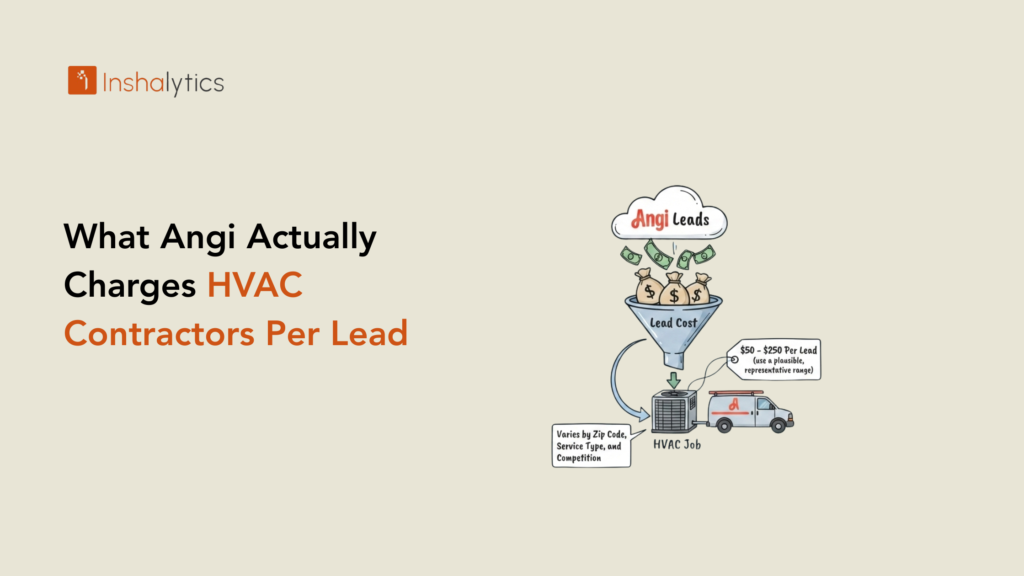
Average cost per lead keeps climbing. Handyman leads on Thumbtack now run $15 to $50, depending on the job type and location. On Angi, you’re looking at similar numbers plus potential subscription fees. When you factor in that only 20-30% of leads convert to actual jobs, your true cost per acquired customer can exceed $100.
The “race to respond” problem. Platforms favor contractors who respond within minutes. But if you’re actually working installing a ceiling fan or fixing a leaky faucet you can’t be glued to your phone. Solo operators consistently lose leads to larger companies with dedicated office staff.
The contractors winning in 2026 aren’t playing this game. They’ve built systems where leads come directly to them, already warmed up and ready to book.
The Real Cost of Relying on Lead Generation Platforms
Most handymen track their cost per lead. Few track their cost per booked job and that’s where the real financial damage shows up.
Let’s run the numbers on a typical month using pay-per-lead platforms:
- 40 leads purchased at $25 average = $1,000 spent
- 30% conversion rate = 12 jobs booked
- Cost per booked job = $83.33
That $83 comes straight off your profit margin on every single job. On a $300 repair, you’ve just given away nearly 28% of your revenue before you’ve even picked up a tool.
But the financial cost isn’t the only problem.
You’re building their brand, not yours. Every job you complete through Angi builds Angi’s reputation. The homeowner remembers, “I found a great handyman on Angi” rather than “I found a great handyman named Mike.” When they need work done again, they go back to the platform—not directly to you.
No relationship equity. Platform leads are transactional by design. The homeowner chose you because you were the cheapest or fastest, not because they trust your expertise. This makes upselling harder, repeat business less likely, and referrals almost nonexistent.
The feast-or-famine cycle. When you rely on platforms for leads, you’re at their mercy. Algorithm changes, increased competition, or a slow month can crater your lead flow overnight. You have no control over the faucet and the platform can turn it off whenever they want.
The handymen thriving in 2026 have diversified. They’ve built multiple lead sources they actually own, so no single platform can hold their business hostage.
7 Proven Lead Generation Strategies That Replace Angi and Thumbtack
These aren’t theoretical ideas. These are the exact strategies handyman businesses are using right now to generate consistent, exclusive leads without paying per-lead fees.
1. Google Business Profile: Your Most Powerful Free Asset
If you do nothing else from this guide, optimize your Google Business Profile. It’s free, it’s powerful, and it puts you directly in front of homeowners actively searching for handyman services.
When someone searches “handyman near me” or “home repair in [your city],” Google shows a map with three local businesses the Local 3-Pack. Getting into that pack means appearing at the exact moment homeowners are ready to hire. No platform fees. No competing bids. Just your phone ringing with ready-to-book customers.
Here’s how to optimize your profile for maximum visibility:
Complete every section. Google rewards complete profiles. Fill out your business description with keywords like “handyman services,” your city name, and specific services you offer. Add your service area, business hours, and all contact information.
Choose the right categories. “Handyman” should be your primary category. Add secondary categories for specific services: “Home Improvement Store,” “Remodeling Contractor,” “Furniture Repair Shop,” or whatever matches your specialty.
Upload photos weekly. Businesses with recent photos get 42% more direction requests. Post before-and-after shots, your work truck, your tools, yourself on the job. Real photos build trust and signal to Google that your business is active.
Get reviews consistently. Reviews are the single biggest factor in local search rankings. Ask every satisfied customer to leave a Google review. Make it easy text them a direct link to your review page. Aim for at least 2-3 new reviews per month.
Post weekly updates. Google Business Profile has a “Posts” feature that most handymen ignore. Use it to share recent projects, seasonal tips, or special offers. These posts show up in your profile and signal to Google that you’re an active, engaged business.
One handyman in Maryland went from page 3 to the Local 3-Pack in five months just by optimizing his profile and collecting reviews consistently. His monthly calls from Google went from 15 to over 100.
2. Google Local Services Ads: Pay-Per-Call, Not Pay-Per-Lead
Google Local Services Ads work differently from traditional pay-per-lead platforms—and the difference matters enormously for handymen.
With LSAs, you only pay when a potential customer actually calls you or messages you through the ad. Not when they view your listing. Not when they click. Only when they make contact. This eliminates the wasted spend on tire-kickers and price-shoppers who never intended to hire anyone.
Even better, LSAs come with the “Google Guaranteed” badge. This badge tells homeowners that Google has verified your business, checked your background, and will back jobs up to a certain amount if customers aren’t satisfied. It’s instant credibility that platforms like Angi can’t match.
Setting up LSAs for handyman services:
- Go to ads.google.com/local-services-ads and create an account
- Complete the background check and business verification (this takes 1-2 weeks)
- Set your service area and the specific services you offer
- Set a weekly budget based on how many leads you want
- Once approved, your ads appear at the very top of Google search results
Budget recommendations: Start with $500-$1,000 per month to test performance. Cost per lead varies by location, but most handymen report $20-$40 per call, with much higher conversion rates than platform leads because these callers specifically chose you.
Why pay-per-call beats pay-per-lead: When you pay per lead on Angi, you’re paying for information. When you pay per call on LSAs, you’re paying for a conversation. That conversation gives you the chance to build rapport, explain your value, and close the job without three competitors doing the same thing simultaneously.
3. Building a Website That Converts Visitors Into Calls
Your website is your 24/7 salesperson. It works while you’re sleeping, answers questions while you’re on a job, and builds credibility before prospects ever pick up the phone.
Too many handyman websites are glorified business cards: a logo, a phone number, and a list of services. That’s not enough in 2026. Your website needs to actively convert visitors into leads.
The 5 pages every handyman website needs:
- Homepage – Clear headline stating what you do and where. “Professional Handyman Services in [City]” works better than clever taglines. Include your phone number prominently and a clear call-to-action button.
- Services page – List every service you offer with brief descriptions. This helps with SEO (people search for “drywall repair ” and “furniture assembly “) and helps homeowners confirm you do what they need.
- About page – Your story, your experience, your credentials. People hire people they trust. A photo of yourself and your team makes your business feel real and reliable.
- Reviews/testimonials page – Showcase your best reviews from Google, Facebook, and anywhere else. Include customer names and locations when possible. Social proof is the most persuasive element on any service website.
- Contact page – Phone number, email, contact form, and service area. Make it impossible to miss how to reach you.
Local SEO basics: Include your city name throughout your website in headlines, page titles, and naturally within the text. Create separate pages for each major service if you want to rank for specific searches like “deck repair in Austin” or “toilet installation Denver.”
Mobile optimization is non-negotiable. 76% of homeowners search for local services on their phones. If your website is hard to read or slow to load on mobile, you’re losing the majority of potential customers before they even see your phone number.
Call-to-action placement: Put your phone number in the header of every page. Include “Call Now” or “Get a Free Estimate” buttons above the fold (visible without scrolling). Make the path from “I’m interested” to “I’m calling” as short as possible.
4. Nextdoor and Facebook Groups: Community-Based Lead Generation
When homeowners need a handyman recommendation, they don’t go to Angi first. They ask their neighbors. Nextdoor and local Facebook groups have become the digital version of asking over the fence and smart handymen are positioning themselves to be the answer.
Nextdoor strategy:
Nextdoor is built specifically for neighborhood connections. Claim your free Business Page and complete it fully: business description, service area, photos of your work, and contact information.
The magic of Nextdoor is recommendations. When one neighbor recommends your business, their entire network sees it. A single recommendation can generate three to five calls. To get recommendations, simply ask satisfied customers: “Would you mind recommending me on Nextdoor? It really helps my business.”
Post business updates twice per month (that’s the free limit). Share seasonal tips, recent project photos, or availability updates. Keep posts helpful rather than salesy Nextdoor users respond poorly to obvious advertising.
Consider Nextdoor’s paid advertising once you’ve established an organic presence. Their local ads are affordable ($3-10 per click) and hyper-targeted to specific neighborhoods in your service area.
Facebook Groups strategy:
Every city has multiple Facebook groups where members ask for contractor recommendations: community groups, buy/sell/trade groups, moms’ groups, and neighborhood groups. Search “[your city] community” or “[your city] recommendations” to find them.
Join these groups and contribute genuinely. Don’t just spam your services. Answer questions when people ask about home repairs. Share advice when someone’s wondering if they can DIY something. When people ask for handyman recommendations and they do, constantly either respond directly or wait for someone to tag you.
The key is being helpful first, promotional second. Groups with heavy self-promotion get annoying fast, and moderators will remove you. But a handyman who’s known for giving good advice? That person gets recommended by others.
Before-and-after posts: These perform incredibly well on both platforms. Show a broken deck railing and the beautiful repair you completed. Capture a cluttered garage and the organized space you created. Visual proof of your work sells better than any written description.
5. Strategic Partnerships With Realtors and Property Managers
Realtors and property managers need handymen on speed dial. They deal with constant small repairs: fixing things for home staging, handling tenant requests, and addressing inspection issues. Finding reliable contractors is one of their biggest headaches.
If you become their go-to handyman, you’ve created a recurring lead source that requires almost no marketing effort.
Why property managers are gold:
A single property management company might oversee 50-200 units. Each unit needs regular maintenance: leaky faucets, broken blinds, door repairs, and appliance issues. If you become their preferred handyman, you could fill your entire schedule from one relationship.
Property managers value reliability over price. They don’t want the cheapest contractor they want the one who shows up when promised, communicates clearly, and doesn’t create tenant complaints. If that’s you, they’ll keep calling.
The realtor connection:
Real estate agents constantly need small repairs handled quickly. Before a listing goes live, it needs touch-ups. Before closing, they need inspection items addressed. After closing, they want to give their buyers a trusted handyman referral.
Offer to be that trusted referral. Provide a small discount for clients who send your way or simply deliver excellent service so they’re confident recommending you.
Outreach email template:
Subject: Reliable Handyman Services for Your Properties
Hi [Name],
I’m [Your Name], a local handyman serving [City/Area]. I know property managers often need quick, reliable repairs and finding trustworthy contractors can be challenging.
I specialize in [your top 2-3 services] and pride myself on clear communication, on-time arrivals, and quality work. I’d love to be a resource for your maintenance needs.
Would you be open to a quick call to discuss how I might help with your properties?
Best, [Your Name] [Phone] [Website]
Send this to 20 property management companies and 20 real estate agents in your area. Even a 10% response rate gives you four new potential partners.
6. Email Marketing and Customer Reactivation
Your past customers are your easiest source of new business. They already know you. They already trust you. They just need a reminder that you exist.
Most handymen finish a job and never contact that customer again. That’s leaving money on the table.
Building your customer list:
Start collecting email addresses and phone numbers from every customer. Put them in a simple spreadsheet or use a free CRM like HubSpot. Include the date of service and what work you did.
Seasonal maintenance reminders:
Every three to four months, send a simple email to your customer list:
- Spring: “Time to check deck boards, clean gutters, and tune up outdoor fixtures.”
- Summer: “A/C maintenance, ceiling fan installations, and outdoor repair season.”
- Fall: “Weatherproofing, gutter cleaning, and getting your home ready for winte.r”
- Winter: “Indoor projects: shelving, painting, fixture upgrade.s”
These emails don’t need to be complicated. A few sentences reminding people of seasonal tasks, plus your phone number, will generate calls from customers who think, “Oh right, I’ve been meaning to get that fixed.”
The referral incentive that works:
Add a simple referral program: “Refer a friend, and you both get $25 off your next service.” Include this in every invoice, every follow-up email, and every completed job conversation.
Referral leads are the highest-quality leads you can get. They come pre-sold on your reputation. They don’t price shop. They are ready to book.
Automated follow-ups:
Use a simple email tool (Mailchimp’s free plan works fine) to send automatic follow-ups:
- 1 week after service: “Thanks for choosing [Business Name]! We’d love a review if you have a minute.”
- 6 months after service: “It’s been a while! Anything around the house that needs attention?”
- 1 year after service: “Annual check-in: here are seasonal maintenance items to consider.”
Set these up once, and they run forever, generating repeat business on autopilot.
7. Content Marketing and YouTube for Long-Term Authority
This strategy takes more time than the others but builds the strongest long-term asset: positioning yourself as the local expert.
When you create helpful content videos, blog posts, social media tips you’re doing two things. First, you’re showing up in search results when people look for help. Second, you’re building trust before they ever call.
YouTube for handymen:
You don’t need fancy equipment. A smartphone, decent lighting, and basic editing is enough.
Create short videos (3-5 minutes) answering common questions:
- “How to know if you need a handyman or a licensed plumber.”
- “5 things to check before calling for an electrical repair”
- “Is your deck safe? Warning signs to watch for”
Include your business name, city, and contact info in every video. End with a call-to-action: “If this is more than you want to tackle yourself, I’m [Name] with [Business], and I’m happy to help.”
These videos rank in both YouTube and Google search. Someone searching “deck repair warning signs” might find your video, appreciate the helpful information, and call you when they realize their deck needs professional attention.
Blog posts that generate leads:
If you have a website, add blog posts targeting local search terms:
- “Cost of Handyman Services in [City]: What to Expect in 2026”
- “Best [City] Handyman for Small Home Repairs”
- “How to Find a Reliable Handyman in [Neighborhood/City]”
These pages can rank for searches that bring highly qualified visitors directly to your website. Someone searching “handyman costs [your city]” is actively researching hiring a handyman. If your page answers their question and your phone number is right there, you’ve just earned a call without paying a dime.
How to Build a Lead Generation System (Instead of Renting Leads)
The difference between successful and struggling handymen in 2026 comes down to one distinction: owned versus rented lead sources.
Rented lead sources are platforms like Angi, Thumbtack, and HomeAdvisor. You pay for access to leads they control. They can raise prices, change algorithms, or shut down your account anytime. You’re renting your business growth from someone else.
Owned lead sources are assets you control: your Google Business Profile, your website, your customer email list, your reputation on Nextdoor, and your relationships with property managers. These don’t disappear if a platform changes its rules. They compound over time, becoming more valuable the longer you invest in them.
The goal isn’t to pick one strategy and ignore the rest. It’s to build multiple lead “faucets,” so your business stays healthy even if one source slows down.
A balanced lead generation system might look like:
- 30% from Google (organic search + Local Services Ads)
- 25% from referrals and repeat customers
- 20% from Nextdoor and Facebook
- 15% from property manager relationships
- 10% from other sources (website, YouTube, etc.)
No single source dominates. If Google changes its algorithm, you still have referrals. If a property manager switches to another handyman, you still have social media.
Monthly time investment:
- Google Business Profile: 1-2 hours (posting updates, responding to reviews)
- Social media: 2-3 hours (posting in groups, sharing project photos)
- Email marketing: 1 hour (monthly customer email)
- Relationship building: 2-3 hours (following up with realtors/property managers)
That’s 6-9 hours per month far less time than most handymen spend managing platform leads and chasing bad prospects.
What to Do With Your First 90 Days Off Lead Platforms?
Transitioning away from Angi and Thumbtack doesn’t happen overnight. Here’s a week-by-week plan for building your own lead generation system while maintaining your current revenue.
Weeks 1-4: Build the Foundation
- Claim and fully optimize your Google Business Profile
- Set up or improve your website with all five essential pages
- Create listings on free directories: Yelp, Bing Places, Apple Maps
- Start asking every customer for a Google review
- Collect email addresses from all past customers you can remember
During this phase, keep your platform subscriptions active. You’re building infrastructure, not yet generating replacement leads.
Weeks 5-8: Create Visibility
- Apply for Google Local Services Ads and complete verification
- Claim your Nextdoor Business Page and ask three past customers for recommendations
- Join five to ten local Facebook groups and start contributing helpfully
- Send your first property manager/realtor outreach emails
- Post your first before-and-after project photos on social media
By now, you should see early signs of new lead sources: a few calls from Google, some Nextdoor inquiries, maybe a property manager interested in talking.
Weeks 9-12: Build Relationships
- Follow up with any realtors or property managers who showed interest
- Send your first email to your past customer list
- Launch your referral program
- Reduce platform spending by 25-50% and monitor whether new sources compensate
- Create your first piece of content (YouTube video or blog post)
At the 90-day mark, evaluate where your leads are coming from. Most handymen find they can reduce platform spending significantly if not eliminate it entirely once their owned sources are generating consistently.
Tracking Your Lead Sources: Know What’s Actually Working
You can’t improve what you don’t measure. Simple lead tracking helps you understand which sources are worth your time and which are underperforming.
The easiest tracking method:
Ask every caller: “How did you find us?”
Write down the answer. That’s it.
At the end of each month, tally your leads by source:
- Google search: 12 leads
- Nextdoor: 6 leads
- Referrals: 8 leads
- Facebook: 4 leads
- Property manager: 5 leads
Now you know where to focus more effort (Google is working great) and where to improve or abandon (Facebook needs more attention or isn’t worth it for your market).
For more detailed tracking:
Use a free CRM like HubSpot to log every lead with their source, the job value, and whether they converted. This lets you calculate cost per lead and return on investment by channel.
Use different phone numbers for different sources. Services like CallRail let you create tracking numbers so you know exactly which leads came from your website versus your Google profile versus your business cards.
Monthly review habit: Spend 30 minutes at the end of each month reviewing your lead sources. Ask yourself:
- Which source brought the most leads?
- Which source brought the highest-value jobs?
- Which source has the best conversion rate?
- Where should I invest more time next month?
Common Mistakes When Leaving Angi and Thumbtack
Transitioning away from lead platforms is straightforward, but several mistakes can derail your progress.
Going cold turkey too fast. Don’t cancel all platform subscriptions on day one. Build your alternative lead sources first, verify they’re generating calls, then gradually reduce platform spending. A sudden stop with no replacement creates a revenue gap that’s hard to recover from.
Neglecting Google reviews. Reviews are the currency of local search. If you stop asking for reviews during your transition, your Google visibility will stall. Make review requests part of your standard operating procedure every job, every time.
Competing on price instead of value. Platform leads condition handymen to compete on price because that’s what wins in a competitive bidding environment. But direct leads don’t require price competition. These customers chose you specifically. Charge what you’re worth and focus on selling value: reliability, quality, communication, and guarantee.
Not following up with past customers. Your existing customer database is your warmest lead source. If you’re not emailing them at least quarterly, you’re ignoring people who already want to hire you again. This is the lowest-hanging fruit in your entire lead generation strategy.
Expecting instant results. Owned lead sources take time to build momentum. SEO doesn’t work overnight. Reputation on Nextdoor grows gradually. Relationships with property managers develop over multiple conversations. Give each strategy at least 90 days before judging its effectiveness.
Forgetting to track results. If you don’t track where leads come from, you’ll waste time on ineffective strategies and underinvest in what’s working. Even basic tracking (asking “how did you find us?”) prevents this mistake.
FAQs: Getting Handyman Leads Without Lead Generation Sites
How long does it take to rank on Google for handyman searches?
Most handymen see meaningful improvement in Google visibility within three to six months of consistent effort. The timeline depends on competition in your market, how optimized your Google Business Profile is, and how consistently you collect reviews. In less competitive suburban markets, you can reach the Local 3-Pack in 60-90 days. In major cities with heavy competition, expect six months to a year of sustained effort.
Can I really compete with companies using Angi and Thumbtack?
Absolutely and you’ll often have an advantage. Platform leads are conditioned to expect low prices and impersonal service. Direct leads who find you through Google, Nextdoor, or referrals chose you specifically. They’re not simultaneously comparing five other quotes. This makes them easier to close at higher prices. Many handymen report that direct leads have average job values 20-30% higher than platform leads.
What’s the minimum budget to generate leads without platforms?
You can start with almost nothing. Optimizing your Google Business Profile is free. Nextdoor Business Pages are free. Facebook groups are free. Asking for referrals is free. If you want to accelerate results, $500-$1,000 per month on Google Local Services Ads is a reasonable starting point. But even with zero advertising budget, you can build a steady lead flow through organic strategies it just takes more time.
Should I completely quit Angi/Thumbtack or just reduce reliance?
Reduce rather than eliminate, at least initially. Keep a minimal presence on one platform as a backup and fill-in source while your owned lead channels develop. Once you’re consistently generating more leads than you can handle from direct sources, you can consider dropping platforms entirely. Many successful handymen maintain a small platform presence for seasonal fluctuations or last-minute scheduling gaps.
How do I get reviews without a customer base?
Start with anyone who’s hired you, even informally. Friends, family, neighbors you’ve helped ask them to leave honest reviews on Google. Then make review requests part of your process for every job going forward. Most customers are happy to leave a review if you make it easy (text them a direct link) and ask at the right moment (right after you’ve finished a job they’re happy with). Even five to ten genuine reviews will dramatically improve your local search visibility.
Ready to Take Control of Your Lead Generation?
The handyman businesses thriving in 2026 aren’t the ones paying the most for leads. They’re the ones who’ve built systems that generate leads without per-lead fees.
Recap of what works:
- A fully optimized Google Business Profile that gets you into local search results
- Google Local Services Ads that bring high-intent calls at reasonable costs
- A professional website that converts visitors into leads
- Active presence on Nextdoor and local Facebook groups
- Strategic partnerships with realtors and property managers
- Email marketing that reactivates past customers
- Content that positions you as the local expert
You don’t need to implement everything at once. Start with your Google Business Profile it’s free, and it’s the highest-impact single change you can make. Add one additional strategy each month. Within six months, you’ll have a diversified lead generation system that doesn’t depend on any single platform.
The leads are out there. Homeowners still need handymen. The only question is whether they find you directly or find you through a platform that takes a cut of your hard-earned money.