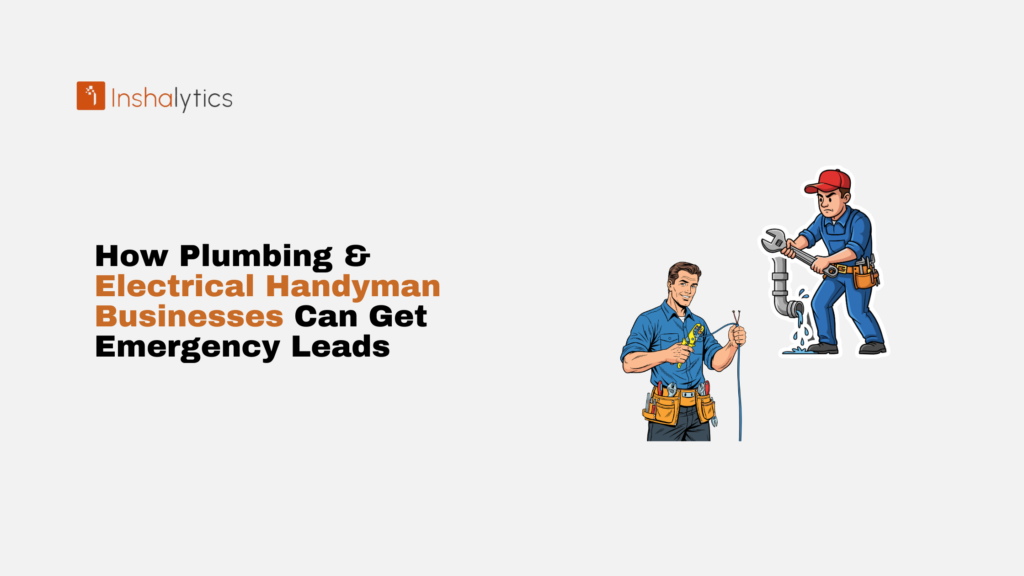
When a pipe bursts at 2 AM or the power goes out during a dinner party, homeowners don’t browse through multiple pages of search results. They grab their phone and call the first professional they find. For plumbing and electrical handyman businesses, these emergency calls represent some of the most valuable leads in the home services industry and most businesses are completely unprepared to capture them.
Emergency leads convert faster, pay more, and often turn into loyal repeat customers. Yet the majority of handyman businesses offering plumbing and electrical services treat their marketing the same way they’d market a kitchen remodel or deck repair. That’s a costly mistake.
This guide breaks down exactly how to position your handyman business to capture emergency plumbing and electrical leads when customers need help immediately and how to turn those urgent calls into a sustainable revenue stream.
Navigate This Post
Why Emergency Leads Are the Most Profitable Calls for Your Handyman Business?
Emergency repairs aren’t just another service category. They represent a fundamentally different business opportunity with economics that can transform your bottom line.
Premium Pricing That Customers Expect to Pay
When someone’s basement is flooding or their electrical panel is sparking, they’re not shopping around for the best price. They need help now. This urgency shifts the entire dynamic of the transaction in your favor.
Most handyman businesses can charge 2-3x their standard rates for emergency calls, and customers expect to pay premium prices for immediate response. A standard electrical outlet repair might bring in $150 during normal business hours. That same repair at 11 PM on a Saturday? You can charge $350-450, and the customer will thank you for showing up.
Less Competition During Off-Hours
The competition drops dramatically during off-hours. While dozens of contractors might compete for a scheduled bathroom renovation, far fewer are willing to answer their phone at midnight. If you’re one of the few who do, you’ll capture business that would otherwise go to whoever happens to be available.
Higher Conversion Rates From High-Intent Searches
Emergency customers convert at significantly higher rates than standard leads. Someone searching for “emergency plumber near me” isn’t researching for a future project—they have water actively damaging their home and need someone within the hour. These high-intent searches mean less time qualifying leads and more time doing billable work.
Lifetime Customer Value Starts With One Emergency Call
Perhaps most importantly, emergency calls create lasting customer relationships. When you show up at 3 AM to fix a burst pipe and save someone’s hardwood floors, you become their go-to contractor for everything else. That one emergency call often leads to years of repeat business and referrals.
What Makes Emergency Lead Generation Different From Standard Marketing?
Traditional handyman marketing focuses on building awareness over time. You optimize your website, collect reviews, run some ads, and wait for customers to find you when they’re ready to start a project. Emergency lead generation requires a completely different mindset.
Speed Determines Everything
The average homeowner dealing with a plumbing or electrical emergency will call the first 2-3 businesses they find and hire whoever answers and can arrive fastest. If your phone goes to voicemail or your website makes it hard to contact you, that lead is gone—probably forever.
Your Marketing Must Work Around the Clock
Most plumbing emergencies happen in the evening or on weekends when people are actually home to notice problems. Electrical issues often surface during storms or extreme weather. If your online presence goes dark after 5 PM, you’re invisible during peak emergency hours.
Mobile-First Isn’t Optional—It’s Mandatory
Someone dealing with a flooded bathroom isn’t sitting at their desktop computer researching contractors. They’re standing in two inches of water, phone in hand, searching for immediate help. Your website needs to load instantly on mobile devices and make it effortless to call you with a single tap.
Trust Signals Carry Extra Weight
Customers hiring for scheduled work have time to read reviews, check references, and compare options. Emergency customers need to make a split-second decision about letting a stranger into their home at odd hours. Visible licensing, insurance information, and professional branding can make the difference between getting the call and losing it to a competitor.
Emotional State Changes Everything
The emotional state of emergency customers differs dramatically from standard leads. They’re stressed, sometimes panicked, and dealing with an active crisis. Your marketing messaging needs to acknowledge this reality and immediately communicate that you can solve their problem quickly and professionally.
How to Optimize Your Google Business Profile for Emergency Plumbing & Electrical Calls?
Your Google Business Profile is the single most important asset for capturing emergency leads. When someone searches for “emergency plumber near me” or “24 hour electrician,” Google’s local pack results dominate the screen—and your GBP determines whether you appear there.
Strategic Business Naming
While you shouldn’t stuff keywords inappropriately, businesses with relevant terms in their name do tend to perform better for those searches. If your business legitimately offers emergency services as a core specialty, consider whether your branding reflects that. “Johnson’s 24/7 Plumbing & Electrical” will naturally rank better for emergency searches than “Johnson’s Home Services.”
Category Selection That Triggers Emergency Searches
Google allows you to choose primary and secondary business categories, and these directly influence which searches trigger your listing. For emergency plumbing and electrical leads, make sure you’ve selected the most specific relevant categories: “Emergency Plumber,” “24 Hour Plumber,” “Emergency Electrician,” and similar options where available. Don’t just default to generic “Handyman” if you offer licensed trade services.
Business Hours That Reflect Emergency Availability
Your business hours settings need to reflect emergency availability accurately. If you truly offer 24/7 service, set your hours accordingly. Google now shows “Open 24 hours” badges that catch attention in search results. If you offer extended hours but not round-the-clock service, still set your actual availability; being open until 10 PM gives you an advantage over competitors who close at 5.
Services Section Optimization
The services section of your GBP should explicitly list emergency offerings. Add specific services like “Emergency Pipe Repair,” “After-Hours Electrical Service,” “24/7 Water Heater Repair,” and “Emergency Circuit Breaker Replacement.” These service listings help Google understand when to show your business and give customers confidence that you handle their specific problem.
Photos That Showcase Emergency Work
Photos on your GBP should showcase emergency work when possible. Images of your team responding to after-hours calls, before-and-after shots of emergency repairs, and photos of your service vehicles with visible emergency contact information all reinforce your positioning. Customers scrolling through local results at 2 AM want visual confirmation that you actually handle urgent situations.
Review Generation From Emergency Customers
Review generation from emergency customers deserves special attention. A review that specifically mentions “they came out at midnight when my basement was flooding” or “answered immediately when our power went out” carries tremendous weight with future emergency customers. After completing emergency jobs, make a point to request reviews and gently suggest they mention the circumstances.
Keep your GBP information current and respond to all reviews promptly. Google rewards active, well-maintained profiles with better visibility. A business that responds to reviews within hours signals to both Google and potential customers that you’re attentive and professional.
Local SEO Strategies to Rank for “Emergency Plumber/Electrician Near Me”
Beyond your Google Business Profile, your website’s local SEO determines whether you capture organic traffic from emergency searches. The strategies here differ meaningfully from standard local SEO because emergency searches have distinct patterns and intent.
Dedicated Emergency Service Pages
Create dedicated emergency service pages for each trade you offer. Don’t bury your emergency plumbing and electrical services on a general “Services” page. Build standalone pages specifically targeting emergency keywords: “Emergency Plumbing Services in [City],” “24/7 Electrical Repair [City],” and similar variations. Each page should thoroughly address the specific emergencies you handle, your response times, and why customers should choose you for urgent situations.
Location-Specific Emergency Landing Pages
These emergency pages need location-specific content to rank in your service areas. If you serve multiple cities or neighborhoods, consider creating emergency landing pages for each significant area. “Emergency Electrician in [Neighborhood]” pages help you capture hyperlocal searches from customers who want someone nearby. Just ensure each page has genuinely unique content rather than duplicated text with swapped city names.
Schema Markup for Emergency Availability
Implement schema markup to help search engines understand your emergency availability. LocalBusiness schema should include your hours of operation, service areas, and contact information. You can also use the “hasOfferCatalog” property to specify emergency services. This structured data helps Google display rich results that highlight your 24/7 availability directly in search listings.
Problem-Based Keyword Targeting
Target the specific emergency keywords your customers actually search. Beyond obvious terms like “emergency plumber,” think about problem-based searches: “burst pipe repair,” “no hot water emergency,” “power outage electrician,” “sparking outlet repair.” People in crisis often search for their specific problem rather than a generic service category. Your content should address these specific scenarios.
Citation Building on Emergency-Focused Directories
Build citations on directories that matter for emergency services. While general business directories help, prioritize platforms where people actually look for urgent help: Yelp, Angi, HomeAdvisor, Thumbtack, and Nextdoor all see significant emergency service searches. Ensure your listings on these platforms emphasize your emergency availability and maintain consistent NAP (name, address, phone) information across all citations.
Local Link Building for Emergency Services
Local link building for emergency services follows different patterns than standard SEO. Partner with property management companies, real estate agencies, and insurance providers who regularly encounter clients with urgent repair needs. These relationships can generate both referrals and valuable local backlinks. Local news coverage of extreme weather events or community emergency preparedness can also create link opportunities.
Page Speed as a Ranking Factor
Page speed optimization becomes even more critical for emergency pages. Someone searching at 2 AM with water flooding their home won’t wait three seconds for your site to load—they’ll hit back and call your competitor. Aim for sub-two-second load times on mobile devices, compress images aggressively, and eliminate any elements that slow rendering.
Google Ads and LSAs for Immediate Emergency Lead Flow
While organic SEO builds long-term visibility, paid advertising delivers emergency leads immediately. For plumbing and electrical handyman businesses, two Google advertising products deserve your attention: traditional Google Ads and Google Local Services Ads.
Google Local Services Ads: The Emergency Lead Powerhouse
Google Local Services Ads appear at the very top of search results with a “Google Guaranteed” or “Google Screened” badge. For emergency services, LSAs often outperform traditional ads because they combine prominent placement with built-in trust signals. Customers see your rating, review count, and Google’s verification badge—exactly what someone needs to feel confident calling an unfamiliar contractor at odd hours.
LSAs operate on a pay-per-lead model rather than pay-per-click, meaning you only pay when someone actually contacts your business through the ad. For emergency services with high intent and strong conversion rates, this model often delivers excellent ROI. You can also dispute invalid leads, ensuring you only pay for genuine opportunities.
Budget Allocation for After-Hours Visibility
Set your LSA budget to accommodate after-hours searches when competition drops, and conversion rates climb. Many contractors pause their ads in the evening, creatingan opportunity for businesses willing to stay visible around the clock. If you genuinely offer 24/7 service, your LSAs should run 24/7 too.
Traditional Google Ads for High-Intent Keywords
Traditional Google Ads complement LSAs by capturing additional search real estate and allowing more sophisticated targeting. For emergency keywords, focus your budget on high-intent terms that indicate immediate need: “emergency plumber now,” “electrician available today,” “24 hour [service] near me.” These keywords cost more per click but convert at dramatically higher rates than general searches.
Landing Page Optimization for Emergency Traffic
Build dedicated landing pages for your emergency ad campaigns rather than sending traffic to your homepage. An emergency plumber ad should land on a page specifically about emergency plumbing services, with a prominent phone number, clear value proposition, and minimal distractions. Every extra click or scroll required reduces your conversion rate with impatient emergency searchers.
Call Tracking Implementation
Implement call tracking to understand which keywords and ads generate actual phone calls. Emergency customers rarely fill out contact forms—they call immediately or move on. Without call tracking, you can’t accurately measure ROI or optimize your campaigns. Most call tracking platforms integrate with Google Ads to attribute phone conversions to specific keywords and ads.
Dayparting and Geographic Targeting
Consider dayparting your bids to increase visibility during peak emergency hours. Plumbing emergencies spike in evenings and weekends when people are home. Electrical emergencies often correlate with storms and extreme weather. Increasing your bids during these windows can capture more high-value leads without wasting budget during slow periods.
Geographic targeting for emergency campaigns should be tighter than standard advertising. Someone searching for emergency help at 3 AM wants a contractor within a 10-15 minute drive, not across the metro area. Use radius targeting around your service base and consider separate campaigns for different zones with adjusted bids based on travel distance.
Website Features That Convert Emergency Searchers Into Booked Jobs
Your website has roughly five seconds to convince an emergency searcher to call you instead of hitting back and trying the next result. Every element of your site needs to support immediate conversion.
Phone Number Visibility and Click-to-Call
Your phone number must be impossible to miss. On mobile devices, it should appear prominently in the header and remain visible as users scroll. Make it a tap-to-call link so visitors can connect with a single touch—any friction loses leads. Consider using a larger font size for your phone number than any other element on the page.
Response Time Guarantees
Response time guarantees provide the immediate reassurance emergency customers need. Prominently display commitments like “60-Minute Response Time” or “We Answer Our Phone 24/7.” These guarantees address the core anxiety of emergency customers: they need to know help is actually coming quickly, not that they’ll leave a voicemail and wait until morning.
Trust Signals Above the Fold
Trust signals need to appear above the fold on every page. Display your contractor’s license, insurance coverage, years in business, and any industry certifications immediately. Emergency customers are making quick decisions about letting strangers into their homes—visible credentials reduce that friction. Badges from trusted sources like the BBB, trade associations, or manufacturer certifications all add credibility.
Mobile Experience Optimization
Mobile experience determines your emergency conversion rate. Over 75% of emergency service searches happen on phones, and that percentage increases dramatically during actual emergencies. Test your site on multiple devices, eliminate any elements that don’t render properly on small screens, and ensure buttons and links have adequate tap targets.
Live Chat and Text Options
Live chat or instant messaging can capture leads who prefer texting over calling. Some customers, particularly younger homeowners, feel more comfortable initiating contact via text even during emergencies. A chat widget that clearly indicates 24/7 availability (if accurate) provides another conversion path for these preferences.
Clear Emergency Messaging
Your homepage and emergency service pages should immediately communicate three things: you handle their specific emergency, you’re available right now, and you can be there quickly. Don’t bury this information below elaborate introductions about your company history. Lead with the answer to what emergency customers want to know.
Authentic Visual Content
Photo and video content showing your team in action during emergency responses builds confidence. Stock photos of smiling contractors don’t resonate with someone whose basement is flooding. Real images of your technicians responding to after-hours calls, your service vehicles with emergency contact information visible, and before-and-after documentation of emergency repairs all reinforce your capability.
Building a Referral Network for Emergency Plumbing & Electrical Work
Paid advertising and SEO capture customers actively searching online, but a significant portion of emergency leads come through referrals and relationships. Building a network of partners who encounter emergencies can create a steady stream of high-quality leads without ongoing advertising costs.
Property Management Companies
Property management companies represent one of the most valuable referral sources for emergency trades. They manage multiple properties, face emergencies regularly, and need reliable contractors who will answer the phone at any hour. Reach out to property management companies in your area and offer priority response times in exchange for their business. Once you prove reliable, you’ll often become their exclusive emergency contractor.
Real Estate Agents
Real estate agents frequently encounter buyers and sellers dealing with unexpected plumbing or electrical issues during transactions. Home inspections reveal problems, closing deadlines create urgency, and agents need trusted contractors to recommend. Join local real estate associations, attend networking events, and build relationships with agents who can refer clients during these time-sensitive situations.
Insurance Adjusters and Restoration Companies
Insurance adjusters and restoration companies work with property owners following water damage, electrical fires, and other emergencies. While they may handle some work directly, they often need to refer overflow or specialized tasks to trusted contractors. Establishing relationships with local adjusters can create a pipeline of emergency repair work.
Nextdoor and Community Platforms
Nextdoor and community-based platforms deserve special attention for emergency services. Unlike Facebook or Instagram, where your posts compete with countless distractions, Nextdoor users actively seek local service recommendations. Being the recommended emergency plumber or electrician in multiple neighborhoods creates word-of-mouth velocity that paid advertising can’t match. Engage authentically on these platforms and let your reputation build organically.
Complementary Trade Contractors
Other trade contractors can become referral partners when they encounter emergencies outside their specialty. An HVAC technician who discovers a plumbing leak during a service call, or a general contractor who finds electrical problems on a renovation—these professionals need someone to refer their clients to. Build relationships with complementary contractors and establish reciprocal referral arrangements.
Branding as “The Emergency Guy”
Building your brand as “the emergency guy” in your market requires consistent positioning across all touchpoints. Your truck lettering should emphasize 24/7 availability. Your business cards should highlight emergency services. Your invoices and leave-behind materials should reinforce that customers can call you any time for urgent issues. When you consistently present yourself as the emergency specialist, referrals naturally flow your direction.
How to Track and Measure Your Emergency Lead ROI?
Emergency leads typically cost more to acquire than standard leads, but they also generate more revenue per job. Understanding your actual ROI requires tracking systems that capture the full picture of emergency lead economics.
Call Tracking as Your Foundation
Call tracking forms the foundation of emergency lead measurement. Since most emergency customers call rather than submit forms, you need to attribute phone calls to their source. Services like CallRail, CallTrackingMetrics, or ServiceTitan’s built-in tracking assign unique phone numbers to different marketing channels, letting you see exactly how many calls come from Google Ads versus organic search versus your Google Business Profile.
Time-Based Performance Analysis
Track performance by time of day and day of week to understand when emergency leads actually convert. You might discover that your Google Ads generate most emergency calls between 6 PM and midnight, or that Saturday mornings produce your highest-quality leads. This data lets you allocate budget and staffing more effectively.
Separate Cost-Per-Lead Calculations
Calculate your cost-per-lead separately for emergency services versus standard work. Emergency leads often cost more per acquisition but close at higher rates and generate larger job values. A $150 cost-per-lead that converts at 60% into $500+ emergency jobs delivers very different economics than a $50 lead that converts at 20% into $200 standard jobs.
Response Time as a KPI
Measure response time as a key performance indicator. Track how quickly you answer calls, respond to messages, and arrive on site for emergency jobs. These metrics directly influence your conversion rate and customer satisfaction. Many CRM systems designed for contractors can track these timestamps automatically.
Lifetime Value Attribution
Attribute downstream revenue to emergency customer acquisition. That 2 AM plumbing call might generate $400 in immediate revenue, but if that customer later hires you for a bathroom remodel and refers three neighbors, the true customer value is much higher. Tracking customer relationships over time reveals the full ROI of emergency lead generation.
Emergency-Specific Review Monitoring
Monitor your review acquisition from emergency jobs specifically. These reviews carry extra weight for future emergency customers, so they represent marketing value beyond the immediate job revenue. If you’re completing emergency work but not generating emergency-specific reviews, you’re leaving value on the table.
Dashboard Reporting
Set up a dashboard reporting that shows emergency lead performance at a glance. You shouldn’t need to dig through multiple platforms to understand how your emergency marketing performs. Create a single view that shows emergency lead volume, sources, conversion rates, and revenue.
Common Mistakes That Cost Handyman Businesses Emergency Leads
Even businesses actively marketing emergency services often undermine their own efforts through avoidable mistakes. Recognizing these patterns can help you capture leads competitors are losing.
Slow Website Load Times
Slow website load times kill emergency conversions more than any other technical issue. When your site takes four seconds to load, a significant percentage of visitors leave before seeing anything. Compress images, minimize code, use a quality hosting provider, and test your mobile speed regularly. Every tenth of a second matters when panicked customers are trying to find help.
Hidden Contact Information
Missing or hidden contact information costs lead at every stage. Your phone number should appear in your header, footer, and multiple times throughout key pages. Don’t make visitors hunt for how to reach you. Some businesses even hide their phone number behind “Request a Quote” forms, a death sentence for emergency conversions.
Unanswered After-Hours Calls
Failing to actually answer after-hours calls negates all your emergency marketing efforts. If your ads and website promise 24/7 availability but calls go to voicemail at night, you’ve wasted your advertising spend and created a frustrated non-customer. Either staff for true after-hours response or use an answering service that can dispatch calls to on-call technicians.
Generic Website Content
Generic website content that doesn’t address specific emergencies fails to connect with distressed customers. Saying “we offer plumbing services” doesn’t resonate with someone whose water heater just exploded. Your content should speak directly to emergency scenarios: burst pipes, sewage backups, electrical outages, and sparking outlets.
Inconsistent NAP Information
Inconsistent NAP information across online directories confuses both search engines and customers. If your Google Business Profile shows one phone number but Yelp shows another, or your address varies across different listings, you’ll rank lower and lose customers who encounter conflicting information. Audit all your online listings and ensure perfect consistency.
Neglected Review Responses
Neglecting review responses signals inattention to potential customers. When someone searching for an emergency plumber at midnight reads through your reviews, they notice whether you respond thoughtfully or ignore customer feedback entirely. Active review management demonstrates the responsiveness that emergency customers seek.
Price-Focused Messaging
Competing on price in emergency advertising misses the entire point. Customers facing emergencies care about speed, reliability, and capability—not finding the cheapest option. Marketing that emphasizes low prices attracts price-sensitive customers while failing to communicate the value that emergency customers actually seek. Focus your messaging on response time, expertise, and trustworthiness instead.
Getting Started: Your 30-Day Emergency Lead Generation Action Plan
Implementing everything in this guide simultaneously would overwhelm any business. Instead, follow this structured 30-day plan to build your emergency lead generation system progressively.
Week 1: Foundation and Google Business Profile
Audit your current GBP listing and identify gaps in emergency-related information. Update your business hours to reflect true availability for emergency calls. Add emergency services to your services list with specific descriptions. Upload photos relevant to emergency work if you have them. Ensure your phone number is correct and uses a trackable line. Write responses to any unaddressed reviews, particularly those mentioning emergency service.
Review your website’s basic emergency accessibility. Is your phone number prominent and tap-to-call enabled on mobile? Can visitors immediately understand you offer emergency services? Make quick fixes to any glaring issues while planning larger improvements.
Week 2: Website Emergency Page Development
Create dedicated landing pages for emergency plumbing and emergency electrical services. Each page should address specific emergency scenarios, emphasize your response times and availability, display trust signals and credentials, and make it effortless to call you. Optimize these pages for local emergency keywords relevant to your service areas.
Implement basic call tracking if you don’t already have it. Even a simple solution like Google’s call forwarding through your GBP provides baseline data on how many calls your profile generates.
Week 3: Paid Advertising Launch
Set up Google Local Services Ads if you haven’t already. The verification process takes time, so start early even if you plan to launch later. Configure your service areas, budget, and business hours for maximum emergency visibility.
Launch a focused Google Ads campaign targeting your highest-priority emergency keywords. Start with a modest daily budget to test which keywords and ads perform before scaling. Build simple but effective landing pages specifically for your ad traffic.
Week 4: Tracking Implementation and Review Generation
Connect your call tracking, website analytics, and advertising platforms to understand the full customer journey. Set up a simple dashboard or reporting routine to monitor performance weekly.
Implement a systematic review request process for emergency jobs. Whether you use automated software or manual follow-up, ensure every satisfied emergency customer receives a request to share their experience. Coach them to mention the emergency circumstances in their reviews.
Begin outreach to potential referral partners: property managers, real estate agents, and complementary contractors. Even scheduling a few introductory conversations this week plants seeds for future lead flow.
Ongoing: Optimization and Expansion
After your initial 30-day implementation, shift to continuous optimization. Analyze which lead sources deliver the best ROI and adjust budget allocation accordingly. Test new keywords, ad copy, and landing page elements to improve conversion rates. Expand your GBP content with regular posts about emergency services. Build out additional location-specific emergency pages to capture more geographic searches.
Emergency lead generation isn’t a one-time project but an ongoing system that improves with attention and data. The businesses that dominate their local emergency markets commit to continuous refinement rather than set-and-forget campaigns.
Turn Emergency Calls Into Long-Term Business Growth
Capturing emergency plumbing and electrical leads positions your handyman business for growth that compounds over time. Each emergency call represents immediate revenue at premium rates, but more importantly, it creates a customer relationship built on trust and gratitude.
The Customer Loyalty Flywheel
The homeowner you help at 3 AM becomes a repeat customer for all their future home repair needs. They tell their neighbors about the reliable contractor who showed up when they needed help most. They leave reviews that attract more emergency customers. This flywheel effect means your emergency marketing investment pays dividends for years beyond the initial lead acquisition cost.
Building a System That Works While You Sleep
Building a true emergency lead generation system requires upfront work—optimizing your online presence, creating dedicated content, launching advertising campaigns, and developing tracking systems. But once established, that system generates high-value leads around the clock while you focus on serving customers and growing your business.
The Competitive Advantage Most Businesses Ignore
The opportunity is significant because most competitors won’t do this work. They’ll continue treating emergency services as an afterthought, answering calls when convenient rather than positioning themselves to capture this high-value market segment. Your willingness to invest in emergency lead generation creates a competitive advantage that’s difficult for others to replicate quickly.
Your Next Steps
Start with the 30-day action plan outlined above. Make consistent progress each week rather than waiting for perfect conditions. Within a month, you’ll have the foundation of an emergency lead system. Within a quarter, you’ll see measurable results in your call volume and revenue. Within a year, you’ll wonder how you ever operated without systematic emergency marketing.
Related reading: What’s a Good Lead Close Rate for Handyman Businesses
The next time a pipe bursts at midnight or the power goes out during a storm, will your phone be the one that rings?