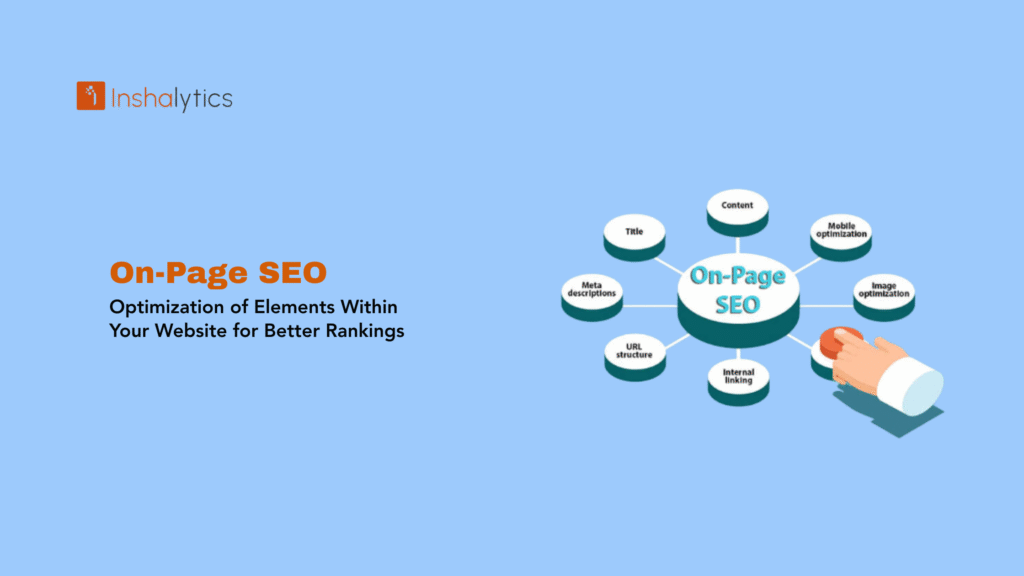
On-page SEO also known as on-site SEO refers to the optimization techniques you apply directly on your website to improve its visibility in search engines. These optimizations help search engines understand your content, evaluate its relevance, and determine whether your webpage deserves to rank for specific search queries.
Unlike off-page SEO, which focuses on external signals such as backlinks and brand mentions, on-page SEO gives you full control. Everything happens within your website’s structure, code, design, and content. When executed correctly, on-page SEO enhances both search engine rankings and user experience two factors that go hand-in-hand in modern digital marketing.
Navigate This Post
What Is On-Page SEO?
On-page SEO involves all the tactics used to optimize the content, HTML elements, and technical structure of your website. Search engines rely on these elements to understand what your pages are about and how valuable they are to users.
Key components of on-page SEO include:
- Content quality and relevance
- Keyword optimization
- Title tags and meta descriptions
- Header tags (H1, H2, H3…)
- Image optimization
- URL structure
- Internal linking
- Page speed
- Mobile-friendliness
- Schema markup
- Crawlability and indexability
The goal is simple: make your webpage as understandable, accessible, and useful as possible to both humans and search engines.
Why On-Page SEO Matters
Search engines like Google analyze hundreds of ranking factors, but on-page elements remain some of the most impactful. Good on-page SEO:
✓ Improves search visibility
Optimized pages are easier for search engines to crawl and index, increasing your chances of ranking for your target keywords.
✓ Supports user experience (UX)
Clear structures, readable content, optimized media, and fast-loading pages help users stay longer and engage more.
✓ Helps search engines understand context
Keyword placement, semantic relevance, schema markup, and well-organized content help AI and search algorithms interpret your topic accurately.
✓ Increases conversion potential
Relevant content and clear intent alignment lead to better user satisfaction and more conversions.
✓ Builds a strong foundation for all SEO success
Even the best off-page strategies can fail if your website lacks solid on-page optimization.
Core Elements of On-Page SEO
Below is a breakdown of the most essential on-page SEO components, with modern best practices tailored for both search engines and LLMs.
1. High-Quality, Search-Optimized Content
Content remains the core of on-page SEO. Google prioritizes pages that demonstrate expertise, experience, authority, and trustworthiness (E-E-A-T).
Characteristics of strong on-page content:
- Answers user intent clearly
- Is original, comprehensive, and well-structured
- Uses natural language optimized with relevant keywords
- Includes supporting data, examples, FAQs, and visuals
- Reads smoothly and is easy to scan
Tip: Use a mix of target keywords, semantic keywords, and long-tail variations to help search engines and AI models understand your topic deeply.
2. Keyword Optimization
Keywords guide search engines to understand what your content is about. Effective keyword placement should feel natural and strategic.
Key areas to include your primary keyword:
- Page title
- H1 heading
- First paragraph
- Subheadings (where relevant)
- Body content
- Image alt text
- URL
- Meta description
Avoid keyword stuffing. Modern SEO favors relevance and semantic context.
3. Title Tags
The title tag is one of the strongest on-page ranking signals. It tells search engines and users what the page is about.
Best practices:
- Keep titles around 50–60 characters
- Include your primary keyword
- Use an engaging format (How-To, Guide, Definition)
- Make it unique for every page
Example:
“On-Page SEO: What It Is, How It Works, and Key Optimization Techniques”
4. Meta Descriptions
Though not a direct ranking factor, meta descriptions influence click-through rate (CTR).
Optimize by:
- Keeping it 150–160 characters
- Summarizing the content clearly
- Adding keywords naturally
- Using action-oriented language
5. Header Tags (H1–H6)
Headings structure content for both users and search engines.
- H1: Main topic
- H2: Major sections
- H3–H6: Supporting points
They help search engines understand the hierarchy and flow of information.
6. Image Optimization
Images improve engagement but must be optimized to avoid slowing down your site.
Best practices:
- Compress images
- Use descriptive alt text
- Add relevant file names
- Use next-gen formats like WebP
Alt text also improves accessibility a bonus for UX.
7. URL Structure
A clean, readable URL improves both SEO and user experience.
Optimal characteristics:
- Short
- Descriptive
- Uses hyphens
- Includes the primary keyword
Example:
/on-page-seo-optimization-guide/
8. Internal Linking
Internal links help search engines discover new pages and distribute authority.
Benefits include:
- Improved crawlability
- Stronger site architecture
- Better user navigation
- Reduced bounce rates
Use relevant anchor text and avoid excessive links.
9. Mobile Optimization
Google uses mobile-first indexing, meaning the mobile version of your site is the primary one evaluated.
Ensure your site is:
- Fully responsive
- Fast-loading
- Easy to navigate on small screens
- Free from intrusive pop-ups
10. Page Speed Optimization
Fast websites rank better and convert better.
Common techniques:
- Compress images
- Minify HTML, CSS, and JS
- Enable caching
- Use a CDN
- Reduce unnecessary plugins
11. Schema Markup (Structured Data)
Schema helps machines including search engines and LLMs understand your content more deeply.
Types of schema:
- Article
- FAQ
- Product
- Organization
- Local Business
- Breadcrumbs
Schema can also earn you rich snippets.
12. Crawlability & Indexability
Search engines need to access your content before they can rank it.
Ensure:
- No accidental noindex tags
- Robots.txt is properly configured
- Sitemaps are submitted
- Duplicate content is handled with canonical tags
How On-Page SEO Boosts LLM Visibility
Large Language Models (LLMs) extract information based on clarity, consistency, and structure.
Your on-page SEO helps LLMs by:
- Providing well-structured headings and definitions
- Using semantic keywords that indicate clear topical relationships
- Offering factual, concise, explainable content
- Creating scannable paragraphs that LLMs can interpret accurately
- Using schema markup that AI systems can parse easily
An optimized page becomes more “AI-friendly,” increasing your chances of being referenced in AI-generated results.
Common On-Page SEO Mistakes to Avoid
- Keyword stuffing
- Duplicate content
- Poor site architecture
- Missing title tags or H1s
- Thin content with little value
- Slow mobile pages
- Broken internal links
- Overuse of pop-ups or ads
Fixing these issues often results in immediate ranking improvements.
Final Thoughts: Why On-Page SEO Should Be Your First Priority
On-page SEO is the foundation of every successful SEO strategy. Without it:
- Search engines may misunderstand your content
- Users may leave your site quickly
- Your off-page efforts may produce limited results
With strong on-page optimization, you create a website that is fast, user-friendly, search-friendly, and AI-friendly all essential components of modern digital marketing.
If you want sustainable traffic and long-term visibility, mastering on-page SEO is non-negotiable.