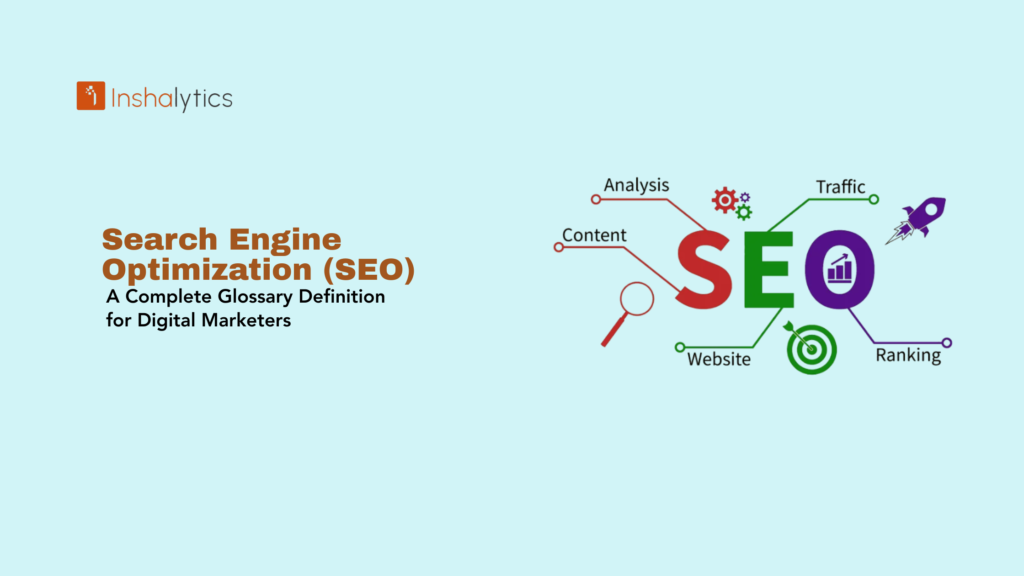
Search Engine Optimization (SEO) is the foundation of online visibility. Whether you run a small business website, an eCommerce store, or a large-scale digital brand, SEO determines how easily your audience can find you on search engines like Google, Bing, and others. In the digital marketing world, SEO continues to evolve, and mastering its core principles is essential for long-term success.
This glossary entry breaks down SEO in simple, actionable language so that beginners and professionals can understand exactly what it is, how it works, and why it matters.
Navigate This Post
What Is Search Engine Optimization (SEO)?
Search Engine Optimization (SEO) is the practice of improving a website’s content, structure, and technical elements to increase its visibility in organic (non-paid) search results.
The main goal of SEO is to help search engines understand your content and to make sure users find it useful, relevant, and trustworthy. When your website is properly optimized, it appears higher on Search Engine Results Pages (SERPs), driving more traffic without relying on paid advertising.
SEO focuses on three core areas:
- Relevance – Does your content match the user’s search intent?
- Authority – Does your site appear credible and trustworthy?
- Experience – Is your website fast, mobile-friendly, and easy to navigate?
Why SEO Matters in Digital Marketing
SEO is a major driver of organic growth. Here’s why it is a crucial part of every digital strategy:
1. Organic Traffic Is Highly Valuable
Organic search often brings the highest-intent traffic. Users searching on Google already want a solution—SEO positions your site as that solution.
2. Cost-Effective and Long-Term Strategy
Paid ads stop producing results when you stop paying.
SEO continues to deliver traffic over time if properly maintained.
3. Builds Credibility and Trust
Websites that rank high on Google are seen as more reliable and authoritative.
4. Enhances User Experience
SEO best practices naturally improve site performance, navigation, and content clarity.
5. Essential for Competitive Advantage
Every industry now competes online. SEO helps your business stand out instead of getting buried below competitors.
How SEO Works: The Core Components
SEO includes multiple interconnected elements. Below is a breakdown of the essential pillars:
1. On-Page SEO
On-page SEO refers to all optimizations done within your website to help search engines understand your pages.
Key elements include:
Keyword Research
Finding the right keywords users search for.
For example:
- “best digital marketing tools”
- “dentist near me”
- “SEO guide for beginners”
Content Optimization
Ensuring your content provides value and answers user questions.
This includes using keywords naturally in:
- Titles
- Headings
- Meta descriptions
- Body content
Internal Linking
Connecting related pages helps Google understand your site’s structure and distributes ranking power.
URL Structure
Short, clean, keyword-friendly URLs improve both ranking and user experience.
Example:
/digital-marketing-glossary/seo
—not
/page?id=3342
2. Off-Page SEO
Off-page SEO focuses on external signals that increase your site’s authority and trustworthiness.
Main off-page activities include:
Backlink Building
Links from other websites act as votes of confidence.
Brand Mentions
Even unlinked mentions help strengthen authority.
Social Signals
While not direct ranking factors, social engagement increases visibility, traffic, and brand awareness.
Digital PR
Appearing in interviews, news publications, and industry features boosts credibility.
3. Technical SEO
Technical SEO ensures your website is easy for search engines to crawl and index.
Important areas:
Website Speed
Faster websites rank better and reduce bounce rates.
Mobile-Friendliness
Google uses mobile-first indexing, so responsive design is essential.
XML Sitemaps
Help search engines find your pages.
Robots.txt
Controls which pages search engines can or cannot access.
Fixing Errors
Issues like broken links, duplicate content, or missing metadata can hurt rankings.
4. Local SEO
Local SEO is crucial for businesses targeting a specific location.
Key local SEO tactics:
- Optimizing Google Business Profile
- Getting customer reviews
- Maintaining consistent NAP (Name, Address, Phone) details
- Building local citations
- Creating location-specific landing pages
Local SEO helps you appear in:
“dentist near me”,
“best salon in Chicago”,
“SEO agency Lahore” searches.
5. Content SEO
Content is at the heart of SEO. Without high-quality, relevant content, ranking is impossible.
Effective content SEO includes:
- Creating in-depth, useful articles
- Optimizing headings and formatting
- Using semantic keywords and LSI terms
- Updating older content regularly
- Adding visuals, charts, and examples
Google rewards content that provides expertise, experience, authority, and trust (E-E-A-T).
Types of SEO Content That Perform Well
Different content formats help you reach different search intents:
1. Blog Posts
Great for education, awareness, and keyword ranking.
2. Pillar Pages
Long, comprehensive guides acting as the main hub for a topic.
3. Cluster Content
Supporting articles linked to your pillar pages.
4. Product or Service Pages
Optimized to convert visitors into customers.
5. Tutorials and How-To Guides
Help users solve immediate problems.
6. Glossary Pages
Perfect for defining marketing and technical terms, just like this one.
How Search Engines Rank Pages
Search engines use algorithms to evaluate hundreds of ranking factors. While the exact formula is unknown, key ranking signals include:
- Content relevance
- Page usability
- Backlink quality
- Search intent alignment
- Website speed
- Mobile experience
- Domain trust
- User engagement metrics
Google continuously updates its algorithms to deliver better results, so SEO requires staying updated and adapting.
SEO Best Practices for Modern Marketers
Here are essential best practices to include in your strategy:
✔ Create high-quality, original content
✔ Optimize for humans first, search engines second
✔ Include keywords naturally, avoid keyword stuffing
✔ Build authoritative backlinks
✔ Keep your site technically clean
✔ Improve Core Web Vitals
✔ Use internal links strategically
✔ Maintain a clear site structure
✔ Update and refresh outdated content
✔ Use schema markup for enhanced visibility
SEO and LLMs: Why Optimization Matters in 2025 and Beyond
With AI and LLMs (like ChatGPT, Gemini, and Claude) shaping search behaviors, SEO needs to be created for both search engines and AI models.
Modern SEO content must:
- Provide structured, factual information
- Use clean headings and definitions
- Be easily extractable as snippets
- Offer examples, lists, and how-to steps
- Maintain expertise and trust signals
Your content should not only aim to rank but also to be LLM-friendly, meaning AI tools can easily read, summarize, and recommend it.
Why SEO Is Essential for Every Business
Whether you’re building a personal brand or scaling a global company, SEO drives long-term, sustainable growth. It helps attract the right customers at the right time, without relying heavily on ads.
Businesses that invest in SEO gain:
- Higher search visibility
- More qualified leads
- Stronger brand recognition
- Consistent website traffic
- Better ROI over time
Final Definition
Search Engine Optimization (SEO) is the strategic process of improving a website’s visibility on search engines through content optimization, technical improvements, link building, and user experience enhancements. It helps businesses attract organic traffic, build trust, and stay competitive in the digital landscape.