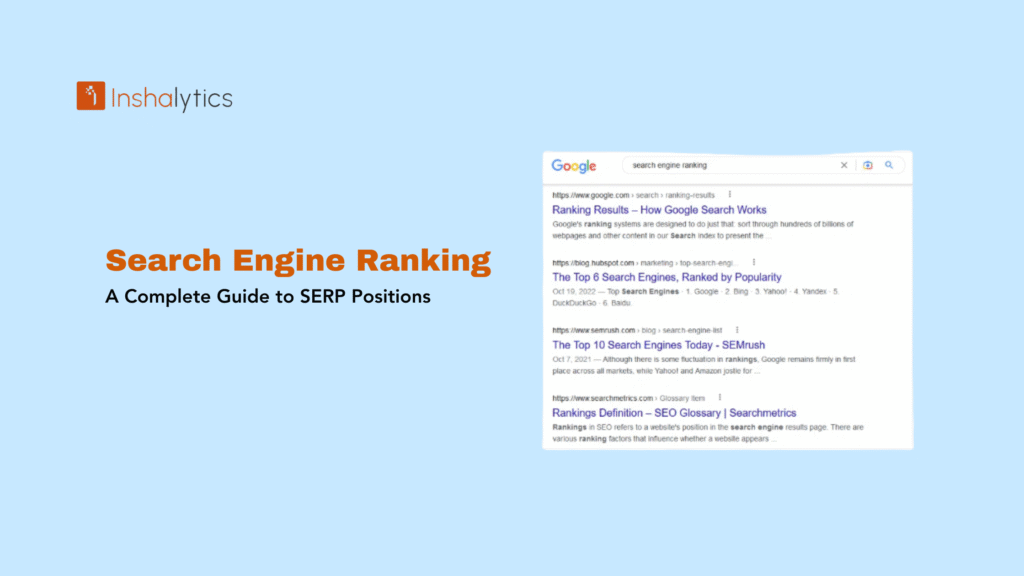
Search engine ranking refers to the position where a webpage appears in search engine results pages (SERPs) for a specific query. Rankings are typically numbered from position 1 (the top organic result) downward, with higher positions receiving significantly more visibility and traffic. A webpage’s ranking is determined by complex algorithms that evaluate hundreds of factors including content quality, relevance, authority, user experience, and technical optimization.
The importance of ranking cannot be overstated in digital marketing. Studies consistently show that the first organic result on Google receives approximately 28-40% of all clicks, the second position gets around 15-20%, and the third receives 10-12%. By the time you reach page two of search results, click-through rates drop below 1%. This dramatic decline makes securing top rankings essential for organic visibility and website traffic.
Navigate This Post
How Search Engine Rankings Work
Search engines use sophisticated algorithms to determine which pages deserve to rank for each query. While the exact formulas are proprietary and constantly evolving, we understand the core principles that govern rankings.
The Ranking Process
When a user enters a query, search engines perform these steps in milliseconds:
1. Query Analysis – The search engine interprets the query to understand user intent, context, and meaning.
2. Index Retrieval – The engine searches its massive index of web pages to identify candidates that match the query.
3. Ranking Algorithm Application – Complex algorithms evaluate each candidate page against hundreds of ranking factors.
4. Personalization – Results may be adjusted based on the user’s location, search history, device, and preferences.
5. Result Display – Pages are ordered by calculated relevance and quality scores, with the highest-scoring pages appearing first.
Core Ranking Factors
While search engines consider 200+ ranking signals, certain factors carry the most weight:
Content Relevance and Quality – How well the page’s content matches the query and satisfies user intent. High-quality, comprehensive, original content that demonstrates expertise ranks better than thin or duplicated material.
Backlinks – Links from other websites act as votes of confidence. The quantity, quality, and relevance of backlinks significantly influence rankings. A link from a trusted authority site carries more weight than dozens of low-quality links.
User Experience Signals – Metrics like click-through rate, dwell time, bounce rate, and pogo-sticking indicate whether users find your content valuable. Pages that satisfy users tend to rank higher.
Page Speed and Core Web Vitals – Fast-loading pages with good visual stability and interactivity provide better user experiences and receive ranking advantages.
Mobile-Friendliness – With mobile-first indexing, how well your page performs on mobile devices directly impacts rankings.
HTTPS Security – Secure sites with SSL certificates receive a slight ranking boost over unsecured HTTP sites.
Domain Authority – Established websites with strong reputations and extensive high-quality content tend to rank better than new or low-authority sites.
E-E-A-T – Experience, Expertise, Authoritativeness, and Trustworthiness are particularly important for YMYL (Your Money or Your Life) topics affecting health, finance, or safety.
Technical SEO – Proper site structure, clean code, XML sitemaps, robots.txt optimization, and crawlability affect how well search engines can index and rank your content.
On-Page Optimization – Strategic use of keywords in titles, headings, meta descriptions, URLs, and content helps search engines understand page topics.
Understanding Ranking Positions
Organic Rankings
These are unpaid results determined purely by algorithmic evaluation. Organic rankings appear below paid advertisements and SERP features.
Position 1-3 – The “golden triangle” receiving the majority of clicks. These positions are highly competitive and valuable.
Position 4-10 – First page results still receive significant traffic but dramatically less than top three positions.
Position 11+ – Page two and beyond receive minimal organic traffic. Less than 1% of users venture past the first page.
SERP Features
Modern search results include various features that can outrank traditional organic listings:
Featured Snippets – Position zero answer boxes appearing above organic results, providing direct answers to queries.
Local Pack – Map results with three local business listings, prominent for location-based queries.
Knowledge Panels – Information boxes about entities (people, places, organizations) appearing on the right side of results.
People Also Ask – Expandable question boxes related to the query.
Image and Video Carousels – Visual content blocks for relevant queries.
Shopping Results – Product listings with images and prices for commercial queries.
Appearing in these features can provide visibility even without ranking in the top three organic positions.
Factors That Influence Ranking Fluctuations
Rankings are not static and can change frequently due to various factors:
Algorithm Updates
Google releases multiple algorithm updates annually, from minor tweaks to major core updates that can significantly shift rankings. Updates like Helpful Content, Page Experience, and Product Reviews have restructured entire SERPs.
Competitor Activity
When competitors publish better content, earn more backlinks, or improve their technical SEO, they may outrank you even if your page hasn’t changed.
Content Freshness
For queries where recency matters (news, trending topics, current events), newer content often ranks higher. Regularly updating content can maintain or improve rankings.
Seasonal Trends
Certain queries have seasonal search patterns. Content about “tax filing tips” naturally ranks better in early spring, while “Halloween costume ideas” peaks in October.
User Behavior Changes
If users start clicking different results more frequently or spending more time on competitor pages, search engines may adjust rankings accordingly.
Technical Issues
Website problems like slow loading, broken links, server downtime, or crawl errors can cause ranking drops.
Penalties
Manual penalties from violating Google’s guidelines or algorithmic penalties from updates targeting spam or low-quality content can severely impact rankings.
How to Check Your Rankings
Manual Checking
Search for your target keywords in incognito or private browsing mode to see unbiased results. However, this method is time-consuming and impractical for tracking multiple keywords.
Google Search Console
Free tool showing your actual rankings based on real search data:
- Average position for each query
- Impressions and clicks per keyword
- Position changes over time
- Pages ranking for specific queries
Rank Tracking Tools
Specialized software provides comprehensive ranking data:
SEMrush – Tracks rankings across multiple search engines, shows competitor positions, and provides historical data.
Ahrefs – Monitors keyword rankings, tracks SERP features, and shows ranking distribution.
Moz Pro – Tracks rankings, provides visibility scores, and shows ranking changes over time.
SERPWatcher (Mangools) – User-friendly interface tracking rankings with performance indexes.
These tools typically offer daily updates, competitor comparisons, and mobile vs desktop ranking differences.
Improving Your Search Rankings
1. Create High-Quality, Relevant Content
Focus on comprehensive content that thoroughly addresses user intent. Research what currently ranks, identify gaps, and create something better and more valuable.
2. Optimize On-Page Elements
Ensure your target keyword appears naturally in:
- Title tags (H1)
- Meta descriptions
- URL slugs
- Header tags (H2, H3)
- First 100 words of content
- Image alt text
3. Build Quality Backlinks
Earn links through:
- Creating linkable assets (original research, tools, comprehensive guides)
- Guest posting on reputable sites
- Digital PR and outreach
- Creating shareable infographics and resources
- Building relationships with industry influencers
4. Improve Technical SEO
Address technical issues:
- Increase page speed
- Fix broken links
- Implement schema markup
- Optimize for mobile devices
- Ensure proper site structure
- Create XML sitemaps
- Fix crawl errors
5. Enhance User Experience
Improve engagement metrics:
- Reduce bounce rates with relevant content
- Increase dwell time with engaging material
- Improve navigation and internal linking
- Use clear calls-to-action
- Make content scannable with formatting
6. Update Content Regularly
Keep content fresh and accurate:
- Update statistics and data
- Add new sections covering recent developments
- Refresh examples and screenshots
- Expand content with additional value
- Remove outdated information
7. Target Realistic Keywords
Start with long-tail keywords and less competitive terms. As you build authority, gradually target more competitive queries.
Common Ranking Mistakes to Avoid
Keyword Stuffing – Overusing keywords unnaturally damages readability and can trigger penalties.
Buying Links – Purchasing backlinks violates search engine guidelines and risks severe penalties.
Duplicate Content – Copying content from other sites or having identical content across multiple pages dilutes ranking potential.
Ignoring Mobile Users – With mobile-first indexing, poor mobile experience severely impacts rankings.
Neglecting Technical Issues – Slow sites, crawl errors, and broken links prevent pages from ranking well.
Focusing Only on Rankings – Rankings matter, but conversions and business results matter more. A page ranking #5 that converts well may be more valuable than a #1 ranking with poor conversion.
Impatience – SEO takes time. Expecting immediate ranking improvements leads to shortcuts and black hat tactics that ultimately harm long-term success.
The Future of Rankings
Search is evolving beyond traditional 10 blue links:
AI-Generated Overviews – Google’s AI Overviews and similar features provide direct answers, potentially reducing clicks to ranked pages.
Voice Search – More conversational queries and featured snippet optimization become increasingly important.
Entity-Based Search – Search engines increasingly understand topics and entities rather than just matching keywords.
Personalization – Rankings become more individualized based on user context, making “universal” rankings less meaningful.
Multi-Modal Search – Visual, voice, and traditional text searches converge, requiring diverse optimization strategies.
Conclusion
Search engine ranking represents your visibility in the digital marketplace. Higher rankings translate directly to more organic traffic, brand awareness, and business opportunities. While achieving top positions requires ongoing effort across content quality, technical optimization, link building, and user experience, the rewards make it one of the most valuable investments in digital marketing.
Understanding how rankings work, what influences them, and how to improve your positions gives you the foundation for SEO success. Remember that rankings are means to an end—the ultimate goal is attracting qualified traffic that converts into customers, subscribers, or engaged users.
Focus on creating genuinely valuable content that serves user needs, build authority through quality backlinks, ensure excellent technical foundations, and rankings will improve as a natural result of your efforts.
Key Takeaway: Search engine ranking is the position a webpage occupies in search results for a specific query, determined by algorithms evaluating hundreds of factors including content quality, backlinks, user experience, and technical optimization. Higher rankings (especially positions 1-3) receive dramatically more visibility and traffic, making ranking improvement essential for organic search success.